
The Hessdalen Lights: The Mysterious Phenomenon of the Norwegian Night Sky
The lights serve as a reminder of the beauty and wonder that can be found in the most unexpected places.
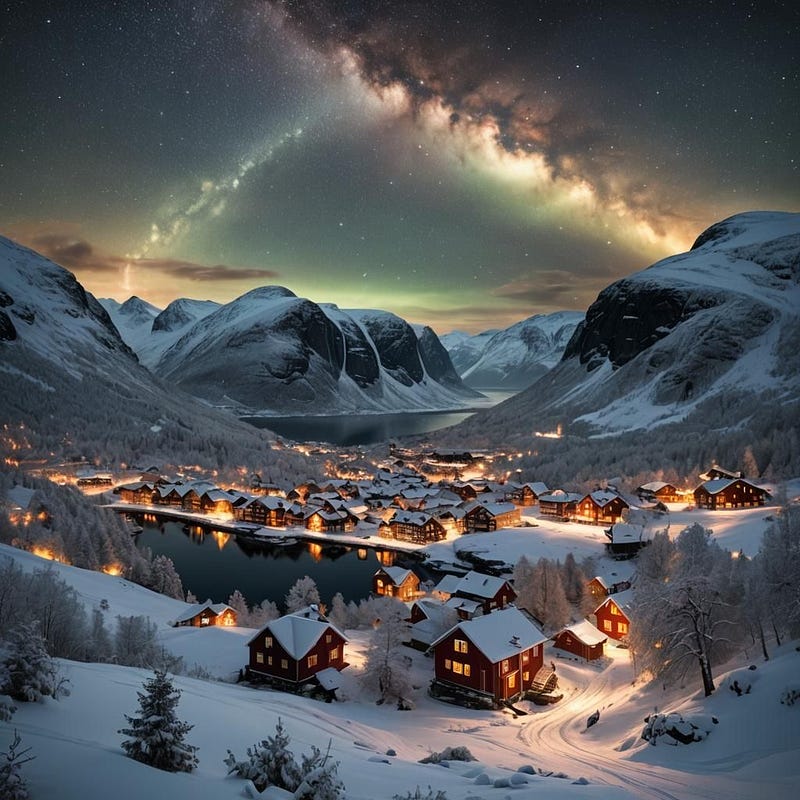
In the heart of Norway, where the enchanting landscape of the Scandinavian wilderness meets the ethereal glow of the aurora borealis, lies the Hessdalen Valley.
This picturesque valley has long been a source of fascination and intrigue for researchers and tourists alike, but it’s not just the breathtaking scenery that draws people to this remote location. It’s the unexplained lights that have captivated the collective imagination for decades.
The Hessdalen Lights appear in the Hessdalen Valley in Norway, usually at night, and vary in color, shape, and duration.
The lights have been observed since the 1930s, and have attracted many researchers and tourists. Some possible explanations are ball lightning, ionized dust, or plasma.
he Hessdalen Lights have been a subject of interest and scientific inquiry for many years.
They are often seen in the clear skies of the Hessdalen Valley, appearing as luminous, hovering orbs that can be various colors, including white, blue, and red.
These lights can last from a few seconds to several hours, and their intensity can vary from faint to dazzlingly bright.
One of the most striking features of the Hessdalen Lights is their unpredictability. They can appear at any time, without any discernible pattern or regularity.
This has made it challenging for researchers to study the phenomenon, as they often have to wait for extended periods before witnessing the lights in action.
Despite the numerous sightings and extensive research, the true nature of the Hessdalen Lights remains a mystery. Several theories have been proposed over the years, but none have been able to fully explain the phenomenon.
One of the most popular explanations for the Hessdalen Lights is ball lightning. This type of lightning is a rare and poorly understood atmospheric phenomenon, characterized by luminous, spherical objects that can appear during thunderstorms.
Some researchers believe that the Hessdalen Lights could be a form of ball lightning, caused by the intense electrical activity in the valley’s atmosphere.
Another proposed explanation is that the lights are the result of ionized dust particles in the valley’s atmosphere. This hypothesis suggests that the dust particles become ionized when disturbed, causing them to emit light.
This theory is supported by the fact that the lights are often seen in the presence of dust storms or other atmospheric disturbances.
Yet another explanation is that the Hessdalen Lights are a form of plasma, a highly ionized gas that can emit light when subjected to an electric field.
This theory is based on the observation that the lights often appear near power lines or other sources of electromagnetic radiation, suggesting that they could be a form of plasma generated by these sources.
The Hessdalen Lights have had a significant impact on the local community and tourism industry. The valley has become a hub for researchers and tourists who are drawn to the mystery of the lights.
This has led to the development of a thriving tourism industry, with hotels, restaurants, and guided tours catering to visitors from around the world.
The local community has also embraced the phenomenon, with many residents becoming involved in research and providing support to visitors.
This has helped to create a sense of community pride and identity, as the Hessdalen Lights have become a symbol of the valley’s unique character and natural beauty.
The Hessdalen Lights remain one of the most enigmatic and captivating mysteries of the natural world. Despite the numerous sightings and extensive research, their true nature continues to elude scientists.
As we continue to explore the depths of the Hessdalen Valley, the lights serve as a reminder of the beauty and wonder that can be found in the most unexpected places.
The Hessdalen Lights are a fascinating and mysterious phenomenon that has captured the imagination of researchers and tourists alike.
While several theories have been proposed, the true nature of the lights remains an enigma, making them an enduring source of intrigue and fascination for generations to come.