
The heartbroken life of Ronnie Roberts
Oral Roberts’ son had a secret
In the late 1980s, a young anorexic woman named Rachel was lying in a hospital bed. She told her mother: “If I’m going to die, I have to know the truth.”
Her mother admitted it. Years later, in 2005, Rachel saw that her cousin, Randy Potts, had the same secret in himself. She told him hers, and in 2010, Randy told the world.
His uncle, Ronnie Roberts, the eldest son of Oral Roberts, the famous faith-healing Christian minister, had been gay.
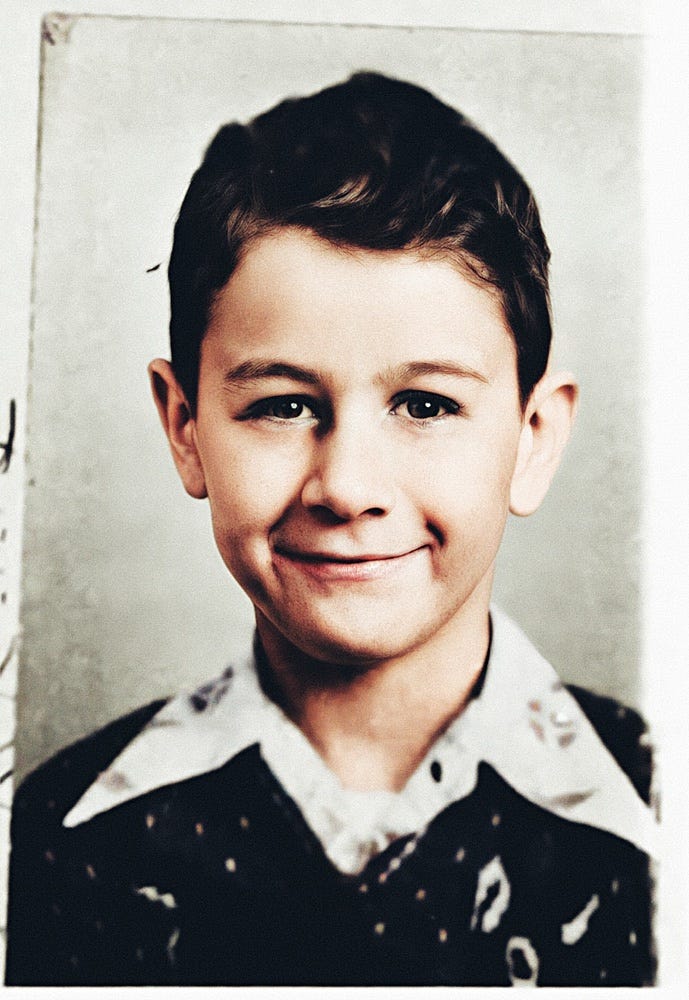
Randly researched his gay uncle and in 2016, on Instagram, did a long post about him.
That was reprinted by The Guardian newspaper, where I noticed it. Randy had assembled a lot of information, but more is known about Ronald David Roberts, the second child and first son of Oral and Evelyn Roberts.
Born in Tulsa on October 22, 1943, all his life, he was ‘Ronnie’, a ‘pastor’s kid’, placed on earth to be an example of a good Christian.
He did his best. A 1985 biography, Oral Roberts: An American Life by David Edwin Harrell, Jr., finds Oral saying he’s so proud of his “little helper.”
So bright! So “nimble with his mind and tongue,” Oral says. Ronnie’s memory is incredible. At age four his father asks him after a sermon to summarize its message. Ronnie recites the whole thing back.
As his mother plays piano at church, Ronnie works the services too. At the altar call, he sings “Don’t Turn Him Away” — and everyone is so charmed they want to get saved all over again.
“He had such a sweet little voice,” his mother writes.
I’m reading her 1976 book, His Darling Wife, Evelyn, which is everything an Evangelical mother’s memoir should be. So proud of her “well-behaved” Christian son. “He would find himself in long conversations with people and they would be fascinated by him because they had never met anyone his age who knew so much about the Bible.”
God had “something special” in mind for him she was quite sure.
They tell stories about him. One time when his father was traveling, his grandmother was ill and asked Ronnie to performing a healing on her.
“When he placed his hand on my head to pray,” the grandmother recalled, “it seemed like Oral praying. The power of God came into that room and Ronnie said, ‘Granny, you’re healed!’”
The family was becoming famous, or infamous, after Oral had left his gig as a poor pastor and became a faith healer, which was not a respectable profession, but a lucrative one. His family upgraded their house every few years. He got an airplane, a ranch, a herd of prize cattle.
Then he was God’s prophet, hearing that divine voice once again. I look through newspaper coverage, finding Oral in 1961 describing it:
“God has spoken to me. He usually calls me by name. He has a strong voice, a military voice, like a general speaking to a private.”
Oral was a not the military-type. He was emotional. His ‘crusades’ were hard on him, the reporter notes. “He sleeps fitfully, never finishes a complete meal and generally loses from five to ten pounds.”
Oral would sink to depressive states, then leave on another ‘crusade’.
Evelyn did her best with the kids.
She’d put off punishing them until Oral came home, however long that was. She writes: “He often accused me of meeting him at the door with, ‘Here’s a switch. Whip these children.’”
The children would ask why their father was gone so much. “Well,” she replies, “he is out trying to win souls to Jesus. He’ll be home soon.” She remembers that Ronnie asks: “Mother, when is ‘soon’?”
A strange child. One time he taped a sign on his bedroom door: ‘Private.’
Super-bright, he gets straight A’s in school. He’s a “brain,” his mother says. But a strange, sensitive child. He went to summer camp once, “because I wanted him to learn to live with other children his own age and become more independent.” He wrote asking them to come get him.
Not like his little brother Richard, she writes. “He wasn’t afraid of anything.”
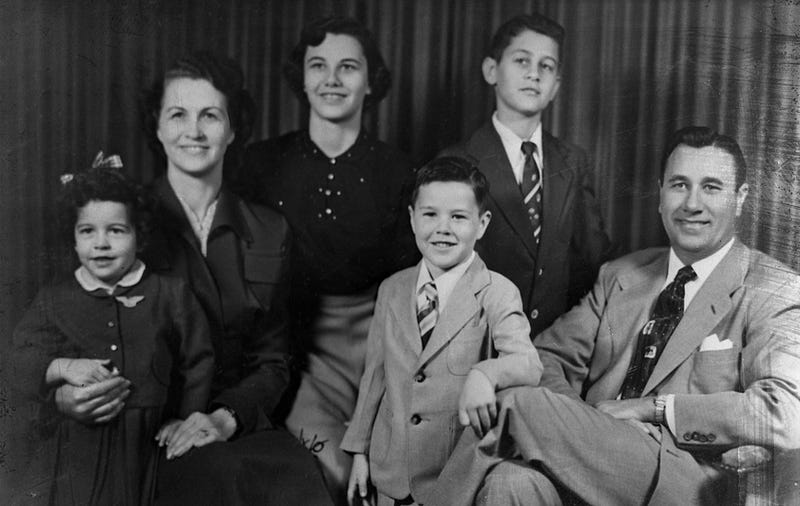
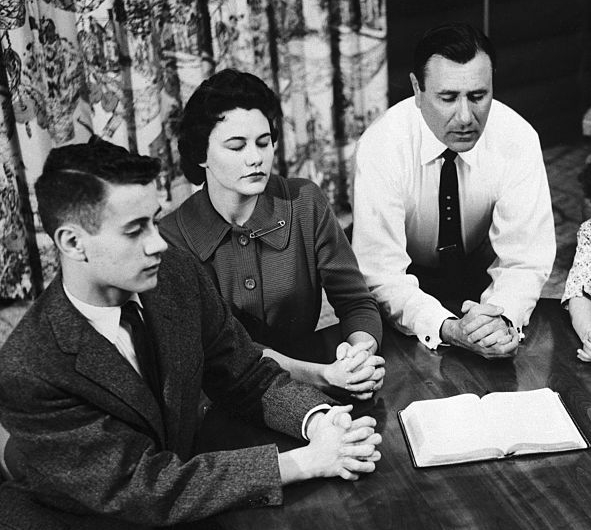
She knew it was hard for Ronnie at school.
Oral Roberts was now an international superstar, with a growing multimedia empire, a star of radio and T.V. If you weren’t into his act, for all his fancy suits and display of wealth, he was — unseemly.
In 1955, Oral Roberts did an infamous stop in South Africa, which was then an apartheid state. Ronnie’s teacher at school, Oral later recalls, read to the class a critical news report of the event. He writes: “When she finished Ronnie rose to his feet and denied that it was true, boiling with resentment that his teacher would do such a thing.”
Ronnie’s older sister Rebecca dreamed of getting married just so she could change her name. But he was stuck with it. His mother writes: “I’m sure Ronnie was never ashamed of his father — he simply wanted to leave his own mark on people and not be prejudged.”
Randy Potts later reports that Ronnie “wrote in letters published after his death that he ‘came out’ in high school, but only to close friends and family, including his father.”
There is no hint of it—overtly—in any family history, which in retrospect are the history of them concealing a secret.
Ronnie went to Stanford University, all the way in California. They knew about Oral Roberts there too.
His professors would call him out in class. He came home and “the hurt spilled out,” his mother writes. They had a big talk about it. She quotes Ronnie addressing his father, who he barely knows:
“Dad, I felt I was denied your time and your concentration in my growing-up years. I desperately needed you. I needed to get your views on certain things and you were always gone.”
Oral replies to the long rant: “I have to obey the Lord, regardless of family or whomever. I have to do what God says to do.”
Oral recalls one night someone telephoned, and asked for him. Oral writes: “I got on the line and heard a deep, almost uncontrollable sobbing and realized it was Ronnie.” He tries to understand his son. “It was almost as if he were saying, ‘I wish I weren’t Oral Roberts’ son because then everything would be all right.”
Oral flew to California and they spent a week together. “I almost lost my son but through God’s help we worked through the problem,” he says.
Ronnie quit Stanford and joined the Army.
He had amazing linguistic skills. He spoke German, French, Chinese and a few other languages his mother can’t recall. The Army wanted him to learn Polish too. But then he calls home saying he’s — caught hepatitis?
His mother writes: “We flew out to be with him and found him yellow with jaundice and so thin it broke my heart. Ron was not only sick in his body; there was also something wrong in his spirit — his inner person.”
Oral took his son in his arms and “commanded Satan to loose our son,” she recalls. “I remember he said, ‘Devil, take your hands off God’s property. You shall not have our son — neither his body, his soul, nor his mind.’”
Oral writes that the treatment worked: “Ronnie was visibly shaken — God did something special for him that day.”
Oral believed Ronnie had the same healing gift, the only of his children to be so favored. He likes a story about one time when he was sick with a sinus infection, and nothing helped, not prayer, not medicine. He said, “Get Ronnie on the phone.” So they called him, and Oral began to cry, asking Ronnie to pray for him.
Year after year, the story gets better. In a 1986 book, Oral writes: “As Ronnie prayed for me over the phone, I immediately felt the presence of the Lord shoot through my body and my sinuses.”
It’s like Ronnie had a gift he didn’t want?
He is trying to be an Evangelical man. In 1966, he gets married to a girl he’d been friends with all throughout high school. They’d both played the flute. His mother likes to recall when Carol came over and the two kids would listen to records, nibbling milk and cookies.
Carol is quoted to say: “I am marrying Ronnie not only because I love him. I do love him, but there is a compelling force that tells me I must marry him.”
They adopt two kids, Rachel and Damon. Working on a doctorate in languages, Ronnie was teaching high school. His mother quotes him proudly: “The Bible is the greatest piece of literature ever written and I include it in my teaching of literature because it’s a great book.”
Ronnie, she sighs, was “a student always and forever, but a very sensitive person.”
Oral was busy building Oral Roberts University. It opened in 1965. Without elaboration, Harrell notes that Ronnie had called the school’s official dedication in 1967 “one of the most moving experiences in my life.”
This surely owes to the idea, still in the air, that Ronnie would manage the Evangelical kingdom his father was building — and be his father’s true son and heir. “Success without a successor is failure,” Oral often says. He dreams of a son to be the prince to his king.
His daughters, of course, were disqualified by gender. The realization settles in that he’ll be stuck with Richard, the son who lacks “the gift.”
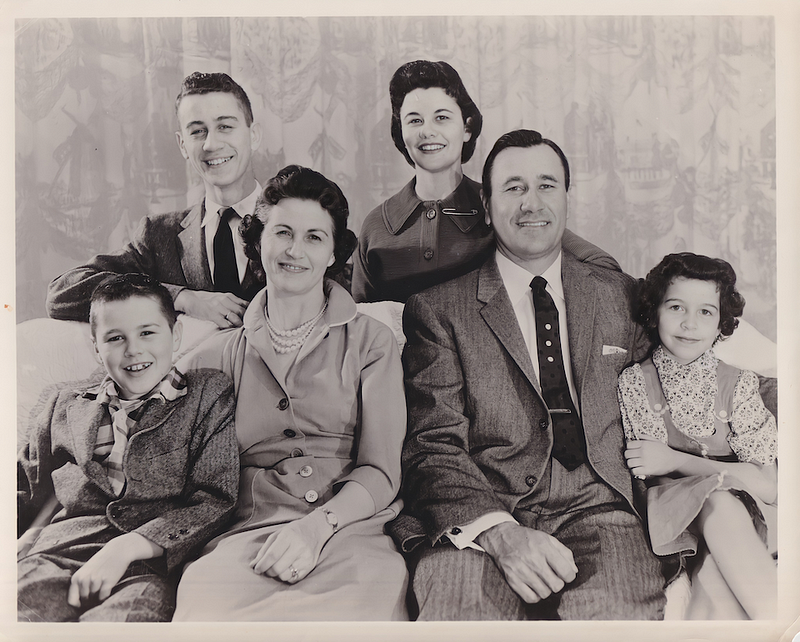
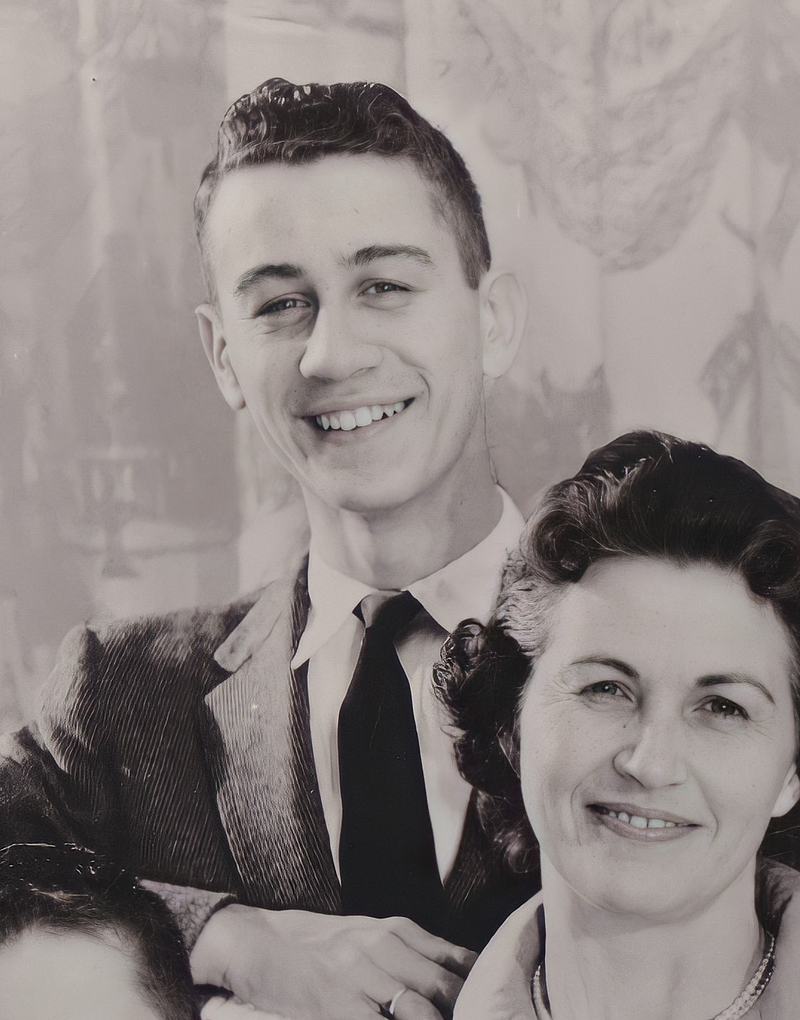
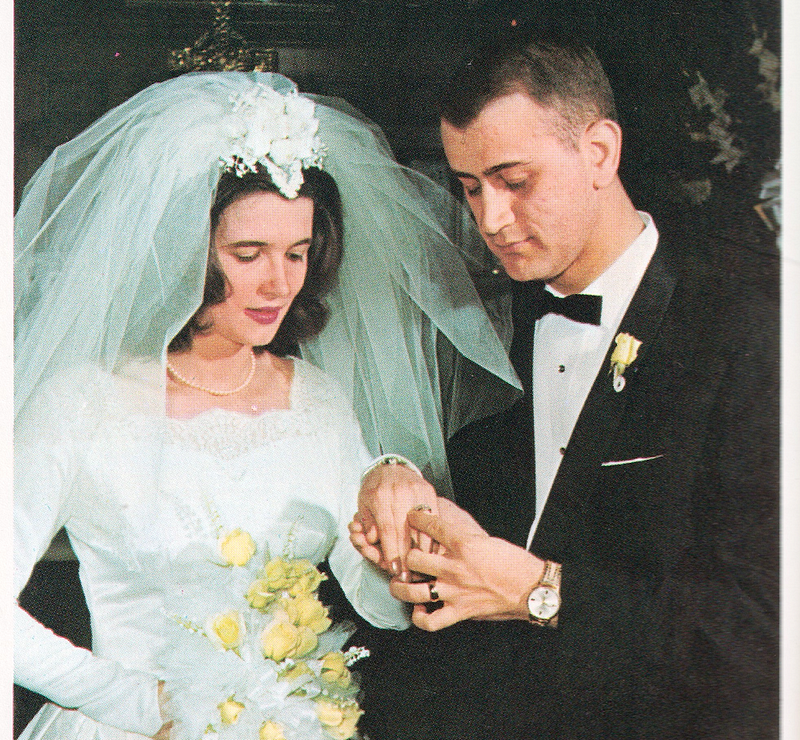
The way they talk about it later, Ronnie’s problem was prescription painkillers.
Oral writes: “To maintain his addiction, his need for money became greater and greater. His marriage began to fall apart, as did his business. His judgement failed — first in little things and then in bigger things.”
I search for mentions of Ronnie in the newspapers around him. On January 23, 1977, a ‘Ronald D. Roberts’ is ticketed for refusing to submit his motor vehicle for police inspection.
Days later, his older sister Rebecca is killed in a plane crash. Oral goes on T.V. to an audience of five million people — tuning in to see how he’ll deal with the problem of something ‘bad’ happening to so favored a servant.
He writes: “I broke down and told the truth — that bad things happen to good people, they happen to everyone, and we don’t always know the reason why.”
Ronnie seems to leave his job as a teacher. It’d been in a predominantly black part of town. Then he’s working as an antiques dealer, specializing in Chinese porcelain. And living in an apartment.
He grows a beard. His father hates it.
As Oral Roberts has reached stratospheric religious fame, Ronnie Roberts is famous in the local gay community for being gay.
He lingers around the family as a strange shadow. What couldn’t be ignored is his arrest, on September 4, 1981, for three forged prescriptions to the same pharmacy in Tulsa.
He was trying to get Tussionex, a cough syrup with a kick. It contains an opioid, and is a well-known temptation to addicts.
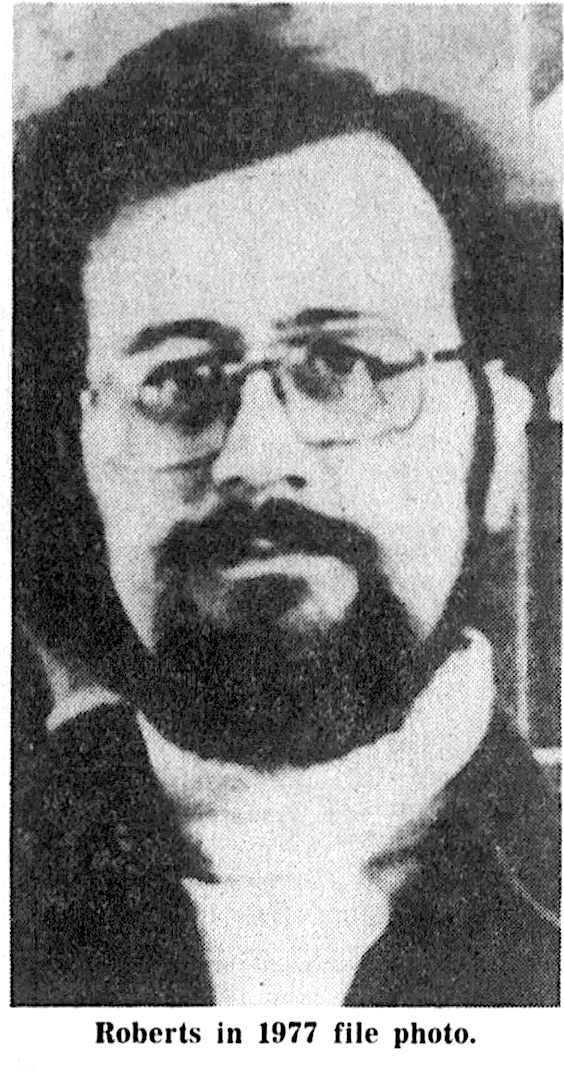
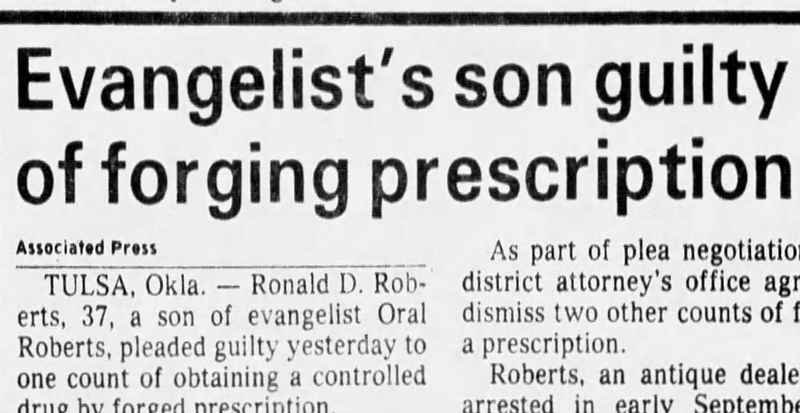
Ronnie pleaded not guilty. Then the following December, he pleads guilty in exchange for getting a year probation, and 60 hours community service. He could’ve gone to prison for ten years.
He stays away from the press, which gets no interviews or new photos. For court appearances, he’s slipped out side entrances.
In late 1981, as Randy Potts later learns, Ronnie wrote to a T.V. preacher
Troy Perry had founded the Metropolitan Community Church, and had a show called God, Gays and the Gospel. He got a check from Ronnie, he recalls, with a note that said something like: “I don’t consider myself religious anymore, but I wanted to help you.”
Later, an unnamed Oral Roberts University employee is quoted in a newspaper report recalling that Evelyn had mentioned Ronnie phoning her “complaining about pain and had asked her to pray for him. The employee said Mrs. Roberts then began crying.”
On the night of June 9, 1982, Ronnie finds himself on a country road five miles northwest of Tulsa. Alone, with a pistol and his dark thoughts.
He’s left some writings in his apartment. In some reports the police say they “could not divulge contents of the notes.” A few news stories say Ronnie suggested in so many words: “you shouldn’t blame yourself.”
One report says he wrote pleading with his children to never get into drugs, which were “the beginning of the end for me.”
And he shoots himself in the heart.
Oral releases a message to the press saying Ronnie hadn’t been the same “since serving in Vietnam.”
But he assures his public he’s “more determined than ever” to continue expanding the ministry.
Oral’s autobiography, Expect a Miracle, narrates how he cried like David for his son Absolom. His son had been “very spiritually minded” when young, he notes, and recalls that he’d once thought to install Ronnie as head of Oral Roberts University.
This was misleading Bible commentary. Absolom is the son who sought to overthrow his father as king. The prince who refuses to continue his father’s lineage is Jonathan.
God seems to have gone silent for the moment, but Oral was hearing Satan loud and clear. He writes:
“In the pain of our grief, the devil began to speak to us. ‘You didn’t raise Ronnie right. You were gone from home too much. You shouldn’t have been so controversial. You should have been able to help him. After all, you claim to be a minister of the Gospel, and you couldn’t help your own son?”
He tells the Devil off. “We did all that we as parents could do.”
But he’s haunted, Harrell notes, by a memory. Years before, a relative told him: “Oral, I feel sorry for your children. I feel sorry for you, too, because you are gone so much. Your children will never love you.’’
At the funeral, Oral didn’t speak, but had a long statement read by a university employee.
It was later reprinted in Christianity Today. One can only imagine the scene of him sitting before the body of his dead son, as his words are read aloud.
“Ron was always close, very close, to touching what he called ‘reality.’ He loved attending my crusade services. He had strong faith, and when he was in control of himself, he knew how to pray and help people.”
As the statement goes on, and on, Oral says that Ronnie had “brain damage,” and dances around the issue of whether he’d gone to heaven.
“Our eldest daughter is in heaven. Now our eldest son is gone. Only Richard and Roberta are left, their spouses and our grandchildren.”
And when Randy came out, while outing his uncle — there was one less.
Inheriting his father’s kingdom, Richard Roberts was perceived to run it into the ground.
A 2014 history reports:
“It was a struggle to get Richard to work a full day, say Oral’s former aides. Richard was often MIA, and it was anyone’s guess whether he was at the Tulsa Country Club or Southern Hills Country Club or elsewhere.”
He was removed in 2007, when Billy Joe Daugherty took over as “Executive Regent” of Oral Roberts University, then on the precipice of bankruptcy.
And meanwhile, Randy had gone in search of Ronnie’s story. He posted ads on the M4M section of Craigslist in Tulsa, asking for people who knew Ronnie. He got an anonymous reply from a man who said they’d been lovers — and that Ronnie had visited before he died.
The man wrote:
“He called then came by my house. He seemed very strange acting and quiet. We never did anything sexual that day. We talked briefly and embraced for several minutes. He held me very tightly as if he was holding on for dear life then left just looking me in the eye and saying good by.”
It hadn’t ever been clear what was going on with Ronnie. “I had the feeling he was trying to go straight again,” the guy adds. 🔶