
The Healing Power of Acupressure: Discovering the Magic Nei-Kuan Behind Wristbands for Nausea Relief and Beyond
And the unfinished mission of our wristbands
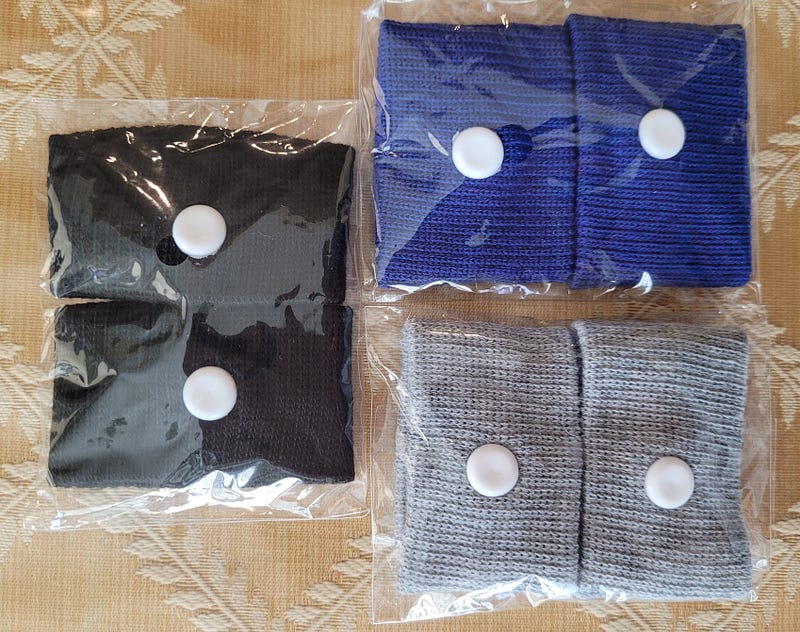
I heard of sea bands for the first time couple of months ago.
I was planning our family getaway in Hawaii. A friend recommended the Sunset Cruise. “Oh, you may want to get sea bands in case of motion sickness.”
Sea bands? Never heard of it.
I decided to check it out. My daughter had seasick once during a cruise vacation.
To my pleasant surprise, it’s a wristband based on the principles of TCM (Traditional Chinese Medicine) acupressure, designed to alleviate nausea and vomiting due to motion sickness by stimulating the P6 Nei-Kuan through a plastic knob attached to the elastic band.
It appears to be a popular option with fairly positive reviews from people who experience motion sickness while traveling by car, boat, or plane. The wristband is inexpensive and widely available.
I decided to get three sets for our family of four. As an acupressure pro, I figured I can easily handle it myself if needed.
How the product got started
Interestingly, it turns out the type of product has been on the market for several decades already. It was introduced in the 1980s by Dr. Daniel Choy. He was a ship doctor on a vessel with seasick crews so he recommended the traditional remedy and asked them to press the P6 point on the inner wrist. To their astonishment, the nausea symptom subsided immediately. Soon the sea band product was born.
Along the way, its application has been expanded to morning sickness as well as post-operative nausea in hospitals without unpleasant side effects.
P6 Nei-Kuan (内关)
P6 Nei-Kuan is an acupressure point located on the inner forearm, between the two central tendons about 2 cun (the breath of index, middle, and ring fingers together) above the transverse crease of the wrist.
Scientific studies such as this and that investigation support the use of the Nei-Kuan point for nausea relief. For instance, a study on pregnant women during the 1st trimester showed the group with the acupressure bands had significantly less frequency and severity of nausea and vomiting than the placebo group. The treatment group also had significantly less frequency and severity of nausea and vomiting during pregnancy while wearing the bands than when not wearing the bands.
In fact, P6 Nei-Kuan has historically been considered a universal pressure point in TCM. It is well-known to promote circulation and is commonly used in acupuncture and acupressure to help treat a wide range of ailments including gastric pain, nausea, vomiting, cardiac pain, emotional stress, insomnia, etc. I would rank Nei-Kuan among the top 10 most critical pressure points out of the ~ 360 total points on the body’s meridians.
The Chinese character of Nei-Kuan point is 内关. 内 means internal, which can be interpreted as internal organs here. 关 stands for a gate or fort. The name of the pressure point implies the criticality of Nei-Kuan.
Nei-Kuan belongs to the Pericardium meridian in TCM, which is on the inner side of the upper limb and terminates at the tip of the middle finger.
It also has a secret hidden path according to Nei Jing, the TCM bible more than 2000 years ago: Inside the body, the circulation path of the pericardium meridian is related to the pericardium and connected to Sanjiao (Triple Burner) and the diaphragm. And Sanjiao is linked to all the organs in the chest and abdomen. No wonder Nei-Kuan is so versatile and powerful.
In recent posts, I also shared acupressure point HT7 on the Heart meridian for better sleep and LU 6 on the Lung meridian which helps to heal my cold quickly. How did our ancestor figure all these out? The meridian system always intrigues me.
What about our sea bands
Well, we didn’t need to wear them during the Sunset Cruise. Although it was a bit bumping once in a while during the 5-hour cruise, we didn’t get seasick.
It was until after the cruise my husband told me there was one passenger who didn’t enjoy the trip as he had seasick and vomiting. Unfortunately, I wasn’t aware of it otherwise I would have offered the sea bands which could be helpful.
So, I stored away these wristbands for future trips. They may get used someday.
This post is for informational purposes only. It should not be considered health advice.
Thank you for reading. I write about culture, work-life learning, and the ancient wisdom of Traditional Chinese Medicine for better living. Click here if you would like to be notified when I publish.


