The Healing Balm of Black Music
Documentary reminds me when Stevie Wonder calmed a city
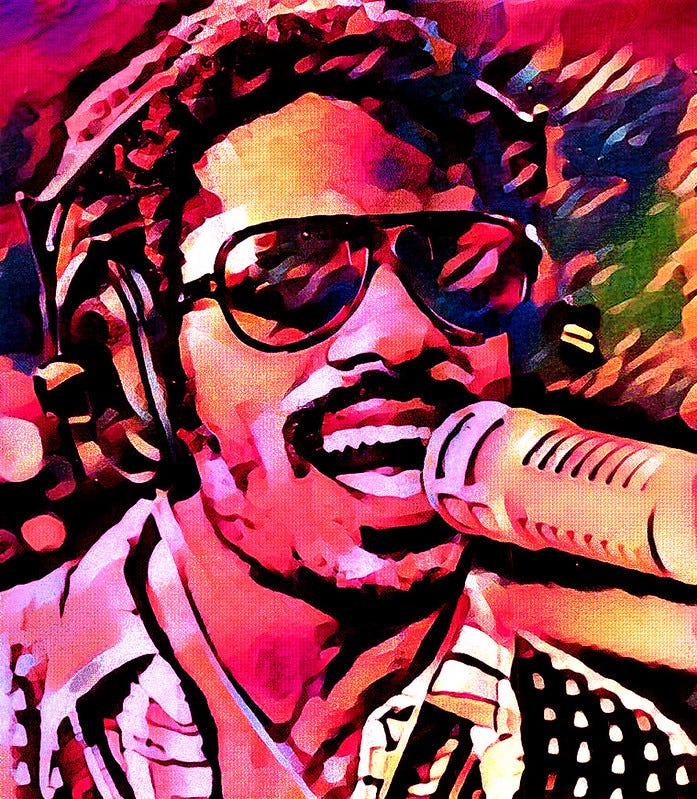
The Academy Award-nominated documentary of the 1969 Harlem Cultural Festival is much more than a showcase of talent, ranging from gospel to Motown to funk to blues to jazz.
“Summer of Soul (…Or, When the Revolution Could Not Be Televised)” is also a history lesson about how music reflects the times and feeds the soul. Held in the wake of political assassinations and urban riots, the six-week festival provided both escape and affirmation for teeming crowds who danced, swooned and even did a little church shouting.
It was a moment when civil-rights protests were giving way to the “Black Power” movement, focused on African heritage, self-expression and community empowerment.
Held during the same time as the iconic Woodstock Festival in upstate New York, the Harlem event — cosponsored by the City of New York and the Maxwell House company — was largely forgotten until Ahmir “Questlove” Thompson, frontman of The Roots, agreed to go through 40 hours of tape.
His directing debut includes performances by Stevie Wonder, Mahalia Jackson, Nina Simone, The 5th Dimension, The Staple Singers, Gladys Knight & the Pips, B.B. King, Hugh Masekela and Sly and the Family Stone. It also includes discussions with festival planners and participants as well as provides the context of issues facing the country and Blacks in particular.
In a Rolling Stone article, Thompson described the event as “a healing moment.” That reminded me of how much I appreciated a Stevie Wonder concert held in in a tense environment a decade later in Greensboro, N.C.
On Nov. 3, 1979, members of the Ku Klux Klan and the American Nazi Party shot and killed five participants of a “Death to the Klan” rally organized by the Communist Workers Party. The group had been trying to unionize textile workers and had earlier protested the showing of the white supremacist film “Birth of a Nation” in a town an hour away.
The march was just getting organized at a predominantly Black public-housing complex when about 10 cars with about 40 Klansmen and Nazis began driving back and forth in front of the rally site.
Several marchers threw rocks and beat the cars with picket sticks. The supremacists got out of their cars and fired into the crowd. In addition to the five deaths, 10 demonstrators and a Klansman were wounded.
No law-enforcement was present, despite the fact that the Bureau of Alcohol Tobacco and Firearms had an agent under cover with the extremists and an informant for the Greensboro police department had reported that the Klan was planning for armed violence.
As a reporter covering the spread of Klan activity at the time, I had interviewed the woman killed. Sandra Smith, a Bennett College nursing student, had been full of passion while leading marches in several cities. When the shooting started, she made sure to get some children safe. When she looked around a corner, she was shot between the eyes.
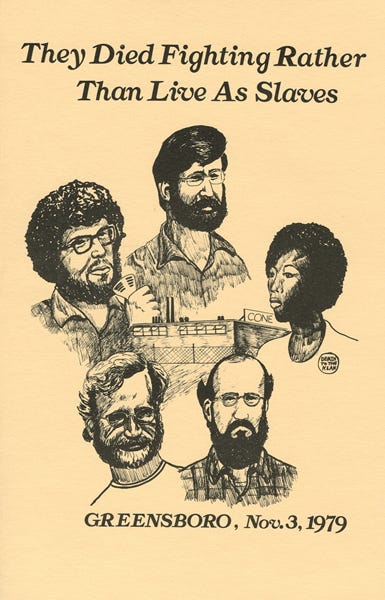
To a city known for civil rights activism with the 1960 Woolworth counter sit-ins by A&T University students, the Greensboro Massacre was a traumatic affront. Over the following year, community outrage, investigations and negative national attention increased tensions.
People were frightened by the unexpected boldness of the Klan and Nazis, unsure of their next moves. Many resented the communist group for endangering residents. And the details of law enforcement indifference or incompetence reinforced old grievances.
For example: the overreaction in the 1969 Greensboro Uprising when the National Guard opened fire in A&T dorms, ending in two deaths and 27 people wounded — nine of them law enforcers. College students had joined those at a Black high school protesting the school officials’ rejection of an elected student leader because he supported the Black Power movement.
After the 1979 massacre, the state charged five Klansmen with murder and one with a lesser crime. In November 1980, the jury acquitted all the defendants, finding that they had acted in self-defense. The verdict generated local protests, as well as shock and dismay across the country.
Just 10 days later, Wonder brought his “Hotter than July” tour to the city, then roiled into an angry gloom. I felt wary that another incident of perceived disrespect, even a small one, could cause an explosion.
The coliseum was packed and when the music started it was clear that people really needed a form of release. It was definitely party time, with many singing and dancing in front of their seats. Stress and anger seeped away with the sweat.
Wonder ending the night with a long rendition of his new song, “Master Blaster (Jammin’):
They want us to join their fighting But our answer today Is to let all our worries Like the breeze through our fingers slip away Peace has come to Zimbabwe Third World’s right on the one Now’s the time for celebration ’Cause we’ve only just begun
Didn’t know that you Would be jammin’ until the break of dawn …
I don’t doubt many people did just that.
For decades, direct and indirect victims of the Greensboro massacre pushed for some semblance of justice:
- In 1980, the city was found liable for the wrongful death of the one protester who was not a member of the CWP. It settled for $351,000.
- A 1984 federal civil rights trial ended in acquittals when the jury decided the extremists’ motivations were political rather than racial.
- In 2004, the community-based Greensboro Truth and Reconciliation Commission found local police were partly responsible for the tragedy.
- In 2015, the city unveiled a marker to memorialize the massacre,
- In 2020, the city officially apologized for not providing adequate police protection.
Now, I am willing to concede that my worries on the night of the concert may have been overblown. But I offered a silent, prayerful thanks to the artist and the music for performing a valuable public service.
Music of any type can move you in various ways. “Summer of Soul” is an education on its role in sustaining Black survival by voicing pain, joy, hope and struggle. It helps enable the perseverance necessary for people to demand recognition and accountability— even when it takes as long as 41 years.