
The Harrying of the North
Over the winter of 1069, William the Conqueror unleashed a brutal wave of violence across northern England. But was this a moment of madness, or a calculated war of terror?
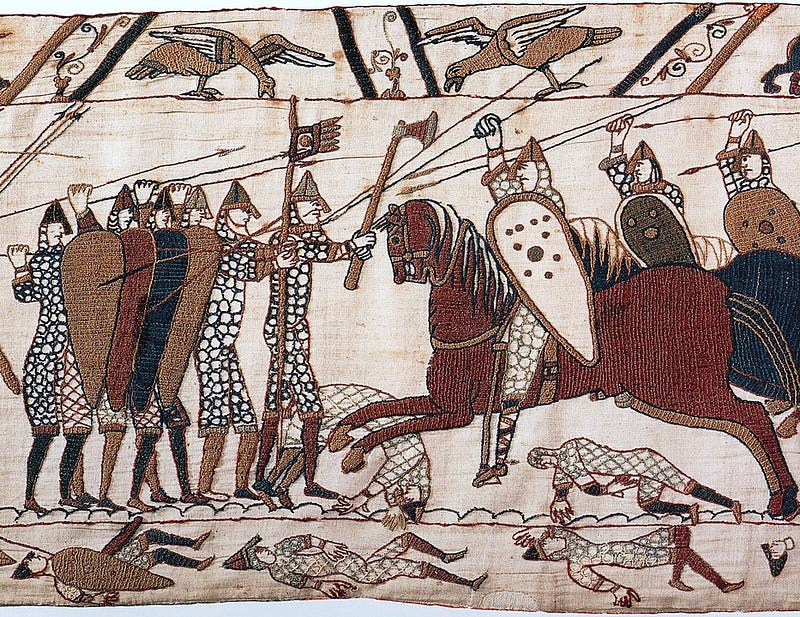
Throughout English history, bloodshed and violence has always remained a constant theme — with civil wars and foreign conquests providing English rulers with the opportunity to exact violent reprisals against their enemies. The Norman conquest of England, which is for many the most famous tale in English history, is no exception to this rule. In 1066, William the Conqueror led his troops across the Channel and defeated Harold Godwinson at the Battle of Hastings, leaving England in the hands of a foreign duke from Normandy.
Although the battle itself has become perhaps the defining moment in English history, much less attention has been paid to the bloodshed that followed the Norman invasion. And one campaign in particular shocked even William’s contemporaries for the sheer brutality inflicted on the English people. In 1069, William undertook what has since been dubbed the Harrying of the North — a violent and bloodthirsty scorched earth campaign that would inflict mass suffering upon the people of northern England.
William, in a fit of unrestrained rage, ordered his troops to lay waste to large parts of Yorkshire and Northumbria in retaliation for an attempted uprising. The brutality would leave entire villages deserted and force locals into the unenviable choice between cannibalism and starvation. The Harrying must have felt like hell on earth for the local population — but to the Normans, it represented just another tool to complete their conquest of the country.
The affair can tell us not only about how the Normans used brute force to control unruly English nobles, but also how William was able to cement his position as the undisputed ruler of England’s northern frontiers. Much has been made about whether or not William acted too rashly in his conquest of northern England, with tales of Norman violence living on for centuries to come. However, the wave of fear unleashed by William has undoubtedly played a major role in the Norman effort to wipe out the rebellious English nobility, and in turn has left behind a lasting scar on northern England.
William’s Conquest
In the aftermath of the Battle of Hastings, as William the Conqueror surveyed the battlefield and contemplated his next move, it was apparent to all that the Normans had now become England’s latest rulers. The conflict, in which a dispute over the English throne had compelled William to lead an invasion force from Normandy, had culminated in the death of England’s last Anglo-Saxon king, Harold Godwinson.
Whilst the Battle of Hasting has today become synonymous with the Norman conquest of England, William’s hold over the country in 1066 was still very much in doubt. Vast swathes of territory, particularly in the north, remained outside of Norman control and showed little respect towards their new master from across the Channel.
Uprisings were frequent, and between 1066 and 1069 William was faced with a number of direct challenges to his authority by restless nobles. Up until 1069, the Normans were able to maintain control of England and consolidate their position, building a series of castles in York, Lincoln, Nottingham and Warwick as a symbolic gesture that they were here to stay. Yet, as the winter air chilled and frost began to settle on the grounds of northern England, 1069 would present William with his greatest challenge to date — and in turn would see a brutal and merciless Norman response.
1069 would bring about a combination of simultaneous uprisings against Norman rule, with William’s ability to maintain control over the country now called into serious question. Earlier in the Summer, a group of nobles had once again risen up in Northumbria and looked to establish their own northern power base. The rebels were led by Edgar Ætheling — a seventeen year old who a few years previously had staked his claim to the throne before submitting to William — alongside an English noble named Gospatric. To make matters worse, the Northumbrian nobles had backup.
A Danish invasion fleet, with as many as 300 ships, had landed in the Humber and formed an alliance with the Northumbrians before attacking the city of York. The Danes were led by the brother of King Swein of Denmark, Asbjorn, and between their raiding party and the Northumbrian rebels William was faced with a formidable enemy. And it only gets worse for the Normans. Additional uprisings, unconnected to those further north, had broken out on the Welsh border and in the south west (Devon and Cornwall). From William’s perspective, it must have seemed as if the whole country had risen up against him all at once.
Tough Times, Tough Measures
William quickly mobilized his troops to tackle the threat head on, leaving his subordinates to deal with the south west. He marched straight towards the Welsh border, bringing a swift end to the uprising and putting the rebels to the sword. With the easy part taken care of, William then turned his attention towards a much greater threat — the Danes. The Danish fighting force, who by this point had retreated to their ships, refused to give battle and avoided direct confrontation with the Normans.
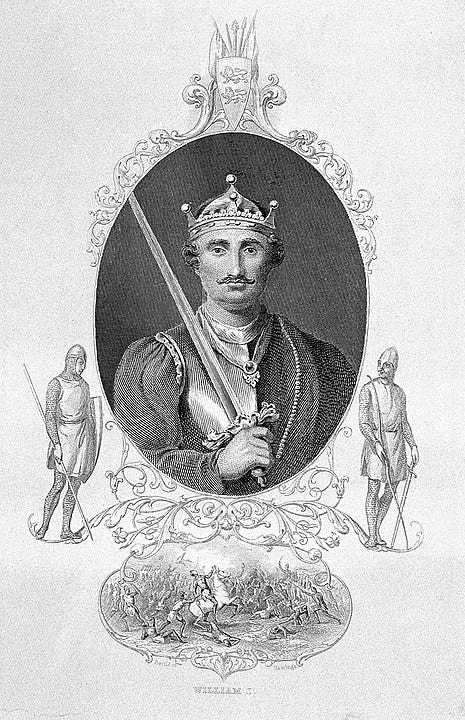
William, who was keenly aware that time was of the essence, opted on this occasion to use an altogether different tactic. The Danes were bribed with large quantities of gold and silver, allowing William to purchase their loyalty and avoid a long and drawn out conflict. With the Danes safely back on their ships, the Northumbrians were now the sole challenger to William’s authority — and on this occasion, he was not in the mood to bargain.
Shortly after Christmas Day, William divided his troops into raiding parties and sent them out to wreak havoc on the Yorkshire countryside. Norman forces would plunder without mercy — burning down villages, slaughtering livestock and unleashing a wave of violence on the local population. The end result was a spree of almost total destruction. With their livelihoods destroyed, famine set in and the locals were forced into cannibalism to survive. In all, thousands would perish in the initial slaughter itself, with the survivors facing a slow and agonizing death in the weeks and months to come.
Orderic Vitalis, a chronicler and monk writing in the 12th century, recalled with horror that “When I think of helpless children, young men in the prime of life, and hoary grey-beards all perishing of hunger, I am so moved to pity that I would rather lament the grief and sufferings of the wretched people than make a vain attempt to flatter the perpetrator of such infamy.” The destruction was so rigorous that in the Domesday book of 1086, compiled almost 20 years after the Harrying, over one-third of Yorkshire land was still described as being in a state of ‘vasta’ — waste.
The actions taken by William were certainly harsh, and have been likened by some to a modern day war crime. However, the violence and cruelty displayed by William was undoubtedly effective. The Harrying had two main objectives in mind: firstly to defeat any remaining Northumbrian rebels, and secondly to leave any future rebels with no resources for a new northern rebellion. When judged by this criteria, the Harrying would prove to be an unmitigated success. William would never again face a rebellion in the north, with his brutal tactics ultimately preventing any further challenges to his authority.
To Orderic Vitalis, William had “made no effort to refrain his fury” in his pursuit of the rebels, and he had certainly spared no expense to protect his own position and ensure Norman control over England. William’s response was both heavy handed and practical, combining sound military principals with a penchant for violence and destruction. The Harrying may have been cruel, bloodthirsty and short tempered, but it was also successful — and ultimately to William, this was all that mattered.


