
The Harmful and Beneficial Effects Cannabis Has on Your Body
Weighing the pros and cons of smoking cannabis when it comes to your brain and lungs

Weed has become incredibly mainstream in the past decade or so. And this is just the beginning as more and more countries are easing their restrictions on its use and distribution. Take Germany, for example — although anything marijuana-related had been put down in the past during Merkel’s party rule, the new government has other plans. A regional cadre of the Free Democrats in Germany, Lars Lindemann, recently wrote on Twitter, that “The legalization of cannabis, long blocked by the Union, allows us to have a regulated and taxed dispensary, controllable quality, and effective youth protection through education.”
Although it is legal to consume cannabis in Germany, it still is illegal to buy it — a law that people had been protesting against for years. The new law would permit the selling of marijuana only if it is being done in licensed shops. In the Netherlands, on the other hand, weed is decriminalized, which means that every person is permitted to be carrying up to 5g of the drug, without being legally persecuted. In Greece, in 2017, a joint ministerial decision changed the classification of marijuana to Table B drug, from Table A drug. In 2018, the cultivation and processing of medical cannabis with up to 0.2% THC were approved by law. Subsequently, in 2021, a new bill legalized the cultivation and sale of medical cannabis that has more than 0.2% THC. And the list goes on.
Apparently, the wide public and government are starting to see cannabis as something that can be used to the people’s benefit, rather than being considered as something harmful and illegal to use. Let’s not forget the impact a possible legalization might have on a country’s economy. All in all, it seems that seeing all the change that’s been happening in the world of cannabis, one is left with the impression that the drug has obviously more benefits than negatives…why legalize its use and production then?
Well, scientists have still not reached a consensus on whether cannabis is overall good or bad for you. Still, there is a lot of research that might shed some light on how marijuana affects the different organs and processes in your body in general. I have compiled some of the research in this article:
Brain Cells and IQ
This is probably the most discussed topic amongst friends that consume cannabis: whether their IQ has dropped due to their consumption of the drug. “Have you become dumber and more prone to forget things?” — this question, in all likelihood, has been asked from numerous marijuana users. Interestingly, the answers I’ve heard throughout the years have always been mixed. While I was in the USA, I had the fortune to speak to at least 20 chronic cannabis users (smoking at least one joint/cigarette a day for more than a year) about their experience with the plant — I was quite surprised by the outcome.
Half of them were quite sure that their intelligence or memory hadn’t been affected after months and years of daily consumption. The other half, on the other hand, did share their concerns that they might have become slightly forgetful and absent-minded, however, without actually becoming “dumber” or losing their edge. Now, it is important to note here that these are just self-observations by the users themselves, and often, people that are close to the user report totally different observations. This is probably due to the fact that such changes in the brain are slow but constant, and it’s hard for the affected person to be conscious enough to detect such subtle changes over a certain period of time without any deep self-reflection.
How about scientific evidence? Some time ago I wrote a whole article specifically on how cannabis affects one’s brain cells. While researching the topic, I came across a renowned study from the last decade, led by Madeline H. Meier of Duke University, which involved the participation of 1037 volunteers from New Zealand that were followed from birth (1972–73), up until they became 38 years of age. During that period, cannabis use was ascertained in interviews at ages 18, 21, 26, 32, and 38. Moreover, neuropsychological testing was conducted when the participants were at the age of 13 (before introduction to cannabis use) and again when they were at the age of 38 (after a period of long-term cannabis use).
This longitudinal study found out the following:
- Persistent cannabis users show neuropsychological decline from childhood to mid-life;
- Individuals, who started using weed on a daily basis in their adult years, didn’t lose any IQ points;
- Stopping the usage of marijuana during their mid-life, individuals didn’t regain any lost IQ points;
- Individuals, who started smoking cannabis daily during their adolescence and then continued the same practice as adults, had lost an average of 6 to 8 points of IQ, by their mid-life;
- Persistent cannabis use over 20 y was associated with neuropsychological decline, and greater decline was evident for more persistent users.
Although the results of the study speak for themselves, it’s also important to the limitations, such as the direct association between persistent cannabis use and neuropsychological functioning. Users that reported neuropsychological impermanent can’t be directly connected to their years of persistent cannabis use. An unknown, “third” variable might be still out there somewhere. Unreporting and misreporting of cannabis use might also have had an effect on the study. Lastly, further investigation is needed “to define the parameters of use sufficient to produce neuropsychological impairment, such as the quantity, frequency, and age-of-onset of use.” Although this particular study found out that persistent marijuana use before 18-years-of-age predicts future neuropsychological impairment, but other studies have concluded that such effects are more common for younger users.
The former one concluded that:
“Increasing efforts should be directed toward delaying the onset of cannabis use by young people, particularly given the recent trend of younger ages of cannabis-use initiation in the United States and evidence that fewer adolescents believe that cannabis use is associated with serious health risk.”

In the following year, a short counter-study was conducted, which was led by Michael Daly of the Behavioral Science Center at the University of Stirling in the UK. Daly argued that he had found this “third” variable that was missing from Madeline H Meier and her colleagues’ research — the stable individual differences in personality traits, which could possibly cause both drug use and changes in intelligence in the individuals examined.
For example, low conscientiousness, which might lead to substance dependence and poor performance on neuropsychological tests, could explain the negative relationship between cannabis use and neuropsychological performance. Also, high levels of openness to experience “could lead people to seek out activities that promote cognitive functioning and could also condition the initiation of cannabis use.”
Another study, conducted by Patrizia Campolongo, a professor of Physiology and Pharmacology at the Sapienza University of Rome, and her colleagues, proved that perinatal exposure to doses of THC given to rat dams, from gestational day 15 to postnatal day 9, “alters cortical gene expression and neurotransmission, leading to enduring cognitive dysfunctions and unrepairable damages in rat offspring.”
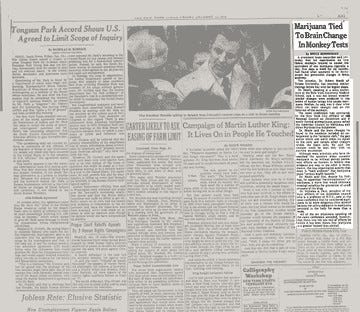
Way back in 1978, a prominent brain researcher argued that he had trained two rhesus monkeys to smoke “the equivalent of one marijuana cigarette a day, five days a week for six months” and found out that there were microscopic yet permanent changes in the monkeys’ brain anatomy. At around the same time another researcher, Dr. Robert Heath of Tulane University, argued that such changes might not necessarily occur in a human’s brain and also that it wasn’t clear what actual effects cannabis on the behavior of monkeys. Although this information is more than 30 years old, it still might give some additional sense of perspective.
Does It Really Matter at What Age One Initiates Persistent Cannabis Use?
Relying on the masses of available research today on the topic of early adolescents’ brain exposure to cannabinoids and subsequent neuropsychological impairments in later life, yes, age does indeed seem to matter more than people would want to. An adolescent brain is still in rapid neurological development and is thus extremely susceptible to any sort of artificial and forced alterations.
How About Memory, Both Long- and Short-Term?
Throughout the years many researchers have tried to investigate the connection between smoking cannabis and memory loss. However, this relationship doesn’t only stem from a simple direct use, rather it’s probably between each individual’s memory function and direct cannabis use. Still, there are some studies that try to shed some light on the complicated topic.
An article from Tabea Schoeler and Sagnik Bhattacharyya, both of the Department of Psychosis Studies at the King’s College London, have argued that the adverse effects on memory would likely to depend on the type of cannabis plant used, that is, the more THC it contains (as opposed to CBD), the more stronger its effect on memory would be. It is also important to note that “Whether those people with a history of frequent cannabis use may develop tolerance to the acute impairments caused by THC is not entirely clear.”
A research paper from 2020 concludes that there is increasing evidence that marijuana consumption adversely affects basal cognitive functions, such as episodic memory, attentional control, and motor inhibition.
Another paper from 2019 presented a systematic review of studies that had been published from 2010 to 2019. A meta-analysis was then performed on 13 selected studies and found out that, through a cross-sectional association, that there were loose linkages between neurocognitive impairments and chronic marijuana use in attention, short-term memory, and long term-memory. Thus it can be concluded that, unfortunately, even though there is increasing interest towards the connection between memory and cannabis use, the current results still remain unclear and equivocal.
Lungs
Apart from the brain, the lungs are probably the organ that’s received the most attention from the cannabis scientist community. People often talk about the drug’s effects on one’s brain — short-term memory, absent-mindedness, intelligence or lack of such, and so on — however, it seems that the discussion on whether the inhaled smoke could potentially harm your lungs, is hardly being recognized.
“It’s bad for your lungs, but not as bad as cigarettes. They are the ones that cause lung diseases, as long as you don’t put tobacco in a joint, you’ll be fine” is the common argument. Cannabis’ effects on the lungs seem to be constantly overlooked, as people base their views not on actual findings, but on weed as compared to tobacco — and that would be a wrong way of evaluating a potentially harmful substance.
In a previous article of mine in regards to the topic, I gave account with a good friend of mine, Matt, who lives in New York City and works as a server in a restaurant. He swims a lot, jogs a lot, and smokes a lot of cannabis. Last year he would come up with the astounding idea of smoking a joint right before a half a marathon. He had made it in just below 3 hours, which, by the way, was a record of his.
“It helped me stay in the zone for a longer period. I was way more concentrated on the running and felt as if I had more breath. I tried the same thing with swimming, but it didn’t work. I wouldn’t get high if I were a lifeguard.”
But why did he feel that cannabis increased his lung capacity? And exactly weed affects the lungs? Science may have some answers.
Back in 2012, a Harvard Health Publishing article was boldly named “Pot smokers can maybe breathe a little easier.” There, the authors argued that moderate consumption of marijuana (one joint a day for as long as seven years) doesn’t adversely affect lung function, as per a study that had been published in The Journal of the American Medical Association (JAMA). This particular study went even further and argued that smoking even acts as a “chest/lungs workout,” which ultimately aids lungs function.
Another article that followed and systematically reviewed 22 studies, argued that there is low-strength evidence that suggests that smoking cannabis is directly associated with wheezing, cough, and sputum production, and also that there is insufficient evidence to conclude that there is an association between marijuana use and obstructive lung disease and pulmonary function.
Another heated topic of debate is whether cannabis is worse for you than tobacco. Some chronic marijuana users usually defend their smoking habit by saying that “at least it’s not as bad as cigarettes, right?” Well, actually both contain many of the same chemicals. However, they differ in the way they are being smoked —smoking cannabis entails larger puff capacity, larger inhaled capacity, longer time holding of breath, and increased concentration of carboxyhemoglobin.
According to a study by John Henry, professor at the Imperial College School of Medicine in London, case-control studies are challenging to conduct as cannabis cigarettes’ sizes are not standardized as the normal tobacco ones, and also because people who smoke marijuana usually smoke tobacco, as well. However, there are some indications that cannabis might actually cause similar ill effects as tobacco, “with many of them appearing at a younger age.”
Cannabis use can also cause chronic bronchitis and damages to the cell linings of the large airways, which is the primary cause for cough, wheeze, and phlegm production, according to the American Lung Association. Chronic users are also linked to cases of air pockets in between both lungs and between the lungs and the chest wall. However, the amount of marijuana inhaled that leads to such problems is not specified.
The Bottom Line
From the scientific papers I’ve read on the topic of whether cannabis is as harmful as tobacco, the findings and the general message of these papers depend predominantly on the researchers’ views on cannabis, making many of these articles biased to a certain extend. Unfortunately, I’ve noticed a similar pattern in mostly all of the papers related to cannabis and its effects on the body and mind.
Most of the information on the matter does raise further curiosity on the subject, however, none of them give any concrete and final evidence of any adverse or beneficial effects on the user. Most of findings can’t stand as facts, as there is a need for further trials and tests. Unfortunately, not much is currently known about the actual effects smoking cannabis has on its users. Nevertheless, with its consumption becoming mainstream and as it is being accepted more broadly as a potential cure for different diseases, scientific interest is bound to spike up and bring some clarity.
Thank you for taking some time to read my article! If you wish to read more written by me, check my Medium page:
If you are further interested in psychedelics and mental-health, I recently wrote about whether smoking can damage your brain cells, and how psychedelics could become the “new weed.”


