
‘The Hare and The Tortoise’ Is This a Simple Kids’ Story About Speed?
Or is there an allegorical thread, that speaks more of how we humans live our lives?
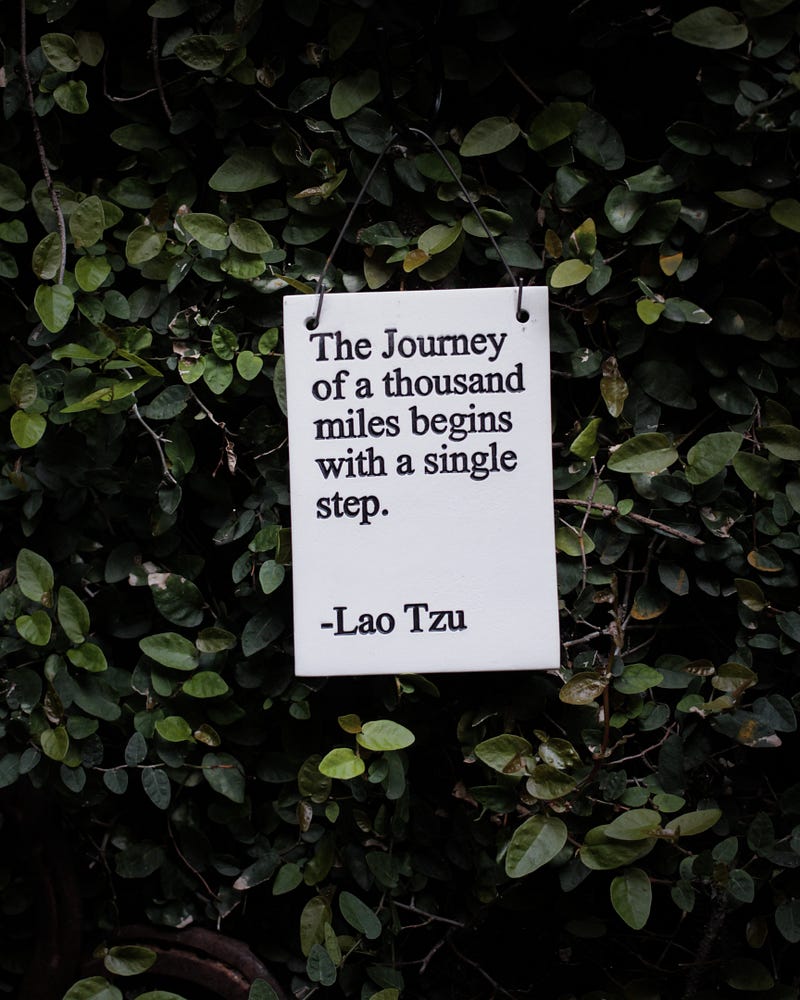
In Aesop’s tale about the Hare and the Tortoise, the tortoise easily beat the hare. Was it because he just kept going, or was there an intellectual game going on, one that the hare had not thought about?
We know that the tortoise is slow, and yet, slow but steadfast, and with intent, he was the clear winner.
Now, if I were to ask you which animal in the world is the fastest, it’s probable you’d come up with the cheetah, the fastest land animal in the world.
It’s what we know.
It’s a big cat that takes three seconds to go from the speed of nought, to the heady speed of 68 miles per hour, a big cat that can turn in mid-air while sprinting, a seriously impressive cat.
Yet this cat is not without its limitations.
Same applies to the hare!
If I were to ask you to determine which is faster, a hare or a tortoise, you would all agree that the hare wins hands down.
We base that conclusion on the impressive short-term bound of the hare, from which it then has to recover.
It can’t just keep going.
No machine can.
Which makes us question, is all not as we imagined?
This study…
Adrian Bejan, professor of Mechanical Engineering at Duke University in Durham, North Carolina, conducted a study which was subsequently published in the Scientific Reports journal.
His research came up with a surprising result on animal speeds.
When the movements of specific animals were averaged out over a lifetime, it was discovered that the fastest animals are often the slowest.
Think about that for a moment!
Maybe Aesop was onto something when he wrote his fable.
And maybe he didn’t write it just for children, entertaining as it is!
Teachers who read this story to young children often end up accepting this analogy:
Slow and steady wins the race.
For five or six year old children, that is a reasonable deduction.
But it runs deeper than that.
The story is not as simple as we first imagine.
The tale is really an allegory, a simple story on the surface, with a deeper meaning running beneath.
The veiled meaning is one that touches on us humans, and our behaviors. Those behaviors can ultimately translate into success, or failure.
Let’s think about it this way.
Many hugely-talented people are often non-achievers, wasting their lives in idleness.
I’m sure you know lots of them!
Others less-gifted, work to capacity in their jobs, slowly and methodically, and they are often the people who produce the best results.
They are the tortoises of this world, who achieve success through diligence, perseverance, hard work, and focus.
They win in the race of life.
They are high achievers in business.
Like the tortoise, they are task-oriented, taking pride in achievement.
Read this fable as an adult and the message is instantly clear.
We relate the tortoise and hare to real life people.
The ‘race’ is not a race at all.
Read allegorically, it is actually a moral about life and the choices we make.
The slow and steady, those who attend to detail, the ethical and upstanding, will, at the end of the day, far surpass the quick and mercurial, the ones with a close-enough-is-good-enough approach.
The story highlights principled behavior.
Hare truly is a fickle character. He knows he has talent. Also, he stands apart from the tortoise in his physical makeup.
But, big mistake, he underestimates. He’s arrogant and assuming. He knows his speed. People look up to him.
Consequently, there is no need for him to put in the hard yards, so he slackens off knowing all is well in the house of cards.
He does what all conceited people do. He takes challenge in his stride, lets his guard down, and loses.
But the tortoise…
Those who identify with the tortoise, the methodical and thorough, the highly-ethical, care not for the capricious.
They keep their end goals in sight, and work diligently towards the outcome.
This allegory is a salutary life lesson.
It doesn’t matter who does what job.
It matters not what your station in life is.
What does matter however, is that the job you have been commissioned to do, is done well and to the best of your ability.
Principled action is the quality that will see you being valued, and selected over others, ultimately achieving success.
“Opportunity is missed by most people because it is dressed in overalls and looks like work.
I’ve added a little allegorical poem below…just because!
It’s called: ‘Winner Takes All’
Are you a ‘slow runner’?
Does running feel bad?
Do your friends always beat you?
Do they laugh when you’re sad?
Do you hate all those races
That you HAVE to be in?
The ones that are long,
The ones you can’t win?
Well cheer up my friend
Because soon you will see
That winning is easy
As easy can be!
It’s not about having
Tall legs that are lean,
Like the hare in the tale
The one who was mean,
The one who was smug
And who knew he could beat
Turtle, his friend,
(He was mad with conceit!)
But Turtle, whose legs
Were short and not thin
Was strong and determined
And knew he would win.
He knew that the hare,
Would be out for a lark,
So the comp he thought merely
A walk in the park.
Just imagine the laugh turtle made
When he saw,
His friend on the kerbside
With a very slack jaw
Which from there emitted
Some snoring impressive,
The noise of which
Was truly excessive,
A noise that allowed
Clever Turtle to creep
Silently by,
With Hare still asleep.
Imagine the sorrow,
Imagine the shame,
When one groggy hare
Awoke from his game,
And found that his race
Was over and done,
And that Turtle
The slow one.
Had actually won!