
The Hard, Cold Wisdom of Life Below Zero
The residents of Port Protection, Alaska, are living a fuller life than you.
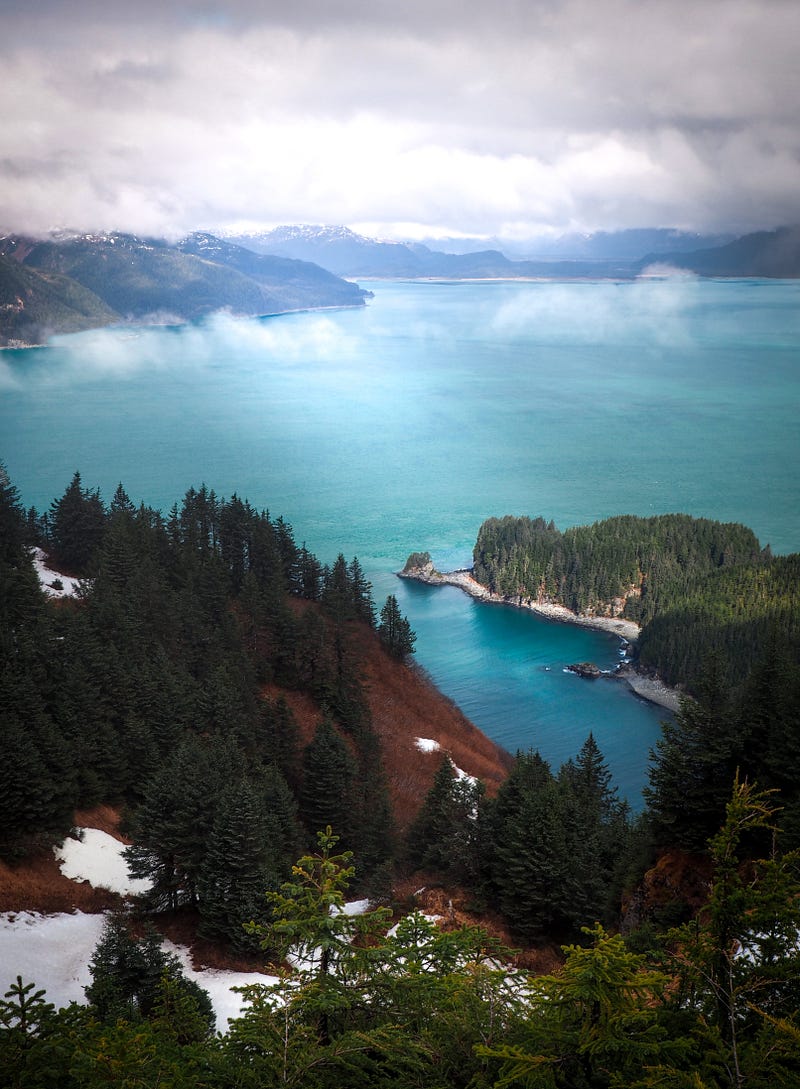
Life Below Zero, Port Protection is compelling television. Stunning, deep green forests. Beautiful, majestic mountains jutting from the ocean. Silvery-gray clouds. Wet snow. Barnacled boats. Orca whales surfacing. Salmon running. Wolves hunting. Bears staring: It all impacts the viewer. And then the weathered, resolute souls who reside there. Bodies broken to various degrees, but with spirits strong, these isolated Alaska residents live off the grid. Old souls, they are: Curly is a logger. Sam is a fisherman. Litzi lost her arm to cancer as a teenager, and then both her sons died just in the last few years. Gary is a seventy-five year old trapper. They are living their lives fully — active and engaged — awakened souls who live off the land. Old timers, they are. It is not about money. It is about the land and the sea.
The planet has taught them lesson after lesson, and that is reflected in everything they do. Isolated far from cities, they are not college-educated folk. But they have learned from the land. And they have learned from the sea. And they have learned from loss. They are better than you and I. And they are more alive than you and I.
Action
Alaska is no country for old men (or old women). Keeping their eyes and ears peeled for bears, wolves, and moose, the residents of Port Protection are simply trying not to die. They hunt, they fish, they trap, they saw, they chop, they build, they grow. You are what you do. These Alaskans are immersed in the environment; this is not a vacation. Where there is a will, there is a way. And when the will is to stay alive, the way is action. These people are doers. They are not sitting around coffee houses discussing philosophy. These people live in the concrete, not the abstract. And a real tradecraft develops from living like this: welding, trapping, gardening, carpentry. It is the type of craftsmanship that only comes from years of experience. What they learn can not be learned in a book. And it leads to both character and pride — an integrity defined by Alaska.
Thought
The people of Port Protection solve problems. They don’t have any other choice. Solve the problem, or be cold. Solve the problem, or be hungry. Solve the problem, or die. It leads to a hands-on, creative type of problem solving. They do and they think. They have a plan A, plan B, and a plan C. Pure logic is required — to stay alive. Again, where there is a will, there is a way. And the way is to think rationally and solve problem after problem. They don’t have “paralysis by analysis” in Alaska. Much is black and white when living off the land. I am cold; I need wood for fire. I am hungry; it is time to fish or hunt. There is a clarity in their thought, a clarity that comes from decisive analysis. With no doctors, police, firemen, mechanics, or carpenters nearby, the residents are on their own. A mistake can be fatal. This tends to sharpen one’s thinking. One can’t be thinking in a muddled or nebulous way when an error can be this costly.
Mike Rose in his essay “Blue Collar Brilliance” discusses the unfortunate association of intelligence with formal education: so many people wrongly assume the educated are more intelligent. Rose writes, “To acknowledge a broader range of intellectual capacity is to take seriously the concept of cognitive variability, to appreciate in all the Rosies and Joes the thought that drives their accomplishments and defines who they are.”
This speaks to the wisdom and logic of blue-collar people. “Cognitive variability” involves creativity and thinking outside of the box. Alaskans have that unique, innovative way of thinking: adapting and overcoming is a way of life. Critical thinking and analysis is required. And divergent thinking is often needed. “A little redneck ingenuity,” says Curly in one episode. There are different types of intelligence. Adapting and thinking one’s way out of a problem requires intelligence. Sheer brainpower is needed to adapt and survive in the ever-changing landscape of Alaska.
Speech
These old souls have a way of talking that comes from experience and living off the land. There is a hint of earthy poetry in their language — the poetry of a Charles Bukowski or a Jack Kerouac. Wisdom borne of experience is conveyed in a different way than wisdom borne in books and education. These people were shaped and molded by their environment, and their words reflect this. Their words carry weight. It is a confidence borne of experience that the book-learned don’t have. It is how they talk. You speak differently when you are a doer and not just a reader. We are shaped by our experiences and shaped by a connection to place. These Alaskan residents have that connection. They are rooted — rooted in place, and rooted in soul. There is passion in their voices. They know they are creating and doing. They know they are lone wolfs and are proud of it. “You got to be a little crazy to be out here alone,” says Mary.
Educated people don’t like to admit it, but deep down, in their heart of hearts, they think they are better than the uneducated masses. They think they are better than a fisherman or a trapper. They think they are more intelligent, wiser, sharper, more rational. They think their advanced degrees prove it. It is an insidious and subtle belief that many have internalized: book smarts are better than street smarts. I am more educated than you because I am more intelligent than you. I am more educated than you, and I am better than you. The educated belong to a club — college graduates, academics, graduate students, intellectuals, PhDs, and the like. We sip our lattes and read Proust and Hemingway. We think deep thoughts. We think we are “Renaissance men.” Articulate and cerebral, we ruminate over the mysteries of life and literature. Even though we will not admit it, we think we are somehow, someway, better than the blue-collar working man, the rural dweller, the farmer, the rancher, the hunter, the lumberjack, the fisherman, the trapper.
Well, we are wrong. We are absolutely wrong. The rational, clever people— the primal and free souls of Port Protection, Alaska — prove that we are wrong.