
NOVEL
The Love We Had
Chapter 8 An unskilled factory worker
Writing challenge
Write and publish a book review of the novel The Love We Had, based on freely chosen chapters published on medium.com.
The book review can be a comment of 100 to 200 words, or a longer article, and should be published on medium.com.
Everyone who publishes a book review will receive a link with free access to the e-book when the e-book is published on KDP. Please tag me Øivind H. Solheim at the end of the review to get free access to the e-book.
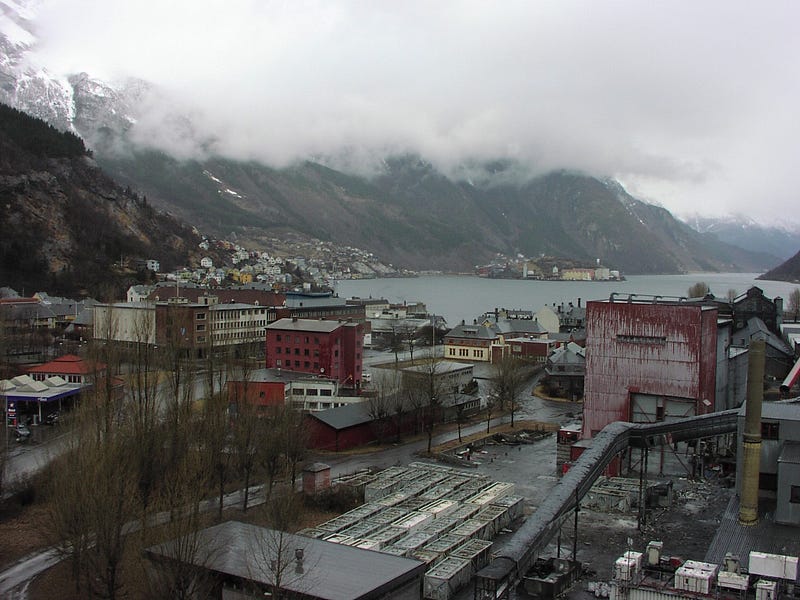
Chapter 8 An unskilled factory worker
I sometimes think I have not done in my life what I could have done, and frankly what I should have done. I could clearly have gotten more out of it than becoming an unskilled factory worker.
It was just that when I was a boy and grew up there in the north, there was mostly one way for people like me, and it was out to sea. It was very nice to earn money by pulling up cod, and we became adults very quickly.
I have in retrospect thought it was well and good, that. But there were actually a good number of things I missed because I did not go on to upper secondary education after primary schools, such as many of my childhood friends, for instance like Knuten and Andreas, who now have good positions in the municipality back home. It was possible to go to school and get an education and become something other than an unskilled factory worker.
This is perhaps one of the things I regret most. — Oh yes, I know, I should have stuck my finger in the ground and felt for. What have I done right, what is not so good?
And is it too late? Has the race been run? I can also think that it is never too late. I can invest in the education I did not take, or another education. Maybe I can succeed now. Maybe I can get on with my life. It’s not too late yet, I can get on with it and fix what is not the way I wanted it. Maybe I can get the education I was thinking of. An education that allows me to have a job, a profession where I can straighten my back and look myself in the eye in the mirror and say:
«You did it! You have grasped the important things in life. You are a free human being.»
What kind of freedom does it give to admit that I — a human being — am free?
These are questions I ask myself these days. It’s very special to live this. It is challenging to relate to a different person, with whom I am still married, at the same time as I have fallen in love with Eira. But it may also expand my consciousness, give me a broader perspective.
I am conscious that doing what I do now can mean new, hopeful happiness in life, or great misfortune. Having a relationship with one other person than the one you’re married to can be a desperate act by someone who knows that he has begun to die. This is how I feel it sometimes. I was dying in that relationship. It was not a healthy place to stay isolated if I wish to stay mentally and emotionally healthy.
Does this make me freer, is it easier now for me to think that I am free? And vice versa: Does it make me more unfree if I think that I am not free? Free compared to what? — In relation to rules and conventions, in relation to morality. Am I free in the relationship with the closest around me?
What does it mean when I say that I feel free compared to those closest to me? Am I free when I dare to act selfishly or do the selfish actions make me unfree? Is it that I am free when I act in accordance with my ethical convictions and what is ethically sound or acceptable to those affected of my actions?
Can my actions at the same time be both ethically defensible and ethically unjustifiable? If so, how is it related?
A note from the author:
The novel “The Love We Had” is made up of three parts, where the three main characters tell how they experienced what happened.
Part 1 The Longest Night -chapters 1–3, told by Lars Part 2 The Light Inside -chapters 4–17, told by Aslak Part 3 Save Our Secret Love -told by Eira
If you liked reading, you can find more here.
Links to earlier and later chapters:
Part 1
Chapter 1 I Love It When Things Are Normal
Chapter 2 I Came Home as Usual
Chapter 3 I Believe in What I See
Part 2
Chapter 5 All we have is — ourselves!
Chapter 6 Coming together — escaping loneliness


