
“The Handmaid’s Tale”’s Stunning Return to Form in Season Four

Hulu’s adaptation of Margaret Atwood’s visionary 1985 novel The Handmaid’s Tale wrapped its fourth season on Wednesday. Some once-adoring critics and viewers gave up on the show due to frustrations with certain creative decisions in the show’s second and third seasons, but they missed out on a fourth season that ambitiously advances virtually every plot thread, delves deep into the complicated effects of trauma, and expands the universe of the series in fascinating ways.
Why I Never Gave up on The Handmaid’s Tale
Most people give up on television series much faster than me. And I understand why. In this era when so many high quality series — past and present — are readily accessible due to streaming why continue to watch a show that no longer sparks joy or, perhaps, even triggers routine disappointment and frustration?
There are many reasons I tend to stick with shows through rough patches. One is the fact that I am by nature a completist. Leaving things unfinished, such as work projects or hobbies, gnaws at me. I don’t know why this trait extends to the media I consume, but I’ve learned to accept it as an idiosyncrasy. Another reason is that I am fascinated by the art of the series finale and am always intrigued by how long-running show’s wrap up their legacies, for better or worse (click here for my article about the challenges of making a great series finale). But the major reason is that I hold out hope that a show will get back on the right course and return to greatness — or, at least, very good-ness.
There have been many occasions in which my patience and persistence have paid off. If I gave up on Friends during its steep decline in quality in Season Seven in which the plot meandered and nonsensical guest stars were shoe-horned in, I would have missed it’s return to glory for its Emmy-winning eighth season. If I gave up on Homeland during the clunky third season that spectacularly struggled to figure out where to take the plot and how to wrap up Nicholas Brody’s plot arc, I would have missed the brilliant soft reboot that followed and led the show to be riveting for several more seasons. Of course, there have also been occasions when I stuck it out to the end and it didn’t pay off, like Game of Thrones, Silicon Valley, and Weeds.
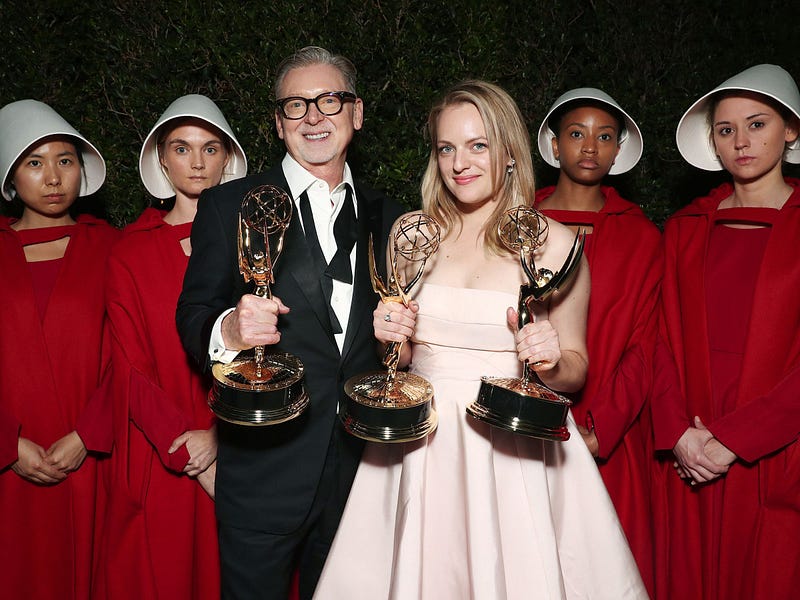
Three years ago, I attended the premiere of The Handmaid’s Tale’s second season at the famed Chinese Theater on Hollywood Boulevard. The first season was unfathomably brilliant and became a pop culture sensation (more on that below), so enthusiasm for the second season was astronomical. Creator Bruce Miller appeared with the ensemble for an introduction and then they screened the electrifying season premiere. I chronicled the event and reviewed the premiere in one of the first articles I wrote (click here to read it). But much has changed regarding the series in the intervening years and there were a couple of times when I wondered if it was worth me sticking it out to see if things improved. After finishing the show’s truly brilliant fourth season on Wednesday, I can say with absolute confidence that I am immensely glad that I did.
A Brief Overview of the First Three Seasons of The Handmaid’s Tale
Author’s Note: The remainder of this article contains major spoilers about the first four seasons of The Handmaid’s Tale. If you do not wish to have major plot points divulged from the series, read no further.
Season One (2017)
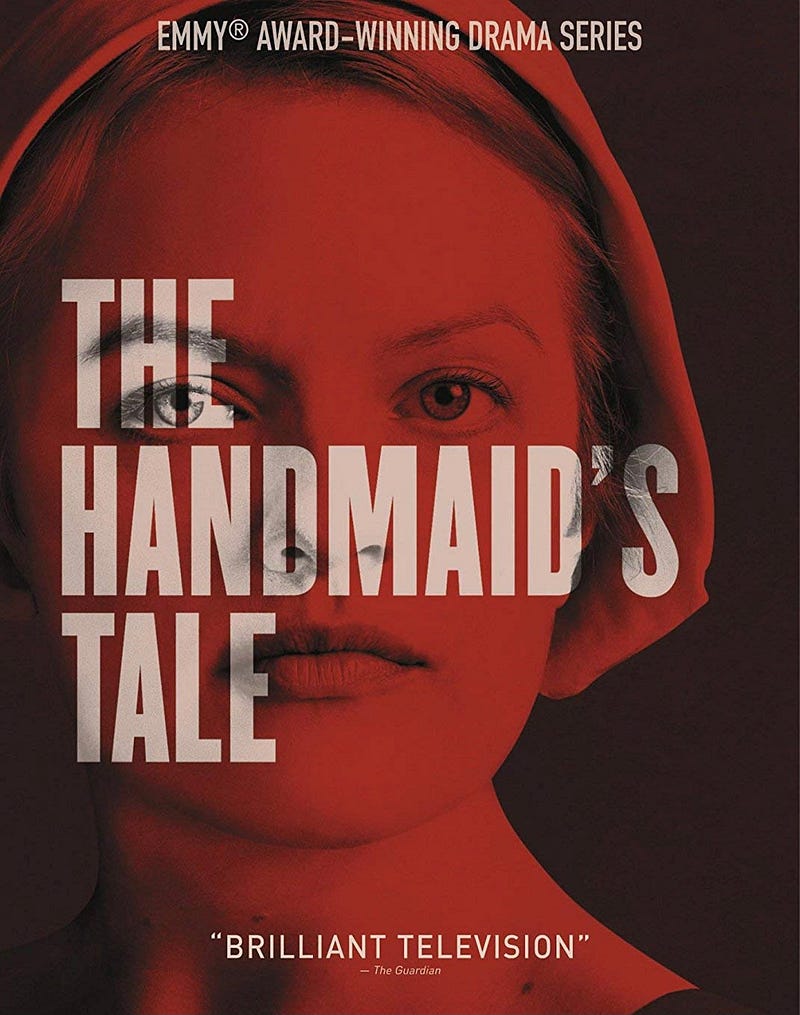
After a few false starts, streaming service Hulu roared into the original series game in April 2017 with The Handmaid’s Tale, an adaptation of Margaret Atwood’s 1985 feminist dystopian novel. The series was one of the season’s most buzzed-about debuts of the 2016–2017 season, yielded near unanimous critical acclaim, and eventually swept the 2017 Emmys, winning Outstanding Drama Series (the first streaming series to do so), three acting awards (for Elisabeth Moss, Ann Dowd, and Alexis Bledel) and trophies for its writing and directing. In addition to being a critical darling, it also became a cultural phenomenon largely due to the fact that it burst onto the scene at the time the #MeToo movement was gaining steam and the Trump administration was installed and began fueling misogyny at every level.
The first season introduced us to June Osborne, played by Mad Men star Elisabeth Moss. Through her characters eyes we saw the horrors of Gilead, a totalitarian Christian regime established after a gruesome civil war divided the United States. As one of the few fertile women left, she was enslaved as a handmaid and forced to submit to rape on a routine basis with the goal of providing a high-ranking Commander and his wife with a child.
In the home, she formed a working relationship with her Commander (Joseph Fiennes), a friendship with his chauffer Nick (Minghella), and garnered the rage of the Commander’s wife (Yvonne Strahovski). Outside the home, she developed a kinship with her partner Emily/Ofglen (Alexis Bledel) and was overseen by Aunt Lydia (Ann Dowd), who kept the handmaid’s in line and guides them toward fulfilling their duties. Through terrifying flashbacks, we learned of June’s prior life with her husband Luke (O.T. Fagbenle), daughter Hannah, and best friend Moira (Samira Wiley), all of whom she was separated from when the new regime took over. These scenes provided a jarring contrast to those in Gilead and provide much-needed context for the political realities and personal relationships that dominate the action.
The decision to make The Handmaid’s Tale an ongoing dramatic series (as opposed to a limited series) was an intriguing — and somewhat controversial — one. The first season adapted the entirety of Atwood’s novel and did so profoundly well. It featured astonishing acting and production values on par with prestigious big screen films while exploring urgent and painful questions related to society, politics, religion, gender, and violence. How could the writers possibly continue Atwood’s fully realized vision in a way that was simultaneously intriguing, surprising, and faithful to its source? And, more broadly, how could a first season so close to perfection be replicated? Many were dubious and, as such, critics and fans alike approached the second season with caution.
Season Two (2018)
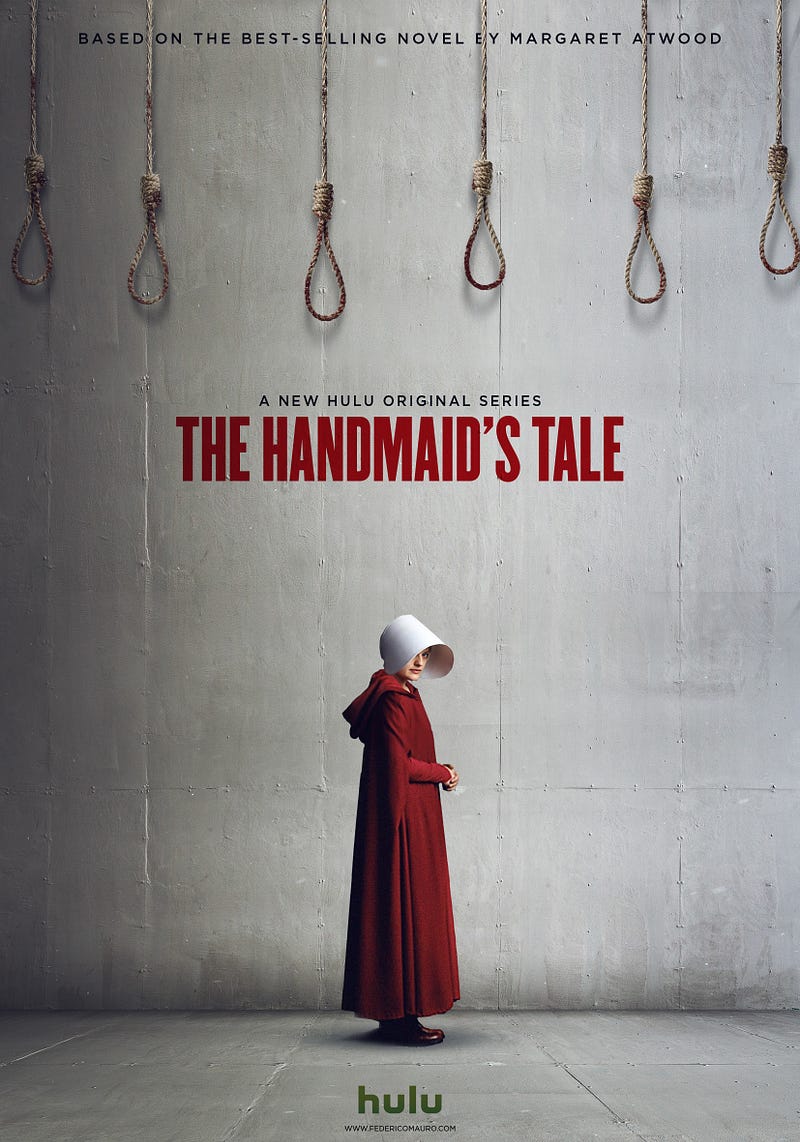
The second season began with a wrenching episode in which June dealt with the consequences of rebelling against Aunt Lydia in the prior season finale and subsequently found (short-lived) freedom from Gilead. However, it quickly became uneven and problematic. The chief problem was June’s plot arc, which found her repeatedly attempting to escape only to be captured and tortured. It was not a particularly compelling arc and it was often a very frustrating one. Of course, Elisabeth Moss was utterly superb throughout, with countless brilliant scenes that show off an even greater range of material than what was provided to her in Season One. Highlights of her second season arc include seeing her relationship with her mother (Cherry Jones, who won an Emmy for her guest appearance) and a riveting episode where she hides out in the abandoned Boston Globe building.
Thankfully, the second season went beyond June and delve deeply into the rich supporting characters. The most impressive was the exploration of Serena Waterford. In the first season, she was a compelling force, but mostly a one-dimensional villain. In the second season, she became the show’s most nuanced and compelling character. We learn more about her role in the shaping of Gilead through fascinating flashbacks, watched her oscillate between profound kindness and unfathomable cruelty toward June, empathize with her intense longing for a child, and cheer her as she stands up to the patriarchy. Yvonne Strahovski was a revelation and richly deserved the Emmy that year (she was nominated and lost).
Several other supporting characters got notable moments in Season Two, as well. We saw Emily abandoned in the colonies, forcibly returned to Gilead, and eventually landing in the home of an especially creepy and mysterious new commander (Bradley Whitford, who also won an Emmy for his guest appearance). While Emily’s role expanded this season, Moira’s shrunk. Nevertheless, Samira Wiley did some truly brilliant work, particularly in the episode that fleshed out her pre-Gilead backstory as a lesbian surrogate. And Ann Dowd continued to be a chilling force to be reckoned with as Aunt Lydia, but she wasn’t quite given as much material in that season.
At 13 episodes, the second season was quite a bit longer than the first, which undoubtedly contributed to a sense of meandering and repetition that lingered throughout several episodes. And when the show failed to generate compelling drama or explore important themes it left the viewer to wonder whether all this misery is truly necessary. This is particularly evident in the birth episode “Holly” and in the divisive season finale “The Word,” which featured unrelenting misery, plot holes, and infuriating twists. The Handmaid’s Tale is rarely an easy watch, so when it feels like it’s going astray narratively or thematically it’s easy to consider abandoning it.
Despite these flawed elements, I think the second season more than justified the show’s continuing existence. In fact, it remained one of the best series on air with acting, directing, and production values that soared even when the writing faltered. The episodes set in the Colonies (e.g., “Unwomen”) and Canada (e.g., “Smart Power”) alone are enough to show that the writers had a true understanding of Atwood’s universe and message and were capable of doing brilliant things with it.
Season Three (2019)

In addition to having to address the ample criticism heaped on the second season and figure out how to progress the plot after the frustrating season finale cliffhanger, the creative team behind the series had to address the release of Atwood’s long awaited and award-winning sequel to the original novel, which was released the same year. The novel, entitled The Testaments, takes place several years later and focused on characters other than June, but it does focus on several elements that have huge impacts for the current series, including the arc of Aunt Lydia and information about how Gilead eventually began to fall. Thankfully, the creative team proved more than up to the task and created another mostly successful season that more than justified the series’ continuation. The third season may not have had the same number of lofty highs as the previous season, but it has fewer lows and overall was much more consistent.
The third season primarily chronicled three plot threads. The first was June’s transfer from the Waterford to the residence of the commander who freed Emily the prior season. Bradley Whitford helped turn Commander Joseph Lawrence into the first truly successful male character the show had produced to date, while Elisabeth Moss continued to do exceptional work as June used the permissive and conflicted Lawrence family to facilitate her growing desire to gather as many children as she can from Gilead and usher them to safety in Canada. The second plot thread focused on the now-strained relationship between the Waterfords. Their desire to get their baby back at any cost resulted in a reckless decision that involved them being taken into custody and arrested for war crimes in Canada. The subsequent power struggle between them was harrowing. And the third plot thread followed Luke, Moira, and Emily adjusting to their new lives in Canada while dealing with trauma related to separation, survivor’s guilt, and their own experiences in Gilead.
The lack of subplots contributed to the season being surprisingly focused and linear. Also helping matters is that the flashbacks were used quite sparingly and fairly effectively, with notable moments including June and Luke baptizing their daughter, a glimpse at what Lydia’s life was like pre-Gilead, and an absolutely horrifying look at the “intake” procedure for women when Gilead was established. We heard about what goes on at the Colonies and at the front lines of the war in Chicago, but the only land we see other than Boston and Canada is the capitol. The detour to Washington, DC was wrenching and fascinating, with the images of the Washington Mall, ransacked and replaced with religious imagery, being truly something harrowing to behold. The third season culminated in an extended season finale that chronicled June’s attempts to smuggle 86 children from Gilead to Canada that was riveting, intensely moving, and a potentially great setup for the next season.
The Handmaid’s Tale’s Stunning Return to Form in Season Four
I know many people who couldn’t handle the repetitive plots and the relentless graphic violence, bleak tone, and dark themes of Seasons Two and Three and gave up watching. I, however, decided to continue on because I found there to be far more good than bad in seasons two and three of The Handmaid’s Tale and I believe that the story Atwood started and the show’s creative team is continuing is utterly fascinating and profoundly important. Nevertheless, I approached the fourth season with some trepidation.
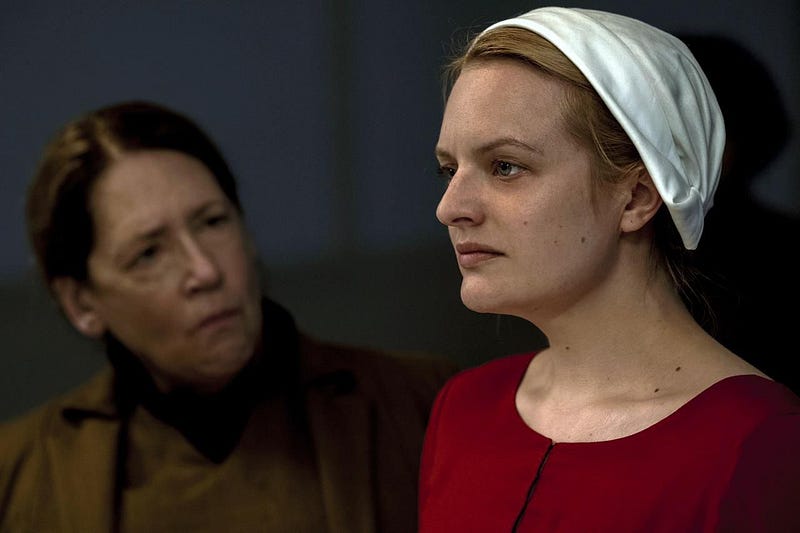
The fourth season of The Handmaid’s Tale premiered on Hulu on April 27, 2021, nearly two years after the third season finale aired. Clearly the break did the creative team some good as they crafted a fourth season that far eclipsed the quality of the second and third seasons and almost rivaled the first.
Perhaps the most satisfying thing about the series’ fourth season is how it (finally) advances virtually all of the plot threads. The season begins with June and the handmaids hiding out at the home of a commander and his wife named Mrs. Esther Keyes (impressive newcomer McKenna Grace). Mrs. Keyes is drugging her husband and leading a resistance effort out of their compound. It appears early on in the season that we might be in for yet another case of “one step forward, two steps back,” when the compound is ambushed and the women get recaptured. This feeling was particularly strong with the show’s third episode, “The Crossing.” Albeit epic in scope, it was an uncomfortable mix of graphic torture, wrenching tragedy, and one instance of melodramatic romance.
The following two episodes focused on June and her fellow handmaid Janine (Madeline Brewer) escaping in a milk tanker on a train and then arriving in war-torn Chicago, which serves as a front in the ongoing war. It was thrilling and harrowing to see previously unseen parts of Gilead and these episodes thoughtfully developed Janine’s character as she never had been before. While June and Janine were hiding out in Chicago, Gilead initiated a bombing campaign which injures and separates June and Janine. The episode was staged with the production values of a big screen war film and the final twist was remarkably affecting. Moira accompanied her humanitarian girlfriend on a rescue mission to the front lines and finally reunited with Moira.
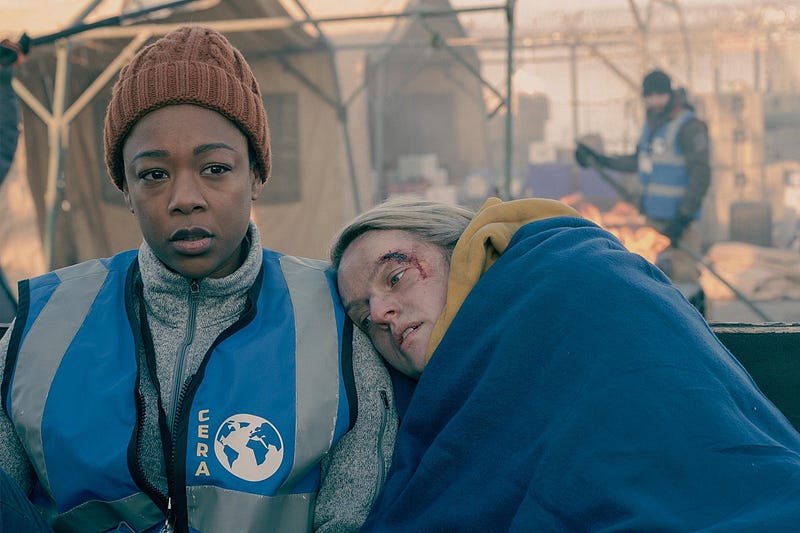
The second half of the season was lighter on action, but heavier on character-driven drama. With June back in Canada, she had the opportunity to come face to face with her greatest loves and her greatest enemies. Although they tried hard to empathize with and validate her despondence and rage, Luke and Moira struggled immensely to accept the shattered version of June that returned. They have the benefit of experiencing less emotional and physical torture than June due to their different roles and shorter stays in Gilead, but they nevertheless grappled with profound feelings of loss and survivor’s guilt. Meanwhile, June spectacularly confronted both Serena and Fred — both in their private cells and on the floor of a courtroom — as their future remained up in the air as what is left of the United States government tried to figure out how they can best leverage them.
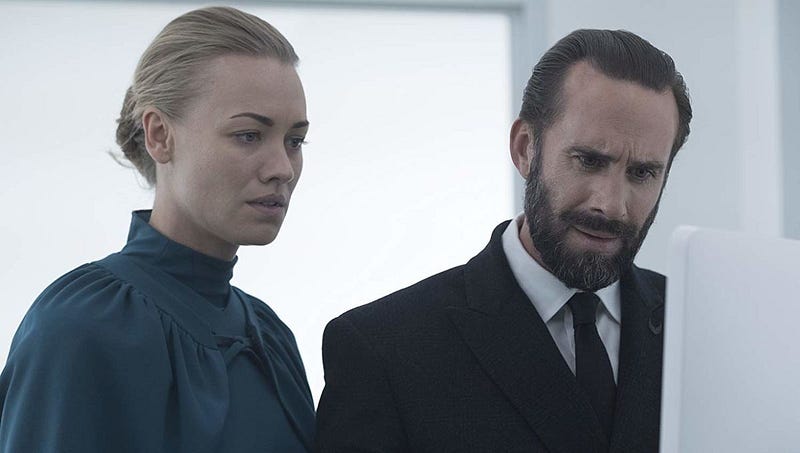
To the frustration and even horror of some, June was so hellbent on justice that when society nor fate deliver it, she embarked on her own form of vigilante justice. She riled up the rage of the ex-handmaids in her support group, indirectly contributed to the suicide of an ex-aunt, and in the show’s spectacular and horrifying season finale, led a mob through the forest to brutally murder Commander Waterford (even after he had been handed over to Gilead to face imprisonment).
Although seeing the show’s protagonist engage in such savage, violent behavior was likely massively off-putting to some, I found it to be an inevitable and authentic development. The character of June Osborne was never a traditional heroine. Atwood presented her as a flawed, complicated woman and the show’s creative team has subsequently built on that. She’s stubborn, vengeful, and often myopic. But she’s also brave, loyal, and determined. And she is emotionally ravaged by profound PTSD that undeniably influences her actions. In many ways her character’s arc evokes that of Cassie Thomas in recent Oscar-winner Promising Young Woman. Both June and Cassie are pushed to the brink and embark on morally questionable and profoundly dangerous attempts at vigilante justice. I doubt their actions would feel as controversial and uncomfortable to so many if they were men. Despite the tremendous advances in our society in the last several decades, morally complex heroines are still few and far between in mass media.
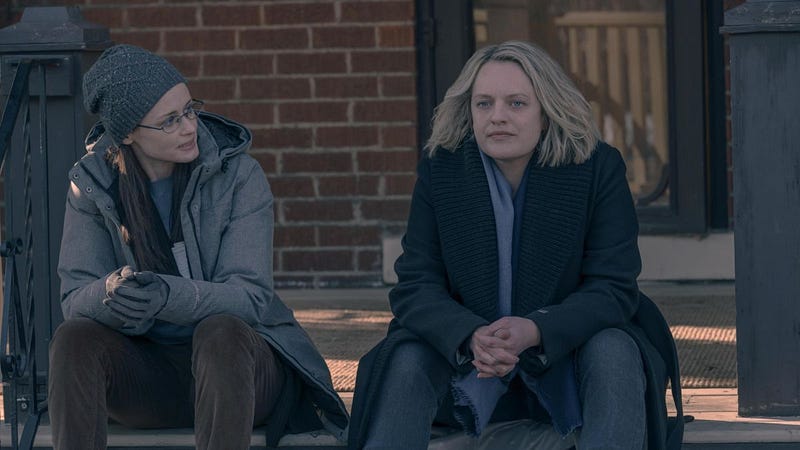
What Elisabeth Moss does in this season is virtually impossible to describe. She digs so deeply into the character of June that she is often unrecognizable. There is a scene when she brutally confronts Serena and labels her as perhaps the person in the world least worthy of redemption. As she repeatedly growls at her, “Do you understand me?”, Moss does transformative acting that has to be seen to be comprehended. And it’s not just grandstanding speeches that she excels at, she has countless scenes of wordless emotional complexity that are utterly fascinating to behold. Quite simply, Moss’s performance is one of the finest performances by an actor of any gender on any sized screen in decades.
And she’s not alone. There are nearly a dozen performances in the fourth season that are award worthy (or at least nomination worthy). As Fred and Serena, Joseph Fiennes does his best work on the series and Yvonne Strahavoski never once strikes a false note. Although they are given relatively minor screen time, Ann Dowd (Aunt Lydia) and Bradley Whitford (Commander Lawrence) are chillingly ruthless and commanding. The complex and relatively quiet emotional journeys of their characters give Alexis Bledel (Emily), Samira Wiley (Moira), and OT Fagbenle (Luke) terrific material that they execute exquisitely. Actors like Amanda Brugel (Rita, who served as a Martha in the Waterford household and escaped Gilead along with the 86 children) and Madeline Brewer (the aforementioned Janine) benefit from increasingly prominent and complex roles, while newcomer McKenna Grace has some profoundly affecting scenes as Mrs. Keyes.
Outside of being an almost incomprehensibly impressive acting showcase, the fourth season of The Handmaid’s Tale expounds on several underdeveloped themes and explores some new ones. As the show shifts from focusing on trauma and survival to PTSD, the nature of justice, and survivor’s guilt, the show goes into complex and fascinating territory. The season also explores the plight of refugees and asylum seekers and the deeply flawed structures and societies that struggle to aid them. And as the show starts to hint at the various factors both from within and without that will likely contribute to Gilead’s inevitable downfall, it creates a rich tapestry of political intrigue.
The race for this year’s Emmys is wildly unpredictable given the unprecedented turnover in nominees that is guaranteed due to the COVID-19 pandemic delaying production on countless shows. (Of the sixteen nominees for Outstanding Drama and Comedy Series at least year’s ceremony only four are eligible this year.) Conventional wisdom has long held that this is the year The Crown will sweep. The Netflix historical drama about the British royal family had its best and buzziest season yet with its fourth, which progressed into the 1980s and heavily featured Princess Diana and Prime Minister Margaret Thatcher (brilliantly played by Emma Corrin and Gillian Anderson, respectively). I have little doubt that it will still win most of the major categories, given its enormous buzz and the fact that The Crown has never won the top category at the Emmys. But, I am now questioning whether it deserves to. The fourth season of The Handmaid’s Tale was such a monumental achievement that it will be an injustice for it to go home empty-handed.
I have absolutely no idea where The Handmaid’s Tale will go from here, especially given the resolution of so many plot threads that season four brought and the ambiguity of the season’s final scene. But it has been confirmed that it will go on, as the show was already renewed for a fifth season.
And I will be waiting with bated breath.
Click here to follow the author on Medium and Twitter.
Read articles about television and streaming series by this author:


