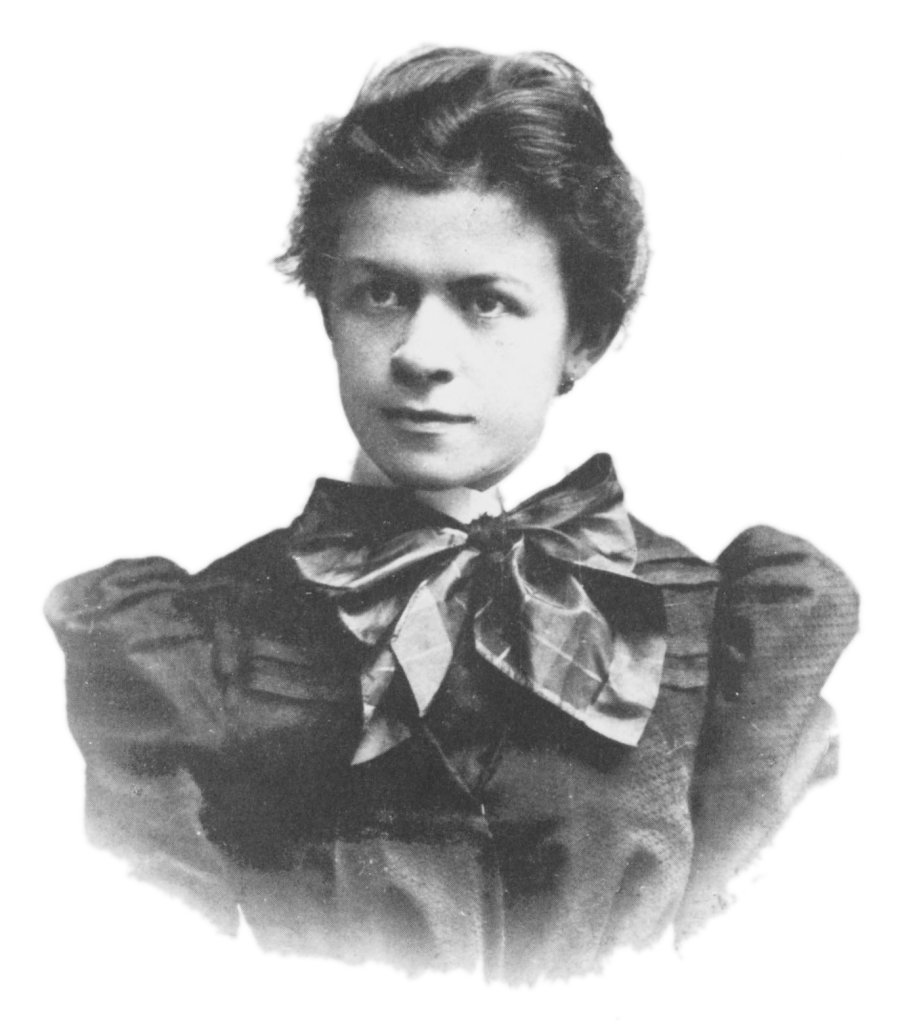
The Gross Truth Behind Albert Einstein That You Never Heard Of
A woman’s genius stolen at the mercy of a thief.
Born with an extraordinary scientific mind, her achievements were marked in the field of physics and mathematics. Yet it was love and an incestuous deception by a man for whom she gave up her promising future, guaranteeing his success to the scientific Olympus.
— Table of Contents —
Hard Beginnings The Fifth Woman Ever Temptation Mixed with Fears The Imperfect Perfect Partner The Beginning of the End Mrs. Mileva Marič-Einstein Ein Stein An Incestuous Betrayal A Tragic Ending
Hard Beginnings
Mileva Marič was born on December 19, 1875, in a Serbian town as an only child. Two siblings who were born before her had died, leaving the family, especially the mother, in endless mourning. Complications during childbirth dislocated her hip joint that left Mileva permanently limping. In the eyes of her mother, her condition erased her daughter’s future and any chances of getting married.
There was, however, a silver lining to her situation: instead of learning to prepare her life to be a potential wife, the alleged defect forced Mileva to start an education in the exact sciences. Despite the traditional customs of the time, her father supported her scientific endeavors in physics. She was also highly gifted in languages, music, seamstressing, and the culinary arts.
Realizing the level of education which her high school offered was too low for her to help enter a university, Mileva’s father made extra efforts to enable her to learn mathematics and physics.
These efforts were uncommon and unpopular at the time as societal belief was that women were incapable of significant achievements. They were scrutinized to have unintelligent minds and a temperament that prevented men from concentrating in lecture halls. When Mileva received a special permit from the local authorities to attend a boys’ high school in Zagreb, she was not welcomed and was bullied constantly. Despite this, none of the students matched her vast knowledge and intellect. She graduated from the school with high marks on her final exams. The door to further her promising scientific future opened.
The Fifth Woman Ever
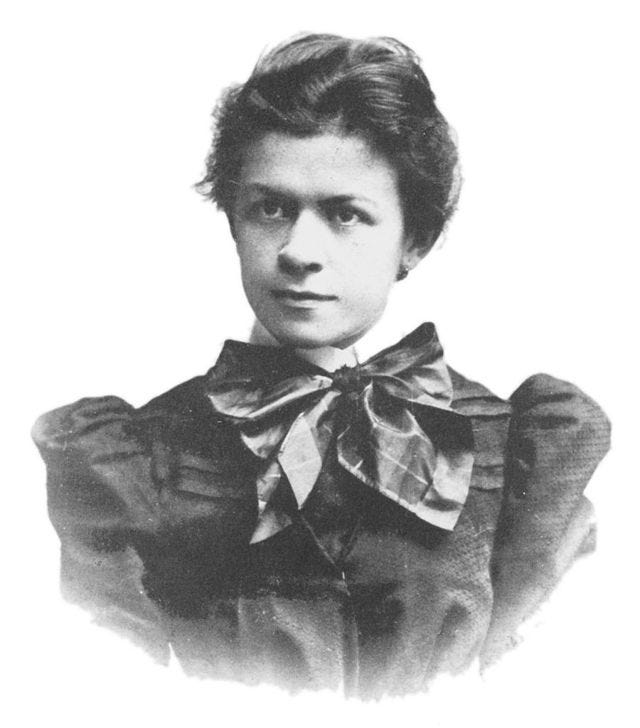
Mileva began to think about her future studies in Switzerland.
The country was considered the mecca of modernity, especially in Zürich, where crowds of students were flocking to. Using her fluency in the German language, she took advantage of the opportunity presented by a polytechnic university that also admitted women. A physics professor named Heinrich Weber reluctantly accepted her as her mentor. It was a turning point, not only for her as a young student, but above all as a young girl. She became the fifth woman to be officially admitted.
Thus, in the fall of 1896, Mileva began a new chapter in her life in the mathematics and physics department of the prestigious Federal University of Technology in Zürich, formerly attended by the winner of the first Nobel Prize in physics — Wilhelm Conrad Roentgen.
Within the walls of her new university, she had no idea how her life would soon be revolutionized by a wild 17-year-old physics enthusiast with lush hair: Albert Einstein.
Temptation Mixed with Fears
Mileva navigated her first two academic years successfully due to her diligence, ambition, and extraordinary abilities. At a distance, a looming young Einstein was obsessed with her, even going as far as inviting himself to private musical parties that were held only by her and her roommates. Yet, the unruly teenager aroused her sympathy.
With his sly smile and charm, he would often compliment her and invite her to cafes where scientific group discussions took place. Even though he showed a clear desire to establish a romantic relationship, his rebellious attitude — breaking conventional norms or mocking rigid social rules — somewhat turned off the older Mileva.
Wanting to cut her mind off the relentless boy with his burgeoning fame in science, she decided to spend a semester at Heidelberg University in Germany. She desired to be a precursor of new discoveries, to take part in ground-breaking research, and to reveal what science has so far uncovered from the mantle of mystery.
Even so, Albert continued to pursue her with a letter which preoccupied her mind for weeks. She reservedly responded:
“You asked me to write when I was not busy, but so far my time in Heidelberg has been filled with constant work.”
Truthfully, Mileva was intrigued by his charming character yet had disdain towards his unpredictable personality. No matter, she was unable to fight against the emerging attraction towards him. After returning to Zürich, all of Albert’s tempting persistence was finally realized and their romance had begun.
The Imperfect Perfect Partner
The newfound couple developed quickly.
Almost as soon as their relationship became serious, it was met with great dissatisfaction by Albert’s mother. As a woman who was from a wealthy family, she was unwilling to be faced with another failure. Her husband and Albert’s father was an unsuccessful entrepreneur, who constantly used her fortune and connections to save the family from bankruptcy. Such fears wrought her mind if her son was to marry Mileva. It also bothered her that she was Serbian and not Jewish. She was older than Albert, physically handicapped, and came from a common family. With all of these imperfections in mind, she was the worst possible girl for her beloved son.
Albert, despite his mother’s protest, did not stop writing letters to Mileva during his departure to Italy, in which he believed emulated romance poems:
“We both understand our black souls so well, drinking coffee and eating sausage… […] I’m lucky to have an equal partner.”
Eventually, he persuaded Mileva to come to Italy. They spent time together, filled with romantic elation and passionate scientific discussions. No matter how much they seemed to be equal, Mileva kept shocking Albert with her mathematical genius. She was on another level compared to him.
The superbly organized Mileva put order into Einstein’s disorderly life. She not only sewed her own dresses, but she also mended Albert’s clothes. She not only reached his heart with her intellect, but also reached his stomach with her cooking. She was the only one able to tame Einstein’s chaotic mind, lack of organization, and forgetfulness.
“She encouraged him to eat meals regularly and taught him to save money. She was often furious at his absent-mindedness. He would look at her calmly, like a little boy stomping his feet, and there was a mischievous fire in his eyes. He then would make silly faces or jokes to calm her.”
She was indeed the most perfect partner.
The Beginning of the End
The first crack in her promising future was failing her graduation exams. Her mentor Professor Weber was furious. He was not only furious at the fact that she had failed but that she had such a close relationship with Einstein. He was concerned that Albert was a bad influence on Mileva. Einstein himself barely passed his exams with the worst grades in his class. In addition, his rebellious attitude to life had a negative impression on the view of any potential employer.
But what really made the talented and outstanding student fail her final exams?
Mileva was pregnant.
In the third month of an unplanned pregnancy, she could not concentrate on her exam studies. Her mind was preoccupied with how badly an illegitimate child would damage her reputation. Albert’s mother’s hateful disposition towards her also took over her thoughts. The situation would only add to the list of defects that her potential mother-in-law saw in her.
Einstein didn’t help her circumstance either. He was unable to decide on marriage and had to scrounge for money by tutoring. With his mother also harboring a never-ending hatred for Mileva, there was no question of planning a wedding.
The future father tried to calm his pregnant partner but was too absorbed in his research. Feeling alone and distraught, Mileva left for Zagreb to be surrounded by her family. She stopped working on her doctorate and put her academic career on hold. Her parents were equally devastated by her situation, especially since they devoted all their time and money to her education and future.
While in her family’s care, she gave birth to Elizabeth, affectionately called Lieserl, on January 27, 1902.
Despite acknowledging the birth of his daughter through a letter, Albert delayed his visit and never saw her. He mainly wrote to Mileva about his work at the Bern patent office. He did mention his readiness to marry but was not sympathetic to the idea that Mileva would come to him in Berlin with their child. So she came there alone.
So what happened to Lieserl?
Biographers long theorized that the infant died of scarlet fever — a disease decimating children at the time, or was put up for adoption. Official documents proving one theory or the other were lost. The cryptic words of Mileva in one of her letters to Albert remain a mystery:
“It went fast, but unpleasantly.”
Mrs. Mileva Marič-Einstein
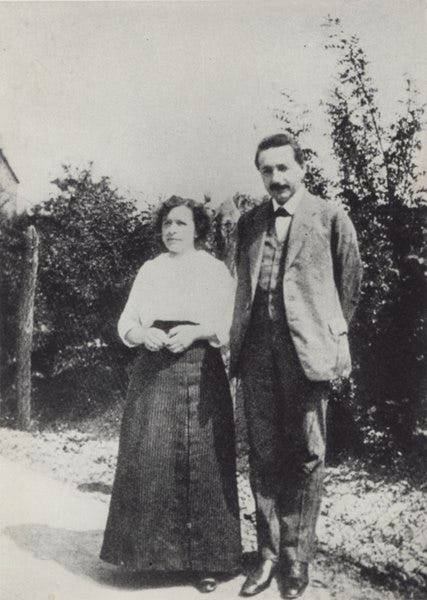
The couple finally had a wedding on January 6, 1903. Before his death, Albert’s father blessed their relationship despite the mother’s objections. They settled in Bern, where he continued to hold his position of a patent clerk. The job provided a good income and a lot of time for reflection.
In Albert’s mind, their passion gradually faded into oblivion. He admitted years later that the reason for deciding to marry was due to his feeling of pity:
“Mileva was ugly and lame and I felt sorry for her.”
Ein Stein
Mileva gave birth again to a son named Hans Albert Einstein on May 14, 1904. As early as 1905, Albert published five groundbreaking works. On the Electrodynamics of Moving Bodies described his special theory of relativity, and another explained the photovoltaic effect observed by Philipp Lenard.
Was it possible that Mileva was the main co-author of these works?
In one of the letters, Mileva’s friend asked her if she wanted Mileva’s signature to appear under the scientific articles that Albert was writing for the basis of their joint research. Mileva argued that there was no such need since in her mind the married couple were as one, after all.
“Like one stone. Ein Stein.”
[In German, one = Ein; stone = Stein]
In addition, biographers claim that in 1905 she said to her father:
“Before we left, we completed important research work that will bring my husband fame.”
Albert was also proud of the couple’s scientific progress. In one of his messages to his wife:
“But I will be happy and proud to be together and be able to successfully complete our work on the relativity of motion.”
So why did Mileva give up crediting her own success?
At the turn of the nineteenth and twentieth centuries, the patriarchal system was still reigning. The fact that his wife significantly contributed to such powerful achievements of a burgeoning physicist would definitely detract from his own credibility and success. Wanting to avoid shame and embarrassment, Mileva agreed to attribute all and any success to her husband.
Henceforth, Albert’s fame and reputation began to bear fruit in groundbreaking ways.
Meanwhile, in 1910 Mileva gave birth to their third child — Eduard “Tete” Einstein. Unfortunately, the arrival of their son in the world did not act as a soothing balm on the couple’s turbulent relationship. While Albert received applause and merits for the couple’s mutual work, Mileva spent her time alone caring for the children. She became depressed and unhappy, and their situation was not improved by their poor living conditions.
However, it was Albert’s departure to Germany that would completely seal their fate.
An Incestuous Betrayal
Mileva’s declining mood and depression effectively discouraged her husband from any intimacy. His desire for female attention then started to go towards his close cousin Elsa Einstein, who lived in Berlin. Their mothers were sisters and their fathers were cousins. They were related on both sides and even had the same surname. However, that did not stop them from forging an abhorrent, intimate relationship.
Albert lustfully wrote to his cousin:
“Now I have someone I can think of with pure pleasure. You pinch me with your letter, but tickle me with goosebumps.”
As early as 1914, just before the outbreak of World War I, he decided to accept a professorship at the University of Berlin. Eventually, his wife’s suspicion began to weigh heavily on him, and he began to consider her a “stone around his neck”.
Albert slowly stopped spending time at home. Whenever Mileva requested him to take care of their family, he completely ignored her. She then decided to take the children and move to her friend’s home.
Soon later, a letter from Albert arrived, and she was given specific conditions under which they could live together again. Mileva was to be the epitome of a maid:
“My clothes and underwear are to be put in good condition. Three meals a day are to be delivered directly to my room. My bedroom and study are to be kept clean and tidy, except for the desk and everything on it.”
And it continued,
“You will waive any personal relationship with me unless absolutely necessary for a social duty. In particular, do not require me to spend time together at home or travel together.”
And lastly, he stated,
“You will follow the rules henceforth: • You will not expect any intimacy or make excuses to me about it. • You will not be allowed to speak to me. • You will leave my bedroom or office as soon as I request it. • You will not take any action to belittle me in the eyes of our children.”
These were the obligations and requirements that he put forward; stipulations from the “respected” Albert Einstein whom Mileva Marić devoted her entire life to.
A Tragic Ending
Even though the extreme demands offended Mileva’s dignity and humanity, she was ready to accept the terms of her husband. At this point in her life, she was desperate: saddled with children, living in poor conditions, and zero financial independence. Her decision surprised Albert, who thought that his list of requirements would effectively discourage his wife from continuing the relationship.
Nonetheless, he already prepared documents defining the conditions of their separation. The couple agreed that he would financially support them and be able to meet the children, but not take them to his new mistress.
Mileva and her sons returned to Zürich, where they lived in utter poverty in the face of war. Albert failed to send money regularly, so she was forced to find some work by being a private tutor and musical instructor.
Some time after the separation, Albert began to persuade Mileva to agree to the official divorce papers because he had new plans with his cousin Elsa. In order to persuade his wife to consent to the divorce, he promised to pay higher child support payments and to send the entire sum of his eventual Nobel Prize money. Mileva agreed to the proposition as the entire ordeal of their broken relationship marred her with serious health problems, preventing her from working.
In 1921, Albert Einstein was finally awarded the Nobel Prize, cementing his reputation as a success. As it was legally written in their mutual agreement, the entire prize money went to Mileva. Although it raised a glimmer of hope in her dire situation, that light was eventually extinguished. The entire amount of money and the last remnants of her health were sacrificed for her son suffering from schizophrenia.
The former spouses saw each other for the last time in 1934. Albert married his cousin and fled with her to the United States, where he became a legend to all.
During one of her son’s severe episodes, Mileva lost consciousness.
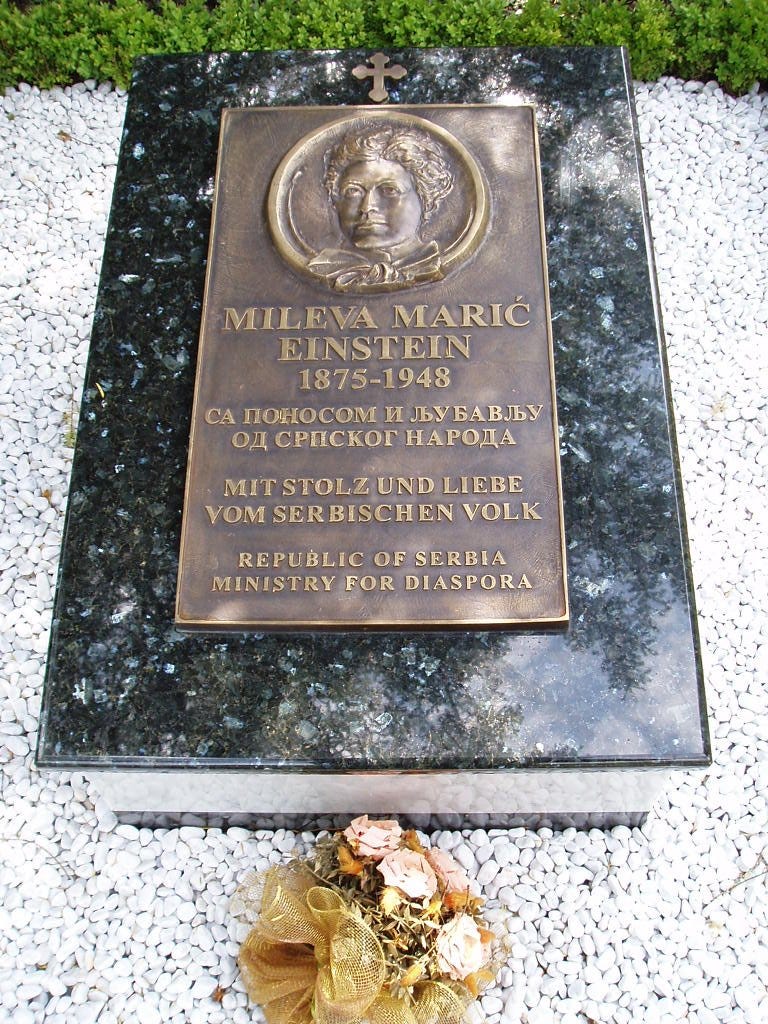
She died in the hospital on August 4, 1948 at the age of 72. She was buried in the Orthodox Church of her beloved Zürich at the Nordheim cemetery.
Mileva and her life story fell into oblivion and remained so for many years. In the 1970s, her tombstone was removed by the cemetery authorities because no payment for the tomb was made for many years after her death. She was completely erased in the eyes of the world. Yet, on the initiative of Dr. Ljubo Vujevic of The Tesla Memorial Society, Mileva’s grave was found in 2004. The tombstone of a woman who was Albert Einstein’s partner and companion was again raised.
For decades upon decades, the relationship between Mileva and Albert was severely marginalized, especially her influence on her husband’s discoveries. Only after the death of the Nobel Prize winner, newfound documents, published in 1987, shed a clear light on their relationship.
These documents were the letters admitting admiration, respect, and desperate need for a woman’s superior mathematical abilities and genius mind.
A woman who was forgotten underneath the Hades of science.
A woman named Mileva Marič.
Do you find this article interesting?
Please don’t hesitate to share it and subscribe to my newsletter to receive my content directly to your inbox. ^^
If you’d like to have unlimited access to quality content, consider supporting me by signing up to become a Medium member. It’s just $5 a month with this link.
Sources:Allen Esterson & David C. Cassidy, with Ruth Lewin Sime, Einstein’s Wife: The Real Story of Mileva Einstein-Marič, 2019.Heather Terrell, The Other Einstein: A Novel, 2016.Princeton University Press, The Love Letters, Albert Einstein & Mileva Marič, 2000.A. Pais, Einstein Lived Here, 1994.R. Highfield, P. Carter, The Private Lives of Albert Einstein, 1994.J. Renn, R. Schulmann, Albert Einstein / Mileva Marič, 1992.P. Michelmore, Einstein: Profile of the Man, Dodd, Mead and Company, New York, 1962.