
The Green Chocolate Hills
March writing challenge — Let’s show some green.
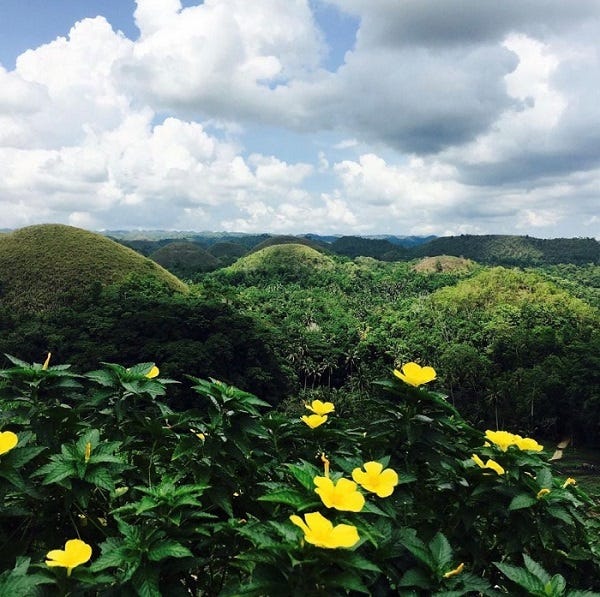
What color would you imagine when you hear the word chocolate? Brown, right? But these chocolates are not brown and not edible either. They are cone-shaped hills spread over one area in the municipality of Carmen, Bohol Island, in the Philippines.
As a child, I was always fascinated by the stories of the Chocolate Hills. Mythical stories were told to children by adults about why the hills are shaped like a cone and why they are so similar in size. However, I had never visited this place as a child, even though it is only a couple of hours away by plane from my hometown.
According to local legend, a giant named Maragtas challenged a group of dwarfs to win control over these lands. He eventually won by rolling two boulders down on them and creating the Chocolate Hills we see today.
A few months before the pandemic hit the world, I had the opportunity to travel to my home country, the Philippines. Bohol Island is located in the Visayas region — known for its lush and green landscape.
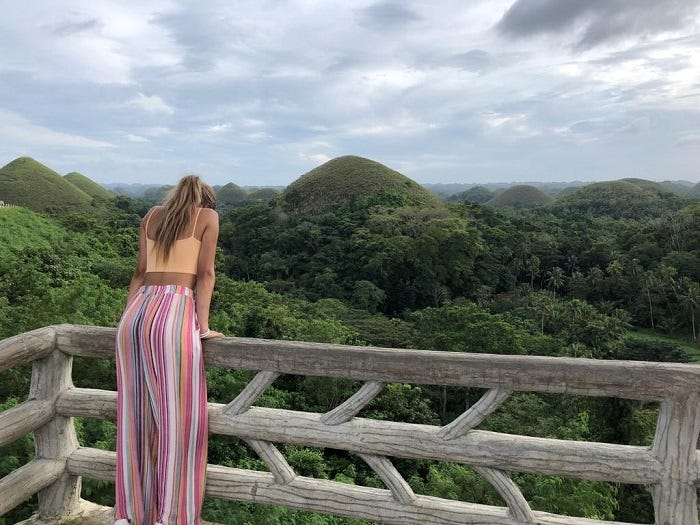
Luckily, I got there before the dry season started. Everywhere I looked, there were shades of vibrant green, from the palm trees swaying in the breeze to the bright moss that covered every available surface. The vibrant greens of the hills were genuinely stunning.
To get to the island of Bohol, there are two options: either by plane or by ferry. There is an airport in Bohol-Panglao (a small island still a part of Bohol) connected by a bridge from Tagbilaran City, the capital of Bohol. Flights are available from Davao City, Manila, Cebu, and Clark.
If you prefer to travel by sea, ferries are available from Cebu, Dumaguete, Siquijor, Camiguin, and Cagayan de Oro, docking at the Tagbilaran City Seaport. From the airport and seaport, buses and taxis are available to get to the municipality of Carmen, where the Chocolate Hills are located.
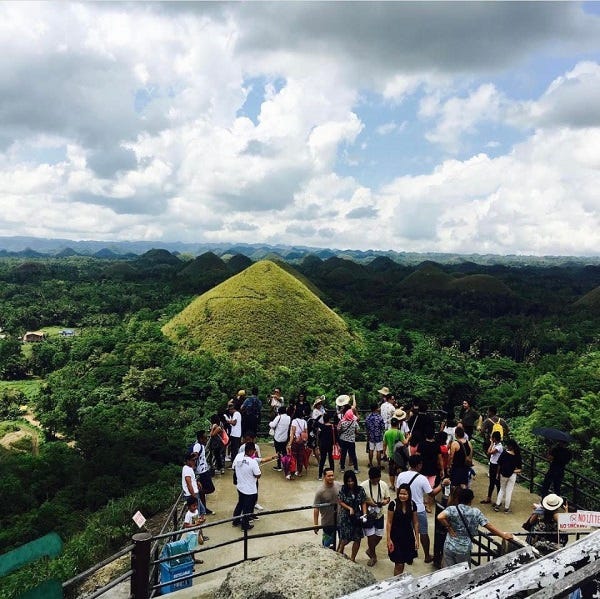
Before truly appreciating the views, you must endure the 200-plus steps or the flight of stairs to get to the lookout or the public observation deck. Remember to slip, slap, and slop (hat on, sunglasses, sunscreen lotion, and a bottle of water) because it’s very hot and humid when you get to the top.
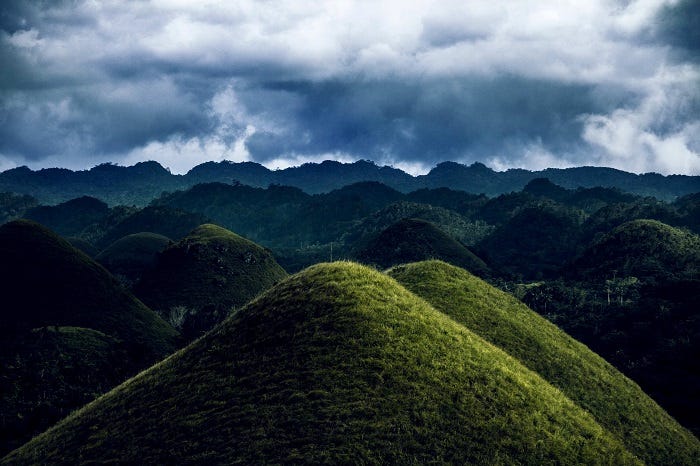
The hills are unique in that they are all almost identical — cone-shaped mounds blanketed in green grass ranging from 50 to 120 meters high and covering an area of more than 50 square kilometers. There are more than 1,260 hills. It is said that during the dry season, these hills turn into a rich chocolatey brown color — hence their name.
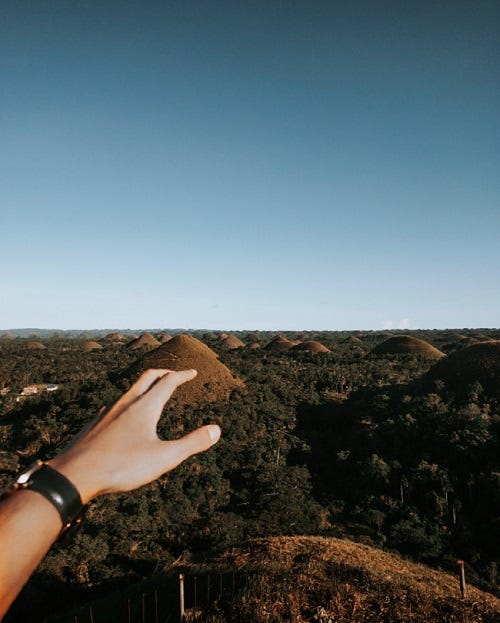
Besides being a geological marvel, visitors can enjoy hiking and biking around these beautiful hills or visiting nearby attractions such as the Tarsier Sanctuary or Hinagdanan Cave.
My visit to Bohol’s Chocolate Hills was an extraordinary experience. I recommend it to anyone looking for an adventure-filled day trip with natural wonders and mythical stories.
The wildlife equally matched the vividness of the flora. Brightly colored parrots flitted between branches while iguanas bustled around, looking for food. Even the fish in the crystal clear waters were a stunning array of greens and blues. It truly felt like an Eden in this tropical oasis.
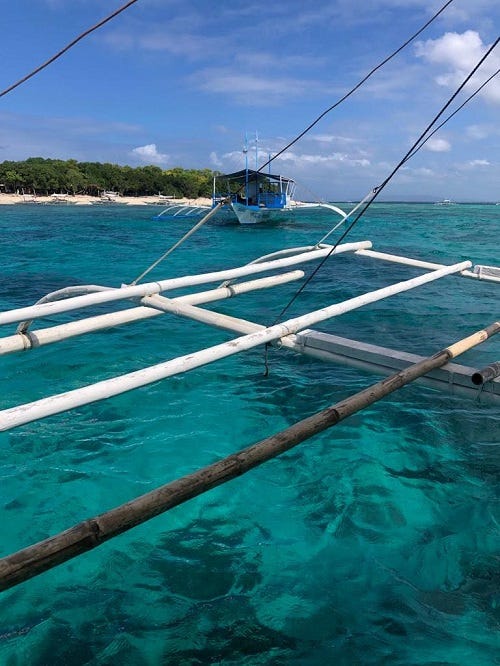
Aside from its natural beauty, this place also holds many cultural experiences to explore. The people there were incredibly friendly and welcoming towards travelers, often offering us samples of their local food and drinks or even taking us on guided tours through their beloved forests and riversides. The people in Bohol and their culture are something to experience, and the Chocolate Hills is a geological wonder that must be seen to be believed.
If I didn’t convince you yet to include the Philippines in your bucket list of countries to visit, maybe reading some stories by Elvie Lins and Liam James H might persuade you.
Thank you for reading!


