

The Greatest Mini Rivalries in NBA History
A true rivalry nails every staple on a rivalry checklist, but when it comes to separating the good from the great and the great from the greatest, we measure each NBA rivalry by how well it checks off the following three characteristics: two iconic teams and/or players, seminal moments throughout multiple postseason battles, and palpable bad blood.
Rivalries worthy of GOAT status possess all three qualities: Celtics-Lakers, Bulls-Pistons, Celtics-Pistons, Cavs-Warriors, Sixers-Celtics, and Lakers-Pistons; coming in right behind them are the truly great rivalries that aren’t quite considered iconic: Bulls-Knicks (was largely one-sided), Lakers-Kings (only one legendary team and duo), Knicks-Pacers (long on unforgettable moments, but, aside from Ewing and Reggie, lacked Hall-of-Fame level talent), and Heat-Knicks (featured more bad blood than, arguably, any playoff series ever, but lacked superstars).
The last tier is made up of good clashes, a la the NBA’s mini rivalries. While the following group, on some level, nailed each of the above three checkpoints, they failed to cement their case as one of the best rivalries in league history, mainly because they either: lasted for a short period of time, lacked a certain level of vitriol, and/or didn’t possess an endless array of All-World talent.
Without further ado, the ten greatest mini rivalries in NBA history.
10. Cavaliers vs. Wizards (2006–08)
Playoff Contests: 2006 First Round (Cavs 4–2), 2007 First Round (Cavs 4–0), 2008 First Round (Cavs 4–2)
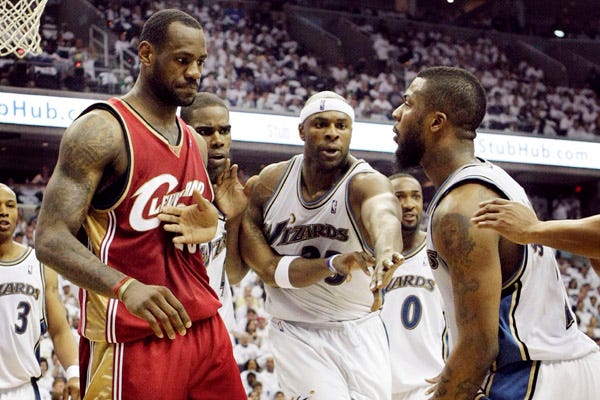
Through the first five games of the 2006 Eastern Conference First Round series between Cleveland and Washington, LeBron notched a triple double in Game 1, dropped 41 points, including the game-winner, in Game 3, and out-scored Gilbert Arenas 45–44, in Game 5, to give the Cavs a 3–2 series lead. But it wasn’t until the waning seconds of Game 6 where the basketball world was forced to accept the beginning of a new era. With the Wizards — a veteran team led by All-Stars Arenas, Caron Butler, and Antwan Jaimson — holding a 113–112 lead, at home, with fifteen seconds remaining, Arenas, an 82 percent free-throw shooter, and one of the league’s best scorers, stepped to the stripe with a chance to force a Game 7.
After Arenas clanked the first, LeBron, who, it’s worth noting, was 21 years-old and playing in his first playoff series, whispered something to him, something that could only be trash-talk, before Arenas proceeded to miss the second free-throw, leading to Damon Jones’ series-sealing game-winner. Just like that, a rivalry was born.
After Cleveland swept an Arenas and Butler-less Wizards squad in the first round in 2007, Cavs-Wizards III, in 2008, produced the defining series of the rivalry, by way of Deshawn Stevenson — the first irrational LeBron-stopper. Stevenson, a role-playing nobody who, that season, averaged 11.1 points per game to LeBron’s 30.0, made waves before Game 1 by claiming that the NBA’s young King was “overrated.” The series — full of trash talk and hard fouls — culminated in a six-game Cavs win, with LeBron averaging 30 & 10 over the series.
9. Clippers vs. Warriors (2014–16)
Playoff Contests: 2014 First Round (Clips 4–3)
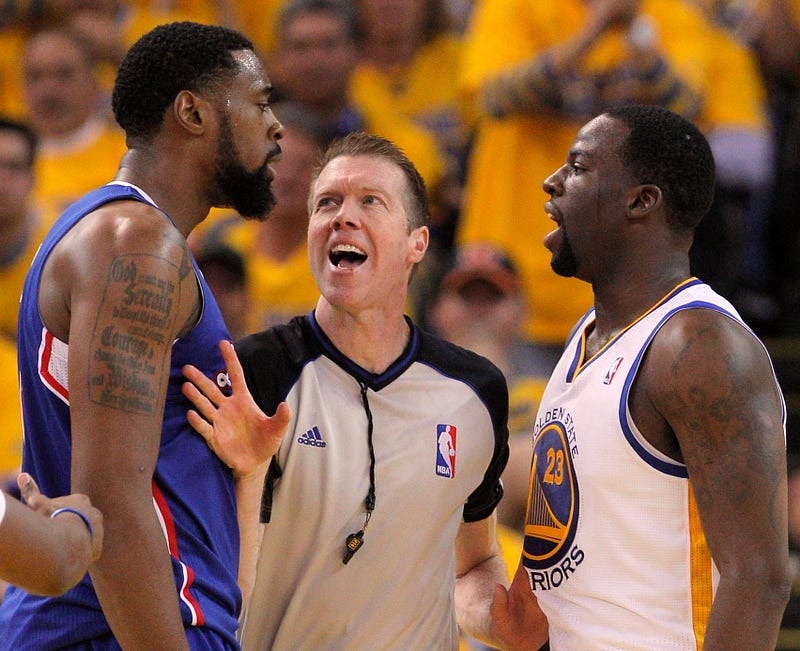
Predictably, this rivalry begun when an always-grumpy Chris Paul scolded the Warriors for celebrating “like they won the NBA Finals” after beating the Clippers in a November 2012 regular season game. The narrative was perfect: the older, veteran Clippers didn’t like that the younger, brash Warriors carried themselves like they won something, when they hadn’t, which was only made funnier by the fact that the Clippers hadn’t anything won either. In a way, neither team respected the other, which culminated in an emotional, seven-game classic in the first round of the 2014 playoffs. Fittingly, following Game 7, both teams engaged in a heated verbal back-and-forth in the tunnel that connects the locker rooms at Staples Center. It felt like the beginning of a rivalry that would define the decade; instead, it was the last time the rivalry would operate from a competitive balance. After a Clippers win on Christmas Day the following year, the Warriors won twelve straight matchups, turning into the league’s best dynasty while the Clippers self-destructed.
8. Cavs vs. Pistons (2006–08)
Playoff Contests: 2006 East Semi-Finals (Pistons 4–3), 2007 East Finals (Cavs 4–2)
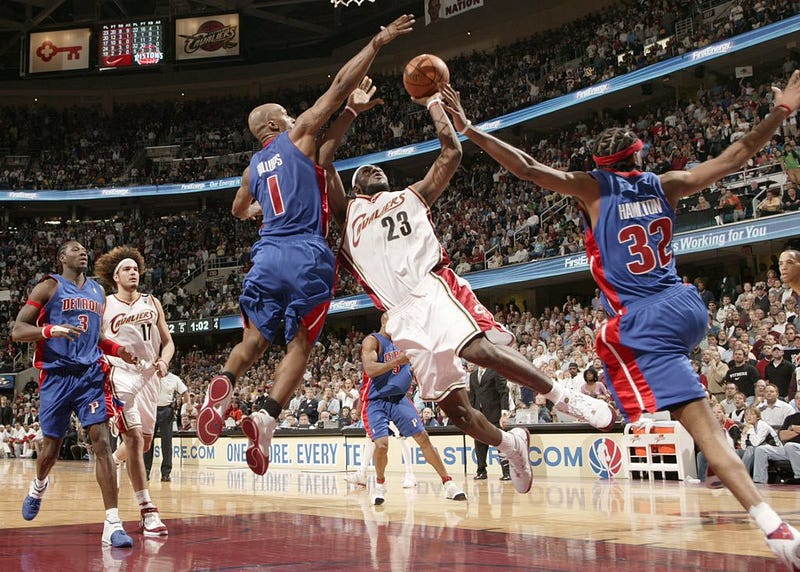
Halfway through the 2007 Eastern Conference Finals, Pistons-Cavs felt like the sequel to the Pistons and Bulls battles of the ’80s, as LeBron, already the league’s best player, ran into the veteran-led, defensively-dominant Pistons. After outlasting the Cavs in seven games the previous year and taking a 2–0 lead in the rematch, the Pistons looked to be two-thirds away from doing, to LeBron, what the Bad Boys had done to Jordan: beat him three consecutive postseasons, in his prime. Alas, following a career-altering performance in Game 5, LeBron ousted the reigning Eastern Conference power in Game 6, ending the rivalry before it began.
7. Heat vs. Pacers (2012–14)
Playoff Contests: 2012 East Semi-Finals (Cavs 4–2), 2013 East Finals (Cavs 4–3), 2014 East Finals (Cavs 4–2)
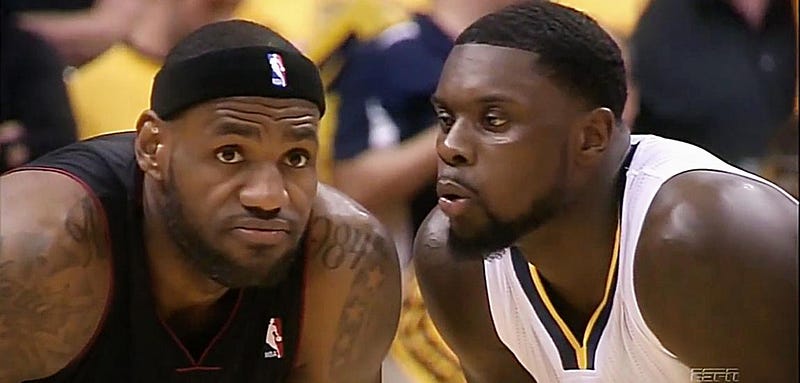
When we remember the constant protagonists throughout LeBron’s career, we focus on the Warriors, Spurs, and Celtics; seemingly forgotten, though, is Indiana who, from 2012–14, consistently pushed Apex LeBron to the brink of elimination. It followed an age-old narrative: the league’s best player and strongest team fighting off the upstarts, with Paul George and the Pacers cementing their case as the player and team, respectively, that LeBron and the Heatles would pass the torch to.
6. Heat vs. Pistons (2005–06)
Playoff Contests: 2005 East Finals (Pistons 4–3), 2006 East Finals (Heat 4–2)
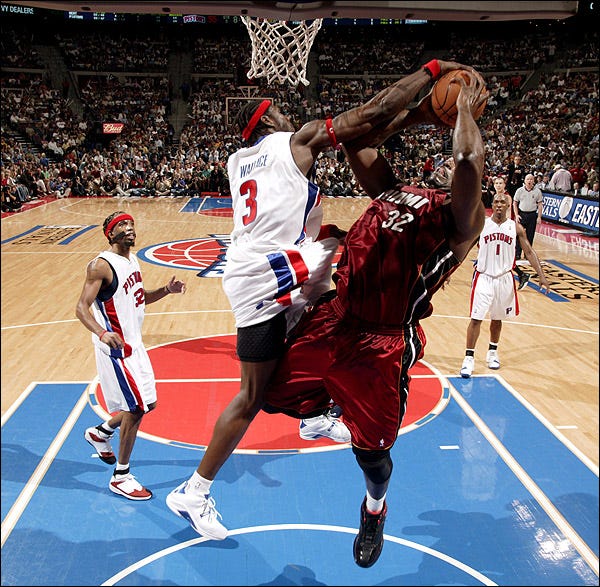
Months after an NBA Finals which saw Ben Wallace do what no opposing big man had been able to do — play Shaq to a draw on the game’s biggest stage — the Lakers traded their dominant center East, pairing him with a rising star (D-Wade) to turn the Heat into the defending champion Pistons’ greatest threat. It’s easy to forgot how great their matchups in those back-to-back East Finals were; A palpable level of bad blood spilled naturally on the court, as the brash, chip-on-their-shoulder Pistons were met by veteran tough guys, a la Shaq, Alonzo Mourning, Gary Payton, and Antoine Walker. The only reason it doesn’t rank higher on this list is because we missed out on a potential rubber-match in 2007.
5. Mavericks vs. Spurs (2001–14)
Playoff Contests: 2001 West Semi-Finals (Spurs 4–1), 2003 West Finals (Spurs 4–2), 2006 West Semi-Finals (Mavs 4–3), 2009 First Round (Mavs 4–1), 2010 First Round (Spurs 4–2), 2014 First Round (Spurs 4–3)
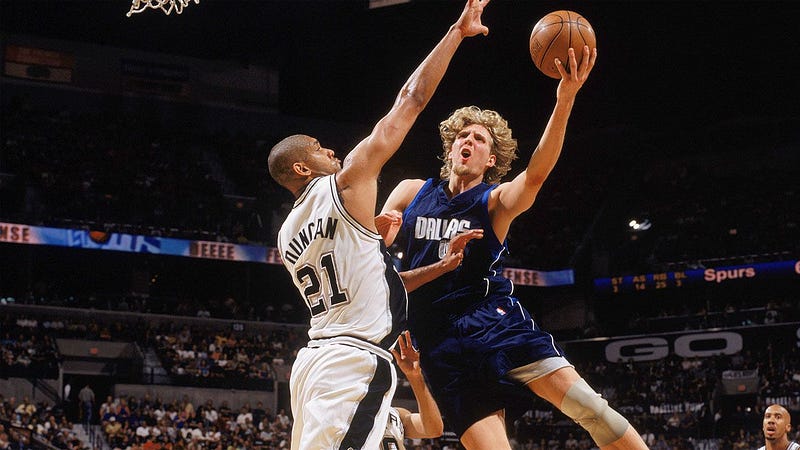
By the turn of the century, the pecking order for the NBA in Texas had been set: Houston, a winner of back-to-back titles in the mid-’90s, was the former King, with the Spurs’ 1999 championship cementing them as the current powerhouse, which left Dallas, forever the black sheep of the state, all-but forgotten.
After Dirk’s breakout season in 2001, and his first All-NBA selection in 2003, ended with postseason losses to Duncan’s Spurs, Mavs-Spurs felt like a rivalry simply due to their shared terrain. Then everything changed in 2006, as Dirk single-handedly carried Dallas past the defending champs, with a road win in Game 7 solidifying the Mavs as a real threat to the Spurs’ decade of dominance. In hindsight, Spurs-Mavs has been overlooked largely because, aside from an iconic clash in 2006, their playoff battles haven’t been accompanied by the greatest of stakes, with the final three matchups coming in the first round.
4. Celtics vs. Heat (2011–12)
Playoff Contests: 2011 East Semi-Finals (Heat 4–1), 2012 East Finals (Heat 4–3)
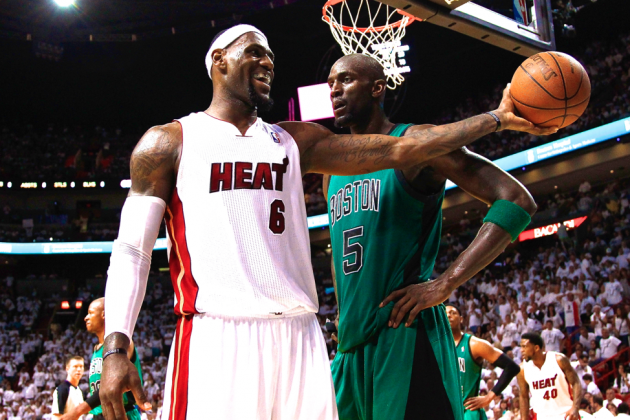
As soon as LeBron announced he would be taking his talents to South Beach, the basketball world anticipated an old-school rivalry between Miami and Boston. For starters, they had history, with the Celtics knocking off LeBron in the second round in ’08 and ’10; more than anything, though, it fit a narrative much like the Bulls-Pistons rivalry of the ’80s: the Celtics, like the Bad Boys, playing the role of the stubborn, trash-talking vets; while the Heat, like the Jordan-led Bulls, were positioned as the up-and-coming superteam.
Their first meeting, on opening night in 2010 — the first game of the LeBron-Wade-Bosh era — set the stage for a vitriol-fueled rivalry, one long on trash talk, hard fouls, and scuffles. Although the rivalry was short-lived, the closeness of their postseason contests, over back-to-back playoff meetings, along with its lasting image — LeBron’s skeleton-shredding Game 6 in Boston — is why Celtics-Heat defines the decade.
3. Spurs vs. Suns (2005–10)
Playoff Contests: 2005 West Finals (Spurs 4–1), 2007 West Semi-Finals (Spurs 4–2), 2008 First Round (Spurs 4–1), 2010 West Semi-Finals (Suns 4–0)
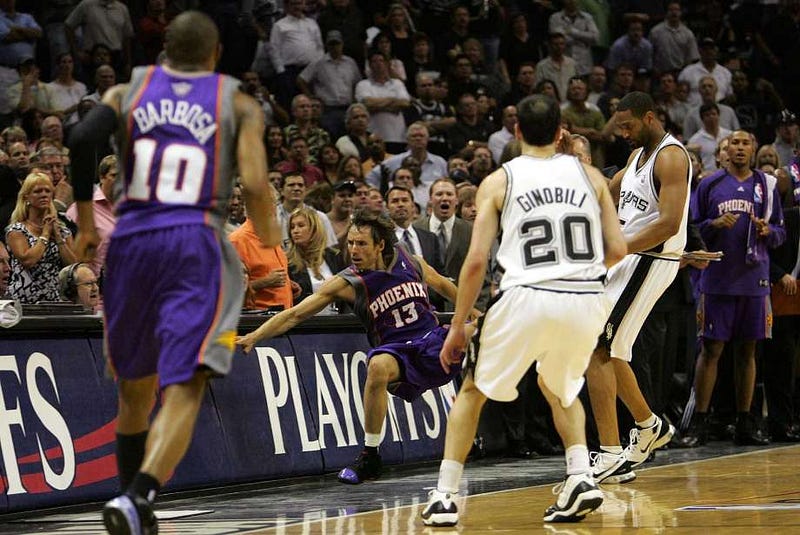
The greatest NBA dynasty of the ’00s peaked from 2005–07, a three-year window in which they won two titles, should’ve won three-straight, and were, undoubtedly, the best team in the league; except, it’d be fair to argue that, they weren’t, given that the most talented squad heralded from Phoenix.
Led by Steve Nash, Amare Stoudamire, and Shawn Marion, the ‘Seven Seconds or Less’ Suns were everything that Duncan and Pop’s Spurs weren’t: entertaining, flashy, and fast-paced. In 2005, Nash’s MVP win cemented the 62-win Suns as a legitimate title contender. Although their season ended with a five-game loss to the Spurs in the WCF — a closer series than most remember, with San Antonio winning four games by an average of 6 points per game — it felt like a stepping stone for Phoenix.
They met again in the 2007 West Semis, just as the Suns were reaching their apex. The ’07 rendition of Dantoni’s offense was light-years better than when they’d last played the Spurs in the postseason: Nash was coming off back-to-back MVPs, Stoudamire had transformed into a top-five player, Marion was now a top-15 talent, and Leandro Barbosa had just been named the NBA’s Sixth Man of the Year.
The defining moment of the series and, really, the rivalry, took place in Game 4. With the Suns winning 100–97, and twenty seconds away from tying the series at 2–2, Robert Horry knocked Nash into the scorer’s table at mid-court, leading to the first scuffle in the rivalry’s unblemished history. And yet, it was the aftermath — with the NBA suspending Stoudamire and Boris Diaw for Game 5, because they’d left the bench — that is the lasting memory of Spurs-Suns. With both big men out for Game 5, the Suns never recovered, losing the series before, just one year later, blowing up their core which signaled the end of an era.
2. Pacers vs. Pistons (2004–05)
Playoff Contests: 2004 East Finals (Pistons 4–2), 2005 East Semi-Finals (Pistons 4–2)
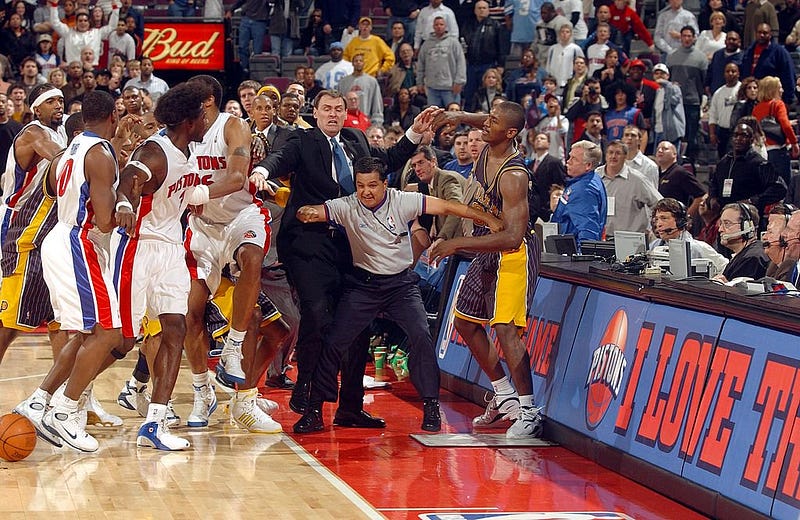
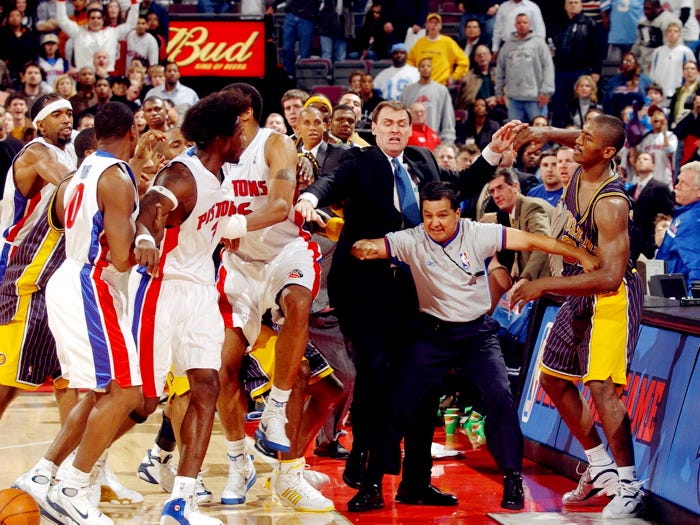
The Malice at the Palace is responsible for pushing the NBA to change its image and limit the engagement between players and opposing fans, while, on a less significant level, it prevented us from experiencing what could’ve been the greatest rivalry of the ’00s, a throwback to the hate-filled battles of the ’80s. A physical, six-game battle in the ’04 Eastern Conference Finals was supposed to be the beginning of something special, as the Pistons and Pacers headed into the 2004–05 season considered to be the two best teams in the East and, aside from the Spurs, the league.
A noticeable sense of disdain carried over into their first meeting that year, with the November 19th matchup feeling more like a playoff battle than the eighth game of the regular season. In hindsight, everything that took place between Ben Wallace’s two-handed shove of Artest, and his going into the stands to confront the cup-thrower, should’ve simply laid the groundwork for an entertaining, if unhealthy, level of hate between both teams. And that’s the irony of it all: while the heightened tension in those moments led to pure chaos, if it hadn’t, we may have been treated to the NBA’s first knockdown, drag-out rivalry since the ‘80s.
1. Lakers vs. Spurs (1999–04)
Playoff Contests: 1999 West Semi-Finals (Spurs 4–0), 2001 West Finals (Lakers 4–0), 2002 West Semi-Finals (Lakers 4–1), 2003 West Semi-Finals (Spurs 4–2), 2004 West Semi-Finals (Lakers 4–2)
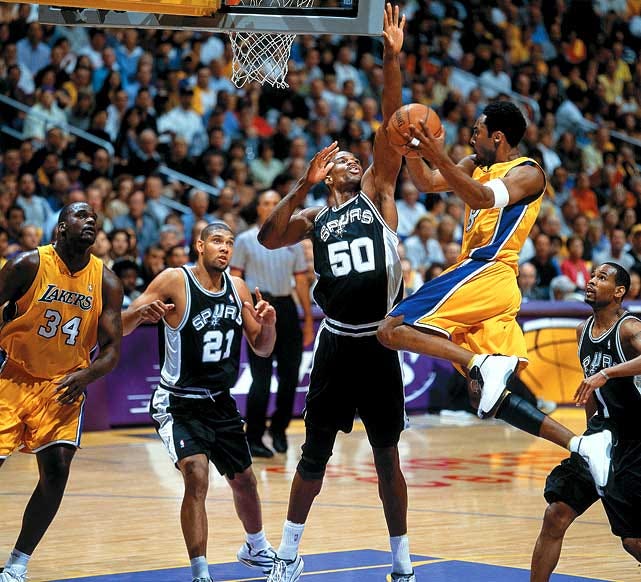
For whatever reason, when debating the greatest rivalries in NBA history, the Lakers vs. Spurs has gotten lost in the shuffle; in fact, it’s not even considered the best of the ’00s, with Lakers-Kings getting the nod solely because it featured an iconic seven-game battle in the WCF, while, I suppose, Lakers-Spurs is diminished largely because their only WCF meeting ended in a sweep. Still, in the first six years of the post-Jordan era (1999–04), the NBA championship went through San Antonio and Los Angeles. They met in the postseason five times over that six-year stretch and combined to win all five titles from 1999 to 2003. After their first three playoff meetings culminated with two sweeps and one five-game snoozer, they submitted back-to-back classics: In 2003, the Spurs’ six-game win not only ended the Lakers bid for four-straight titles, but announced their arrival as the NBA’s next juggernaut; then, in 2004, the Lakers got revenge with a back-breaking three-pointer by Derek Fisher, with 0.4 seconds left in Game 5, a shot that may have prevented the Spurs from winning three-straight championships. It’s the best mini rivalry, if not one of the greatest pure rivalries of its time, simply because it featured the two defining teams (Spurs and Lakers) and three most dominant players (Kobe, Shaq, and Duncan) of the NBA’s post-Jordan era.