
The Greatest Love Is Showing Kindness To Yourself
In response to prompt 28 of 52 of Dancing Elephants Press.
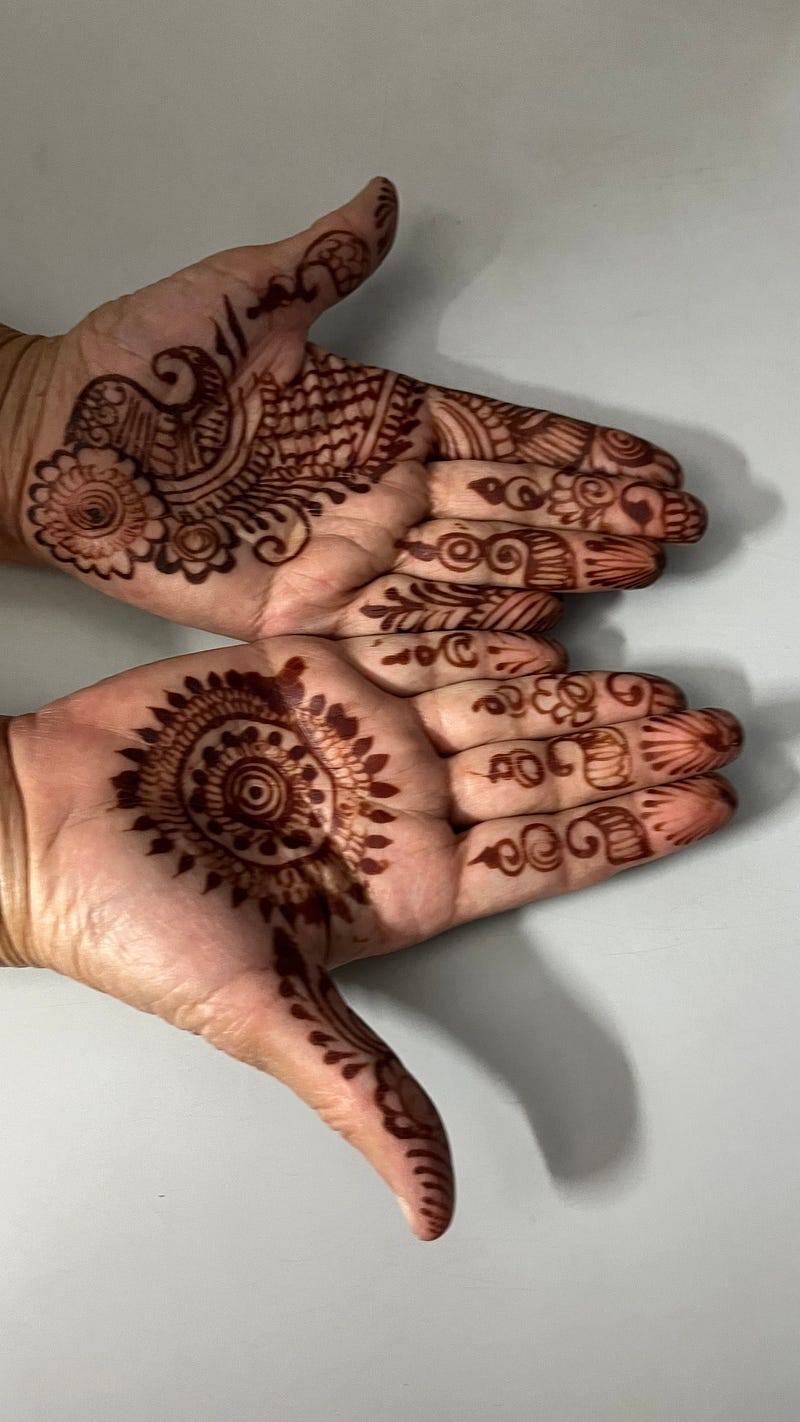
In the photo above ☝🏽are my hands. Henna/mehendi was applied by professionals. I selected the design and there they went. Why did I decorate myself?
I went to attend my niece's wedding in Rishikesh. It gave me happiness to be part of the wedding guests.
I was only getting henna done in my hands. It really gives you the joy to love yourself and look lovely.
Henna on the hand is a symbol of self-love for women. It is supposed to bring luck, joy, and beauty, and its perfume has some aphrodisiac properties.
When there were weddings or festivals women enjoyed putting the designs to show their happiness.
Brides decorate themselves with henna.
In India, it is popularly called Mehendi, and big celebrations are held.
Why did this tradition start?
The tradition of Henna/mehendi began to give women esteem and a confident self-image and kindness to be able to self-love themselves.
Women in the past had far more responsibilities towards the home and their husbands and families. To create time for themselves they would join together as friends and spend time celebrating life through henna/mehendi functions.
The beautiful designs on their palms made them feel and look happy.
Initially, happily married homemakers would turn up at the request of their relatives or friends to do the Henna/Mehendi makeup for the brides.
As a form of kindness and gratitude, these women were given money and presents for having decorated the hands of the bride and other women in the party.
Mehendi functions have become an integral part of wedding rituals. It is very time-consuming to apply henna to a bride. The bride sits patiently to enjoy the ritual and revels in the beautiful designs.
The bride has the right to select the design on the hands and feet and gets the name of the groom inscribed. It is secretly added and then the groom is asked to decipher where his name is to add fun to the occasion. Then his friends are asked to help him to find his name on the hands and feet.
What does it signify, and has it evolved with time like other bridal customs?
The significance of bridal henna/Mehendi
Henna is used for body art for at least 5,000 years and for social and cultural interaction. Some scholars say that henna art was first found in ancient Indian texts and images. However, other scholars are of the opinion that the Moghuls brought this art to India Sometime in the 12th century. Historically, mehendi is applied in Egypt Middle East, and North Africa.
The Mehendi night is usually celebrated before the wedding day and once it is applied the bride has to sit at home and spend time with her friends and relatives.
The interaction with friends is to keep the stress level of the bride low. It is to keep her calm for the big occasion. It is also to make her hands and feet look beautiful with this temporary color to build self-confidence and happiness so that the bride can self-love herself as she will look the most beautiful among all the guests.
It is the bride’s day and the bride must look the best. Friends of the bride should also look beautiful so everyone is color their hands but their designs would be lighter and less ornamental than the bride's.
To bring in self-love for the bride, it was a custom to switch off from the fiancee and treat yourself to all kinds of natural beauty products and bathe in turmeric (also called haldi) water.
Then the beauty treatments would begin and last till the day of the wedding.
Henna/mehendi extended to other occasions
In India Henna/Mehendi is not only celebrated at weddings but on other occasions as well.
Women sit in a long line waiting for getting their mehendi done professionally during Diwali a festival of lights, Eid the festival after fasting, and Karva Chauth Women’s fasting for their husbands are examples.
To wrap up
Henna/mehendi is now becoming professional and more elaborate. Women are finding it to be a great pleasure to spend time on themselves. It is a great way to show kindness to yourself.
There are special mehendi artists who create new and modern designs to make women happy and create a place for themselves.
Even men have now become a part of mehendi professionals and spend time decorating women’s hands. There are special bookings for the artists in venues.
Also, the artists are asking for a much higher price than before as they know that there is a lot of competition for them as new designers emerge every day. Mehendi has also brought about creativity in an application through the art of design.
Indeed mehendi is like a love story with yourself. It is kindness showered by giving time to yourself and cutting yourself off from other responsibilities and enjoying the present moment fully.
I would like to recommend the following articles:
Read how Fatima gets inspiration for writing and tips and solutions on how to avoid distractions.
William suggests that the flow of tears is important to clear the backlog of emotions.
Thank you dear Annelise Lords for this excellent prompt on Self-love and Kindness.
Thanks to the editors of DEP- Dr. Gabriella Korosi, Vidya Sury, and Annelise Lords for all the help.
©Dr. Preeti Singh, 2023.
Connect with me Click here to subscribe to my stories| joinMedium ‘with my referral link | Connection on Medium link Dr. Preeti Singh |Facebook Instagram Linkedin Email: [email protected]


