
The Greatest Car Designer You’ve Never Heard Of
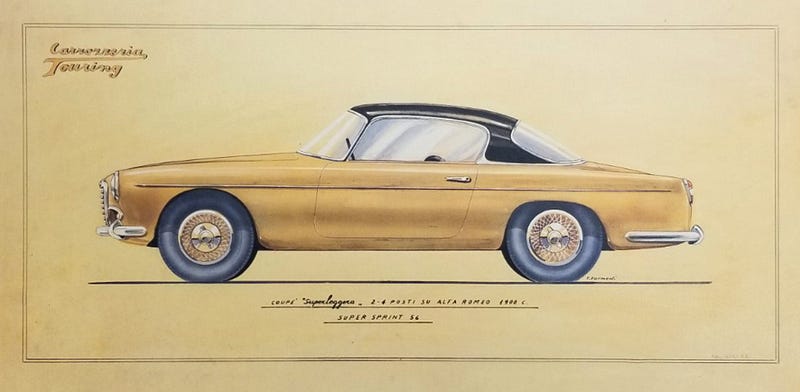
Having worked in the automobile design field for a decade, I know well how, given the secretive nature of this business, it can be complicated, if not impossible, to give credit for successful products where it’s actually due. This state of affairs is almost as old as automobile design itself, but that doesn’t make it any less unfair, particularly in the case of Federico Formenti, quite possibly one of the most significant Italian car designers who ever lived. Yet also one you’re unlikely to have ever heard of. The name “Carrozzeria Touring” is revered among car collectors for its graceful, timelessly elegant mid-20th Century automobile designs. Yet, very few know that many of those classics were actually penned by Formenti. Touring was established in Milan by Felice Bianchi Anderloni in 1926, rising to international prominence a decade later, in 1936, thanks to its patented “Superleggera” (“superlight”) technique for automobile coachwork. Consisting of a framework of small-diameter steel tubes, brazed to shape on jigs and then covered by thin alloy body panels.
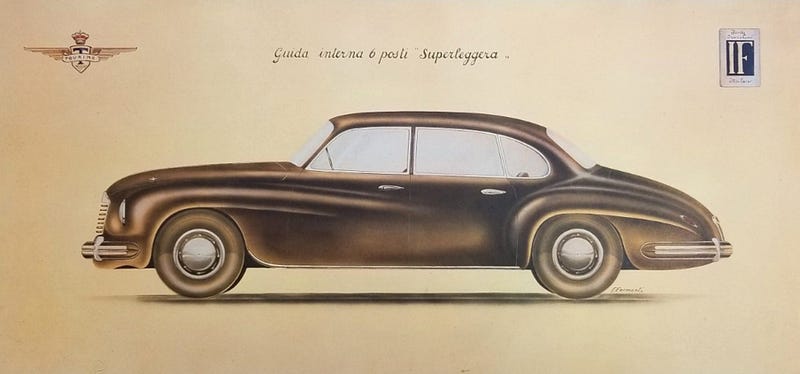
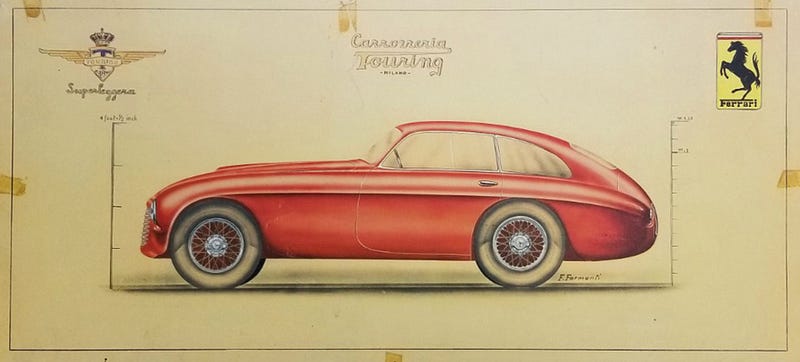
On top of the design freedom such a flexible technique allowed, the resulting bodies were also remarkably light, hence the name. The “Superleggera” patent was such a success that, in the post-war years, the moniker became an integral part of the Company’s name: “Touring Superleggera.” Around the same time, Carlo Felice Bianchi Anderloni, the son of Touring’s founder, took over the helm of Touring Superleggera. While Carlo Felice certainly was an expert gentleman driver and a very cultivated individual, he was no designer. “His” designer was Formenti, a young man just as talented as he was shy and reserved: he found perfectly normal for Anderloni, being Touring’s owner and his boss, to take personal credit for his designs when talking to customers. Those designs include icons like the Ferrari 166 MM, Alfa Romeo 6C 2500 “Villa d’Este” and 1900 Super Sprint, the Aston Martin DB4… The list could go on, and on indeed it did.
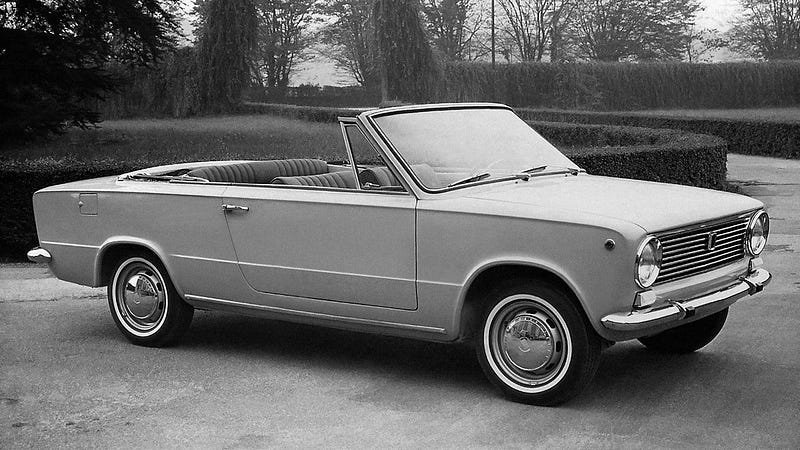
Until it didn’t. By the early 1960s, Touring Superleggera made a substantial investment in new, larger premises at Nova Milanese to build hundreds of automobile bodies for Lancia (Flaminia GT Coupè and Cabriolet), Alfa Romeo (2000/2600 Spider), and even the Sunbeam Venezia for the Rootes Group. The good times did not last, though: the Sunbeam Venezia failed to gain traction on the market, while Alfa Romeo ceased production of the 2600 Spider without a replacement. Meanwhile, Lancia’s worsening financial position meant no new commissions were forthcoming. After one last attempt to lure Fiat into a convertible variant of its popular “124” model failed, Touring ran out of options and filed for bankruptcy in late 1966.
Formenti and his former employer, Bianchi Anderloni, didn’t remain unemployed for long, though. Alfa Romeo’s president Giuseppe Luraghi promptly hired Bianchi Anderloni as the head of Alfa’s “Dipartimento Progettazione Carrozzerie,” which controlled the “Centro Stile,” directed by Giuseppe Scarnati since its inception in 1956. As far as period documents and first-hand accounts reveal, though, Mr. Bianchi Anderloni hardly had any influence on the Centro Stile’s output, as Scarnati fiercely defended “his” field until his retirement in 1975. Federico Formenti followed his old boss at Alfa Romeo, putting his two decades of Touring experience to good use at the Alfa Romeo “Centro Stile.” Mario Favilla, a former Alfa Romeo designer I’ve had the pleasure to meet recently, remembered Formenti as a man of extraordinary skill, almost a “one-man design studio,” that with humility helped younger designers to “mature” and often provided advice and solutions to the experts. To learn more about Federico Formenti, I’d suggest you read Favilla’s excellent book… If you understand Italian, that is…
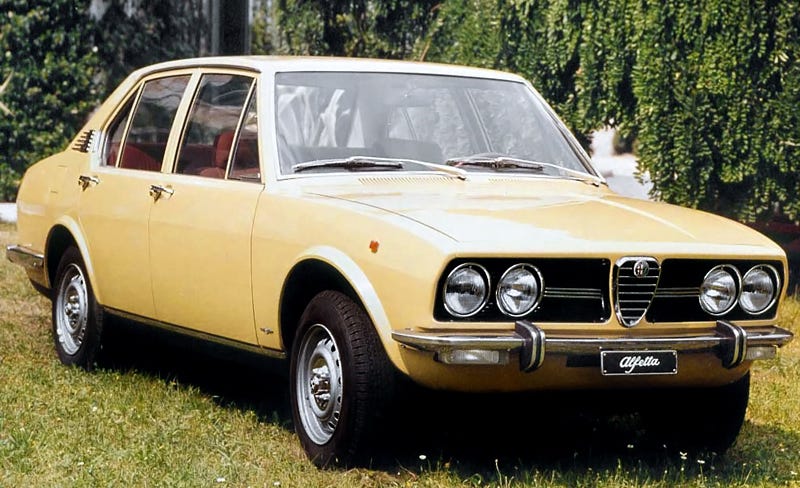
In the book, Mr. Favilla recalls an episode from 1970: the Alfetta saloon was signed off for production, but a quirk of internal bureaucracy meant that the 1:10 scale scale “four views” drawing, necessary for the model’s type approval paperwork, wasn’t made until the day before its deadline. When Giuseppe Scarnati found out, he desperately asked Formenti if he could make that drawing overnight.
That was like asking for a miracle, as the task would typically take one week: Formenti agreed, and, the following morning, the Centro Stile staff found the requested drawing on his table, together with the butts of all the cigarettes he smoked while drawing… In the car design field, fact and fiction often are difficult to tell apart, as many people want to grab credit for successful designs, whether deservedly or not, while more modest individuals don’t and get lost in time. But it’s never too late to tell the story straight and give credit where it’s due, whenever possible.