
The Greatest Bitcoin Explanation of ALL TIME
Demystifying Bitcoin and the Emergence of Web 3.0: A Vision for the Future

If you have friends or family members who are still struggling to grasp the concept of cryptocurrency, this explanation is for them.
Also to read:
Introduction to Bitcoin
Bitcoin, the world’s first cryptocurrency, operates on the foundation of the world’s first public blockchain network. It is this public blockchain that gives Bitcoin its power. So, what exactly is Bitcoin? In essence, Bitcoin is a digital currency that enables individuals to send and receive value from anywhere in the world using nothing more than a computer and an internet connection.
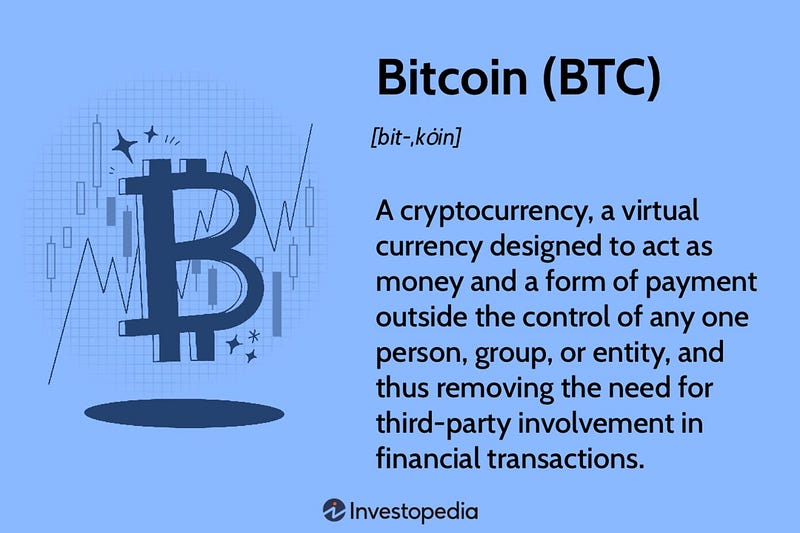
However, what makes Bitcoin truly revolutionary is its ability to function without the need for trust in a middleman. It is the absence of a central authority or corporation that makes Bitcoin the world’s first public digital payments infrastructure. By “public,” we mean it is accessible to everyone and not owned by any single entity. In contrast, we have public infrastructure for information, like the internet, websites, and email, but no equivalent for payments — until now.
Bitcoin’s Role as a Game-Changer
The groundbreaking aspect of Bitcoin lies in its potential to redefine how we transfer value over the internet. Before Bitcoin, if you wanted to send money remotely via phone or the internet, you were reliant on private banks to facilitate this process. These banks would update their ledgers to debit your account and credit the recipient’s account. If both parties used different banks, numerous intermediaries would come into play.
With Bitcoin, this ledger is not owned by a corporation; instead, it’s a public blockchain. Anyone can add an entry to this ledger, transferring their Bitcoins to another individual. This democratizes the process, enabling anyone, regardless of nationality, race, religion, gender, or creditworthiness, to create a Bitcoin address and receive digital payments at zero cost.
In essence, Bitcoin is the world’s first globally accessible public money.
Is Bitcoin Perfect? No, and That’s Okay
Is Bitcoin perfect? The answer is no, and that’s entirely expected. Just like email when it was first invented in 1972, Bitcoin is far from being the ultimate solution in every aspect. It’s not yet universally accepted, it’s not the standard for pricing goods and services, and it’s not always a stable store of value.
However, what makes Bitcoin truly extraordinary is its ability to operate without the need for trusted intermediaries. This fundamental shift in how we perceive and use money is remarkable. The mere fact that Bitcoin works without intermediaries is a monumental achievement in computer science.
Bitcoin is only the beginning of a transformative journey. If we can replace private payment infrastructure with public alternatives, we can extend this transformation to other areas. The reasons for embracing blockchain technology and its public infrastructure are crystal clear. It paves the way for a future where critical choke points in human interaction are disintermediated, enhancing efficiency and reducing vulnerabilities.
The Need for More Public Infrastructure
Why do we need to build more public infrastructure? The answer is simple: as private intermediaries providing essential, but privately-owned infrastructure become fewer, larger, and more powerful, their failures pose increasing risks.
We’ve witnessed major data breaches like the Equifax incident, which exposed 143 million Americans to hackers, as well as major fraud cases on the SWIFT network. In the banking world, the failure of a few corrupt employees at an Indian bank resulted in a $1.8 billion theft. Cyberattacks have extended to IoT devices, pacemakers, and even vehicles. The vulnerabilities in these systems stem from relying on a single point of failure, whether it’s a corporation or a government.
In contrast, the blockchain and public infrastructure present a way to eliminate these single points of failure. This is a fundamental shift similar to what the internet brought about in the 1990s when it removed single points of failure in communication infrastructure.
Web 3.0 and the Ownership of Networks
To understand the concept fully, we need to delve into Web 3.0, a new era that goes beyond web 1.0 and web 2.0:
- In web 1.0, users viewed content in curated walled gardens. It was characterized by curated, walled gardens, where content was presented within a controlled environment.
- Web 2.0 allowed user-generated content. It allowed users to not only consume content but also create content, as seen with the rise of the blogosphere.
- Web 3.0 takes it a step further, enabling users to own the networks they interact with through digital assets and tokens.
Web 3.0 introduces the idea of ownership, specifically the ownership of networks. Blockchain and digital assets, represented by tokens, are integral to this vision. When you own a cryptocurrency, you possess an ownership stake in a network, allowing you to participate in its operations and decision-making.
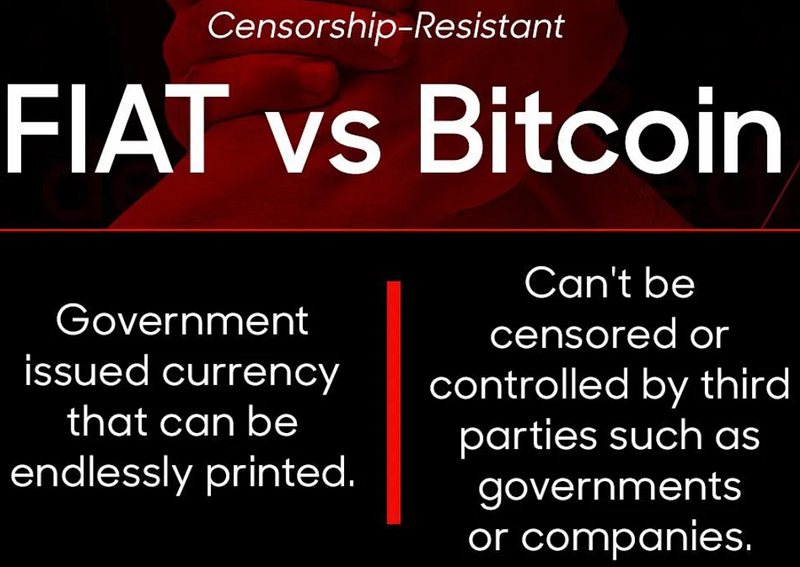
This change enables a shift from centralized internet infrastructure controlled by a few corporations to decentralized infrastructure owned by network participants. The power to influence the network’s future is placed in the hands of those who invest in its tokens, fostering decentralization.
It’s a transition from centralized control to user ownership and influence over the network’s future.
Only The Beginning of the Crypto Revolution
In conclusion, Bitcoin and the emergence of Web 3.0 signal a revolution in how we perceive and utilize technology. By removing the need for trust in intermediaries, blockchain and cryptocurrencies pave the way for a more secure, efficient, and equitable future. It’s a paradigm shift that can shape our future for the better.
In the journey towards a more decentralized future, it’s crucial to adopt policies that support these innovations. A light-touch, pro-innovation approach is essential to ensure the flourishing of these technologies in America, promoting both the benefits and security of all.