
HEALTH|FEMINISM
The Greatest Birth Control That’s Specifically Designed For Men
If men gave birth to babies, I think they’d take the issue much more seriously

I started having sex when I was 17 years old and sought out birth control on my own.
It was the late 90’s and I was not trying to have a baby any time soon.
My mom was part of a generation that didn’t openly talk about menstrual period, even from mother to daughter, let alone discuss sex.
Thankfully, I had a proper year-long health class at my private middle school and top public school in Philadelphia that also had a counselor on the premises for students to go to with questions.
There was no Internet at the time, but plenty of resources were made available to me and I took full advantage, including the free condoms that were in the counselors office for the taking.
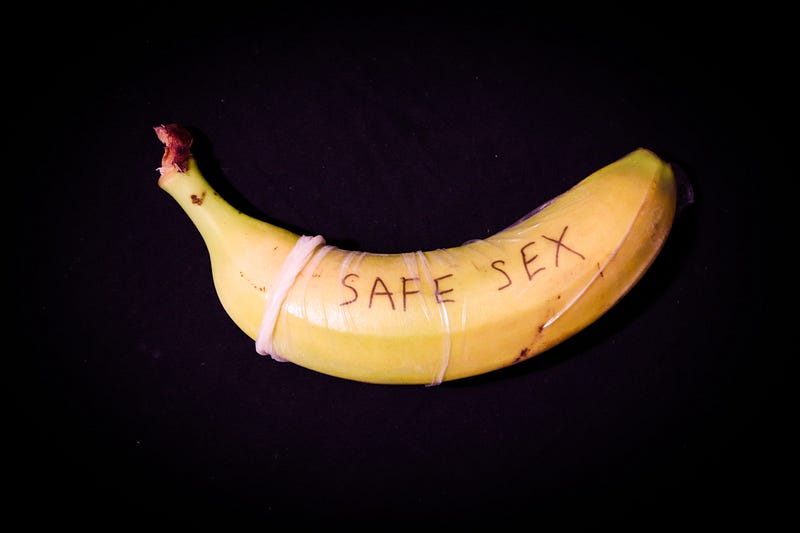
Condoms were important to me because they not only provided protection against pregnancy, in most cases, they also protected against sexually transmitted diseases.
My health teachers were sure to include graphic photos of STDs (now oftentimes referred to as STIs- Sexually Transmitted Infections) which I found repulsive!
It wasn’t until I had a boyfriend that I fully trusted and with whom I was in a long-term relationship that I decided to stop using condoms and try “The Pill”.
Holy Mother of ________!?#%&$&
I never had such mood swings, breast tenderness, and overall physical, mental, and emotional discomforts in my life!
Sometimes I wonder if my relationship with that boyfriend would’ve gone better if I hadn’t been on the pill.
We lasted almost a year and broke up when he moved to North Carolina. However, I was a bit of a hot mess during that time, beyond birth control issues, and wanted to go in search of “finding myself”.
I didn’t have a serious boyfriend again for another 2–3 years.
Part of the reason is that I never wanted to go on the pill again, I didn’t trust the majority of men my age to be monogamous and I decided at 22 years old that I didn’t want to have any biological children.

I have been babysitting from the time I was 11 years old. My brother had his first of 3 children when he was only 17 years old.
I saw first hand all the time, money, and energy that children cost.
From the time I was wee tot, I had imagined having children and what they’d be like, but everything changed after a decade of caring for and helping other people with their children.
I also started taking the issue of overpopulation seriously and delved deep into spirituality which gave me the experiential knowledge that at and in our heart of hearts, we’re all the same.
“Continuing my bloodline” or passing along my DNA has never mattered to me. I figured that if I change my mind about having kids, I’ll adopt or be a stepmom with someone who already has children.
Little did I know, 23 years ago, how much of an issue birth control would be for me as an individual, as part of a couple, for my nation and our planet.
There has grown to be quite a wide range of options for birth control.
The one I liked and stuck with, off and on, throughout my 20’s is Depo Provera. Fortunately, I didn’t suffer any serious side effects like many others and I loved not having a menstrual cycle while on it.
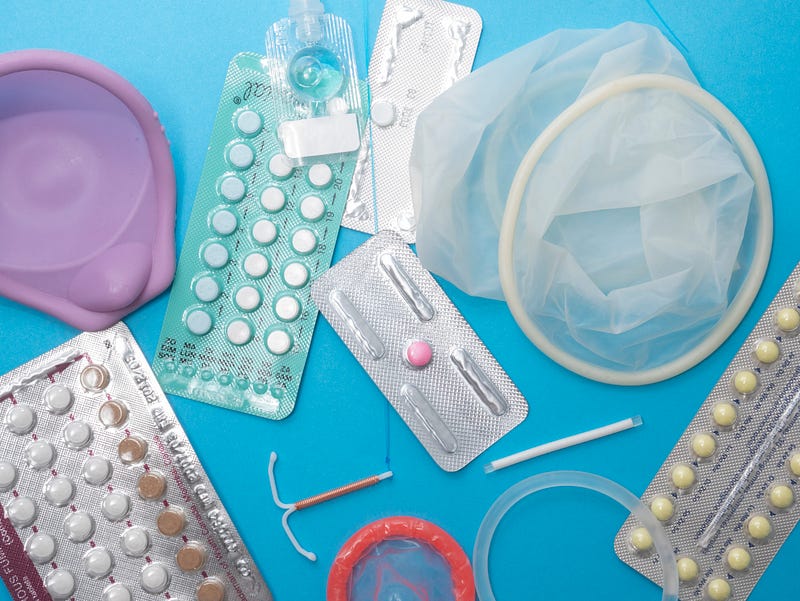
Look at ALL of these different forms of birth control…..
There’s also the option of surgery- tubal ligation for women, and vasectomy for men.
However, the mere mention of a vasectomy to some men makes them cringe because they don’t like the idea of a hole being created in their scrotum to cut anything in there.
I don’t blame them.
Aside from a vasectomy, the only other option that men currently have available to them for birth control is condom use.
Researchers are working on one for men, too, but it’s not a reality yet. Still, men have several options to help avoid an unplanned pregnancy.
The “several options” are 4:
- Vasectomy
- Condoms
- Outercourse (such as masturbation, oral or anal sex)
- Withdrawal (Pulling Out)
It’s incredible and frustrating that this is the case in the year 2022.
Allegedly, there are several “trials underway” (check out the link to this article to read about them), but not one is close to being launched as an option for male birth control.
Here’s my favorite:
Clean Sheets Pill
This is a fast-acting male birth control method currently in the early stages of development in London. This contraceptive allows a man to orgasm without ejaculating.
The Clean Sheets Pill has the added potential to significantly lower male-to-partner transmission of HIV/AIDS. It is called the Clean Sheets Pill because it stops semen from being released.
This contraceptive pill is taken two to three hours prior to sex and lasts for 16–24 hours.
The development of this male birth control option may be stalled due to funding issues. More research is needed before this potential male birth control pill could begin the long FDA research, testing, and approval process.
How about this famous case of a man being pregnant?
Hopefully, more men, and people in general, will increasingly value birth control enough in the future to support scientific research and trials that are necessary to make a wide variety of birth control for men an option.

Another story of mine along these lines:
Become a member:


