
The Great Vaccine Race
Who’s winning, how many will take it, and will it work?
Typically, it’s a mild disease caused by a virus spread via infected individuals through airborne droplets when coughing, sneezing, or even talking. A person can also become exposed by touching surfaces contaminated with the infectious droplets as well. Among the first symptoms an infected individual will experience include fever, respiratory problems, and most notably swelling of the salivary glands below the ear. I’m referring of course to Rubulavirus, the microorganism which causes Mumps.
Why mention a centuries old disease, and why do so now?
Well, to this day, a Mumps vaccine remains the quickest ever to market. Mumps virus was isolated in 1945, and an inactivated vaccine was developed in 1948. This vaccine produced only short-lasting immunity, and would be discontinued when a better option became available nearly three decades later. In the mid-1970s, prolific vaccine researcher Maurice Hilleman, isolated a specific strain, which became known as the “Jeryl Lynn Strain”. Named for his daughter Jeryl Lynn, who provided the sample after she came down with mumps at age 5, and remains in use within vaccines today.
Operation warp speed
Operation Warp Speed (OWS) isn’t military or even NASA speak for space travel, it’s a multi-departmental American government program which aims to deliver 300 million doses of a safe, effective vaccine for Sars-Cov-2 the coronavirus responsible for Covid19 by January 2021. OWS has provided funding, in the form of grants, to various vaccine makers in the hopes of accomplishing this stated mission.
Many question the timeline, or fast track status for a coronavirus vaccine. Typically, a vaccine takes 10–15 years to come to market, with Mumps being the fastest to date, just shy of four years. Calling for a vaccine to be widely available in less than a year, as President Trump continues to do, can best be regarded as wishful thinking. Producing an effective, and equally as important, safe vaccine, takes time. Vaccines typically become widely available after three phases or clinical trials, all of which involve growing numbers of people, over longer periods of time, verifying safety and efficacy every step of the way.
According to the Centers for Disease Control, in the first phase, small groups of people receive the trial vaccine. In the second, the study expands to a larger group, who’s age and physical health are similar to those for whom the new vaccine is intended. In the final Phase III, the vaccine is given to thousands of people, as broad a cross section of the general population as possible.
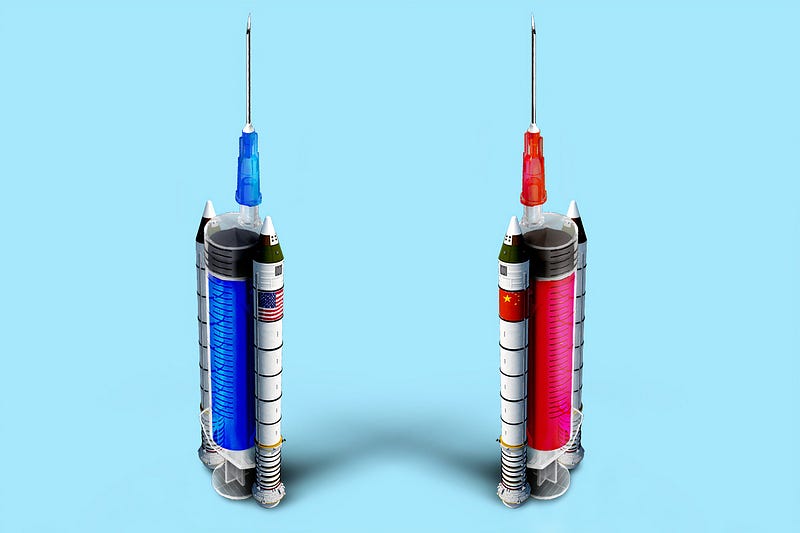
While the U.S currently has a handful of manufacturers working in conjunction with hospital systems and Universities in Phase III, China became the first country to receive foreign approval for an emergency use vaccine. Europe and Australia currently have one group in or near final phase.
Big bets on long shots
Expenditures by the U.S government are closing in on $10 Billion to bring a viable vaccine to market. Some candidates who received funds including, Johnson&Johnson, Pfizer, Moderna, and AstraZeneca are all industry heavyweights, while one, Novavax, awarded $1.6 Billion in grants, has never in their thirty-three year history brought a vaccine to market.
Some level of optimism, as well as reservation, exists with each biotech firm and their respective clinical trials. There is a high degree of coordination between American, European and Australian trials, many of which are being conducted across borders.
While not verified by global health agencies, Russia has registered a vaccine, with President Putin indicating one of his daughters was a trial subject, and has been vaccinated. As of this writing, the United Arab Emirates has approved a vaccine from Chinese state owned manufacturer Sinopharm, to be used on front line healthcare workers before Phase III is completed. The UAE has 31,000 volunteers participating in the clinical trials, and officials have reported no adverse reactions thus far.
When a vaccine against Sars-Cov-2 is ready for use stateside, some critical questions remain; how many people will volunteer for an injection, will it be mandated for children prior to attending school, or travelers boarding a plane, and what are the ramifications, if any, for those choosing not to vaccinate?
A Harris Poll survey in the summer of 2019, before the current pandemic, of 2,000 U.S adults is in no way encouraging. Of those polled, 45 percent noted at least one source that caused doubts about the safety of vaccination. The top three doubt-causing sources were online articles (16 percent), past secrets/wrongdoing by the pharmaceutical industry (16 percent) and information from medical experts (12 percent). The survey also asked Americans to choose a statement that best represented their feelings about vaccine safety and efficacy. While the vast majority (82 percent) chose in favor of vaccines, 8 percent selected responses expressing serious doubt. An additional 9 percent said they were unsure.
More recently (August 7th 2020), Gallup found one in three Americans would not opt for a Coronavirus vaccine, this even if the vaccine was both free and FDA approved. Such resistance is not unprecedented. When Gallup in 1954 asked U.S. adults who had heard or read about the then-new polio vaccine, “Would you like to take this new polio vaccine (to keep people from getting polio) yourself?” just 60% said they would, while 31% said they would not. So far, willingness to adopt a new vaccine looks similar today.
It’s one thing to answer a poll question, but another to make a real life, health balancing decision for yourself and your family. Here in Michigan, our Governor Gretchen Whitmer received a flu vaccine shortly after an address on the importance of such measures. Flu vaccines though, have a decades long record for safety.
Will President Trump volunteer for a Coronavirus vaccine? Will he encourage his extended family, and supporters to do the same? That and other questions remain open and unresolved for now. Should they chose to however, China, and possibly Russia, have one available.