
Our Dullest Bodily Response Is Still A Mystery
Do You Really Know Why You Yawn?
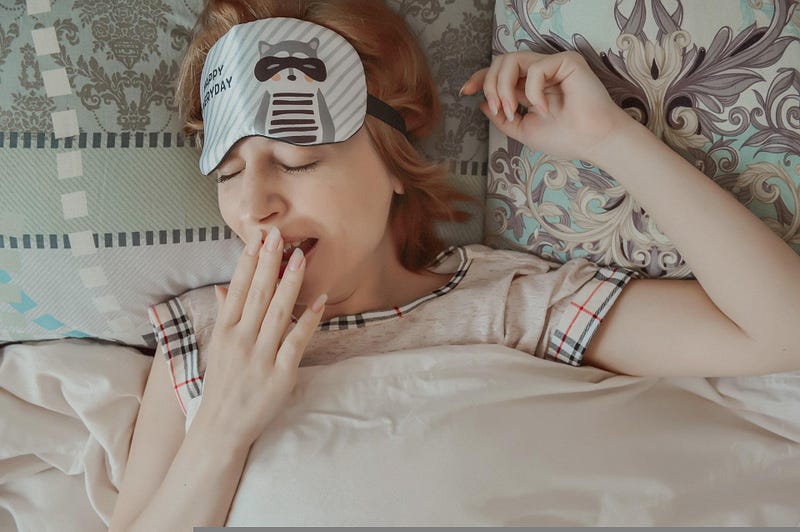
You are in a zoom call at the end of your workday.
A guy drones on about the company statistics. He shows graphs and numbers that made sense for some 5 minutes.
Your eyes defocus.
Your eyelids are heavy as lead.
Yet you somehow try to maintain focus.
What does your body do in response?
You yawn, shift a bit in the chair and try to adjust your posture to resemble a more awake state. Why did you actually yawn though?
Was its purpose trying to get you into a more active state?
Common knowledge is that we yawn in response to tiredness and sleepiness.
But there can be other reasons:
- Sickness
- Medicines
- Sociological — like yawning initiated by watching someone else yawn
It is believed that we yawn because this action causes us to breathe in more air, allowing more oxygen into the blood. However, experiments were conducted on a group in a room with a higher concentration of carbon dioxide vs. a group in a room with a higher concentration of oxygen. Only a little difference was found in yawning rates.
So, I went down the rabbit hole of yawning-related research online.
And the answer is not that simple!
There is no clear-cut evidence-based answer, but only several conjectures based at best as to why we yawn.
And hence, even today, such a common and deviously simple-looking topic like yawning evokes lots of discussions.
Let’s see a few theories.
1. It Wakes You Up
This theory is the most obvious one (and backed by a lot of research). It stems from the fact that yawning follows tiredness or drowsiness.
This has resulted in the arousal theory of yawning.
We know and have experienced that yawning is followed by fidgety behavior.
You feel kinda stretchy and a “comfortable uneasiness” engulfs you.
An experiment showed that there was an increase in heart rate and skin conductance, right after yawning.
What causes this to happen?
The very act of yawning!
Of opening our mouth wide until the jaw stretches.
It is believed from this study that this itself causes the mechanical stimulation of a specific cluster of cells — the carotid body.
So where is the carotid body located?
*Geekiness Alert!*
It is found below the ear where the jaw is connected.
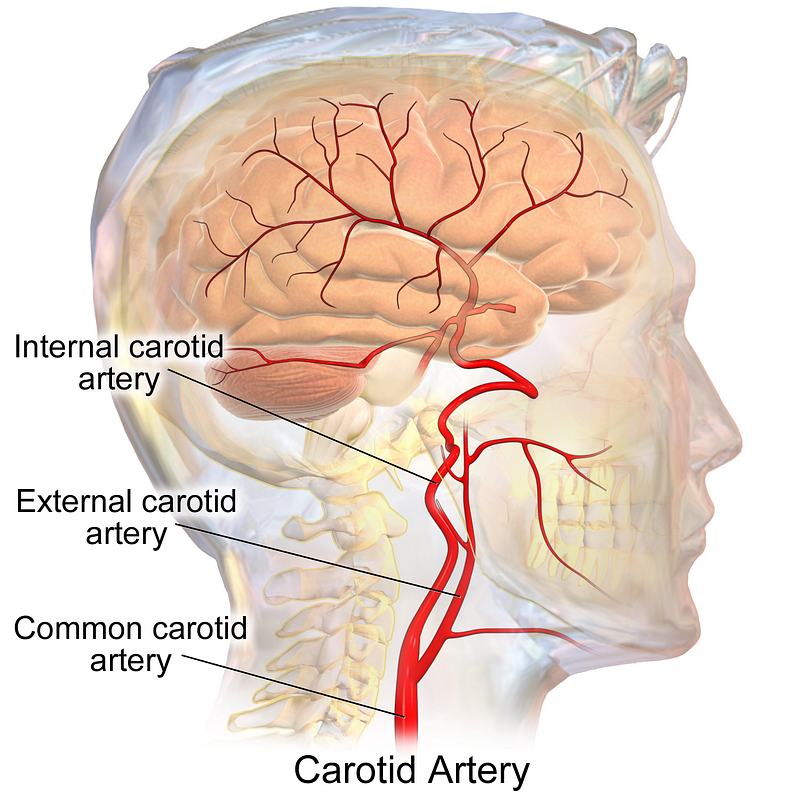
The strategic location of the carotid body helps in its stimulation when our jaw opens wide during yawning.
This leads to a release of hormones such as adenosine and catecholamines, which subsequently mediate the arousal response.
Interestingly, researchers found that a dose of caffeine has on the body's responses and compared them with the responses from yawning.
This means a yawn elicits almost the same “wake up” response in your body as a cup of coffee.
So remember that next time you yawn just before getting into Starbucks, you might as well turn back and skip the cappuccino!
2. It Cools Your Brain
The second theory is that the purpose of yawning is to help us cool our brains.
The evidence from this thoery comes from a research where brain temperature recordings were continuously monitored in rats during the 3 minutes before and after a yawn. It was observed that brain temperatures were higher till the onset of yawn, followed by a significant fall and return to base value in the next 3 min after yawning.
— from the paper on Thermoregulatory Hypothesis
It has been shown that warm environments do elicit more yawning and cool environments reduce it.
Hence the theory that yawning may have a thermoregulatory significance.
But correlation may not mean causality.
Naturally, there are several critiques of this theory.
For example, we feel comfortable, relaxed, and drowsy in a warm and cozy room which may cause us to yawn.
Whether the purpose is thermoregulatory or not, the physiological responses we generate after yawning do definitely have a cooling effect — the stretchy reaction on our face increases the facial blood flow which helps in dissipating heat.
Deep inhalation during a yawn reduces the temperature of blood going from the lungs to the brain.
Even the tears coming to the eyes at the “yawn-climax” may in fact have a role in cooling!
3. Sociological Reasons
We saw biological and environmental reasons why we might yawn.
But we ignored the elephant in the room!
One big trigger to yawning is by watching others yawning. It may not even be by looking at other people yawning, but also at other animals.
Heck, I yawned several times even while searching for yawning cat pictures for this article (trust me the internet is filled with them).
The contagious nature of the yawn is largely why scientists think that there may be sociological reasons why we yawn.
An experiment was conducted on a group of 22 toddlers, where they were shown video recordings of their mothers yawning. It was observed that 16 did not yawn at all through the study, while 2 yawned once after the presentation and 4 after.
It was surprising that they were immune to the effects of contagious yawning even when watching an individual yawn, who had a strong bond with them (their mother)!
But older children (4 years and above) were affected by the “yawn contagion”.
There are other pieces of evidence that indicate a strong correlation between yawning and social skills/empathy.
For example, the same research found that the contagious response is much lower in people with:
- Mental disorders like schizophrenia
- Autism
Another piece of evidence that supports the sociological theory:
Humans are not the only ones susceptible to contagious yawning.
It is observed in other social animals like chimpanzees, lions, cats, and dogs among many others.
I even saw my landlord’s dog yawn after looking at me yawning (but he was generally a very sleepy dog, yawning frequently whenever I have seen him awake).


Due to all the evidence, researchers theorize that yawning behavior may have been used to indicate tiredness and a need to rest to other members of the group.
It is thus concluded that yawning may be a part of the action repertoire of empathic and communicative processes in adult humans and some other mammals which provide for a strong social role of yawns in these species.
— Research paper, Yawning and its physiological significance
Scientists have a pretty good idea regarding the factors responsible for yawning.
But, the answer to the question as to WHY we yawn remains a gaping mystery.
The next time you feel drowsy during a zoom call at the end of your workday, you can ponder over this deep question of humanity.
You may arrive at a satisfactory answer.
Or a better idea would be to simply shut down your computer and go to sleep.
You need it!
Managed to reach the end without falling asleep? Great! I hope you enjoyed the post as much as I enjoyed researching and writing it.
If you liked the facts in this article, you may also like one more unique fact:
Did you know that Medium’s Clap button explodes if you keep holding it?💥
Try it out!
Till then, happy reading!
fin.


