
NATURE PHOTOGRAPHY. BIRDS
The Great Tit Get-Together
When the songbirds take over your garden
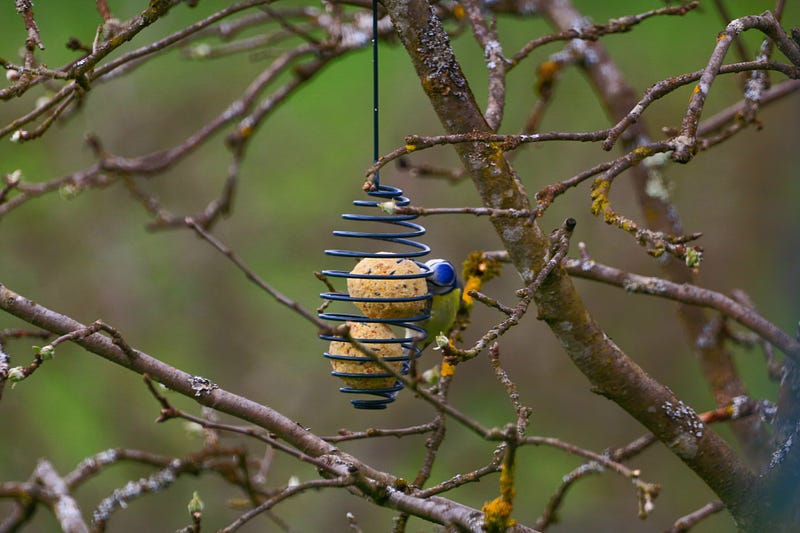
Songbirds. Known for their pretty melodies and quirky little bodies, these birds aren’t just for fairytales but uplift our backyard daily. In all shapes, sizes and colors, blue and great tits are the most dominant ones of their species.
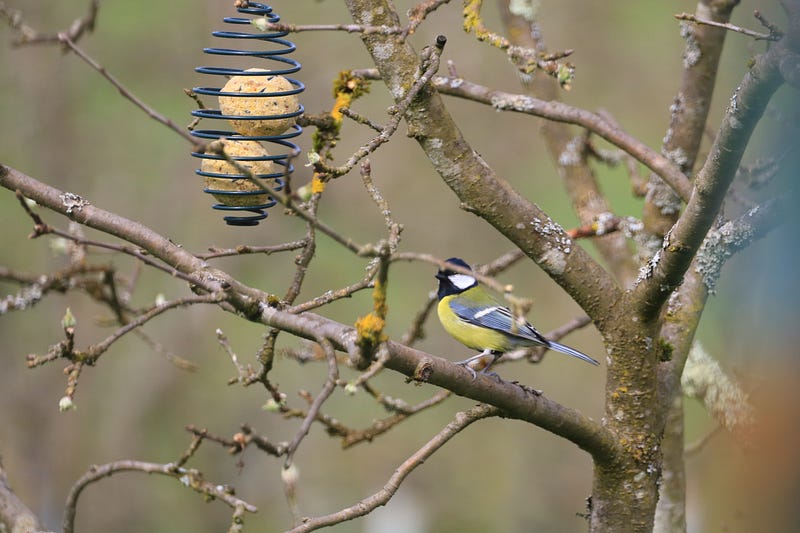
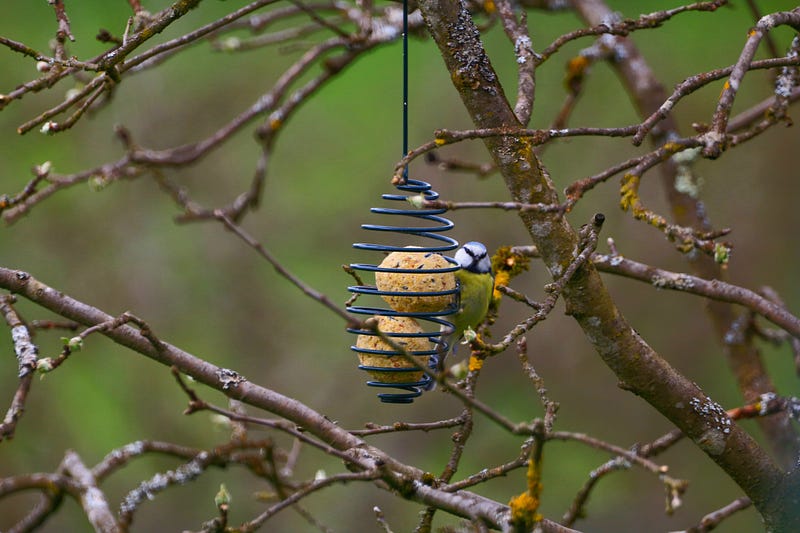
My parents found a new feeder and bought a couple of these stretchy spirals to entertain the birds. The first ones I saw coming for it were the tits.
“Tits are small birds with short bills and short legs. They’re always on the go, flitting about in trees looking for insects, and darting in and out of sight.” — rsbp.org.uk
While the blue tits are my favorite ones of the species, the great tits are the largest ones. Females and males are difficult to tell apart as they look the same.
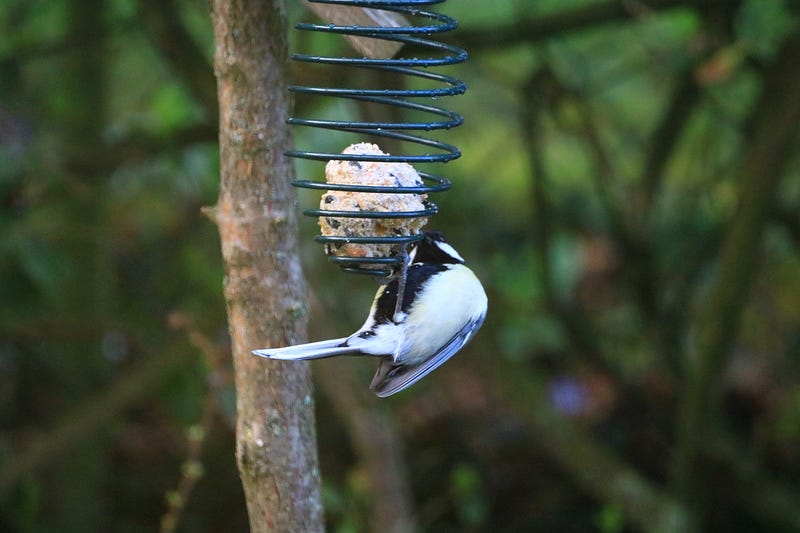
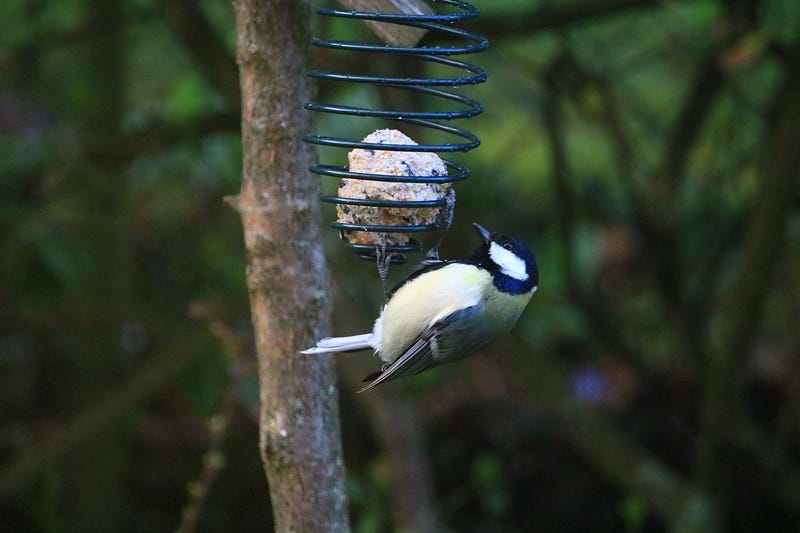
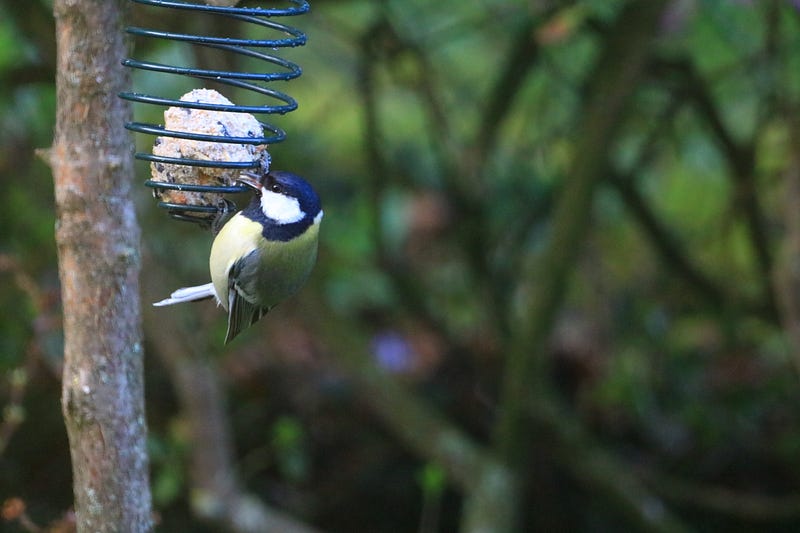
Great tits
“Great tits are very vocal birds. Their song is a two-note descending call repeated several times, usually described as ‘tea-cher, tea-cher!’.” — rsbp.org.uk
Great tits are home in the woodlands but made their move into urban areas and suburban gardens a long time ago. They aren’t shy among other birds and always get their share (or a bit more) at the feeders. However, they don’t hang around for long, just grabbing a seed or two and flying off again. Their favorite foods are sunflower seeds, peanuts and fat.
As resident species, great tits don’t move much and stay more or less in the same place throughout the year.
They prefer holes in trees to create a nest out of moss, hair and fur but are happy to put their eggs also into man-made boxes. Both parents take part in feeding the chicks that hatch from up to 15 eggs.
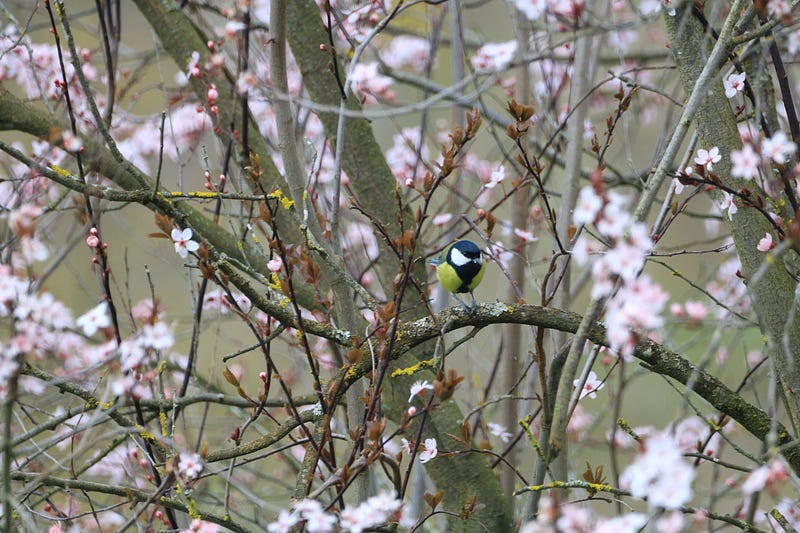
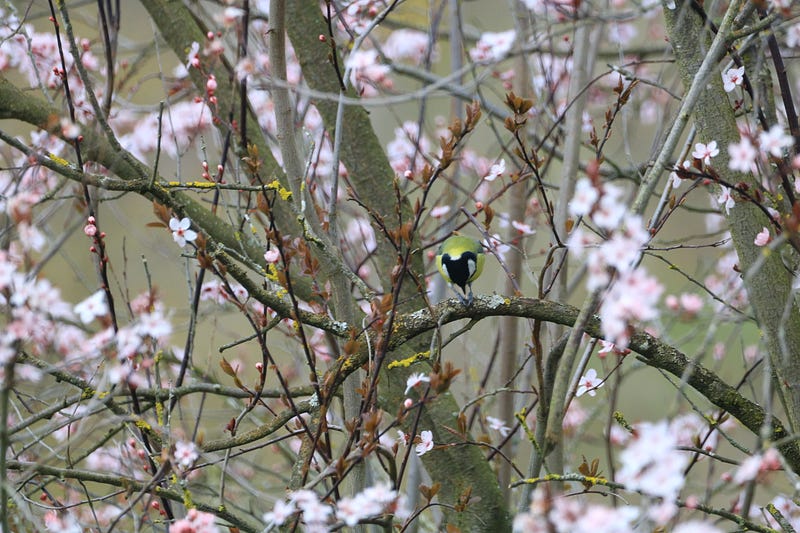
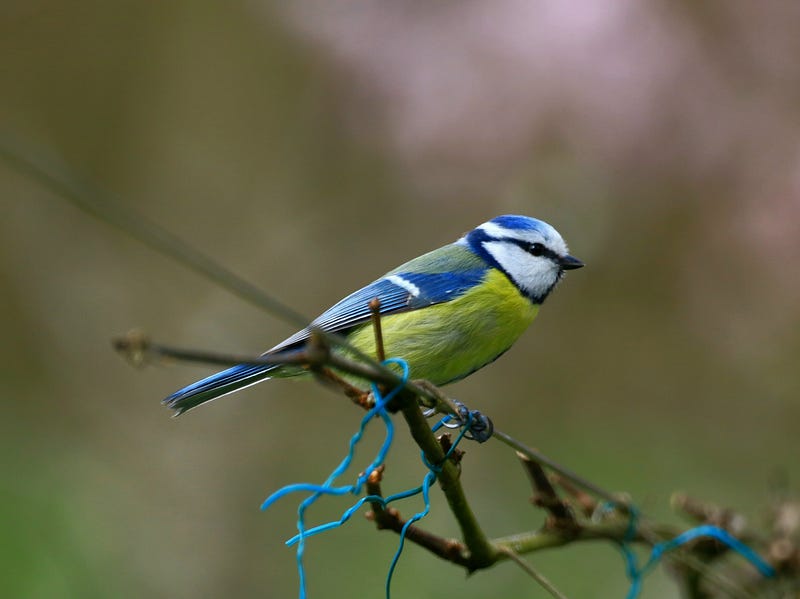
I always look for the dark black head which tells the great tits apart from the blue tits. As both of them don’t sit down for long, it’s sometimes difficult to tell them apart, especially when the sun is shining making the feathers shine and sparkle in a dark blue.
Blue tits
At my parents' garden plot is the wooden box hanging on one of the trees. I think that box might be older than me, and growing up I’ve never seen birds in it but in the most recent years, my parents had birds breeding in it quite regularly.
After hearing my mom telling me there was a family of blue tits living in the wooden box, I didn’t have to be patient for long with my camera in hand when one of the parents jumped out of the hole.
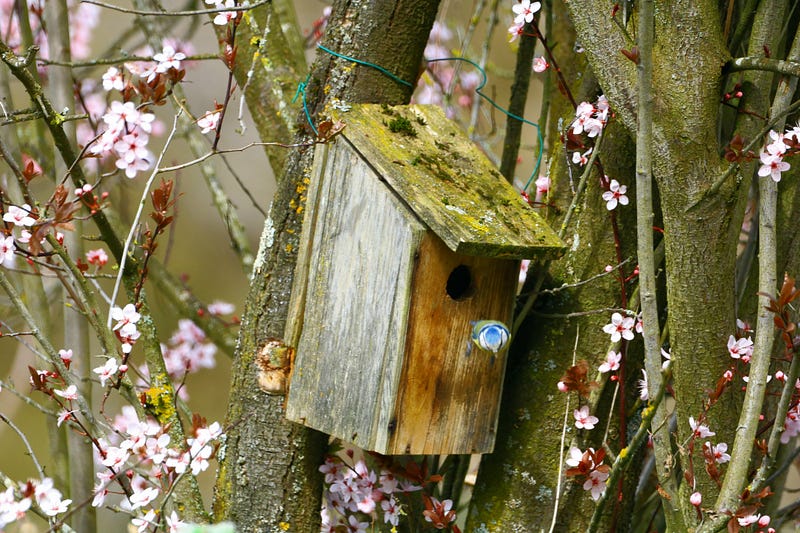
Blue tits are more common in gardens than great tits and they are a little smaller. Females and males are also difficult to tell apart as they look alike. You can see more of them together at one spot or even mixed in between other tit species.
“They have a blue cap, which can be raised into a little crest. They also have a white face, with a blue-black stripe that runs across their eyes.” — rsbp.org.uk
During breeding season these little songbirds are incredibly active always on the hunt for another caterpillar or other invertebrates to feed their chicks.
Blue tits are very acrobatic and you can spot them often hanging upside down on roofs or your garden feeders trying to pick a spider or some seeds.
“The blue tit song is quite distinctive, but also quite difficult to describe! It sounds a bit like: ‘tsee-tsee-tsee-di-di-di-di’. The first part is like a high pitched whistle, and then it dives down into a bit of a trill at the end.” — rsbp.org.uk
Blue tits love to build nests in holes in trees but they aren’t restricted to nature. They are very creative when it comes to nesting and will select anything as long as it’s out of reach for predators.
They’ll squeeze themselves into crevices in buildings and often select spots in man-made structures such as ticket machines, bins and hollow signs. They will also happily take the wooden box you set up.
Just like the great tits, they’ll also create a soft nest out of moss and grass with some feathers in between. Both parents will then take on parental duties taking turns in feeding the chicks.
As they are smaller, great tits might invade their nests but they sometimes end up with a mixed brood in the nests which will result in great tit fledglings who believe they’re blue tits and won’t be able to breed.
I hope you enjoyed this short photo essay alongside the informative narrative. As it had gotten incredibly cold, I didn’t go out to capture more birds but might get some different species in the upcoming weeks.
More about blue tits and other birds:
Join my email list here if you would like to read more travel essays or sign up for the Medium membership to receive unlimited access to my and other writers’ stories out here (I will receive a commission fee in return).
WordPress | Shutterstock | Instagram | YouTube | Mailchimp | Amazon


