Summary
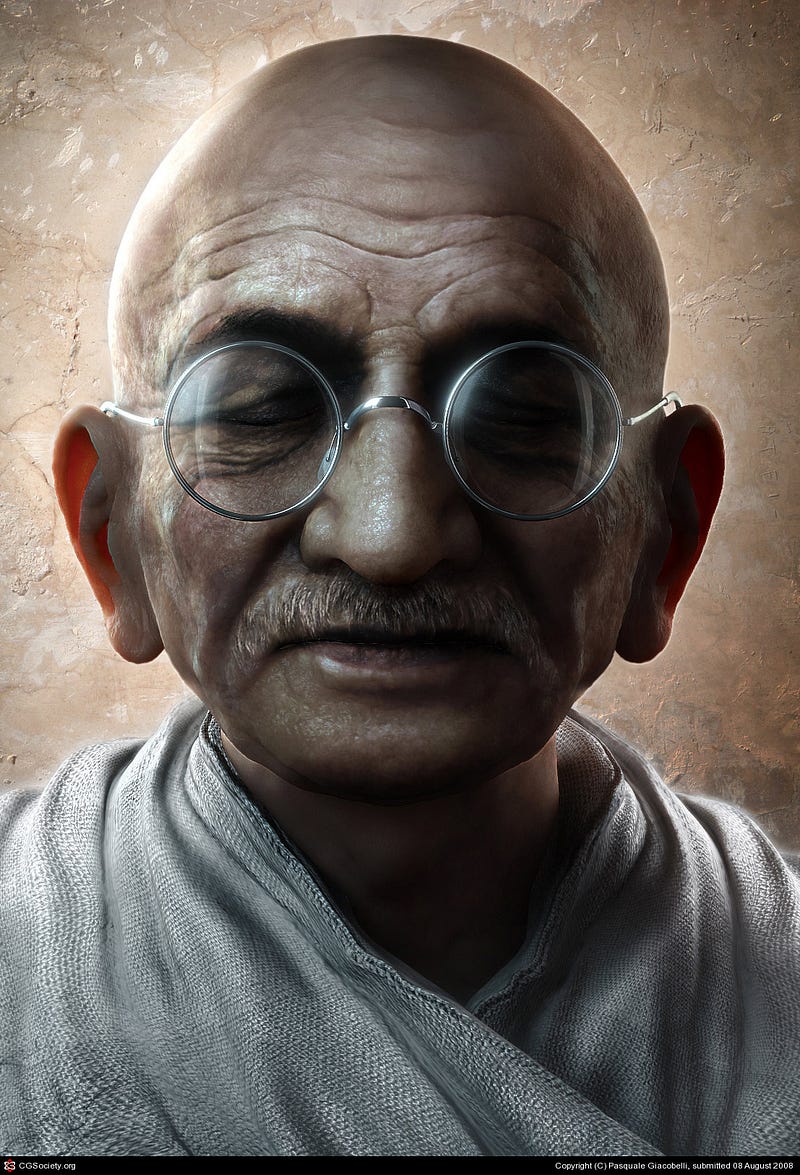
The web content titled "The Great Soul" eulogizes Mahatma Gandhi as a transformative leader who championed truth, non-violence, and equality, and whose teachings and legacy continue to inspire and enlighten.
Abstract
The article "The Great Soul" pays homage to Mahatma Gandhi, highlighting his profound influence on the masses through his teachings of truth and non-violence. Despite his humble appearance as a fakir, Gandhi wielded immense moral authority, inspiring people to follow his lead. His commitment to dismantling religious and caste barriers and his support for gender equality are celebrated as revolutionary. The text reflects on Gandhi's humanity and his inevitable death, suggesting that even in his passing, he exposed the world's anger and cruelty, perhaps implying that he was too virtuous for the world. His enduring presence in the hearts of people is likened to a flame that braves the tempest, symbolizing hope and resilience.
Opinions
- Gandhi is portrayed as a powerful moral figure whose actions and words had a significant impact on society.
- The text conveys a deep respect for Gandhi's principles of truth and non-violence, suggesting they are timeless and still relevant.
- Gandhi's approach to equality, particularly in terms of religion, caste, and gender, is presented as visionary and ahead of his time.
- The author seems to suggest that Gandhi's death unveiled the harsh realities of the world, implying a critique of societal values.
- Gandhi's legacy is seen as a beacon of light, suggesting that his teachings continue to guide and inspire long after his death.