
The Great Hong-Kong Tussle
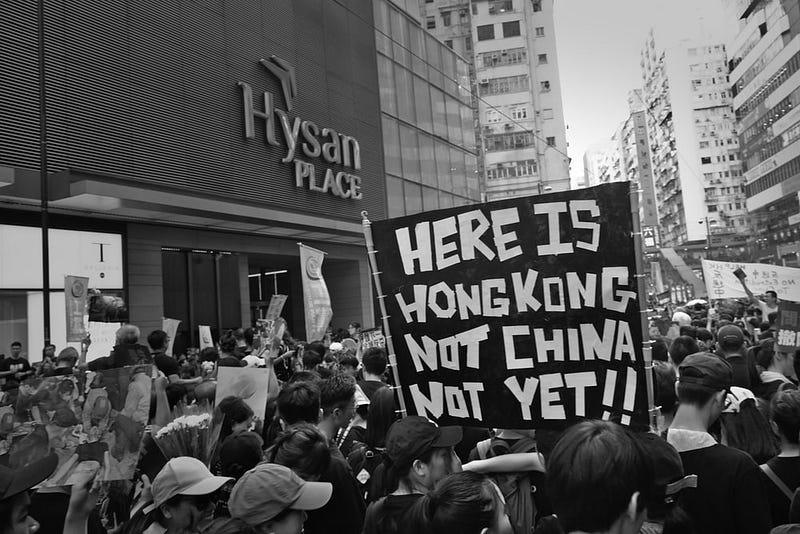
On the 1st of July, on the day of Hong Kong’s handover to China, something touted as the biggest challenge to Beijing’s rule since 1997 happened when around half a million Hongkongers marched through the streets, calling out for democracy. Ever since The Hong-Kong Protests have dominated a majority of headlines in the past year, and even continue to do so; with some people lauding it (even going as far as to call it Time’s Person Of The Year worthy) and others who think it is just a colossal, sprawling mess.
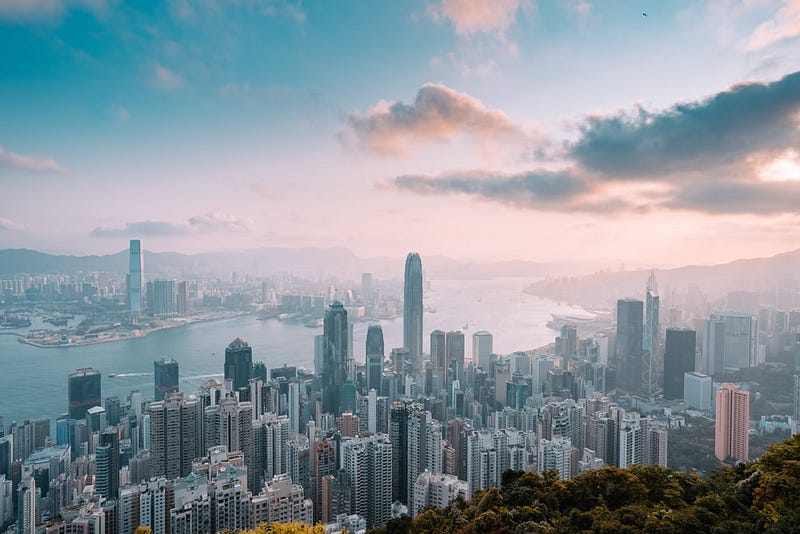
Decide for yourselves as here’s an analysis of the crux and developments of the problem:
History
It is paramount to understand the history of the conflict to understand its true essence. China and Hong Kong share a fairly convoluted history. For starters, The United Kingdom had held Hong Kong as a colony since 1841, when it occupied the area during the First Opium War (See: Treaty of Nanjing). The colony of Hong Kong was returned to China in 1997 after a treat between British Prime Minister Margaret Thatcher and China premier Zhao Ziyang in 1984 (See: Sino-British Joint Declaration). The treaty mandated that China would give Hong Kong some political and social autonomy through a “one country, two systems” policy for a 50-year-period (which is till 2047). This is commonly referred to as the “handover” of Hong Kong as Special Administrative Region (SAR), and under this, Hong Kong enjoyed slightly more rights like free speech and freedom of assembly; along with control over Economy, Police Force and the Justice System under its quasi-constitutional document, the Basic Law; though Military and Foreign Affairs were continued under China. Moreover, Hong Kong did not have complete over its political system, the issue of which we will reflect on later in the post.
Why is there Friction between Hong Kong and China?
People
First and foremost, the people of Hong Kong don’t see themselves as culturally and ethnically Chinese per se, but a particular sub-ethnic and sub-culture group of “Cantonese.” A lot of frustration has been building because of erosions of Cantonese culture, specifically fears that the language is dying out as Mandarin is emphasized in public schools and becomes the lingua franca.
Also, while they consider themselves culturally and ethnically Chinese, they do not recognize the Chinese government’s jurisdiction, as China agreed during the 1997 Handover to leave the administration of Hong Kong alone; the relationship is comparable to how Puerto Rico is free to administer itself but under the general protection of the United States.
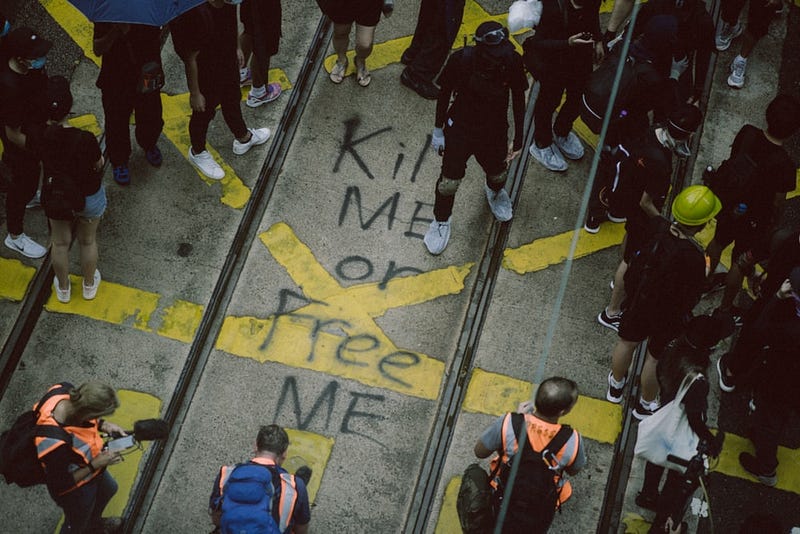
The Political System of Hong Kong
The politics of Hong Kong is unfairly rigged in mainland China’s favour (a.k.a pro-establishment). In Hong Kong, the Chief Executive (CE) is the head of the government of the SAR. The voting for CE is not done very inclusively; rather, only around 1200 people get to vote. They are members of an election committee that is, again, largely dominated by representatives from commercial bodies and other professionals.
The Legislative Council (LegCo)is the legislative body of Hong Kong. They have the power to propose bills and make amendment process, though they are largely overshadowed by the Executive (which solely has the power to pass and propose new laws). Here, only 35 of the 70 seats of LegCo are directly contested through geographical constituencies, which could consist of a mix of Chinese and the local Hong Kong population. The other half is allotted through functional constituencies which are generally represented by the Education, Health, Tourism, Finance and Trade sectors. Needless to say, if you’re a multi-billionaire, and Hong Kong has many of them, owning companies across many sectors, you control a lot of votes. The nature of their businesses in needing to trade with China means these billionaires tend to be very pro-Beijing, and naturally, these corporate seats are dominated by pro-Beijing guys. There is criticism that this causes Chinese/pro-establishment domination in an already dominated legislative and political process.
Extradition Bill (Direct cause of the conflict)
The introduction of the Extradition bill was the direct trigger in the cause of protests. In 2018, a couple from Hong Kong went on holiday in Taiwan. Only the boyfriend came back as Chan Tong-kai murdered his girlfriend, Poon Hiu-wing in the hotel room they shared and confessed to leaving with her body in a suitcase. This murder case exposed a legal loophole: Chan could not be punished for a crime he confessed to committing in a Hong Kong Court as he committed it in Taiwan; neither could the Taiwan Court convict him as there is no extradition (an Extradition is an act where one jurisdiction delivers a person accused or convicted of committing a crime in another jurisdiction, over to their law enforcement) agreement between Taiwan and Hong Kong. Therefore, he was charged in a money laundering case in a Hong Kong court as he had used his girlfriend’s credit card after her death. He served 19 out of his 21 months in jail time, but the question still arose: what was to be done about the murder charges?
This led to the introduction of the Fugitive Offenders and Mutual Legal Assistance in Criminal Matters Legislation (Amendment) Bill 2019, popularly referred to as ‘The Extradition Bill’. This bill enabled the transfer of fugitives and offenders to both Taiwan and more controversially, mainland China. Carrie Lam, the ‘chief-executive’ had struck a deal with Beijing to give more authority to China to extradite fugitives from Hong Kong to other parts of China without much justification or oversight. China was notorious for shutting down all and any challenges to its governance regardless of the means, intense censorship and stringent control over its justice system. This is another chip off of Hong Kong’s autonomy, and it means that Hong Kong activists that go to mainland China to advocate for democracy could be seized when they return home and jailed elsewhere in the country. Hongkongers felt that this will be used as a way to snuff out civil disobedience and could be one of the final nails in the coffin for Hong Kong’s semi-autonomous movement if it had gone through, as the general populace was already fearing a gradual erosion of the “one country, two systems” policy, and ergo, Hong Kong’s autonomy.
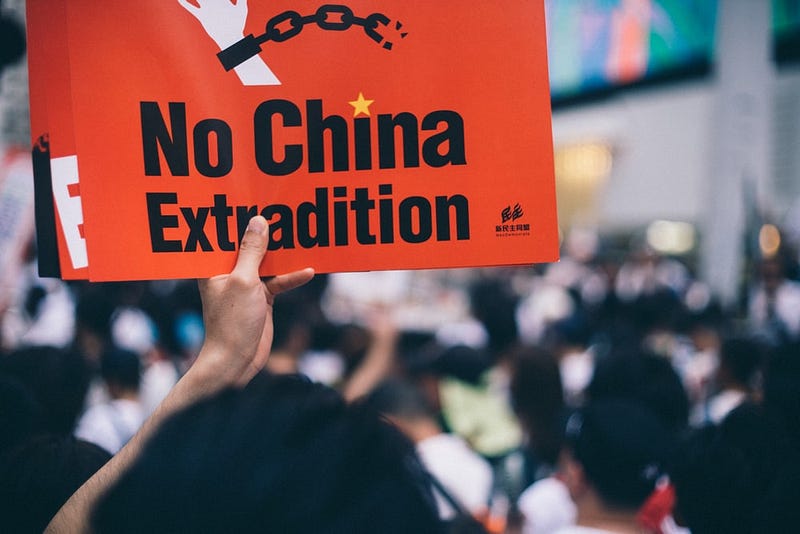
The Protests
The protests began in June with one main objective — for the government to withdraw the controversial bill that would have allowed the extradition of fugitives to mainland China. Yet, this signalled something different for different people involved. For some, it was for the simple repealing for an unfair bill. For others, it was a war for democracy. A rebellion for autonomy. Hundreds of thousands of people took to the streets. What began as peaceful protests escalated into something out of control as two protesters were shot with live bullets, a man set on fire and another hit with a brick amidst protests. Police brutality and the indignance of Carrie Lam were clearly not helping matters. More than 1,300 people have been arrested so far in the context of the Extradition Bill protests, and the number continues to rise.
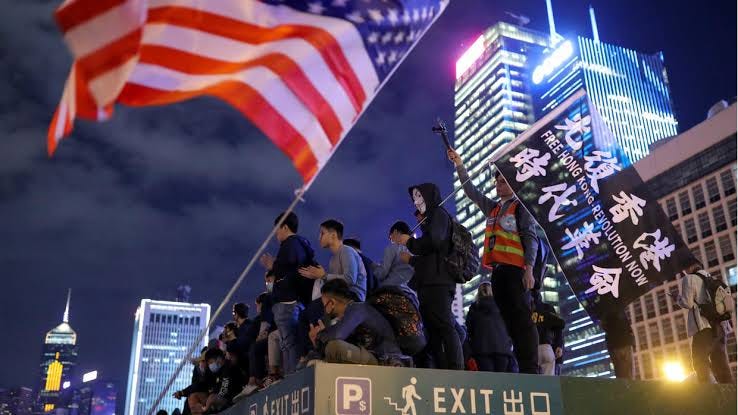
Amnesty International interviewed 21 people, almost all of whom described being beaten with batons and fists during their arrests, even when they posed no resistance. Protesters become more extreme in their vandalism, setting fires in subway stations and smashing shop windows; especially establishments against their cause. The agitation reached its peak in international headlines when protesters stormed LegCon, an unprecedented event, taking down the People’s Republic of China (PRC) emblem and defacing the portraits of leaders who served after 1997.
The protests snowballed into something larger, with the protesters now pushing for five demands (“Five demands, Not one less!” is the rallying cry):
- Full withdrawal of the bill
- An independent inquiry into instances of police brutality
- Amnesty for those arrested under the context of protests
- Retraction of the government characterization of the protests as “riots”
- Implementation of Universal Adult Suffrage in Hong Kong and direct election to choose the Chief Executive and members of the LegCo
Carrie Lam consented to the first demand by withdrawing the bill, but by then, it was too. The protests had gained too much momentum to stop.
The Future
It is clear that the protests were not what it had started as; it has evolved. Though they have a common goal of autonomy in mind, the goals of individuals are quite variant. Some want Carrie Lam to be removed. Others want a fair electoral process. Then, there is even a group of people who are looking for complete separation from China and to do away with the “2047 agreement” ( Article 1 says Hong Kong is “an inalienable part of the People’s Republic of China”). China has had a very firm cautionary stance with President Xi vowing to crush any separatist movements with “bodies smashed and bones ground to powder”. There are concerns of an attack by troops from Beijing; which seems plausible, but highly unlikely.
The protests have both been criticized and lauded by the international community. Detractors feel that the leaderless protests have lost sight of its original vision and are now just hampering the overall process while others feel that this is a monumental step in the quest for democracy after the 2014 Umbrella Movement. Nevertheless, in light of the protests, progressive action has happened — other than the obvious revoking of the bill; in the latest district council elections, 17 of the 18 councils were won by Pro-democracy candidates in an unprecedented landslide victory. Though it doesn’t mean a lot in the bigger landscape and is more of an indicator of public opinion, this does give the Pro-democracy bloc more power in the upcoming 2022 Chief Executive Elections.
The economy and tourism sector have taken a major hit, with Hong Kong officially entering a recession in October. Unemployment rates have especially risen in the tourism and food sectors, by 5%, with small-time businesses being shut down. Hong Kong’s status as an economic hub causes it to affect the global sector as well.
What lies next is unclear to say, at the best. Anti-Lam and Anti-Beijing sentiment is at an all-time high. Neither Beijing nor Hong Kong is willing to budge, with irreconcilable differences pervading. Though the protests have dwindled in scale, they don’t seem to be stopping anytime soon. Meanwhile, police have arrested over 6,100 people and formally charged nearly 1,000 since June 9, when the protests began. The youngest arrested so far is 11 years old. With economic losses continuing to seep in and people already starting to move, will there be an end to this stalemate? Only time will tell.
Disclaimer: We are a platform which allows all views to be represented without bias or discrimination. This piece is not to be judged upon as the final stance of MUNner’s daily or MEC MUN Society.
.
.
.
Follow us on medium for more for similar stories. Follow us on Social media to stay in the loop- Facebook| Instagram|Telegram Channel |Youtube|Twitter. We also invite guest writers to publish their material via this blog!.


