
The Great Dragon Boat Racing Summer
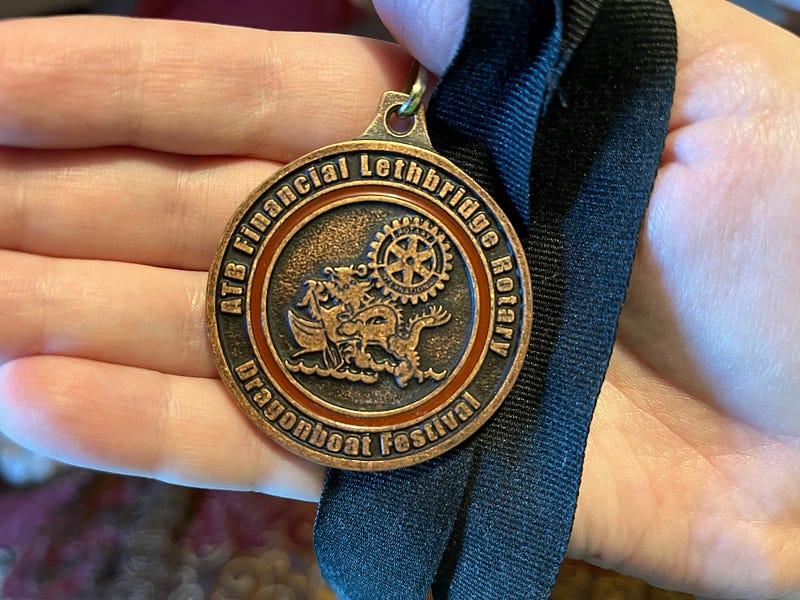
My souvenir bronze medal from Canada
“Wow, that’s amazing!” said my teammate Chrissy, staring up at the long wooden boat suspended above our heads.
Other teammates were peering at the many dragon boat race photos that our Seattle host couple had hung on their walls.
“Yes, we’ve raced all over the world,” said the Seattle woman. “Tokyo, Sydney, Singapore.”
The boat in her house was just a half-size replica of a dragon boat, but still, I wondered if it had somehow been hauled into the living room, or if the living room had been built around it.
For several years, I’d been hearing about a sport called “dragon boat racing” taking place on Flathead Lake in Montana, an hour and a half away from my home.
The photos in the newspaper intrigued me: many pairs of paddlers propelling long, narrow boats, with a drummer sounding the beat at the front and a person steering with a paddle standing at the back.
The sport had been practiced in Asia for thousands of years, but was only now rising to popularity in the United States.
In the summer of 2013, my love for all things water finally drew me to sign up. I’d rowed crew in grad school and was now part of a Masters rowing team in Idaho, four hours round trip from my home.
Now I’d have to travel for dragon boat practices, too.
“I can’t believe you come all the way from Plains for this,” my teammates would say.
But in rural Montana, driving three hours round trip is like a walk in the park. We have to travel for everything — sports, shopping, and cultural opportunities.
To my delight, I learned that I’d get to travel further afield than Somers, Montana, where our practices were held. We were going to the races!
As soon as I heard this, I hoped I’d have the opportunity to take home a race medal as a souvenir.
When I rowed in grad school in Scotland, my crew raced at the Scottish University Championships and placed second. We were supposed to receive silver medals, but because it was 2009 and the heart of the recession, the organization didn’t have enough money to give them to us.
I was sorely disappointed. I’d never been good at a sport before and that medal would have been something I cherished all my life.
Now I had a chance at redemption. I picked up my paddle and got to work.
Dragon boat racing is extremely hard on the body. You raise one arm straight up, then twist with all your might as you plunge the paddle into the water and pull, over and over and over again. Once all the oxygen gets sucked out of your body, your muscles must keep working.
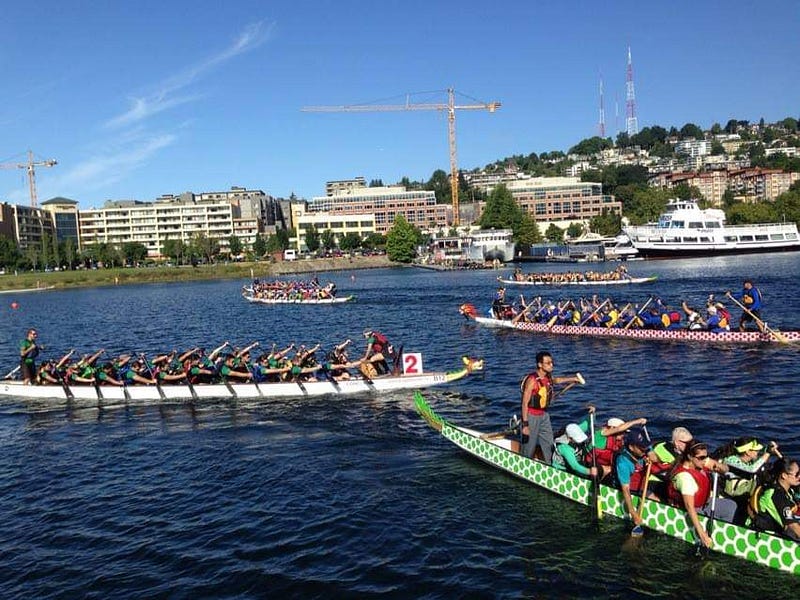
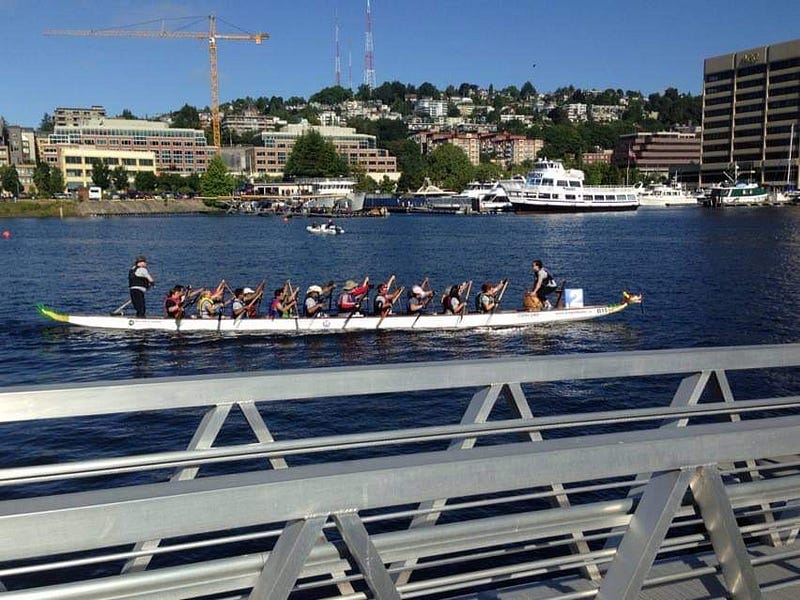
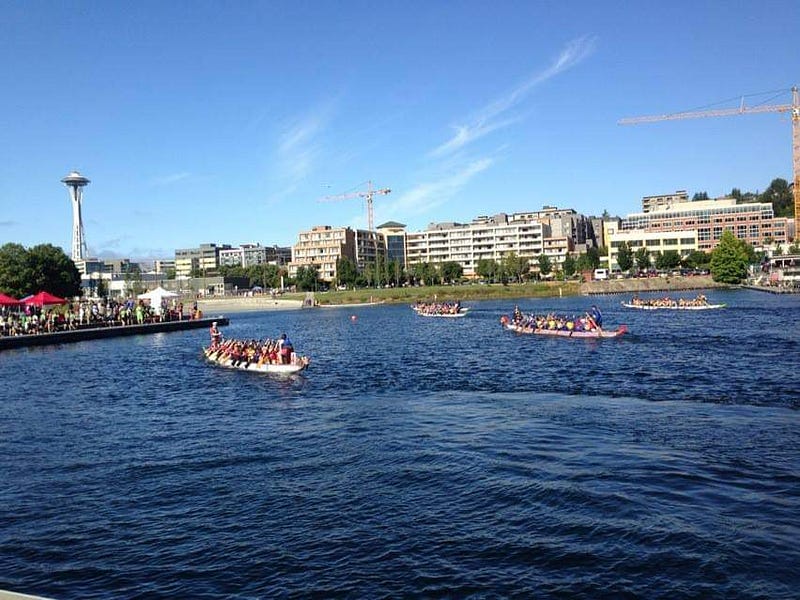
The trip to Seattle was great fun. The bay where we rowed was right by the Space Needle, which was a beautiful sight to behold as countless dragon boats jostled each other going in and out of the docks.
It was a hot day and I baked under the searing sun. I was still content from the barbecue at the host couple’s house the night before, when we admired the boat that hung from their ceiling.
No medals, though. I don’t recall if that regatta even gave any out. I think my team did well. My only souvenirs were my few photos and the orange stain my sunscreen left on my pristine white racing jersey.
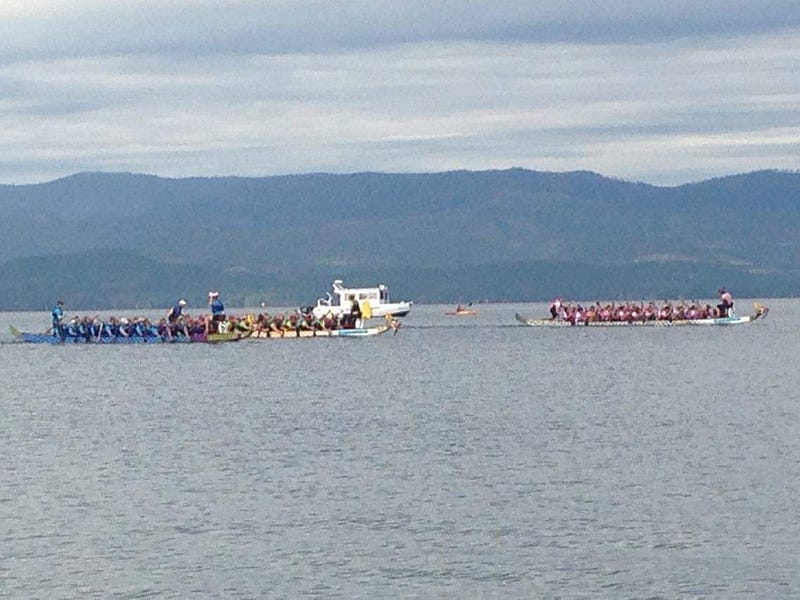
Other trips followed. One day, deep in summer, our team held a practice session at Glacier National Park. My mom and I got up at the crack of dawn to make the three-hour drive so I could be there on time.
It was worth it. The clear, still waters of Lake McDonald greeted me, only whispering under my paddle with the slightest sound as our boat whisked along. Our drummer’s beat rang out in the crisp morning air, tourists watching us from the rocky beach. Aside from a couple of kayaks, we had the whole lake to ourselves.
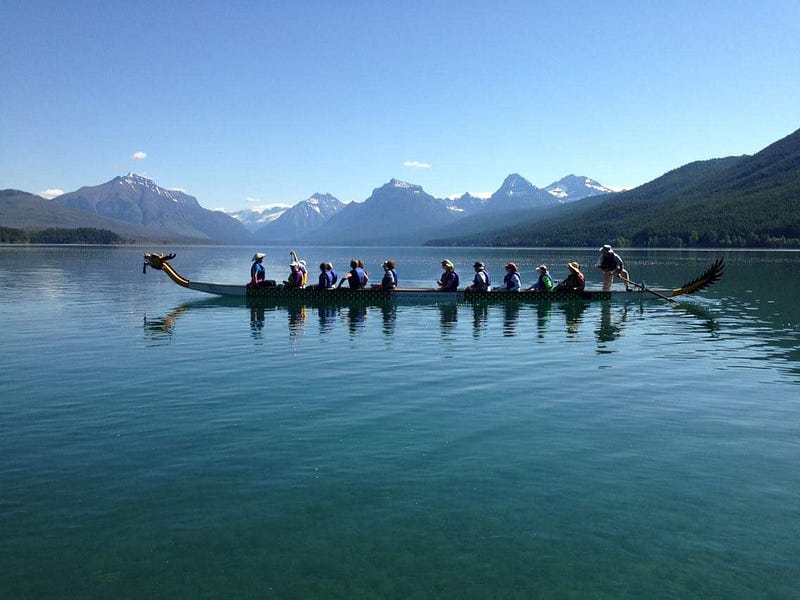
Then we readied ourselves for our races in Lethbridge, Alberta. I was especially excited for these, since despite its proximity, I had only been to Canada three times in my life, and then only to British Columbia.
The morning of departure, I made the long drive up to Kalispell, Montana, and boarded the team van. Big mistake — I was trapped for eight hours round trip with the most annoying, complaining, and chattering of my teammates.
At least I had a window seat. I could look out upon the majestic ice-sculpted mountains of Glacier National Park to the west, and marvel at the stunning flat farmland and prairies of Alberta.
I remember a disturbing dinner conversation with my (much older) teammates in a pizza restaurant in Lethbridge. They were talking about death and how they’d rather die relatively young than linger on to a great old age.
“I want to live long,” I said. I didn’t want to slip away into nothingness, to not be conscious anymore, to not exist in this big and beautiful world.
They all jumped on me, saying I was too young to understand. If only they knew how scared of death I was. Then they’d have been a little more compassionate.
The Lethbridge Dragon Boat Festival had the poor judgment to schedule a raucous concert right across the street from our hotel. As a result, I hardly got any rest the night before our races. I finally fell asleep in the wee hours curled up at the foot of my bed, listening to the TV to drown out the noise.
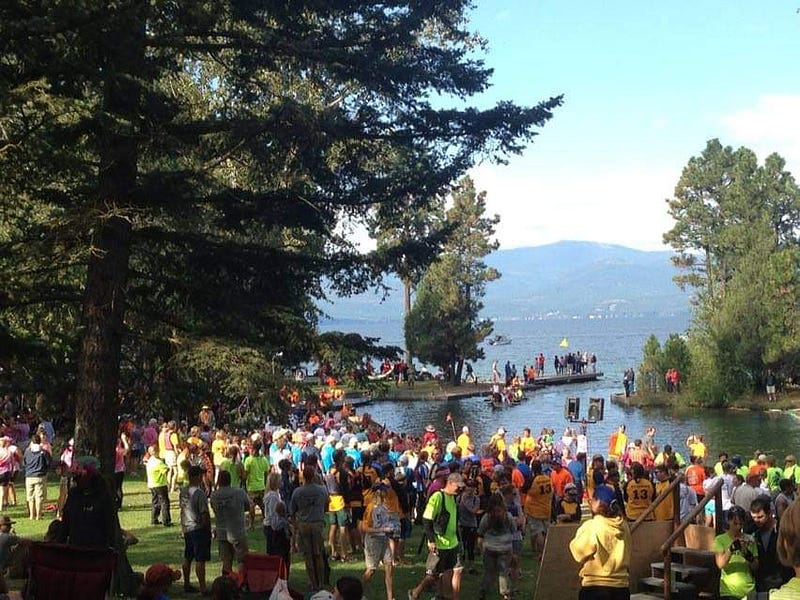
In the morning, though, I was raring to go. We were racing in Canada! As it turned out, we were the only American team at the regatta. People made a big fuss over us, proclaiming that we made the regatta international.
We had our first heats of races in the morning and advanced. The thrill of competition seized me. Round by round, we kept going through. Our coach didn’t like us looking over at other boats while we were racing, but I couldn’t help it. I kept seeing us creep ahead of other bows, or better yet, leap ahead, and inwardly cheered.
When it came time to choose my lunch from one of the many concession stands, I realized that I had forgotten about Canadian money. All I had was American! The regatta was in a park and there was no ATM in sight.
I felt like an idiot going from vendor to vendor, asking if they’d accept American dollars. Finally, I found a Greek gyro stand that would. I ate my lunch while I strode along the shore of the lake, too restless to sit still.
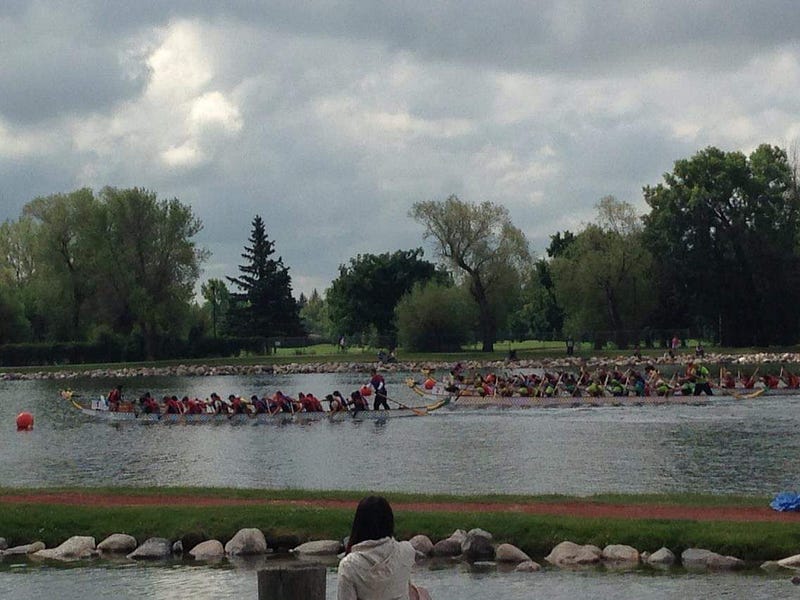
Our success continued in the afternoon races, until finally we reached the championship round. People from competing boats called out encouragement to us, the international team. We lined up at the start and the gun went off.
A dragon boat race lasts two and a half minutes at most, but if you’re trying to win, it’s one of the toughest physical tasks you’ve ever tried in your life. Bodies heave, paddles splash, and immensely heavy boats zoom through the water.
We were ahead of some teams, but behind two others. I paddled as hard as I could, muscles screaming, but the finish line was closing in. The race ended like that — us in third place out of all the dozens of boats in the regatta. It was a fine showing.
Then came a surprise. They were handing out medals! Dare I hope? Yes! There were bronze medals, too. I was finally going to get my water sport prize.
“Hey, we’re international medalists!” Chrissy exclaimed as the new medal hung around her neck.
It was a better souvenir from Canada than any money could buy.
Thanks for reading, and thank you to the editors at Globetrotters (JoAnn Ryan, Anne Bonfert, Jillian Amatt — Artistic Voyages, Adrienne Beaumont, Michele Maize) for running a great publication.
Anne Bonfert’s wedding dress is just the kind of thing I’d wear for my own wedding:
Tara Torres tells a vivid travel story:
Here is the October “Souvenirs” Challenge:


