
The Good Samaritan & the Robber
The Question of Relationships
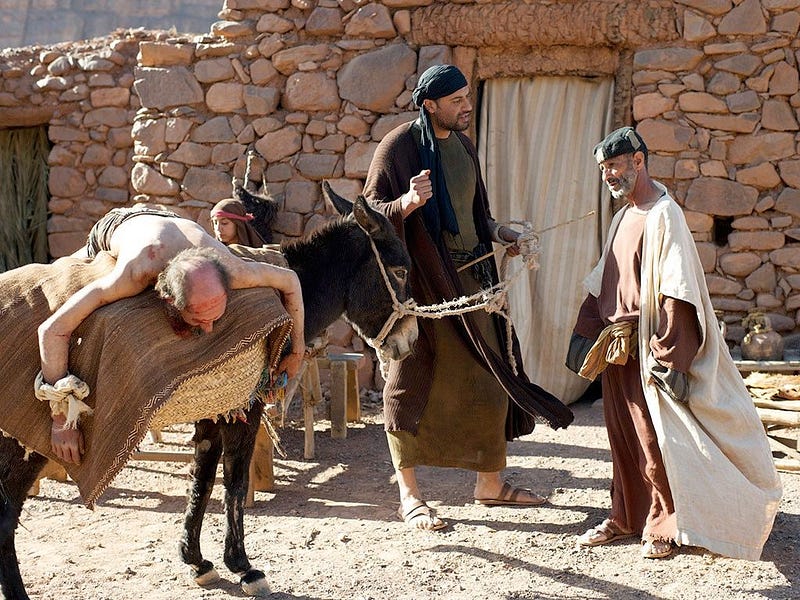
One of the most famous parables in the gospel is the parable of the good Samaritan. There are 5 labelled characters in the parable, which include the good Samaritan, the priest, the Levite, the injured person, and inn-keeper. Some robbers are also part of the story. The most forgotten character in the Gospel are the robbers in the story.
The insights of George Soares Prabhu, SJ would be helpful for us to get deeper into the parable. If the same action of robbery was continued, we should try to find out the reason for it. Probably the robber is doing so because he is in need of food. The society may have forced him to take up that role. At such moments, I think it is the question of survival more than the question of right/wrong. Holding this insight on the background, I would like to reflect on the relationships between the persons — the relationship of robbers with the injured person, with the good Samaritan and with the Priest (Levite). The robber may not have any relationship with any of them as a friend or a relative.
Before we get into the depths of the relationships, let us try to see who could be the robbers today? The companies who do vast ecological damage in the name of development robs the future from the younger generations, robs the present of poorer people. In the name of development, the government and other influential sectors rob the land of indigenous people. Corruption and different economic schemes or developmental models are forms of economic robbery. Many countries, including my own, have the dubious distinction of the fast growth rates in inequality between the rich and the poor. Caste and class distinctions rob the dignity of many sections of the society.

In addition to these large-scale robberies, there are also small-scale robberies by the people who found it difficult to survive. There are also some miscreants trying to gain advantage by means of robbery. But the civilized culture of today has brought a change in our understanding, only the small-scale robbers are called robbers. The other exploiters become the patrons of development and freedom. In today’s world, we should divide the category of robbers into two categories, petty robbers (many do for their survival) and large-scale exploiters. Now let us see the relationship of both the groups of robbers with the injured person, Good Samaritan, and the priest.
The petty robbers rob and attack in a very explicit manner. The injured person feels disgusted at the robbers. There is a relationship of hate brewing between them. The large-scale exploiters do their jobs in a very subtle way. The injured persons are either unaware of or refuse to believe in the damage created by the exploiters. The occasional freebies given by them act as pain-killers. The injured person (s/he won’t even know s/he is being injured) has an admiration-based relationship with them and wants to become like the exploiters.
The relationship between the robbers and the priests is a working relationship. By priests, it needn’t mean only the priests of any religion, but anyone who has a responsibility to be a care-taker and a prophet. The robbers of both kinds don’t attack the priests; the petty ones out of respect accorded to them; the exploiters due to the tacit understanding between them. Priests might attack the petty ones for the injustices committed by them, but let the exploiters do their job. Many times, the priests are least interested in getting involved (opposing) in these acts of robbery as it would dirty their hands or affect their comfortable lives.
The relationship between the robbers and the Good Samaritan could take various forms. Surely, the Samaritan would do the basic form of charity to the injured persons. But s/he would be compassionate with the petty robbers. Most of them are engaged in such acts for the sake of survival or for a decent living. The Good Samaritan would take part in the creation of opportunities for the betterment of life situations. S/he would take support in initiatives that reduce the inequality of the society. But a different face of the Good-Samaritan would be seen in his/her relation with the exploiters. S/he becomes a prophet and fight against all forms of implicit and explicit exploitation.
World needs more Good Samaritans, the ones who are compassionate with the petty robbers and the poor and take part in efforts to empower them, the ones who are fearlessly fighting against exploitative systems and individuals.
I would be happy to hear your comments or ways of looking at the same parable.

If you are interested, I have also written these pieces.


