
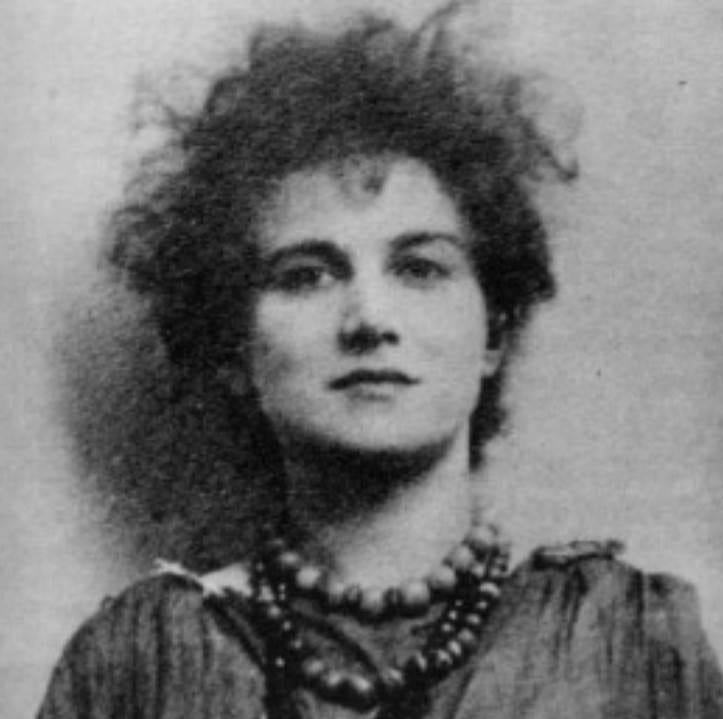
The Golden Dawn and the Rebirth of Western Magick
The Hermetic Order of the Golden Dawn proved indispensable — and burdensome — to modern occultism
The quest for a Western magickal tradition, or a remade variant of it, altered the face of occultism in the early 20th century.
The most influential effort occurred through the Hermetic Order of the Golden Dawn, a British-based initiatory group whose innovation was matched only by factional disputes and frictions among its leaders — which in turn precipitated still newer forms of occultism.
The traceable history of the Golden Dawn began in fall of 1887, when London coroner and Freemason William Wynn Wescott (1848–1925), came into possession of a folio of alchemical symbols and encrypted ritualist writings in English, French, Latin, and Hebrew.
The 60-leaf folio was accompanied by a sheet with the name and address of a mysterious (and possibly invented) German countess whom the bearer could contact for guidance.
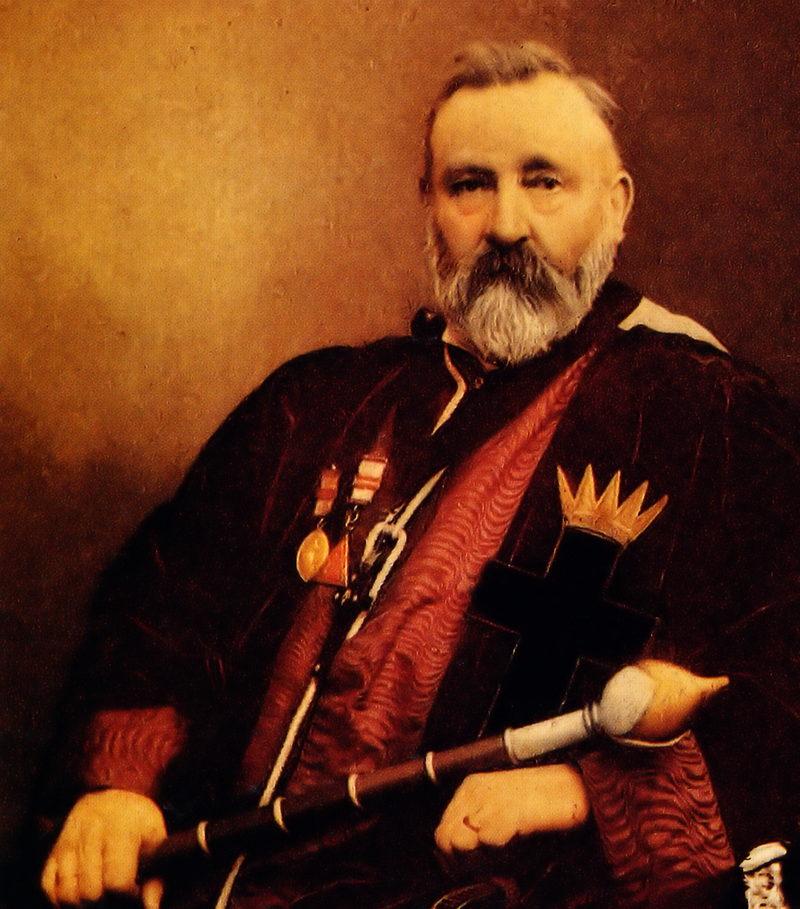
Wescott said that he received these “Cypher Manuscripts” from the Rev. A.F.A. Woodford, a fellow Freemason who died that year. For his part, Woodford is sometimes said to have purchased the manuscripts from an antiquarian bookdealer in 1880; other accounts have him receiving them from Masonic scholar Kenneth R. H. Mackenzie, who died in 1886.
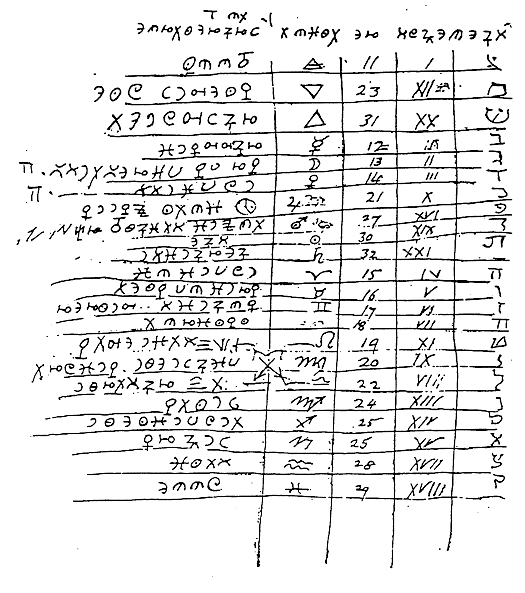
There is controversy over whether Wescott, seeking to endow himself with magickal authority (a common theme in occult history) forged the coversheet and follow up correspondence with the unseen Countess Anna Sprengel, sometimes said to have died in 1890.
In any case, Wescott claimed to have received from the countess news of hidden masters, later called “Secret Chiefs,” who maintained a Hermetic-Rosicrucian order into which he was provisionally invited. Wescott brought the material to two friends and colleagues with whom he was already involved in a self-styled Rosicrucian group. They were William Robert Woodman (1828–1891) and S.L. MacGregor Mathers (1854–1918); Mathers seems to have coined the lasting term “Secret Chiefs.”
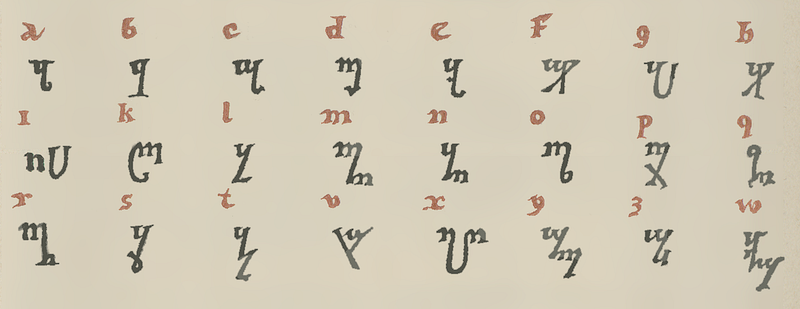
Westcott and his collaborators deciphered the folios, which were based on a code from a 1518 manuscript called Polygraphia by Johannes Trithemius, the German Benedictine abbot who had worked with Renaissance occultist Cornelius Agrippa. The three men devised the framework of the Golden Dawn as the outer order of the secret lineage from which the manuscripts were said to have originated.
For a time, the Golden Dawn proved an extraordinary womb of activity for a wide range of both male and female artists, intellectuals and seekers hungry to revive the mythical and magickal. Luminaries included poet W.B. Yeats (1865–1939), magician Aleister Crowley (1875–1947), historian Evelyn Underhill (1875–1941), actress Florence Farr (1860–1917), and occultists A.E. Waite (1857–1942), Dion Fortune (1890–1946), and Israel Regardie (1907–1985).
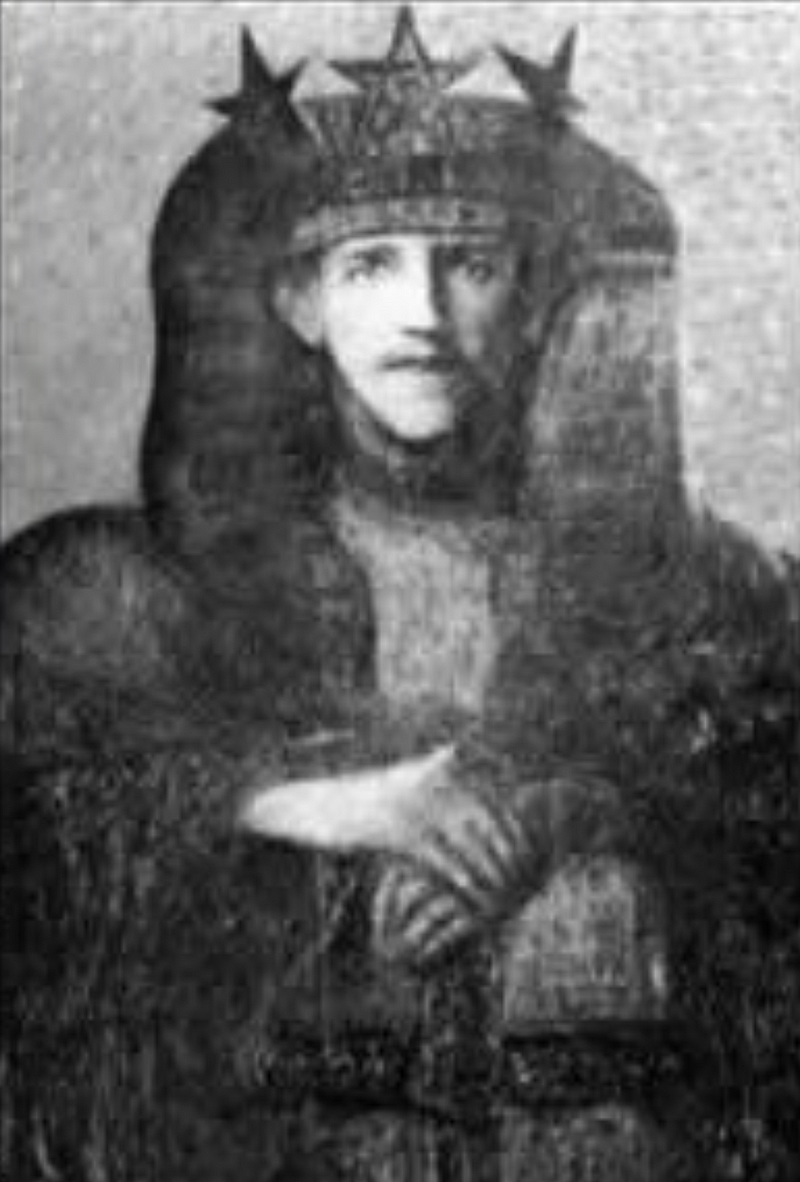
S.L. MacGregor Mathers, in particular, proved tireless in his labors to restore Western magick. In that vein, occult scholar Donald Tyson avers of Mathers in his Essential Tarot Writings:
He was a gifted psychic and spirit medium who, in conjunction with his wife, Moina, who was also a psychic, received from spirits many of the teachings that formed the Golden Dawn system of magic.
This point is often glossed over but needs to be stressed. Mathers did not compose or create the magic of the Golden Dawn; he received it from spiritual beings. He was in regular communication with the spirits who presided over the Golden Dawn current, known as the Secret Chiefs. It is these spiritual beings who are the ultimate architects of Golden Dawn magic which is firmly rooted in the Western esoteric tradition.
In her impeccable and beautifully written 1995 history, Women of the Golden Dawn, Mary K. Greer captures the lives of female initiates who comingled in this world. Regarding the order’s activities, Greer notes:
Magic in the Golden Dawn worked via a number of tools and techniques that had to be carefully learned. They included words of power that vibrated on the astral plane; laws of correspondence between symbol and that which it symbolizes; evocation of Spirits or the assumption of god-forms by the magician; knowledge of timing through the moon, planets, stars, and seasons; and the experience of traveling astral pathways between hierarchies of energies and through the planes to effect changes and bring back information.
As shown in the Magician card of the Tarot, magicians draw power from above (aided by angels and forces of a higher spiritual vibration) and channel it through their bodies and into physical reality. They use ritual first to contact the spiritual forces and second to ground the forces, to manifest the effects they desire.
Kenneth Mackenzie, who possibly originated the Golden Dawn cipher manuscripts, defined magic as ‘a psychological branch of science, dealing with the sympathetic effects of stones, drugs, herbs, and living substances upon the imaginative and reflective faculties.’ While some writers have regarded magic as psychotherapeutic work (Francis King and Israel Regardie, for example), others have characterized it as the discovery of unity within all duality, the truth behind all illusions. W.B. Yeats sought knowledge of what he called ‘the single energetic Mind,’ and its pole, ‘the single Memory of nature,’ both of which he believed could be evoked by symbols. But I like Florence Farr’s definition of magic best: ‘Magic is unlimiting experience.’ That is, magic consists of removing the limitations from what we think are the earthly and spiritual laws that bind or compel us. We can be anything because we are All.
In 1891, S.L. MacGregor Mathers and his wife and intellectual partner Moina, sister to French philosopher Henri Bergson, relocated to Paris; for him the move was ostensibly to be nearer the Secret Chiefs. Moina (née Mina Bergson) was a deeply incisive graphic artist focused on occult themes; friends urged her return to Paris to continue to study painting, an activity that some felt her husband thwarted. In any case, the pair, though struggling for money, formed the magickal power couple of the belle époque.
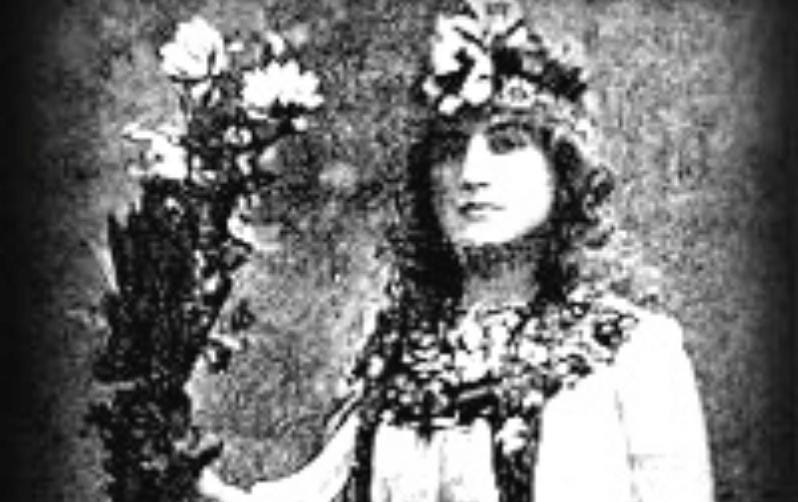
By the late 1890s, Mathers maintained that the Chiefs — with whom he was then exclusively in touch — appointed him head of the organization. Woodman had died in 1891 and Wescott, probably under pressure from his employers, resigned in 1893, ceding a leadership role to Farr. London-based challenges arose to Mathers’ anointment, which the occultist sought to quell through a strong-willed new deputy: Aleister Crowley. Crowley’s magical name in the order was Pedurabo, the meaning of which appeared in the closing line of his eponymous 1899 poem: “I shall abide.”
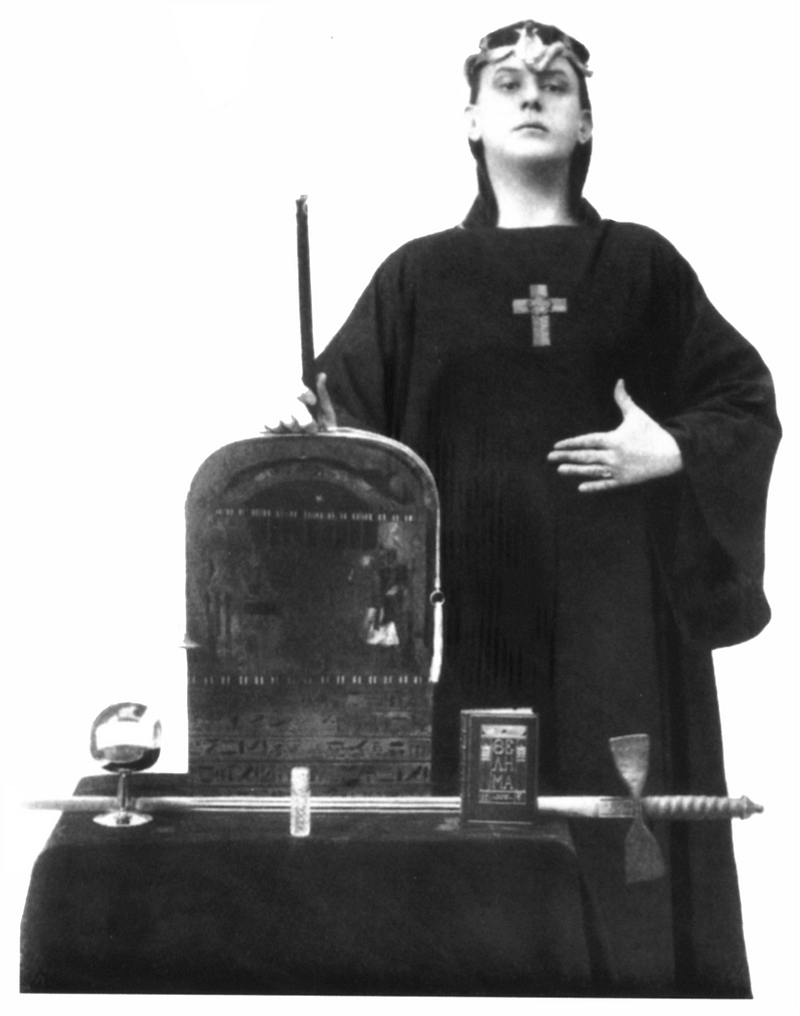
Crowley and Mathers met in Paris in 1899 and formed an uneasy bond. Both were unhappy, though for different reasons, with the order’s direction. The 25-year-old Crowley was an anarchic and imperious intellect who disliked the Golden Dawn’s formality. Mathers possessed a somewhat authoritarian and dandyish streak, though tempered by a gentler character than his fiery (and brief) disciple. He resented key members’ independence and, as he saw it, impetuosity. In essence, both men, though temperamentally different, yearned to be in charge.
That year, Perdurabo had a less encouraging encounter in London with Yeats, ten years his elder and a feted literary voice. The senior poet disliked Crowley personally and found his poems unruly and lacking technical mastery. In early 1900 and extending into spring, Crowley clashed with the London lodges, who refused to recognize the advanced degrees that Mathers had bestowed on him and moved to revoke the Paris chief’s authority.
In April, Crowley, wearing a mask of Osiris to ward off magical attacks, changed the locks on one of the lodge doors, an act of aggression on Mathers’ behalf who suspected a conspiracy to replace him with a restored Wescott. On April 19, Yeats, another lodge member, the landlord, and a constable confronted and expelled Crowley at the lodge doors. Charges, countercharges, and mutual legal actions quickly followed, presaging the end of at least the first phase of the disputatious order.
In years immediately following, Crowley broke with Mathers — the enduring pattern of the younger man’s life — while competing orders spun off, lingered, and frayed, each claiming to carry on the real Golden Dawn legacy. This may have been the inevitable outgrowth of claims of clandestine knowledge, including receipt of secret communiques, an issue that also ruptured Theosophy.
Mathers died of flu in Paris in the days immediately preceding the end of World War I, an early victim of the epidemic that swept the globe claiming tens of millions of lives. He was not yet 65; Moina was 53. Spinoff organizations were already functioning, including the Stella Matutina or “Morning Star”. Members included Waite, Yeats, Fortune and, for a brief time, Crowley’s one-time secretary Israel Regardie who attracted the umbrage of surviving initiates when between 1938 and 1940 he published the Golden Dawn rituals. Mathers had unsuccessfully sued Crowley in 1910 for smaller-scale leakages. For her part, Moina Mathers and members loyal to her husband founded the Alpha et Omega lodge (sometimes rendered Rosicrucian Order of Alpha et Omega).
In 1919, British occultist Dion Fortune joined Alpha et Omega but expressed disappointment over the quality of its teachings. Moina resolved Fortune’s misgivings by expelling her in 1922 following charges that the initiate had exposed some of the order’s secrets. Fortune believed that she was afterward the victim of “astral attack” by Moina who sicced on her a giant feral cat, which might be considered a tulpa or animated thought form in Tibetan Buddhism. The struggle resulted in her popular 1930 manual and memoir, Psychic Self-Defence in which she recounted the episode:
Coming upstairs after breakfast one morning, I suddenly saw, coming down the stairs towards me, a gigantic tabby cat, twice the size of a tiger. It appeared absolutely solid and tangible. I stared at it petrified for a second, and then it vanished. I instantly realised it was a simulacrum or thought form that was being projected by someone with occult powers. I rose up, gathered together my paraphernalia, and did an exorcism then and there.
After ensuing struggles on the astral plane with an “enemy” draped in “full robes of her grade, which were very magnificent,” Dion prevailed in a “battle of wills.” But a shock arrived: “when I took off my clothes in order to go to bed I found that from neck to waist I was scored with scratches as if I had been clawed by a gigantic cat.” Although never explicitly stated, Moina is implicated as the robed female figure, presumed source of the attack. Greer deems it “highly questionable” that the artist-magician played any part in the episodes.
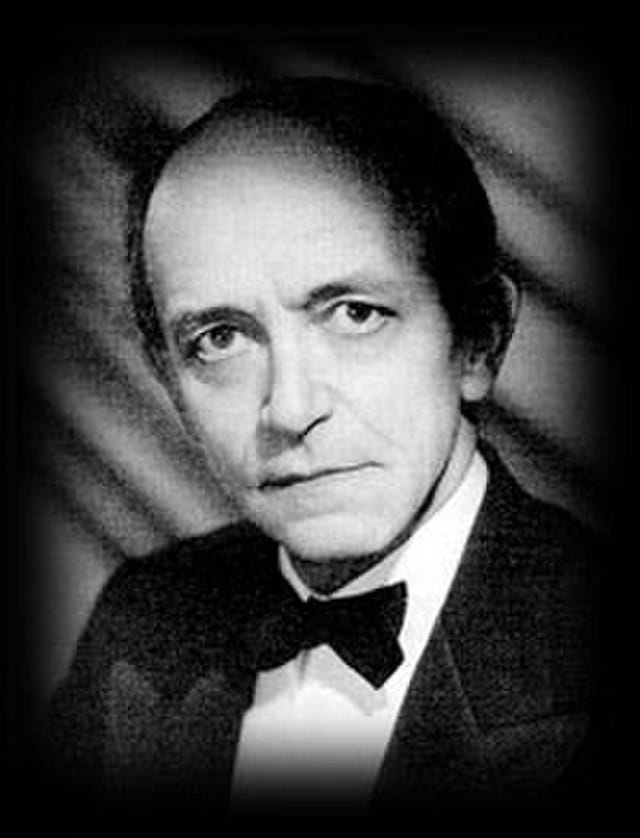
Around that time, Moina clashed with another initiate, an enterprising New Yorker, Paul Foster Case (1884–1954). She accused Case, who had risen quickly through the initiatory ranks, of including sex magick in his teachings, which was considered verboten. The two exchanged accusatory letters, leading to Case’s simultaneous expulsion and resignation.
Case went on to organize the extant Builders of the Adytum (Greek for “inner temple”) widely known by its acronym B.O.T.A. In Case’s hands, B.O.T.A. became one of America’s first mail-order occult houses, providing students with weekly mailers in Tarot, symbolism, and occult study. In 1947, Case capped his career with publication of his still-popular book The Tarot. It functions as a readable encapsulation of key aspects of Golden Dawn symbolic philosophy. With his mail-order courses, Case signaled the democratizing impulse of American occultism.
Crowley, meanwhile, moved rapidly into new adventures, founding the mysteriously named A∴A∴, an organization whose secrecy extended even to its name. Many reckon it stands for Argenteum Astrum (Latin for “Silver Star”) but this is disputed. In an inspired leap, trickster philosopher Robert Anton Wilson (1932–2007) suggested that the organization’s name A∴A∴ is complete in itself, designed to expose pretenders who endeavor to unknowingly disclose what its initials signify.
The Golden Dawn’s influence extends to history’s most popular work of Tarot, the Waite-Smith deck. Issued in 1909 by publisher William Rider & Son, it was known for decades as the Rider-Waite deck, a title that omitted one of its creators.
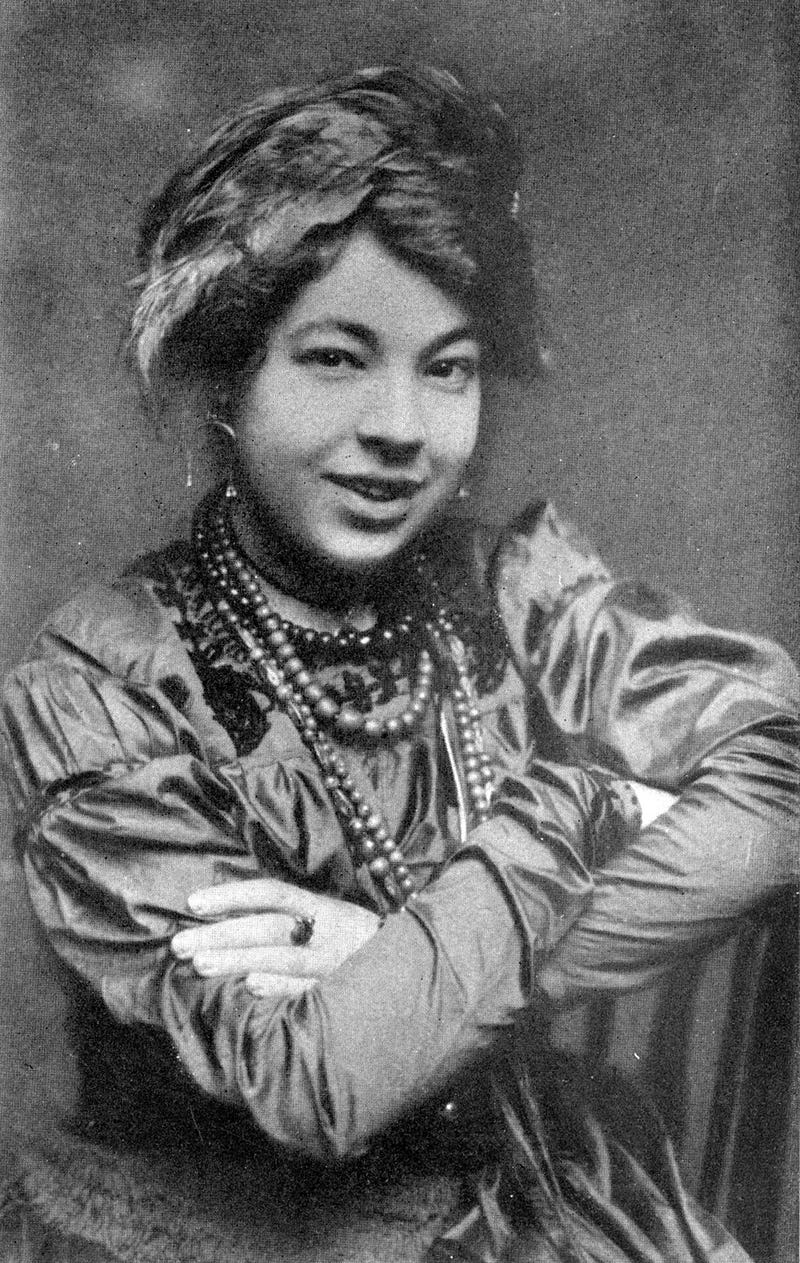
The images were drawn by artist and occult initiate Pamela Colman Smith, known as “Pixie.” In 1893 at just 15, the London-born prodigy studied art at Brooklyn’s Pratt Institute. Following the death of her mother three years later, however, Smith left in 1897 without her degree. Yeats introduced the artist to the Golden Dawn into which she was initiated in 1901. Under commission from fellow initiate Arthur Edward Waite, Smith in just six months produced the first deck with fully illustrated minor suits, a practice widely adopted since. Prior to Smith, only the 15th century Sola Busca deck featured spare imagery on selected minor suits.
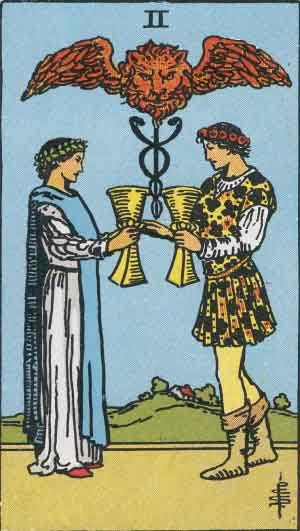
Smith’s work is effectively the urtext of contemporary Tarot as most decks that followed adapted if not directly echoed Smith’s designs and illustrative keys. In addition to instructions received from Waite, there is speculation that Smith collaborated on her images with Golden Dawn colleagues Yeats and Florence Farr, who was a friend. In any case, the deck’s expressive and shrewdly dramatized figures bear the markings of her distinctive vision.
Smith’s illustrations were originally black-and-white line drawings with color later added during the printing process. Her originals are missing and the printing plates were destroyed, Greer reports, when Nazi bombs demolished the London printshop housing them.
Even those who never heard of the Golden Dawn today recognize Smith’s images. More than 100 million copies of the Waite-Smith deck have appeared in over 20 nations, [1] and its illustrations appear on t-shirts, magnets, jewelry, candles, and virtually every form of accoutrement. The artist’s only known comment on the deck appeared in a 1909 letter she wrote to photographer and mentor Alfred Stieglitz: “I just finished a very big job for very little cash!” [2] When Smith died in Cornwall in 1951, her estate was so barren that its contents were sold to settle debts.
Absence of the Golden Dawn in magickal tradition would be akin to absence of Adam Smith in economics. For all that, I harbor mixed feelings about the Golden Dawn’s legacy.
I admire the efforts, if not always the discernment, of its founders — not to mention their intrepidness. The organization provided an aesthetic to the modern occult; a hope that magickal practice and initiation could be revived in the modern world; a womb of gestation for artists of radically differing temperaments; and, most importantly, a framework of ceremonial magick for 20th century seekers. An atmosphere of relative parity prevailed between the sexes; within three years of the Golden Dawn’s founding, 48 of 126 initiates were women. [3]
At the same time, the order commenced and continued with an archly defined hierarchy and degree-based initiatory system that, in some regards, replicated the orthodoxy many seekers were fleeing in the traditional faiths. The inflated-sounding nature of its titles and ranks (just one of Crowley’s tongue-twisting garlands was “Lord of the Paths of the Portal of the Vault of the Adepts” — a Kabbalistic-Rosicrucian reference), colored a good deal of the occult in decades ahead.
The order also created what I consider didactic cleavages between “white” and “black” magick, sometimes brandished with catechistic judgment and certainty. Movements that begin in opposition to doctrine often devolve into mirror reflections of it. In my estimation, the Golden Dawn’s penchant for secrecy ultimately served less to shield the sacred from the profane than abet the authority (and sometimes puffery) of its leaders. In later years, secrecy descended into habit, the offspring of custom, owing less to purpose than emotion. This produced divisions and splits.
Even documenting the Golden Dawn’s history has taken on the flavor of its dramas. Well intentioned historians, sometimes through no initial impulse of their own, get caught up in this web so that historicizing the order becomes an intrigue in itself.
Prior to this writing, I grew interested in the whereabouts of the original Cypher Manuscripts. Some of the adept letters of Theosophy are, for example, housed in the British Library and others at the group’s international headquarters at Adyar. In this case, however, no one seemed to know.
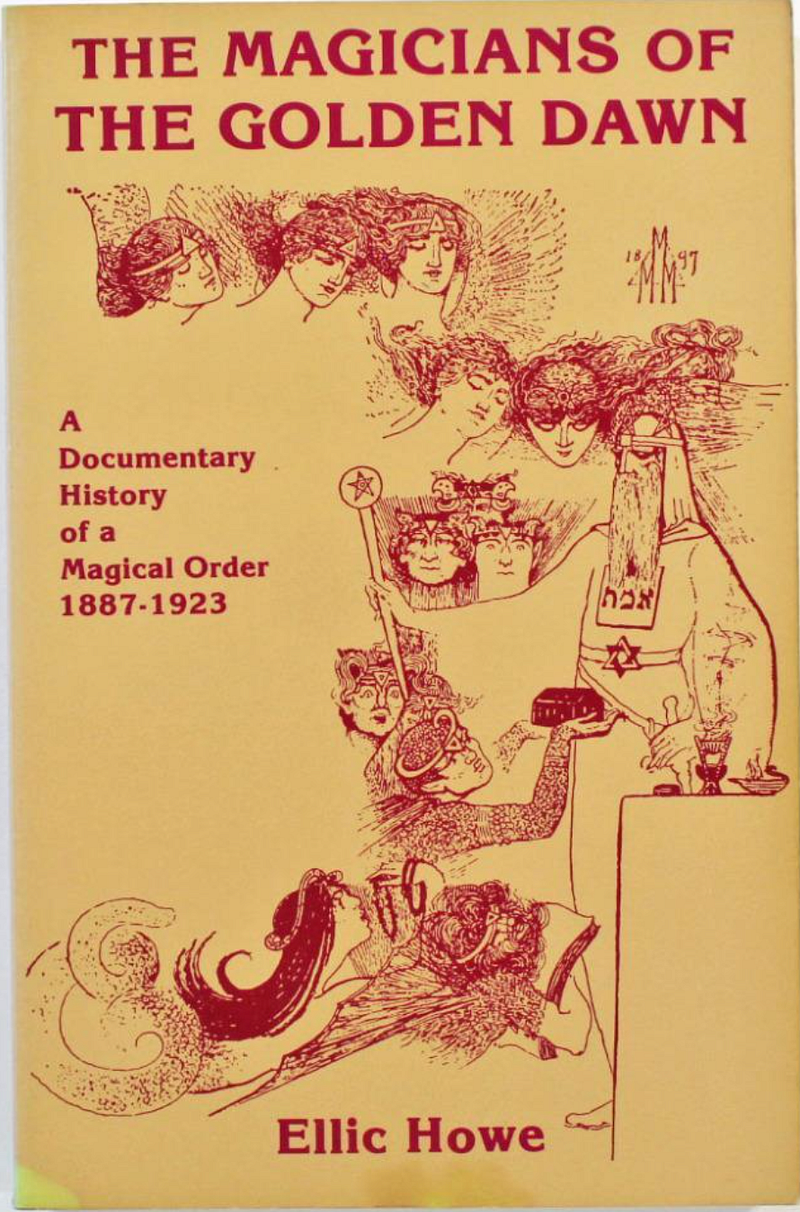
Then I encountered revealing passages, often written with the intentional inscrutability of a historian or journalist honoring conditions set by a source. In Ellic Howe’s seminally important 1972 study, The Magicians of the Golden Dawn, the historian discovered the original Cypher Manuscripts and contemporaneous documents in a “Private Collection” kept by its owner in a “strongroom.”
This material and others were revealed to Howe, he explained, “on condition that neither their location nor ownership be disclosed.” Several of his statements on the matter are so tortuous — again, I assume as a gesture of goodwill toward his sources — that even Howe’s references require parsing.
This article is adapted from the author’s forthcoming Modern Occultism.
Notes
[1] “Reviving a Forgotten Artist of the Occult” by Sharmistha Ray, Hyperallergic.com, March 23, 2019.
[2] Greer (1995).
[3] Do What Thou Wilt: A Life of Aleister Crowley by Lawrence Sutin (St. Martin’s Press, 2000).


