
The Godfather Effect: ‘You Can Start By Acting Like a Man’
The Godfather at 50: Film a gateway to meaning, purpose, truth, faith: Michael Corleone, a prodigal son seeking the true father?
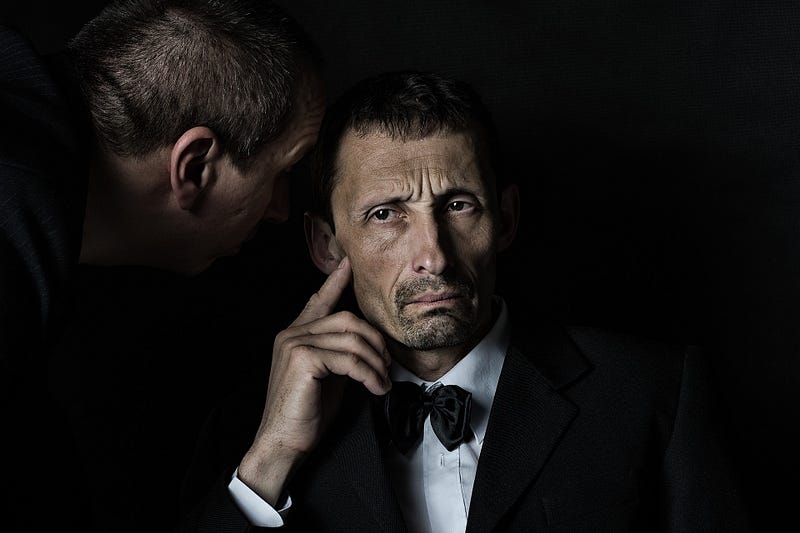
Fifty years after its release, The Godfather endures as the story of family, fatherhood, and faith — cleverly disguised as a gangster movie.
From family to work to the battles of life, we still use Godfather analogies the way earlier generations could widely quote (and recognize) the Bible as a standard frame of reference (stories we all knew), a source of wisdom.
“Italians have a little joke that the world is so hard a man must have two fathers to look after him, and that’s why they have godfathers.” Mario Puzo explains in The Godfather, the 1969 novel that guides the films.
Why are so many men so quick to use The Godfather as a parable for their worlds? Why do we compare people we encounter to characters from the three films? The Godfather Effect shows why this 1972 masterpiece is still rated history’s greatest film.
The age-old test: Fight for the family — or focus on my own needs
“You cannot say ‘no’ to the people you love, not often,” we learn in Puzo’s original Godfather novel. “That’s the secret. And then when you do, it has to sound like a ‘yes.’ Or you have to make them say ‘no.’ You have to take time and trouble.”
The core of each installment is the critical question: Will you follow “old school” time-tested lessons or try something new? Thy will or my will? Or, as the middle child, Fredo Corleone, shows: The eternal struggle is between serving “the family” (a cause bigger than yourself) and seeking “Something in it for me — on my own.”
For the youngest son, Michael, the haunting statement became “I’m not a man like my father,” as he tried so hard to be different, live a different life, becoming more American in the New World. The uniquely American film shows the children of the great immigrant trying to find their way as Italians born in America while protecting and moving their family forward.
Like the prodigal son in the Bible, Michael leaves home (starting a romance with the very American Kay Adams). But when his father is gunned down, he feels called to come home and stand up for and fight for his father. He is soon in his father’s native village, falling for a very Italian wife, his father’s son. But eventually, he is back to trying to balance the needs of his Italian family in an ever-changing American environment.
Courage, Heart, Mind: How The Godfather is like The Wizard of Oz
Like The Wizard of Oz, we meet three sons/seekers who have each inherited one of their father’s great strengths: bold courage (inherited by Sonny), a big heart (inherited by Fredo), and strategic brainpower (inherited by Michael).
And in each case, they focus so much on their “go-to” strength that they go too far. So, in the end, your greatest strength becomes your biggest weakness:
- Sonny, the fighter, inherited his father’s strength and is a bit of a bully. His boldness helps Sonny lead and seize moments — but ultimately, it fuels anger and quick and sometimes rash decisions (or displays of fury) that destroy him.
- Fredo, the sweet, simple son, who inherited his father’s loving heart, is so emotional that his needs for pleasure and honor make him constantly weak, too childlike. As a result, he’s considered the weak link, the stupidest brother in the family. Fredo ultimately destroys himself with a syrupy childishness that leads to his looking for love (and respect and attention) in all the wrong places.
- Michael, the smart one (the nice college boy and war hero), inherited his father’s intellect, and he outlasts all of them. But without the loving heart of Fredo and Sonny’s cocky confidence, the analytical Michael becomes cold, calculating, and very lonely, isolated from his true family.
Michael is a prodigal son, but Tom is the truthteller
But wait, there’s still more:
Vito Corleone, the Godfather, also has an adopted son, Tom Hagen, the truthteller. Hagen is the ultimate outsider (German-Irish, not Italian like the family and a lawyer using the law to help a family that built its power on making its own rules).
Puzo writes, “The lawyer with the briefcase can steal more money than the man with the gun.”
And then there’s the only daughter, Connie. During the three films, she changes more than any other character, moving from a sweet and innocent new bride to a spoiled debutante to a manipulative murderess.
The Godfather also shows how this 1972 film and its 1974 and 1990 sequels became a “gateway to faith,” secretly showing enough Catholicism (and most of the seven sacraments) to whet the appetites of young viewers to learn about a way of living going back more than 2,000 years.
Watching the latest return of the original to theaters, it seems clear that, as young Michael, we are each Prodigal Sons seeking our True Father, pulling away when he disappoints us — returning when we know we must.
Coming home when we know the father needs us
All men of a certain age quote The Godfather the way early generations cited Scripture and poetry.
I’m one of those guys of a certain age ( the start of Generation X) who quotes “The Godfather” as a secular Bible: watching and quoting it repeatedly. So seeing the film on the big screen is a moment of genuine excitement.
Sitting in darkness, the first lone trumpet blast of the theme song warns us this film will be unique. Then we see the big head of Amerigo Bonasera, the undertaker, on-screen declaring: “I believe in America.”
Bonasera tells us how he lived the American dream, avoiding anything wrong until his daughter was beaten, bloodied, and raped. He now demands justice, and action, concluding Vito Corleone will provide the justice government wouldn’t.
The Godfather Effect: When the American consciousness shifted
In The Godfather Effect, author Tom Santopietro explains the novel and films marked “a turning point in the American consciousness.”
Suddenly, ethnic groups saw themselves differently, distinct from corrupt global institutions surrounding them. All organizations inevitably find ways, to tell the truth selectively (to fit their narrative) and do as they please. So we seek a place of refuge where we can feel safe.
While Sonny and Tom speak of the family business needing to be “business” and not personal, Michael sees things his father understood clearly, telling Tom:
“Tom, don’t let anybody kid you. It’s all personal, every bit of business. Every piece of … every man has to eat every day of his life is personal. They call it business. OK. But it’s personal as hell. You know where I learned that from? The Don. My old man. The Godfather. If a bolt of lightning hit a friend of his, the old man would take it personal. He took my going into the Marines personal. That’s what makes him great. The Great Don. He takes everything personal like God.”
The organization as family
From the start, Vito Corleone modeled his family after the ultimate family and authority (the Church), where advancement means protecting the family and its relationships. The word religion comes from the word relationship).
The military, aka deadly force part of the family, is modeled after the Roman Empire’s old legions.
Immigrants who have felt “let down” by the government and traditional institutions can pledge their loyalty and respect to The Godfather, who may, in turn, someday ask for a service.
“I don’t trust society to protect us. I have no intention of placing my fate in the hands of men whose only qualification is that they managed to con a block of people to vote for them,” we read in Mario Puzo’s Godfather novel.
The purpose of a man and father?
Vito is Godfather to Johnny Fontaine (modeled after Frank Sinatra). We soon see the family will do all it can to love and help Johnny and eventually seek his help to build Las Vegas into a national destination for entertainment.
But first, the Godfather uses Johnny to teach a central lesson of the film: “You can start by acting like a man,” Vito tells a crying Johnny, slapping and mocking him to teach him what a man must do. Finally, he asks if Johnny spends time with his family, adding that a man who doesn’t spend time with his family can never be a real man.
That question of what it takes to be a real man, a true father, and the rightful and respected family leader repeatedly returns. It’s a question haunting all of the children of Vito.
Michael, the thinker, struggles the most, trying to make himself (and his family) “strictly legitimate,” getting them out of corrupt businesses (Vito worries about the drug business the underworld is moving into, while Michael eventually tries to rid himself of the casinos). Yet, Michael finds the higher he rises, the more corruption he encounters.
The most powerful scene comes when Michael, who resisted and avoided the Godfather, becomes a Godfather, renouncing Satan and evil as he has all his enemies hunted down and executed.
“Friendship is everything,” Vito says in Mario Puzo’s Godfather book. “Friendship is more than talent. It is more than the government. It is almost the equal of family.”


