
The Glorious, Long Overdue Arrival of “The Nanny” on Streaming
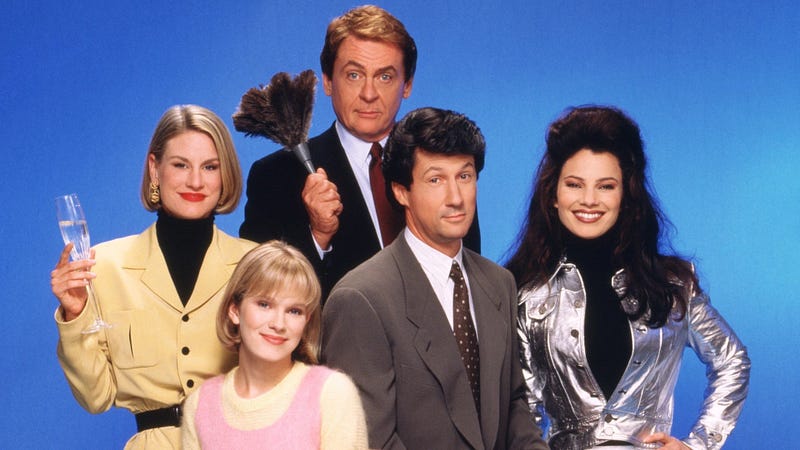
After years of only being available on DVD and reruns on obscure cable channels, Fran Drescher’s classic 1990s CBS sitcom finally made its streaming debut on April 1st via HBOMax. Having recently rewatched the series in its entirety on DVD, I can attest that it is certainly worth revisiting — and that it is possibly the most underrated comedy series of the 1990s.
The Nanny’s Six Season Run, Objectively Speaking
The Origin. The Nanny famously began by pure happenstance when Fran Drescher ran into current CBS President Jeff Sagansky on a transatlantic flight. She had recently starred in a short-lived series for the network (Princesses, co-starring Twiggy and Julie Hagerty) and managed to convince Sagansky to let her and her then-husband Peter Marc Jacobsen pitch a show to him. He agreed.
When they got back to Los Angeles, Drescher and Jacobsen made the pitch to Sagansky — it would be like The Sound of Music, but instead of a compassionate ex-nun played by Julie Andrews, a brash and sexy door-to-door makeup salesgirl from Queens showed up at the door. Sagansky was sold. Drescher and Jacobson teamed up with Robert Sternin and Prudence Fraser, another husband-and-wife writer-producer team who had success in the 1980s with the Tony Danza-Judith Light sitcom Who’s the Boss?.
The show premiered on CBS on November 3, 1993 and ran for six seasons, amassing 146 half-hour episodes. For historical context, it premiered a few months after Cheers wrapped and spun-off into Frasier. During its first year on the air, Roseanne, Seinfeld, and Murphy Brown were dominating the Nielsen ratings. It was a year after The Golden Girls wrapped and a year before Friends would soar into the stratosphere. It was arguably the second golden age of the American sitcom, which undoubtedly contributed to The Nanny being overshadowed and under-appreciated during its initial run.
Author’s Note: The remainder of this article contains spoilers about the plot arc of The Nanny. If you have not seen the show and want the plot trajectory to remain a surprise for you, I urge you to bookmark this and return to it once you have watched the show.
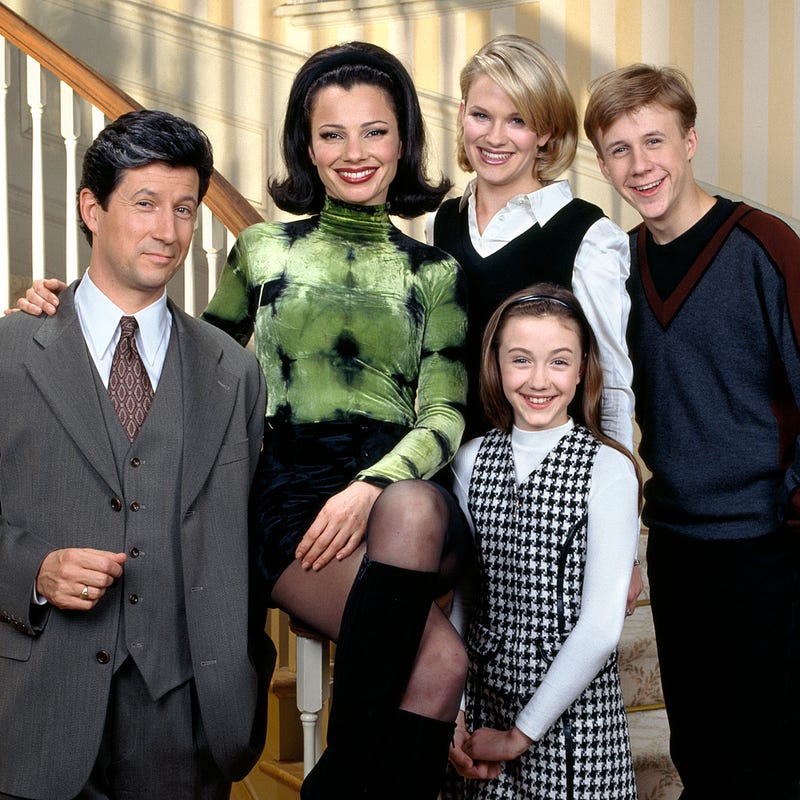
The Plot Arc. The show’s masterful and enduring theme song, which was written and performed by Ann Hampton Callaway, sets the plot up quite clearly. Fran Fine was a young woman “working in a bridal shop in Flushing, Queens, until her boyfriend kicked her out in one of those crushing scenes.” Now relegated to selling makeup door-to-door in Manhattan (due to the fact that her boyfriend ran the bridal shop and fired her when they broke up), Fran stumbles upon the mansion of suave, widowed Broadway producer Maxwell Sheffield (Charles Shaughnessy).
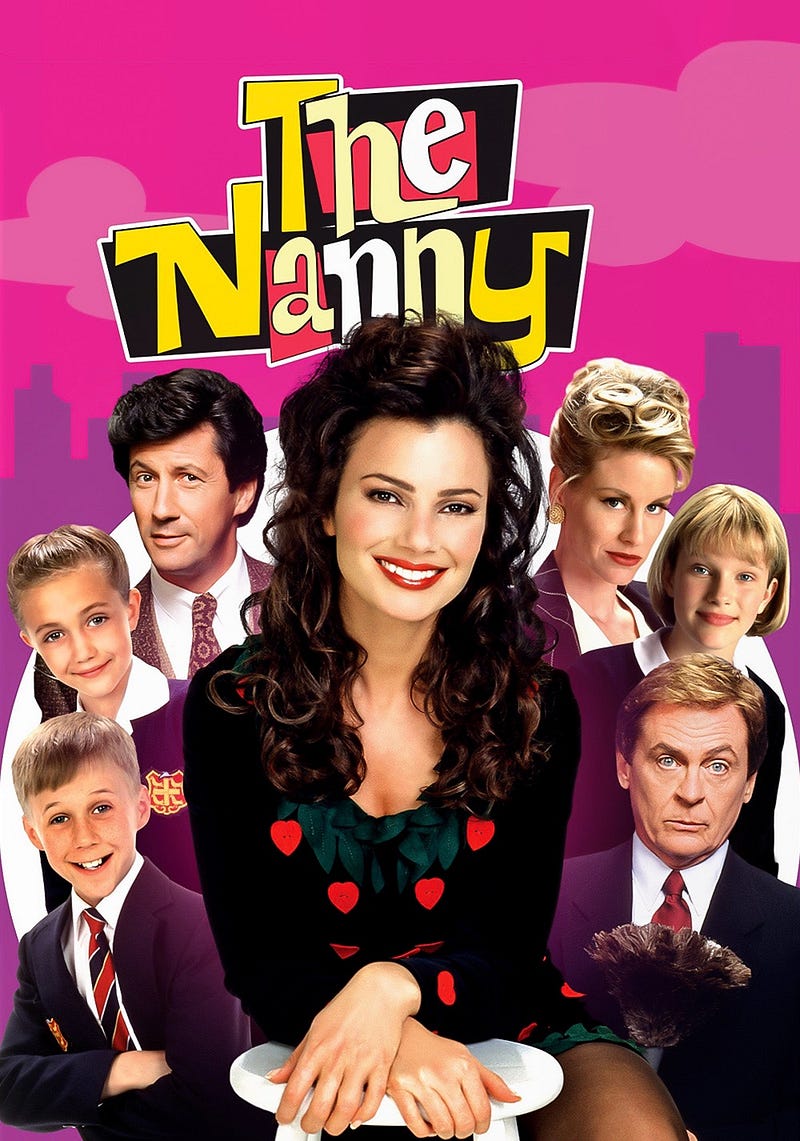
Due to a classic sitcom misunderstanding, Fran is mistaken for a candidate for the newly vacant position of a nanny for the three Sheffield children. And “who would have guessed that the girl we described was just exactly what the doctor prescribed?” Fran simultaneously infuriates and charms Maxwell instantly, but he keeps her on because she quickly wins over the three children by injecting some normalcy and warmth into their stuffy, aristocratic existence.
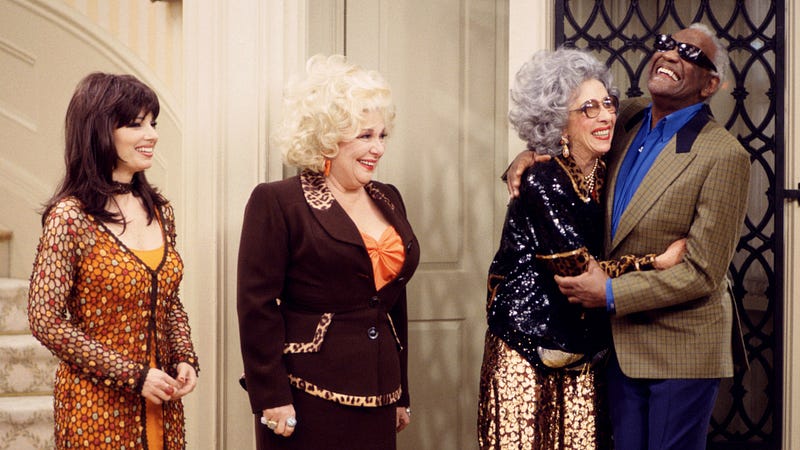
Fran’s arrival at the Sheffield’s home has a ripple effect on many others lives. She inspires rage and jealousy in Maxwell’s producing partner C.C. Babcock (Lauren Lane), who seems to only have one positive emotion in her entire repertoire — an unyielding romantic passion for Maxwell. Fran becomes the confidante and sparring partner of the Sheffield’s long-suffering butler Niles (Daniel Davis). And she quickly becomes the envy of her family back in Flushing, including her tacky and overbearing mother Sylvia (Renee Taylor) and ditzy, hapless best friend Val (Rachel Chagall).
Over the course of the show’s run, the show’s plots, themes, humor, and characters evolved in remarkable ways, while managing to keep true to the core elements that made the show work. The first season emphasized Fran’s integration into the Sheffield family, with an emphasis on child-rearing that resulted in heart-tugging moments. For this reason, the show was written off by many as a TGIF-style family sitcom. But it was anything but that, as was evident to anyone who stuck around for the second season in which the adult ensemble characters were fleshed out, particularly the dynamics of Fran’s family and Niles and C.C.’s hilarious dysfunctional relationship. The third season was filled with “will they or won’t they?” sexual tension between Fran and Maxwell and amped up the parade of guest stars as the show became a cultural phenomenon.
The fourth season put another roadblock in the way of Fran and Maxwell’s courtship when he took back the “I love you” he uttered during some extreme turbulence on a flight in the Season Three finale. (On a side note, I will die on the hill that “And then he took it back!” should have been the cultural touchstone that Ross and Rachel’s “We were on a break!” was.) The writers used this twist to spend most of the fourth season exploring Fran’s path to true adulthood. She goes to therapy, she assertively searches for a man, and she stands up to friends and colleagues. And by the end of the season, her profound growth has won over Maxwell and they consummate their relationship.
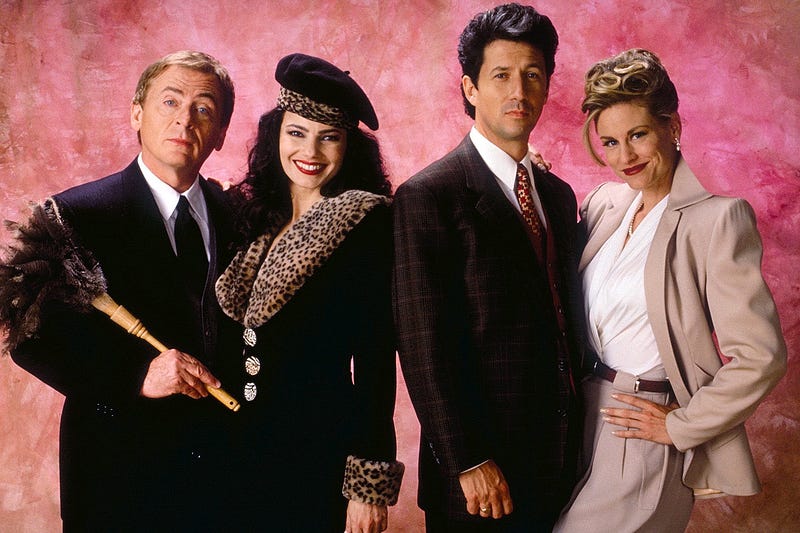
As Fran and Maxwell’s relationship escalates in the fifth season, C.C. has a nervous breakdown, Niles grapples with the enormous changes, and the focus with Fran and Maxwell shifts from “will they or won’t they?” to “how will they?” as questions arise about child-rearing, class differences, religious differences, wedding planning, prenuptial agreements, and converting their relationship into the physical realm. The sixth and final season of the series chronicles Fran’s journey to assuming the role of Mrs. Sheffield and getting pregnant, while Niles and C.C’s relationship takes a stunning turn.
The Ratings. Although the show wasn’t a ratings blockbuster during its run, its second and third season drew particularly impressive ratings. During this time, the show regularly ranked among the top 20 programs in the United States. However, the show was an unqualified blockbuster internationally. It aired in more than 90 countries and 12 different countries adapted the American version into their own local series, which were particularly popular in Latin America and Russia.
The Awards. Although the show was never an awards juggernaut, it nevertheless managed several high profile nominations despite the fact that it aired against the heydays of shows like Frasier, Seinfeld, and Friends. It was nominated for 12 Primetime Emmys — four in major categories (two nominations for Fran Drescher in Lead Actress, one for Renee Taylor Supporting Actress, and one for Lee Shallat Chemel’s direction) and eight in technical categories (six for costumes, one for hairstyling, and one for lighting). It won one for its costumes. It was also nominated for two Golden Globes (both for Drescher), an American Comedy Award, a TV Guide Award, a Golden Satellite Award, and numerous awards for its younger cast members.
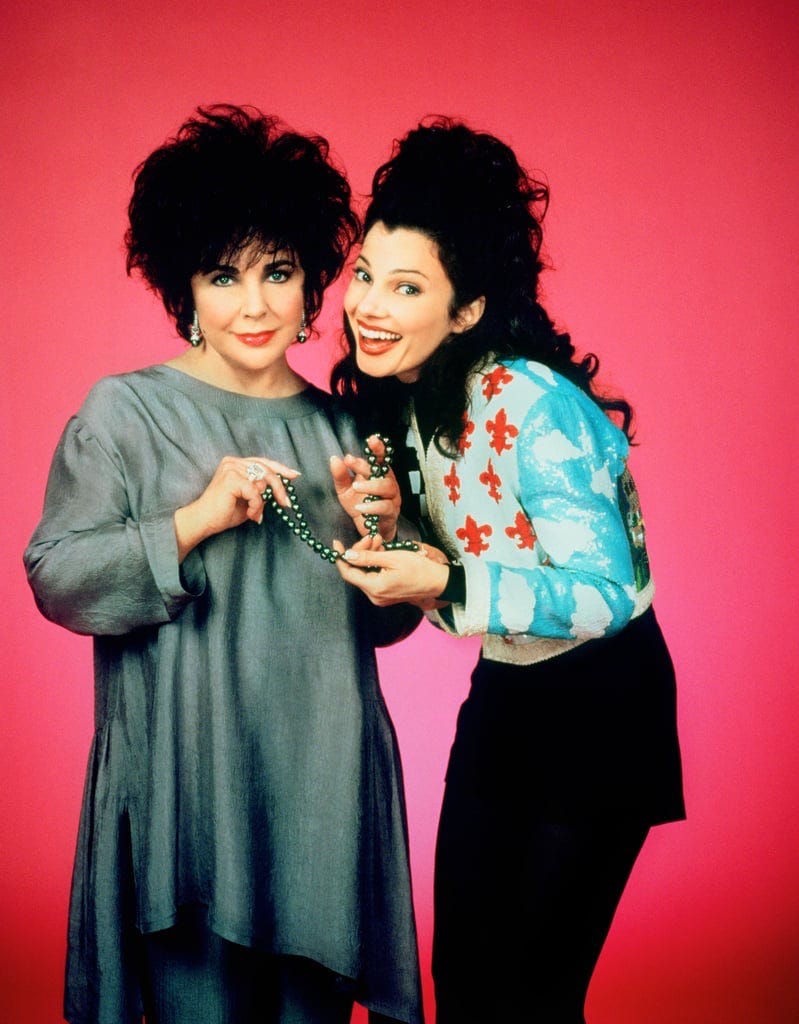
The Guest Stars. Few shows in the 1990s — or any decade for that matter — had nearly as impressive a roster of guest stars as The Nanny. Over the course of its six season run it amassed 160 notable guest stars, including (but certainly not limited to): film and television legends Elizabeth Taylor, Whoopi Goldberg, Cloris Leachman, Rita Moreno, Hugh Grant, Dan Aykroyd, Chevy Chase, Roseanne Barr, Milton Berle, Jason Alexander, Bob Barker, Joan Collins, Tyne Daly, Estelle Getty, Pamela Anderson, Monty Hall, Jay Leno, David Letterman, Shari Lewis, Rosie O’Donnell, Ray Romano, Jon Stewart, and Alex Trebek; music legends Celine Dion, Elton John, Ray Charles, Bette Midler, Burt Bacharach, Patti LaBelle, and Michael Bolton; theater legends Marvin Hamlisch, Carol Channing, Lynn Redgrave, and Ben Vereen; and — most regrettably — Donald Trump. Name a narrative series that stuffed as many high profile guest stars into its run. I’ll wait. (Only A-list addicted Will & Grace comes close to matching it.)
The Nanny’s Six Season Run, Subjectively Speaking
The Ensemble. In my opinion, the single greatest aspect of The Nanny was its acting. Despite being known to most for her nasally voice and bold fashion, Fran Drescher was and remains one of the finest comic actresses of her generation. Her remarkable gifts for physical comedy and mugging came closer to matching Lucille Ball than virtually any actress in the last few decades. Her razor-sharp wit and ability to oscillate between broad comedy and moving dramatic moments were just as good as the actresses on more high-brow series that dominated the Emmys during the 1990s (Murphy Brown’s Candice Bergen and Mad About You’s Helen Hunt).
Although he was relegated to the role of exasperated “straight man” for much of the show, Charles Shaughnessy was flawless as Maxwell. He oozed charm and nailed every single line with the skill of the veteran character actor that he is. The fact that Daniel Davis didn’t get a single award nomination for his role as Niles is one of the most baffling injustices of 1990s television. He was the highlight of the supporting cast and in my opinion gives a performance as inspired and iconic as David Hyde Pierce’s portrayal of another Niles (on Frasier) that dominated the Emmys for years. As his sparring partner and eventual love interest C.C., Lauren Lane gave a profoundly committed performance that delved into the ugliest and most complicated parts of her character with rabid glee.
The only cast member to get a major award nomination outside of Drescher was Renee Taylor as Fran’s mother, Sylvia. Taylor, a veteran character actress who earned an Oscar nomination for co-writing the 1970 film Love and Other Stranger, took a role that could have been pure caricature and imbued her with a fully developed comic persona and remarkable nuance as the season unfolds. Ann Morgan Guilbert, famous for playing Dick Van Dyke and Mary Tyler Moore’s neighbor on The Dick Van Dyke Show, was pure comic genius as Fran’s dementia-addled grandmother. The show runners wisely expanded the role of both Sylvia and Yetta as the seasons progressed. As Fran’s best friend Val, Rachel Chagall never got particularly juicy material but she never failed to land a laugh when called upon.
Although they rarely got much screen time, especially as the show evolved, all three child actors were superb (and they all got nominations from the Young Artist Awards to prove it). As eldest daughter Maggie, Nicholle Tom was endearingly insecure and was more than up to the task when the scripts required her to grow up and become rebellious. As middle child Brighton, Benjamin Salisbury was a highlight of many of the early episodes with his scheming and sarcasm. And as youngest daughter Gracie, Madeline Zima deftly walked the line between endearing and deeply eccentric.
And then there’s all those guest stars…
The Writing. Although I consider the stunning acting ensemble the undeniable MVPs of The Nanny, the writing staff is perhaps its most under-appreciated aspect. The scripts were never quite as polished or sophisticated as the best of Frasier or Murphy Brown, nor were they as audacious or boundary-pushing as the best of Seinfeld or Roseanne, but in terms of inspired plotting, character-based comedy, hilarious running gags, and savagely funny one-liners, the scripts of The Nanny rivaled the best sitcoms on television during its run. Sure, the show was quite uneven (as most shows that produce 24 or more episodes a season are bound to be) and they produced their fair share of stinkers (as you embark on your streaming journey, let me warn you about Season Two’s ill-fated spinoff setup “The Chatterbox,” Season Three’s animated special “Oy to the World,” and Season Four’s horribly dated “No Muse is Good Muse”). But when the scripts shined — which was much more often than not — it was a masterclass in the art of the situation comedy.
One area where I deviate from The Nanny’s die-hard fans and even some of the show’s own talent is in my admiration for the sixth season. The show plummeted in the ratings and was prematurely canceled, with several unaired episodes being “burned off” in the summer after the series finale officially aired, and several creatives behind the show complained about network interference preventing them from taking the series where they really wanted to. However, during my full series rewatch I was actually blown away by how well the final season clicked for me. I found the ensemble’s chemistry to be at an all-time high, the plots to be more sophisticated and high-brow, and countless big moments to be nailed exquisitely. The writers deserve enormous credit for ending the show on a high note creatively, even though it didn’t end on a high note commercially.
The Jewish-ness. It’s easy to sample a few episodes of The Nanny (or even just read a plot synopsis) and assume that it is a “fish-out-of-water” comedy, one in which a character is removed from their environment through a plot contrivance and transported to a foreign environment where they make disastrous social blunders. To a certain degree, that is a fair assessment of much of The Nanny’s humor. But the show actually goes much deeper into class and cultural differences than that characterization suggests. Nowhere is this more evident than in the show’s portrayal of Judaism.
Fran comes from a devoutly Jewish family and her religion is a prominent feature of the show throughout its run. Sure, the scripts often play into stereotypes of Jewish culture for laughs frequently, but they do so with love. It’s clearly insiders writing it as affectionate satire and not outsiders appropriating, criticizing, or mocking. The show also upends harmful stereotypes by making the Jewish characters not elite and uber-wealthy (that would be the WASP-y Sheffields), but rather unrefined and working class. Throughout its six-season run, the show depicted numerous Jewish holidays and customs, incorporated countless Yiddish expressions, and discussed numerous cultural issues affecting modern Jews in America. The Nanny is perhaps the most substantive portrayal of Judaism on a long-running television comedy.
The Queer-ness. When I was 11 or 12, long before I realized I was gay, I remember reading in Entertainment Weekly (aka my childhood Bible) that The Nanny had developed an enormous following among gay men. I recall the conversation around this being something brimming with gay stereotypes (e.g., “Of course, the gays love it! It’s about Broadway and Fran dresses like a drag queen!”). And, sure, both of those factors played a role in the series amassing an LGBT following.
The Nanny is perhaps the only long-running television series set in the world of Broadway and there were countless references to and appearances by Broadway royalty (memorable running gags included Maxwell’s rivalry with Andrew Lloyd Weber and Fran’s obsession with Barbra Streisand; sadly neither Lloyd or Streisand were among the show’s cavalcade of guest stars). And, yes, the aesthetic of the series was delightfully queer. Fran’s bold and often tacky outfits were utterly spectacular (it’s no surprise that the show’s lone Emmy came for its costumes) and the show featured rich and elaborate production design.
But I suspect what draws LGBT people (particularly gay men) to The Nanny goes beyond its obsession with musical theater and its larger-than-life aesthetics. Fran Fine is an insecure woman who yearned to move beyond the life she was destined for if she stayed at home with her dysfunctional family. After being dealt some heartbreak, she boldly journeyed into a thrilling, but daunting, new life where she creates a new family that always had her back and welcomes her eccentricities. Although she, nor any recurring character on the show, identified as LGBT, this is a narrative that resonates deeply with many in the LGBT community. And then there’s the fact that so much of the show is built upon a theme all too palpable to many gay men, the confusion and devastation of unrequited love (not to mention the fairy tale of such love becoming requited).
In Conclusion. Ultimately, The Nanny was a far better, more impactful, and more enduring series than it was ever given credit for. I couldn’t be happier that HBOMax invested in making sure that its legion of fans can revisit it and contemporary audiences can discover it. Maybe, just maybe, its arrival on streaming will move the talks of reviving the show in its original sitcom format or as a Broadway musical forward. If only we could be so lucky.
Twelve Episodes of The Nanny You Should Stream Right Now
“The Nanny-in-Law” (Season One, Episode 10). The late, great Cloris Leachman knocks it out of the park as Maxwell’s former nanny who arrives for a visit and deeply disapproves of Fran. Leachman is one of the show’s first high-profile guest stars and, ultimately, one of its best.
“Schlepped Away” (Season One, Episode 16). One of the show’s first and finest farces, this classic finds a blizzard bringing New York to a stand-still, resulting in Fran and the Sheffields to scrap their Bermuda vacation and take shelter in Sylvia’s apartment in Queens.
“The Whine Cellar” (Season Two, Episode 10). During Sylvia’s umpteenth 50th birthday party, Fran and C.C. get locked in the wine cellar together for hours and bond over the only thing they have in common — Maxwell. This is one of the show’s best farces and Drescher and Lane knock every moment out of the park.
“Close Shave” (Season Two, Episode 21). In a setup worthy of I Love Lucy, Fran covers Maggie’s candy striper shift on the same day Maxwell needs to have an emergency appendectomy.
“Oy Vey, You’re Gay” (Season Three, Episode 7). Maxwell falls head- over-heels for a woman for the first time since losing his wife. Unfortunately, she turns out to be gay. Oh, and Fran gets put on the “Worst Dressed” list.
“Val’s Boyfriend” (Season Three, Episode 18). The single funniest sequence in the entire run of The Nanny occurs when C.C. takes Fran to a sushi restaurant for a heart-to-heart and Fran unknowingly ingests an enormous amount of Wasabi. And the episode built around that classic scene is a real winner.
“The Tart with Heart” (Season Four, Episode 1). When Maxwell takes back the “I Love You” he uttered to Fran during their tumultuous flight on the Season Three finale, Fran becomes deeply embittered and has a fling with a blind man played by Seinfeld’s Jason Alexander.
“Kissing Cousins” (Season Four, Episode 13). After Fran’s new flame turns out to be her cousin, she begins seriously rethinking her romantic choices and takes Mr. Sheffield up on his offer of sending her to therapy. This all-time classic features a guest appearance by Daily Show host Jon Stewart as her cousin, the beginning of Spalding Gray’s superbly droll appearances as Fran’s therapist, a hilariously elaborate Dynasty spoof, and an audacious one-liner commenting on the controversy surrounding whether there would be a coming out party on Ellen DeGeneres’s eponymous sitcom.
“Rash to Judgment” (Season Five, Episode 11). Like many sitcoms, The Nanny occasionally went too far into caricature and slapstick. This should have been one of those cases, but somehow it works spectacularly well. When Val wins VIP tickets to a Michael Bolton concert, Fran convinces Val to let her use them to take Maxwell on a do-over date following their disastrous first attempt. Unfortunately, an allergic reaction to her mother’s pasta makes Fran balloon up.
“Call Me Fran” (Season Five, Episode 13). When a gift of Knicks tickets is rebuffed by her father due to his disapproval of her relationship with Maxwell, Fran begins to deeply question her relationship with men. This episode features brilliant work from Drescher and Taylor, in addition to one of Daniel Davis’s best scenes on the show as he has an epic meltdown directed at Maxwell.
“I’m Pregnant” (Season Six, Episode 6). In this kick-off to a fabulous three-part storyline, Maggie’s pregnancy scare leads Fran to discover that she is in fact the one who is pregnant. Drescher gives one of her finest performances of the series in this episode.
“Yetta’s Letters” (Season Six, Episode 18). In this classic farce, Niles and C.C. try to hide their burgeoning relationship, unaware that Fran and Maxwell already know the truth. (Interestingly, this episode was filmed right around the time of the classic Friends episode that had a similar setup involving Monica and Chandler). Meanwhile, Maxwell and Andrew Lloyd Weber go to war over the rights to Yetta’s old love letters, which Fran thinks have the potential to make a great musical. The hilarious episode ends with a spectacular, elaborate musical number depicting the Broadway show that resulted from Yetta’s letters.
Honorable Mentions: “Pilot” (Season One, Episode One); “Canasta Masta” (Season Three, Episode 16); “The Two Mrs. Sheffields” (Season Three, Episode 9); “Me and Mrs. Joan” (Season Four, Episode 6); “The Producers” (Season Six, Episode 16); “The Dummy Twins” (Season Six, Episode 17); “The Finale (Parts One and Two)” (Season Six, Episodes 21 and 22)
Click here to follow the author on Medium and Twitter.
Read articles about classic television comedies by this author:


