
The Global Financial Crisis of 2008
Why did it happen?
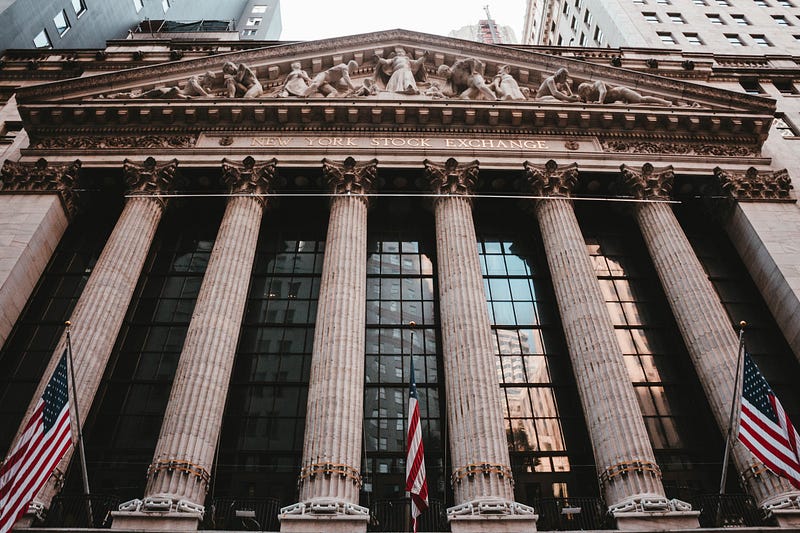
The year was 2008; the world had just got the shock of the financial crisis after the subprime mortgage crisis of 2007.
As a result, gigantic investment banks turned out to be insolvent in paying off their debts. Thus, the Federal Government of the U.S had to bail out or help in surviving most of the investment banks and companies, but could not do much in the case of Lehman Brothers, who later filed bankruptcy on 15th September 2008.
On the same day, Dow Jones witnessed a huge plummet of 504 points in seven years. Other investment banks were aided either by the Federal Government or by other private institutions.
Fannie Mae and Freddie Mac were taken over by the Federal Government, Merrill Lynch by Bank of America; whereas Goldman Sachs and JP Morgan Chase had to change their framework and had to get converted to bank holding companies from investment banks to get secured aid from the government.
The Build-up
With the liberalization of laws and interest rates, house demand in the United States started to increase post-2000, which led people to take debts to finance their houses.
That pick led to an increase in the mortgage-based loans that were buckled up to be called Mortgaged Backed Securities (MBS).
These mortgage-backed securities were hedged as Credit Default Swaps (CDS). CDS is a hedging instrument against the loan (here mortgage-loan) that ensures that if a party fails to pay its debts (the house owner), the party holding CDS would pay it back.
Portfolios of these mortgage-based loans were further converted into Collateralised Debt Obligations (CDOs). CDOs are a bundle of various types of risky to safe debts categorized by investment banks. These various types of debts are called tranches.
The top investment banks at that time also included subprime loans to this instrument, which were actually very poor in terms of fundamental values but were given the higher ratings by the Three Big Credit Rating Agencies (S&P Global Ratings, Fitch Group, and Moody’s).
The Crisis
Investment banks took insurance of Credit Default Swaps against any potential defaults from the then biggest insurance company in the world AIG (American International Group Inc.)
The chances in early 2003–04 seemed very low for such securities to default, but as soon as people started defaulting on paying their mortgage loans, AIG had to start paying what it had insured, and that led to the fiasco of “Too Big to Fail” as U.S Federal had to bail out AIG with $85 billion and the collapse of this financial instruments (CDS) led to the subprime crisis in 2007 followed by the global crisis in 2008.
The Aftermath
This period was stated to be very crucial for investment banks and global institutes, including governments. It took several years for people and governments to rise again.
In addition to that, during this critical period, another scam was taking place in terms of misconduct by the investment bank Barclays, based in the United Kingdom, which involved major investment banks at the later stage.
The scam today is known as The LIBOR (London Interbank Offered Rate) Scam, which has become one of the leading reasons for replacing the LIBOR prevailing from three decades by 2021.
The history of the global crisis is as fascinating as it can be. It was a disaster but lead to some good things like the invention of Bitcoin.
In the end, it was a result of human greed and blind ambitions leading to destruction. Can it happen again? Well, history doesn’t repeat itself, but it does rhyme, right?


