
The Gestation Period
A travel story
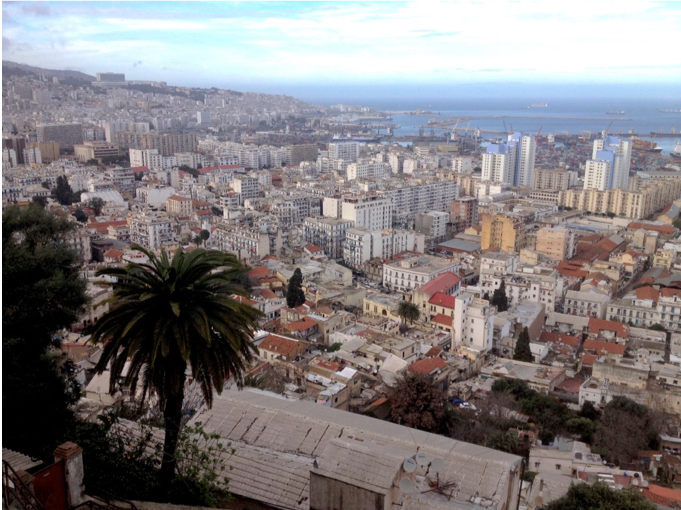
We escape the brisk Canadian winter, trading it for the warmth of a timeworn Mediterranean city in the Northern borders of Africa. Six years have passed since I last tread the hilly streets of Algiers, a charming city with an amalgamated scent of hope and despair. In equal proportions.
For once, I commend the traffic that surrounds me for seemingly slowing down time, for tolerating my obsessive need to absorb every molecule and every pixel of every vantage point that greets me.
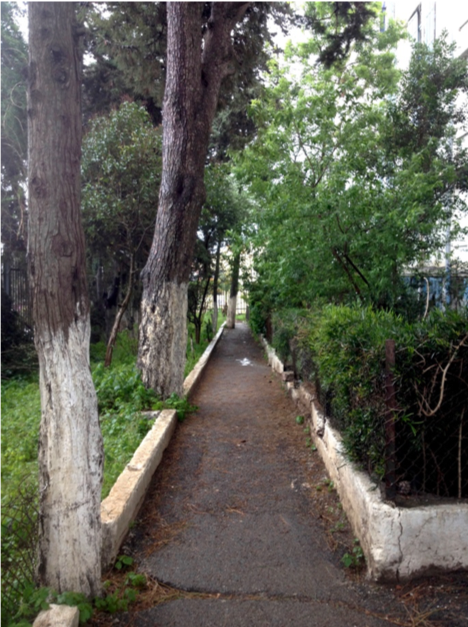
We eventually arrive at the long path to my grandparents’ building, a path that has been narrowed by the culpable hand of time and corporal growth. Fenced with vined metal on one side and the aroma of pine trees on the other, this very path is brimming with memories from our childhood.
Like furry-tailed squirrels in the wild, my sisters and I would collect pine nuts and immediately cache them in our bellies. For safekeeping, of course.
Along the path also lay trees with small yellow flowers that we would pluck, crush and add to a water-filled vile. The final concoction was low-grade perfume.
A cat with sepia-coloured fur and blotches of smoked brown defends her territory, a patch of fenced grass right before the building’s unguarded entrance.
This is unlike any ordinary visit.
Following a recent stroke, my aunt has been hospitalized. She lays there, floating in a gray zone inaccessible to the rest of us. We visit her almost daily, bringing homemade vegetable soup that we feed her through a nasal tube while updating her on the mundane affairs of the conscious world.
Under the unusual circumstances, we are not treated as guests like we normally are and in that I find relief. And freedom.
While I was born in Algeria and raised here till the age of eight, today I admire the land with quasi-virgin eyes. Now in my 20s, I hold the germinal capacity to soak in and appreciate the culture of my ancestry and the land on which it sprouted.
Given my new-found freedom (and despite the linguistic knots in my tongue), I run errands that are usually handled by the locals, snatching every opportunity to explore my designated playground.
Grocery list in hand, I visit the nearby farmers’ market almost daily, returning with fresh produce on one hand and a batch of fresh baguettes on the other. Sometimes (often) I balance a box of fresh mille-feuille from one of the many bakeries that supply the city with its warmth and nostalgia.
On my way home, feeling entirely accomplished and accustomed to life outside a self-check-out machine, I often people watch and imitate, assuming the cultural branches of my ancestors. I eavesdrop on conversations, appreciating the informal formalities that are shared between friends and between strangers.
Hugs, kisses and handshakes are generously exchanged while words of brotherhood and sisterhood perpetually float in the air.
Big metal doors, often melded with curved patterns, safeguard nearly every home. Across the thresholds, the sidewalks are bordered in stripes of red and white. And across the sidewalks, islands separating the road carry endless rows of maturing palm trees.
A man stationed behind a small smoky food cart serves roasted peanuts in cones of yesterday’s newspaper, as if to secretly spread news of the nation’s recent setbacks.
Nearby, a young group of friends savour delicious merguez sandwiches. Comparable to a hotdog, merguez is a spicy sausage served in an equal-sized baguette and topped with hot sauce. For a truly unforgettable experience, French fries are sometimes stuffed into the sandwich.
As I continue my stroll, the city’s colonial history echoes in my ear, pulling at the heartstrings of my pedigree.
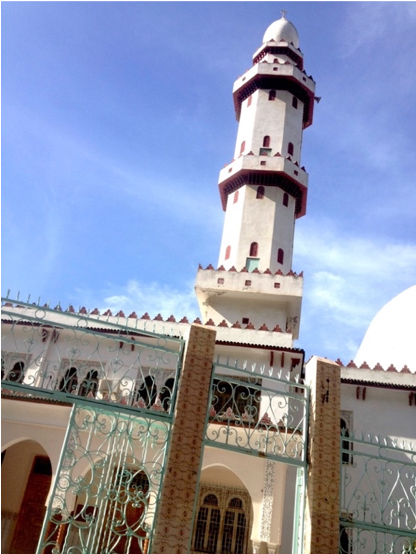
Like any previously colonized city, the architecture of Algiers reveals its many historical adventures. The ancient-domed mosques signify the entry of Islam and the Ottoman Empire, while the European-styled buildings reflect the city’s unending French influence. French prefixes and suffixes regularly infiltrate Arabic words, creating hybrids that often succeed their Semitic counterparts.
Unable to fully shed the past, a diluted strain of Stockholm syndrome lingers in the air.
The sepia-coloured cat makes her usual rounds at the end of the daily siesta. To the sound of her compelling meow, we quickly abide with a bowl of milk, increasing the serving size once we realize her swelling belly.
Meanwhile, we prepare our daily afternoon coffee. A prized tradition.
Often without notice, family, friends and neighbours gather to share baked goods, laughs and the usual local headlines. I drift in and out of the ambient conversations, eagerly seeking to learn something new. To unravel bits of my uncharted heritage that I may have lost or may have never had the chance to seize.
Weeks pass by and the rituals continue.
Mimicking the ways of a lifelong local, my wandering strolls become more and more brisk and the heavy knots in my tongue slowly disappear.
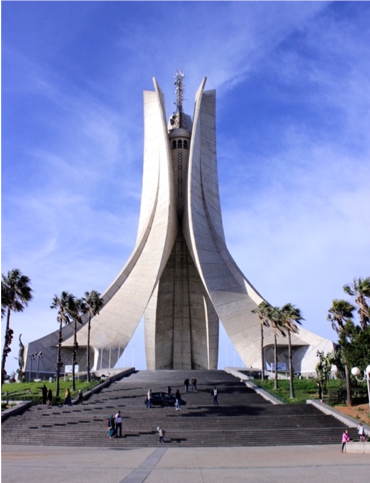
On our last morning, I admire the view from the kitchen window. I see Algeria’s famous monument in the far distance, the Martyr’s Memorial. Unveiled in 1982 to mark twenty years of Algerian independence, the structure remains a source of strength and courage for the Algerian people.
In the midst of all its despair and in spite of its many defeats, Algiers remains a unique crater of hope and promise.
The sepia-coloured cat outside my grandparents’ building defends her territory, a patch of fenced grass home to four adorable kittens.