
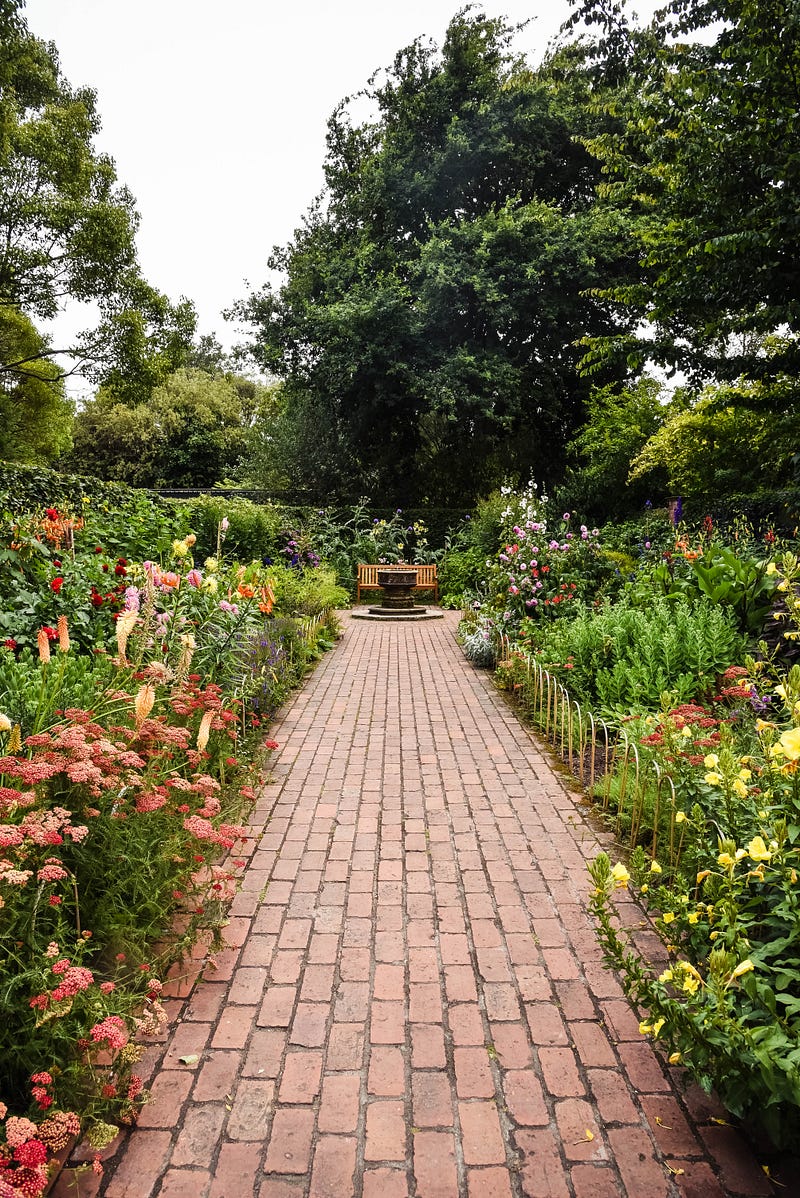
The Garden
Georgios was an understated man, middle aged with no family of his own.
He was a gardener, his plants were his family their blossoms his children, their aroma his salve in the loneliness that was his life.
His garden was his temple, its aroma Gods incense.
Here he would toil everyday, his fingers bringing forth the treasures held in the bosom of Gaia.
Whenever anyone from the village needed seedlings or plants it was to Georgios they went.
He was not like his fellow villagers, who were robust and outgoing. He was reclusive, rarely left his home, mild of manner and spoke with a tongue gilded in gold. Church was his only outing, done religiously on Sunday’s and Holy Day’s.
He would then return to the Eden he’d created in the unrelenting volcanic piece of earth he fostered.
Many thought him eccentric, not understanding his choice to live as the monks that reside reclusively on the mountain monasteries of the sacred Agios Oros.
Yet, still he served the earth that had born him amongst the people he had known all his life.
It came to pass, one cursed evening that a crime was committed in the village.
The widowed father of a young lady waited impatiently for his daughter to return from her errands. He became distressed as night cloaked the village with its ominous shroud. Worry rooted itself in his heart — Anthoula had never been late before.
The troubled father, lantern in hand went out in search of his only child.
After sometime had passed and he could not find hide nor hair of his daughter, he beseeched his neighbors for their aid in his search to pinpoint his daughters where abouts.
The villagers searched exhaustedly they found nothing, not even a shadow, the hour late — as they began returning to their homes, Anthoula was seen walking quickly towards the village, from the opposite direction they had searched.
Her hair was in disorder her clothing soiled and in deshabille.
Her father beside himself approaches her with the concern only a parent is burdened with — he asks her tearfully what had happened to her.
Anthoula, stood silent under the inquisitive glare of her neighbors.
Her concerned father, kindly led her to their home, where he gently persuaded her to speak of what had befallen her.
Breaking under the scrutiny of her fathers unrelenting inquisition, Anthoula, tells her father she had been raped and that because darkness had fallen she had not been able to see the face of the person who’d committed this abominable offense against her.
The father in his pain and held in throes of rage, tore at his face and beseeched the god’s to pluck out his eyes that they may not look upon the daughter he had failed to protect.
As village’s are close knit communities, the lives of the inhabitants overlapping one another, word of the offense against Anthoula, spread like wildfire, the gossips ran amuck, their hearts and minds scorched with suspicion. Neighbor shunned neighbor, vengeance the primary offensive.
As time passed and the little minds in the village could not figure out who had committed the offense, they planted their eyes with the force of their accusations turned towards shy Georgios — he was an anomaly to them — therefore he must be the offender.
From that one suggestive thought onward Georgios life became anything but the peace he so craved. He was spat upon, cursed at, refused sanctuary in church and when he awoke every morning he found ram horns hung on his door (ram horns symbolize a culprit, cuckold, unworthy, criminal).
Georgios, became more of an anchorite, never leaving his home, he tended his garden beneath the masked safety of the night.
The behavior of the villagers struck fresh scars daily over raw, still oozing unhealed scars Georgios undeservedly carried, they bled — invisible to others.
For Georgios the scars had become his only companions in the torturous abyss that had become his loneliness.
The villagers had not desisted in their behavior, when many months had passed. One sultry summer morning when the villagers awoke, as each opened their doors to greet a new day, there in their courtyard’s they found strewn on their rustic cobblestones, bouquets of flowers, of every bloom and every fragrance.
Inquiring as to where the flowers had come from the villagers all gathered in the square searching for answers in the faces of those clustered nearest to them.
Everyone except Georgios!
In lined procession they all began marching towards the city-hall in search of answers to the enigma.
As they drew closer to their destination, they halted before Georgios, home and there — revelation!
Georgios, garden had been cut to the roots, his glorious Eden was a desert, the jewels of his heart no longer bloomed, the aromas that had risen to heavens had been stifled by the one who had tended them with the care of a father.
One of the villagers stunned at the destruction he saw before him, gripped in the claws of curiosity he approaches Georgios home, he knocked on the door wishing to entreat him about what he beheld.
Georgios, opens his door a crack, shyly peering through.
The villager asks him, “Why, would you do this, why would you destroy the only thing you love”?
Georgios replies, with the pathos of innocence wronged, “My people give me pain — rams horns, I give you in return my heart, my garden of love, that is all I had to give”.
Stunned the villagers bowed their heads in shame. Returning to their homes, contemplating the injustice of their deeds.
There is nothing below the heavens and above the earth that will not be made manifest.
Anthoula, caught in a compromising situation and in her panic to hide her affair with another villager, had lied. She had never been raped. Her lover whom she tried to shelter from her fathers wrath, scorned her.
Anthoula, by keeping the identity of her lover a secret an innocent man was unjustly accused and abused at the hands of the only community he had placed his trust in.
Her silence the greatest betrayal.
But Justice’s eyes overflowed with veracity, her crepuscular ray’s, God’s fingertips in supplication bathed Georgios with her eminence.
Justice, that day was not blind.
Story based on true events.
Copyright ©. R Tsambounieri Talarantas. June 7, 2020. All Rights Reserved.


