
“The Game of Life and How to Play It”| Authored by Florence Scovell Shinn

“The Game of Life and How to Play It,” written by Florence Scovell Shinn and first published in 1925, is a seminal work in the field of personal development and metaphysics. In this book, Shinn explores the power of thought, spoken words, and divine intuition in the context of prosperity and success. Across its pages, she lays out the idea that life is not a battle but a game, a game that is played in the field of the mind and can be won by adhering to spiritual laws.
The book is divided into distinct chapters, each focusing on a key principle such as the power of the word, the law of karma (or the law of giving and receiving), the law of nonresistance, and the power of intention. Shinn draws heavily from Biblical scripture, interpreting verses through the lens of metaphysical principles and universal laws. She emphasizes that individuals can manifest their desires through affirmations, faith, and visualization, effectively claiming that our thoughts and beliefs shape our reality.
One of the most compelling aspects of Shinn’s work is her unwavering optimism and the assertion that the Universe is inherently generous and ready to provide for our needs. She encourages readers to align themselves with positive thinking and to declare affirmations that will help them to overcome fear and doubt. Shinn advises that by expecting good, we invite it into our lives.
Her discussion on the law of nonresistance is particularly poignant. Shinn suggests that resistance to what life brings only causes more struggle and that by accepting and even blessing situations we find challenging, we can transcend them and find a higher path to success.
“The Game of Life and How to Play It” also addresses the importance of choosing one’s words wisely, as they have the power to change situations and bring about material conditions. Shinn asserts that gratitude and generosity are key components of a prosperous life, and that by giving to others, we open the way for our own receipts.
Despite being nearly a century old, the book’s themes resonate with contemporary audiences, aligning with the principles found in “The Secret” and the broader Law of Attraction movement. Shinn’s work has been praised for its practical advice and simple, yet profound spiritual insights.
Critics of Shinn’s philosophy might argue that it oversimplifies life’s complexities and the nature of success, potentially leading to a form of victim-blaming where one’s difficulties are seen as a product of their incorrect thinking or lack of faith. Furthermore, the heavy reliance on Christian scripture may not resonate with all readers, particularly those of different faiths or secular viewpoints.
In summary, “The Game of Life and How to Play It” offers an early 20th-century perspective on the power of thought and belief in shaping one’s destiny. It is a concise guide that combines spiritual wisdom with practical advice, encouraging readers to take charge of their lives by understanding and applying spiritual laws. While its approach may not appeal to everyone, its enduring popularity suggests that many find value and empowerment in Shinn’s words.
Expanded…
“The Game of Life and How to Play It,” authored by Florence Scovell Shinn, offers an exploration of the spiritual principles that, according to Shinn, govern prosperity and personal achievements. Shinn’s writing is a pioneering work in the New Thought movement, which posits that metaphysical principles can lead to real-world success and happiness.
Shinn uses a variety of metaphors and anecdotes to illustrate her points, supporting her arguments with interpretations of biblical scripture. She suggests that life is a game in which the individual is both the player and the referee, with the power to enforce the rules — rules that are universal spiritual laws. The central tenet of her philosophy is that our thoughts and words have creative power.
Here are some key principles that Shinn emphasizes in her book:
1. The Power of the Word: Shinn believes that the spoken word is incredibly powerful and that positive affirmations can create a positive reality. She encourages the reader to speak affirmations daily to bring about positive changes in their life.
2. The Law of Prosperity: According to Shinn, expecting prosperity is essential to achieving it. She argues that a mindset of abundance attracts abundance, while a mindset of lack attracts lack.
3. The Law of Karma: Shinn’s interpretation of karma is that what you give out returns to you multiplied. She encourages generosity and positive actions as investments that will yield returns in the form of blessings and good fortune.
4. The Law of Nonresistance: This principle suggests that resistance to what is happening in your life causes more of the same hardship. Instead, accepting and blessing every situation, even the difficult ones, will lead to peace and the eventual overcoming of the challenge.
5. The Law of Forgiveness: Shinn emphasizes the importance of forgiveness, stating that it is a crucial step in freeing oneself from past mistakes and negative patterns.
6. The Law of Love: Central to Shinn’s philosophy is the concept that love is the most powerful force in the universe. Operating from a place of love, she argues, ensures the flow of good in one’s life.
7. Intuition: Shinn also touches upon the concept of divine guidance or intuition, stating that by listening to and acting upon our intuitive insights, we align with the divine plan for our lives.
8. Success: For Shinn, true success is a harmonious balance of all aspects of life — wealth, happiness, love, and health — and she provides tools and affirmations to achieve this balance.
9. Fear and Worry: Shinn asserts that fear and worry are destructive and that one should replace these negative emotions with faith and a positive vision.
Throughout the book, Shinn offers practical advice on how to apply these laws to various aspects of daily life, from financial prosperity to interpersonal relationships. She emphasizes the importance of visualization and gratitude, instructing readers to hold a clear and thankful picture of their desires as already fulfilled.
“The Game of Life and How to Play It” is not without its criticisms. Some readers may find Shinn’s approach overly simplistic, suggesting that complex life challenges can be overcome merely through positive thinking and affirmations. Others may question the assumption that individuals have complete control over their circumstances, which may not take into account systemic issues or the role of chance.
Despite these criticisms, the book has been widely read and continues to be relevant to those interested in the intersection of spirituality and self-improvement. Its enduring popularity is a testament to its compelling message of empowerment and the potential for transformation through the conscious application of spiritual laws.
More Books Authored by Florence Scovell Shinn
Florence Scovell Shinn wrote several books focused on the power of thought and affirmations in creating reality. Following “The Game of Life and How to Play It,” she authored a few more books that expanded on her ideas. Here’s a list of other books by Florence Scovell Shinn:
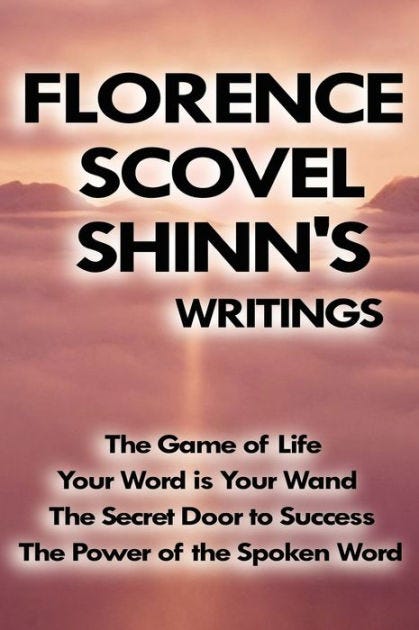
1. “Your Word is Your Wand” (1928): This book is a sequel to “The Game of Life and How to Play It” and it emphasizes the power of spoken words as a tool for creating change in one’s life.
2. “The Secret Door to Success” (1940): A book that explores the idea that there are no secrets to success; success comes to those who are aware of the power of their subconscious mind and the universal laws.
3. “The Power of the Spoken Word” (1945): Published posthumously, this book is a collection of affirmations and writings that reinforce Shinn’s beliefs about the influence of our words on our life experiences.
These books collectively form the core of Shinn’s teachings and are often found compiled into a single volume, sometimes referred to as “The Wisdom of Florence Scovell Shinn.” Her works continue to inspire readers interested in New Thought philosophies and the law of attraction.