avatarGabe Araujo, M.Sc.

Free AI web copilot to create summaries, insights and extended knowledge, download it at here

4884

Abstract

ool</h1><figure id="0002"><img src="https://cdn-images-1.readmedium.com/v2/resize:fit:800/1*NaI7q8CKh1JbDvZYJ8hHwA.png"><figcaption></figcaption></figure><p id="2fc9">Mage, a relatively new player in the workflow automation domain, has been gaining attention for its simplicity and versatility. Designed with a focus on lightweight execution and ease of use, Mage allows users to define and execute workflows with minimal effort.</p><p id="8dcb">Its minimalist approach makes it an excellent choice for smaller projects or scenarios where simplicity is valued.</p><div id="04cb"><pre><span class="hljs-variable">$ </span>mage workflow run my_workflow</pre></div><p id="8eb7">Mage’s recent updates have primarily focused on improving its extensibility and integration capabilities.</p><p id="c37e"><b>The introduction of plugin architecture enables users to extend the functionality of Mage with custom plugins tailored to their specific requirements. This flexibility allows users to integrate Mage seamlessly into their existing workflows and toolchains.</b></p><blockquote id="63ea"><p>When it comes to integration with emerging technologies, Mage has been quick to adapt. Its compatibility with cloud-native architectures, such as Kubernetes, enables users to leverage containerization and orchestration capabilities for running their workflows.</p></blockquote><blockquote id="97b3"><p>Additionally, Mage’s support for serverless computing platforms like AWS Step Functions and Azure Logic Apps empowers users to leverage the benefits of serverless architecture.</p></blockquote><p id="3e35">Although the Mage community is still growing, the tool has received positive feedback from early adopters. The community actively supports and contributes to the development of Mage, ensuring its continued improvement. The roadmap of Mage indicates a focus on enhancing its extensibility, scalability, and integration capabilities, promising a bright future for this lightweight workflow tool.</p><h1 id="4a63">Kestra: A Scalable and Extensible Workflow Automation Platform</h1><figure id="7e9f"><img src="https://cdn-images-1.readmedium.com/v2/resize:fit:800/1*7q_nd0O89z4dChdr5oiNbA.png"><figcaption></figcaption></figure><p id="b914"><b>Kestra is a powerful workflow automation platform designed for scalability and extensibility.</b></p><p id="c7cb">With its distributed architecture and fault-tolerant execution, Kestra can handle large-scale workflows with ease. It provides a comprehensive set of features for defining, scheduling, and executing workflows, making it a robust choice for enterprise-grade automation.</p><div id="e2a3"><pre><span class="hljs-attr">apiVersion:</span> <span class="hljs-string">kestra.io/v1alpha1</span> <span class="hljs-attr">kind:</span> <span class="hljs-string">Flow</span> <span class="hljs-attr">metadata:</span> <span class="hljs-attr">name:</span> <span class="hljs-string">my-flow</span> <span class="hljs-attr">spec:</span> <span class="hljs-attr">description:</span> <span class="hljs-string">My</span> <span class="hljs-string">Kestra</span> <span class="hljs-string">Flow</span> <span class="hljs-attr">tasks:</span> <span class="hljs-bullet">-</span> <span class="hljs-attr">id:</span> <span class="hljs-string">task-1</span> <span class="hljs-attr">type:</span> <span class="hljs-string">http</span> <span class="hljs-attr">config:</span> <span class="hljs-attr">url:</span> <span class="hljs-string">"https://api.example.com/data"</span> <span class="hljs-bullet">-</span> <span class="hljs-attr">id:</span> <span class="hljs-string">task-2</span> <span class="hljs-attr">type:</span> <span class="hljs-string">python</span> <span class="hljs-attr">config:</span> <span class="hljs-attr">code:</span> <span class="hljs-string">| import pandas as pd # Process data here</span></pre></div><blockquote id="2dce"><p>Recent updates in Kestra have focused on improving its performance and management capabilities. The introduction of distributed execution, enabled by technologies like Apache Kafka, allows for parallel execution of tasks across a cluster of workers, resulting in faster workflow completion times.</p></blockquote><p id="fd4c"><b>Additionally, enhancements to the user interface and monitoring capabilities have made it easier to manage and track workflow executions.</b></p><blockquote id="6df9"><p>Kestra’s integration with emerging technologies is noteworthy. With the proliferation of cloud computing, Kestra seamlessly integrates with popular cloud providers like AWS, Azure, and Google Cloud.</p></blockquote><p id="3312">This integration enables users to leverage managed services such as AWS Batch and Azure Data Factory for executing tasks within their workflows, further enhancing scalability and cost efficiency.</p><p id="b158">The Kestra

Options

community is growing steadily, with contributors actively adding new features and resolving issues. The comprehensive documentation and support provided by the community make it easier for users to adopt and extend Kestra.</p><blockquote id="e88b"><p>The roadmap of Kestra highlights plans for improving scalability, reliability, and integration, ensuring its continuous evolution as a robust workflow automation platform.</p></blockquote><h1 id="b000">The Future of Workflow Automation</h1><figure id="4402"><img src="https://cdn-images-1.readmedium.com/v2/resize:fit:800/1*NaI7q8CKh1JbDvZYJ8hHwA.png"><figcaption></figcaption></figure><blockquote id="7135"><p>As workflow automation continues to evolve, several trends and advancements are expected to shape the field. One significant trend is the increasing integration of machine learning into workflows. Airflow, with its strong support for machine learning frameworks, is well-positioned to embrace this trend.</p></blockquote><p id="97c8"><b>We can anticipate further enhancements in model training, deployment, and monitoring capabilities within the Airflow ecosystem.</b></p><p id="23f9">Another area of interest is the adoption of serverless computing and cloud-native architectures. Both Mage and Kestra are actively integrating with serverless platforms, enabling users to harness the benefits of scalability, cost efficiency, and simplified infrastructure management. Going forward, we can expect tighter integration with cloud providers and the development of specialized plugins for specific serverless services.</p><p id="68c9">Furthermore, the rise of event-driven architectures and real-time data processing will likely impact workflow automation. Tools like Airflow, Mage, and Kestra will need to adapt to handle event-driven workflows seamlessly. This may involve the development of new features and integrations with event streaming platforms like Apache Kafka and AWS EventBridge.</p><blockquote id="6cd9"><p>In conclusion, workflow automation tools such as Airflow, Mage, and Kestra are playing pivotal roles in orchestrating complex tasks and enabling efficient automation.</p></blockquote><p id="2bdd">With their recent updates, integration with emerging technologies, and active community support, these tools are well-prepared for the future. As the field continues to advance, we can anticipate exciting new features, improved scalability, and enhanced integration capabilities from Airflow, Mage, and Kestra. Whether you are a data engineer, data scientist, or software developer, these tools provide valuable resources for streamlining your workflows and staying ahead in the automation game.</p><p id="4111"><i>Disclaimer: The views and opinions expressed in this article are my own and do not necessarily reflect the official stance of the Airflow, Mage, and Kestra projects or their respective communities.</i></p><p id="9969"><b>I hope this article has been helpful to you. Thank you for taking the time to read it.</b></p><p id="09e9">💰 <a href="https://codeeliteintprep.gumroad.com/">Free E-Book </a>💰</p><p id="9784">👉<a href="https://codeeliteintprep.gumroad.com/">Break Into Tech + Get Hired</a></p><p id="1b34"><i>If you enjoyed this article, you can help me share this knowledge with others by:<b>👏claps, 💬comment, and be sure to 👤+ follow.</b></i></p><p id="401b"><b>Who am I? </b><i>I’m Gabe A, a seasoned data visualization architect and writer with over a decade of experience. My goal is to provide you with easy-to-understand guides and articles on various data science topics. With <a href="https://medium.com/@araujogabe1/list/reading-list">over 250+ articles published across 25+ publications</a> on Medium, I’m a trusted voice in the data science industry.</i></p><div id="92c7" class="link-block"> <a href="https://medium.com/@araujogabe1/membership"> <div> <div> <h2>Join Medium with my referral link — Gabe Araujo, M.Sc.</h2> <div><h3>Read every story from Gabe Araujo, M.Sc. (and thousands of other writers on Medium). Your membership fee directly…</h3></div> <div><p>medium.com</p></div> </div> <div> <div style="background-image: url(https://miro.readmedium.com/v2/resize:fit:320/0*Ut8jd-Yzusrj1SGT.jpeg)"></div> </div> </div> </a> </div><p id="4966">💰 <a href="https://codeeliteintprep.gumroad.com/">Free E-Book </a>💰</p><p id="f4dc">👉<a href="https://codeeliteintprep.gumroad.com/">Break Into Tech + Get Hired</a></p><p id="fbda"><b><i>Stay up to date.</i></b><i> </i>with the latest news and updates in the Programming space — follow the <a href="https://medium.com/ai-genesis?source=about_page-------------------------------------">Everything Programming</a> publication.</p></article></body>

The Future of Workflow Automation: Airflow, Mage, and Kestra
Note: The following blog post reflects my personal views and opinions on the evolving landscape of workflow automation and the role of Airflow, Mage, and Kestra.

As a technology enthusiast, I am always excited to explore the latest advancements in workflow automation. In recent years, the field has witnessed significant progress, and three notable tools have emerged as prominent players: Airflow, Mage, and Kestra.

In this blog post, I will delve into these tools, discussing their recent updates, features, and improvements, as well as their integration with emerging technologies such as machine learning, serverless computing, and cloud-native architectures.

Additionally, I will touch upon community contributions, support, and the roadmap of each tool.

Finally, I will speculate on the future trends and advancements in workflow orchestration and how Airflow, Mage, and Kestra may adapt to meet new challenges.

Airflow: Orchestrating Workflows with Elegance
Airflow has gained immense popularity among data engineers and data scientists due to its flexible and scalable nature.

It provides a platform to programmatically author, schedule, and monitor workflows, making it a versatile tool for orchestrating complex tasks.

One of the standout features of Airflow is its intuitive interface, allowing users to define workflows as directed acyclic graphs (DAGs).

This graphical representation makes it easier to understand and visualize the dependencies between tasks.

from airflow import DAG
from airflow.operators.python import PythonOperator
from datetime import datetime

def task1():
    # Task 1 logic here
    pass
def task2():
    # Task 2 logic here
    pass
# Define the DAG
with DAG("my_dag", start_date=datetime(2023, 6, 27), schedule_interval="0 0 * * *") as dag:
    task_1 = PythonOperator(task1, task_id="task_1")
    task_2 = PythonOperator(task2, task_id="task_2")
    task_1 >> task_2  # Define task dependencies

In recent updates, Airflow has made significant improvements, enhancing its usability and performance.

The introduction of Airflow 2.0 brought a revamped user interface, making it more user-friendly and intuitive. Additionally, it introduced the concept of task groups, enabling users to organize tasks within a DAG into logical groups, further enhancing readability and manageability.

Airflow’s integration with emerging technologies has also been commendable. With the rise of machine learning, Airflow provides seamless integration with popular frameworks such as TensorFlow and PyTorch, allowing users to incorporate machine learning models into their workflows effortlessly.

Furthermore, Airflow’s compatibility with serverless computing platforms like AWS Lambda and Google Cloud Functions enables users to leverage the scalability and cost efficiency of these services.

The Airflow community is vibrant and active, with numerous contributors continuously enhancing the tool. The support and documentation provided by the community are commendable, making it easier for newcomers to get started. The roadmap of Airflow shows a focus on improving scalability, security, and usability, ensuring that it remains a go-to choice for workflow automation.

Mage: A Lightweight and Versatile Workflow Tool

Mage, a relatively new player in the workflow automation domain, has been gaining attention for its simplicity and versatility. Designed with a focus on lightweight execution and ease of use, Mage allows users to define and execute workflows with minimal effort.

Its minimalist approach makes it an excellent choice for smaller projects or scenarios where simplicity is valued.

$ mage workflow run my_workflow

Mage’s recent updates have primarily focused on improving its extensibility and integration capabilities.

The introduction of plugin architecture enables users to extend the functionality of Mage with custom plugins tailored to their specific requirements. This flexibility allows users to integrate Mage seamlessly into their existing workflows and toolchains.

When it comes to integration with emerging technologies, Mage has been quick to adapt. Its compatibility with cloud-native architectures, such as Kubernetes, enables users to leverage containerization and orchestration capabilities for running their workflows.

Additionally, Mage’s support for serverless computing platforms like AWS Step Functions and Azure Logic Apps empowers users to leverage the benefits of serverless architecture.

Although the Mage community is still growing, the tool has received positive feedback from early adopters. The community actively supports and contributes to the development of Mage, ensuring its continued improvement. The roadmap of Mage indicates a focus on enhancing its extensibility, scalability, and integration capabilities, promising a bright future for this lightweight workflow tool.

Kestra: A Scalable and Extensible Workflow Automation Platform
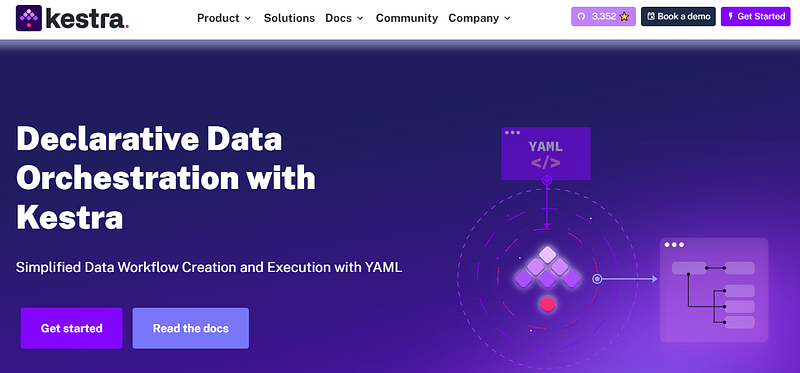
Kestra is a powerful workflow automation platform designed for scalability and extensibility.

With its distributed architecture and fault-tolerant execution, Kestra can handle large-scale workflows with ease. It provides a comprehensive set of features for defining, scheduling, and executing workflows, making it a robust choice for enterprise-grade automation.

apiVersion: kestra.io/v1alpha1
kind: Flow
metadata:
  name: my-flow
spec:
  description: My Kestra Flow
  tasks:
    - id: task-1
      type: http
      config:
        url: "https://api.example.com/data"
    - id: task-2
      type: python
      config:
        code: |
          import pandas as pd
          # Process data here

Recent updates in Kestra have focused on improving its performance and management capabilities. The introduction of distributed execution, enabled by technologies like Apache Kafka, allows for parallel execution of tasks across a cluster of workers, resulting in faster workflow completion times.

Additionally, enhancements to the user interface and monitoring capabilities have made it easier to manage and track workflow executions.

Kestra’s integration with emerging technologies is noteworthy. With the proliferation of cloud computing, Kestra seamlessly integrates with popular cloud providers like AWS, Azure, and Google Cloud.

This integration enables users to leverage managed services such as AWS Batch and Azure Data Factory for executing tasks within their workflows, further enhancing scalability and cost efficiency.

The Kestra community is growing steadily, with contributors actively adding new features and resolving issues. The comprehensive documentation and support provided by the community make it easier for users to adopt and extend Kestra.

The roadmap of Kestra highlights plans for improving scalability, reliability, and integration, ensuring its continuous evolution as a robust workflow automation platform.

The Future of Workflow Automation

As workflow automation continues to evolve, several trends and advancements are expected to shape the field. One significant trend is the increasing integration of machine learning into workflows. Airflow, with its strong support for machine learning frameworks, is well-positioned to embrace this trend.

We can anticipate further enhancements in model training, deployment, and monitoring capabilities within the Airflow ecosystem.

Another area of interest is the adoption of serverless computing and cloud-native architectures. Both Mage and Kestra are actively integrating with serverless platforms, enabling users to harness the benefits of scalability, cost efficiency, and simplified infrastructure management. Going forward, we can expect tighter integration with cloud providers and the development of specialized plugins for specific serverless services.

Furthermore, the rise of event-driven architectures and real-time data processing will likely impact workflow automation. Tools like Airflow, Mage, and Kestra will need to adapt to handle event-driven workflows seamlessly. This may involve the development of new features and integrations with event streaming platforms like Apache Kafka and AWS EventBridge.

In conclusion, workflow automation tools such as Airflow, Mage, and Kestra are playing pivotal roles in orchestrating complex tasks and enabling efficient automation.

With their recent updates, integration with emerging technologies, and active community support, these tools are well-prepared for the future. As the field continues to advance, we can anticipate exciting new features, improved scalability, and enhanced integration capabilities from Airflow, Mage, and Kestra. Whether you are a data engineer, data scientist, or software developer, these tools provide valuable resources for streamlining your workflows and staying ahead in the automation game.

Disclaimer: The views and opinions expressed in this article are my own and do not necessarily reflect the official stance of the Airflow, Mage, and Kestra projects or their respective communities.

I hope this article has been helpful to you. Thank you for taking the time to read it.

💰 Free E-Book 💰

👉Break Into Tech + Get Hired

If you enjoyed this article, you can help me share this knowledge with others by:👏claps, 💬comment, and be sure to 👤+ follow.

Who am I? I’m Gabe A, a seasoned data visualization architect and writer with over a decade of experience. My goal is to provide you with easy-to-understand guides and articles on various data science topics. With over 250+ articles published across 25+ publications on Medium, I’m a trusted voice in the data science industry.

💰 Free E-Book 💰

👉Break Into Tech + Get Hired

Stay up to date. with the latest news and updates in the Programming space — follow the Everything Programming publication.

Programming
Technology
Data Science
Artificial Intelligence
Machine Learning
Recommended from ReadMedium