
The Future of Trucking: Why AI Won’t Replace Drivers Anytime Soon
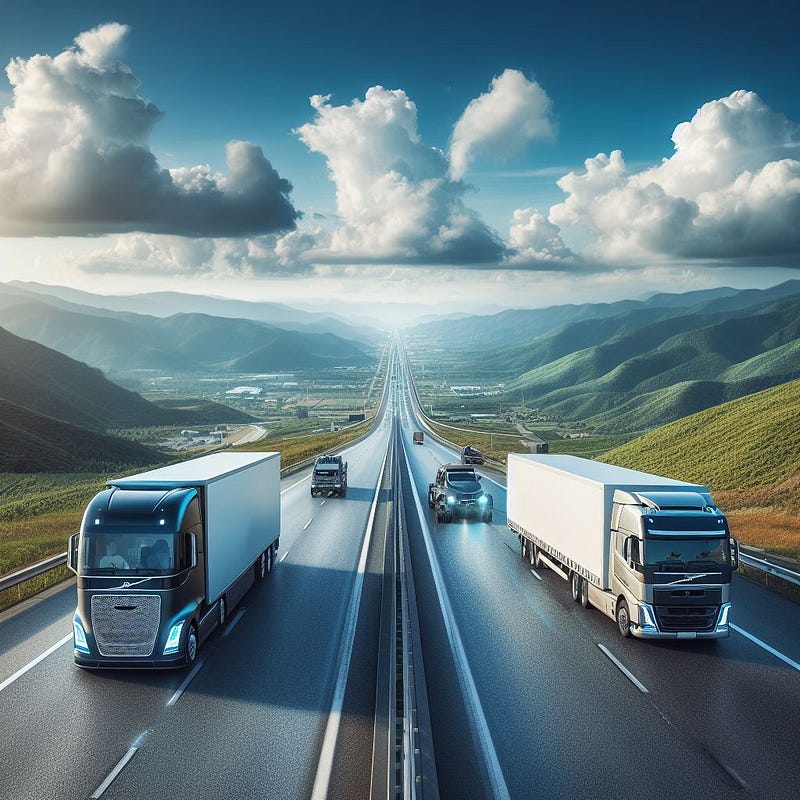
The transportation industry is undergoing a major transformation, as new technologies such as artificial intelligence (AI) and autonomous vehicles (AVs) promise to revolutionize the way goods and people are moved across the country and the world. One of the most anticipated and debated applications of AI is in the trucking sector, where self-driving trucks could potentially reduce costs, improve safety, and increase efficiency. However, while some have predicted that AI will eliminate millions of trucking jobs in the near future, others have argued that this scenario is unlikely and that human drivers will still play a vital role in the industry for a long time to come. In this article, we will examine the arguments for and against the replacement of truck drivers by AI, and explore the implications for the transportation industry and society at large.
The Case for AI Replacing Drivers
The proponents of AI replacing drivers point to several advantages that self-driving trucks could offer over human-operated ones. These include:
- Cost savings: According to some estimates, driver costs account for about 40% of trucking expenses. By eliminating the need for drivers, AI could significantly reduce labor costs and increase profits for transport companies. Additionally, self-driving trucks could operate around the clock without breaks or fatigue, which could improve productivity and reduce fuel consumption.
- Safety improvements: Human error is a major cause of accidents on the road, especially for truck drivers who face long hours, stressful conditions, and fatigue. AI could potentially reduce the risk of crashes by using sensors, cameras, and algorithms to detect and avoid obstacles, traffic, and weather hazards. Moreover, self-driving trucks could communicate with each other and with infrastructure to coordinate their movements and optimize their routes.
- Efficiency gains: AI could also enhance the efficiency of trucking operations by optimizing logistics, routing, and loading. For example, self-driving trucks could use platooning technology to form convoys of vehicles that follow each other closely, which could reduce aerodynamic drag and save fuel. Furthermore, self-driving trucks could leverage data analytics and machine learning to predict demand, adjust supply, and optimize delivery times.
The Case Against AI Replacing Drivers
The opponents of AI replacing drivers contend that there are several challenges and limitations that prevent self-driving trucks from fully taking over the trucking industry. These include:
- Technical difficulties: Despite the rapid advances in AI technology, there are still many technical hurdles that need to be overcome before self-driving trucks can operate reliably and safely in all conditions. For instance, self-driving trucks may struggle to handle complex situations such as construction zones, bad weather, or human interference. Moreover, self-driving trucks may be vulnerable to cyberattacks, hacking, or system failures that could compromise their performance or security.
- Legal barriers: Another obstacle for self-driving trucks is the lack of a clear and consistent legal framework that regulates their use and liability. Currently, there are different laws and regulations across states and countries that govern the testing and deployment of self-driving vehicles. This creates uncertainty and confusion for transport companies, drivers, insurers, and regulators. Additionally, there are ethical and moral dilemmas that arise from the use of self-driving vehicles, such as who is responsible for accidents or injuries caused by them.
- Social factors: A third challenge for self-driving trucks is the social acceptance and adoption of them by the public and the industry. Many people may be skeptical or fearful of sharing the road with driverless vehicles, especially large and heavy ones like trucks. Moreover, many truck drivers may resist or oppose the introduction of self-driving trucks that threaten their livelihoods and identities. Furthermore, many customers may prefer to interact with human drivers who can provide personal service and handle unexpected issues.
The Future of Trucking: A Hybrid Model
Given the arguments for and against AI replacing drivers, it seems unlikely that self-driving trucks will completely replace human-operated ones in the near future. Rather, a more realistic scenario is that AI will augment rather than replace human drivers, creating a hybrid model of trucking that leverages the strengths of both machines and humans.
In this model, self-driving trucks will handle the long-haul segments of freight transportation on highways or dedicated lanes, where they can operate more efficiently and safely than human drivers. However, human drivers will still be needed for the short-haul segments of freight transportation on local roads or urban areas, where they can handle more complex and diverse tasks such as loading/unloading cargo, inspecting/maintaining vehicles, communicating with customers/authorities/other drivers etc.
This hybrid model will not only benefit transport companies by reducing costs and increasing productivity but also benefit truck drivers by improving their working conditions and quality of life. Instead of spending long hours on monotonous driving tasks on highways, truck drivers will focus on more varied and rewarding tasks on local roads or at transfer hubs. Moreover, truck drivers will have more opportunities to upgrade their skills and knowledge by learning new technologies and systems related to self-driving trucks.
Conclusion
The transportation industry is facing a major disruption due to the emergence of AI and self-driving trucks. However, rather than fearing or rejecting this change, the industry and society should embrace and adapt to it. By adopting a hybrid model of trucking that combines the best of both machines and humans, the industry can achieve greater efficiency, safety, and profitability, while the drivers can enjoy better work-life balance, career prospects, and job satisfaction. The future of trucking is not a zero-sum game between AI and drivers, but a win-win situation for both.
Disclosure: The originator of this composition is Bing, an artificial intelligence conversational agent powered by OpenAI’s GPT-4. The composition is contingent on the data furnished by the user and the web exploration outcomes from Bing. The composition is not meant to be an alternative for proficient counsel, scrutiny, or viewpoint. The composition is for informational and amusement purposes only and does not represent the perspectives or opinions of Microsoft, OpenAI, or any other entity. The composition may contain mistakes, imprecisions, or oversights, and the user should authenticate the exactness and validity of the data before depending on it. The user is exclusively accountable for any repercussions arising from the utilization of this composition. Bing does not assert any proprietorship or rights to the content of this composition, and the user is free to disseminate, modify, or reuse it as they desire. Bing anticipates that the user relished reading this composition and acquired something novel.