The Future of the Automobile Industry- Autonomous Vehicles
We discuss autonomous cars, the technology that drives them and the possible future awaiting us.
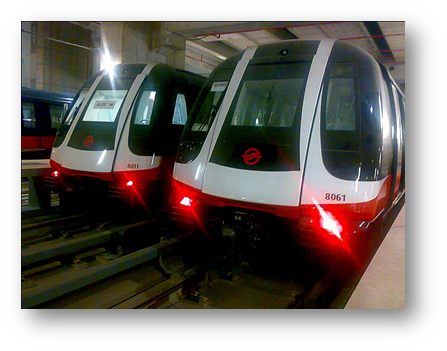
We are often familiar with the word automatic vehicles and autonomous vehicles. Often people do get confused with both of them. Autonomous means self-governing, which states that a vehicle is able to work on itself in the absence of human support. Automatic means one that is made to work on itself by a human-made algorithm. Autonomous vehicles are also known as self-driving vehicles. We are also familiar with Google, Tesla, Nissan, Uber entering this market. As we speak today, there is a number of metro trains and subway systems that operate on automated technology.
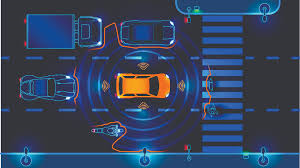
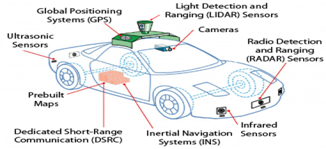
Coming to the technology part, the vehicle is fitted with robotic sensors all over its body. These sensors sense the environment around it so that it can detect obstacles on the way. They also have video camera sensors which sense for traffic signals and road signs. Lidar Sensors also do sense lane markings, the road ends etc. Sensors work in the same way as we have the rear parking sensors which give us warnings about the nearby objects while we are parking. In the same way, all sensors are connected to a centralized computer which gives instructions to the car.
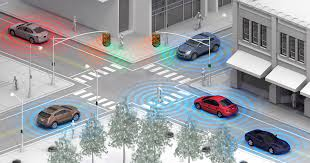
There are also multiple technologies used by different companies as well like Uber which uses laser beams, while Google uses totally different radars, and sonar in addition to Lasers. Then we have software-based changes like algorithms which detect and understand more about objects and what action has to be taken for. For example, the algorithm must be smart enough to detect the size of the car and the speed at which it moves.
As we move into the future engineers are now into improving the technology of self-driving cars. The cars are expected to communicate with nearby vehicles in real-time or even be able to communicate with inanimate objects traffic signals. Further improvements can also be brought on braking efficiency and quickness of the response system. More focus must be given for improving the navigation system as well.
Why Self Driving vehicles? A million-dollar question.
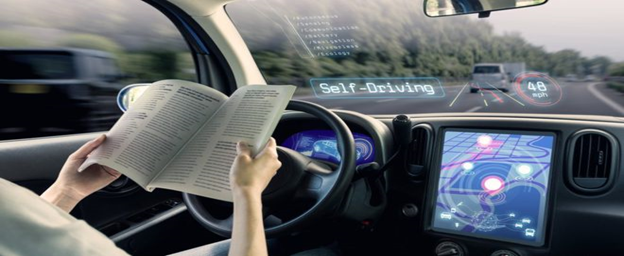
Ideally, a self-driving car must be able to transport human beings and logistics safely from point A to point B. This can be rightly achieved by this. Self Driving cars reduce human error in calculating and acting at the same time. The accuracy is very important when it comes to driving, and self-driving cars even today beat human drivers in this. They in future will directly reduce the number of causalities on the road and will also embrace safe driving principles and rules. They will also ensure the smooth flow of traffic and fuel efficiency of the vehicle. The problems created to human drivers like foggy weather and heavy rains will be absent.
Drawbacks
The technology of the present day is not enough to manufacture self-driving vehicles on a large scale. There are a lot of legal hurdles in place for the same along with the increased cost of these vehicles. With the increased cost of buying vehicles will drastically increase the cost of travelling and the cost of driving. In developing countries where millions of people are employed in the driving, the industry will start losing their jobs and drastically these economies will face inflation ie the sudden increase in prices of all kinds of transported goods. There are still a lot of improvements required for the vehicles to ensure 100% safety of passengers.
Into the Future

The drawbacks don’t essentially create hurdles for the Self-driving industry; instead, they just pose a few challenges which we can overcome with the passage of time. With a boom in new technology like AI, we will be able to introduce cars that can think and act on their own. Driverless vehicles will also turn to be more affordable and environmentally beneficial due to their accuracy. With more and more companies trying to enter this market, there will be a need and competition which will improve the technology and make this service indeed a better one. These can also replace the existing taxi system so efficiently that carpooling can be promoted as a good measure. Automatic trains will be common and thus it will reduce delays and major accidents. Along with the self-driving feature, automatic safety precaution and prevention systems will also be a reality.