
The Future of Photography is… Film
Analog imaging never went away. And soon, it may be more important than ever.
For the past six to nine months the future has come at us fast. Destiny is never known and is always debated with competing crystal balls. It leaves us with a mix of anxiety and anticipation.
The engine driving this train forward is AI technology and its effect on photography — the pastime, the art and the form of expression we all love. Depending on your exposure to the topic, AI brings with it the expectation of improved image making with previously unthinkable back-end editing tools, or perhaps the doom of the genre itself with text prompted generative visual processes. The field has tried to carve out niches where it expects to endure and less enthusiastically, the places where it will concede the fight.
It has been on my mind for a while and I think I am arriving at some clarity. Watching both from afar and up close, it has filtered into my media streams. Opportunity presented the chance to edit a published book of analog photographs transformed by style transfer AI techniques. I enjoyed the opportunity and I am proud of the work that resulted.
I did my first search for “AI Photography” on twitter a few months ago. To my embarrassment and surprise, my searches initially yielded things that perhaps my wife shouldn’t see. History tends to repeat itself, like VHS and the internet before, adult entertainment often drives the application and adoption of new technology. The first to lose their gigs as a result won’t be photographers, it will be the Instagram models, Tictoc dancers and cam girls. With relief, more recently, this search has yielded results featuring more mundane subject matter that I have a hard time dismissing as artificially created.
I saw a thread the other day where a photographer shot a smiling model in front of a rolling green hill bathed in golden hour light. The photographer decided she was going to take her model to the beach, extracted her subject, prompted an AI image generating engine to create a beach scene with matching light conditions and combined the two. Viewed in isolation each image was compellingly real. The same photographer took another image of a model sitting in a diner staring into the sunlight streaming into the window. The table before her is bare, subsequent edits used AI to conjure dishes and glasses to fill the table before her.
I follow a photographer who shoots stark minimalistic black and white landscapes. Recently he has begun to post two types of images, some he makes with his camera and some created with AI at the result of text prompts to an AI image generator. He is transparent in which is which, but if he wasn’t, I would have no clue.
The moment is upon us and many people have tried to identify a historical anecdote for it. The revival of LP records is one such frequently made “save the day” comparison, but it has some key differences. Music is still recorded and mixed digitally, the final support, the pressing onto vinyl is the analog step. In photographic terms that is the equivalent of capturing an image with a digital camera, processing it in Lightroom then printing out a digitally transposed negative onto a transparency that then can be used to create a silver gelatin print in a darkroom. A handful of photographers do this, printmaking skills in the darkroom are a true gift. But that’s not where the future is going to lead for photography broadly.
AI will be to photography what plastics were to pottery, ceramics, and glass ware. None of these crafts disappeared but they shed many of their functional, mass commercial applications and became, in their purchase and use, something special. Something better than the ordinary. They eventually took up residence as a respected art or craft. Photography is the new art glass or pottery.
How will we get to this place? I think we will see a divergence based on capture media. Over time, digital photography will be swallowed up whole by the larger genre of digital image making. A portion of this future genre will be purely text prompted generative AI, harnessing machine learning conditioned on a historical catalog of archived images. Another portion of this will be images refined with AI tools from a starting point. The nuance between these sides of the same building will be if the starting point was a photograph, a sketch or a textual description.
Eugène Atget was one of the first photographers considered to be an artist. Though this was suggested to him near the end of his life, he dismissed the comparison. At the turn of the 19th century and early in the 20th, Atget wandered the streets of Paris with his large format glass plate negative camera documenting “his Paris” that was being pulled down and replaced by new, ”hideous” architecture in the age of Art Nouveau. To pay for this he made other images. Images of famous or scenic venues and would sell these prints to painters. Painters who worked in dingy dark spaces cranking out tens of pictures per day to supply what was then a commodity business filling the empty wall space for an emerging middle class. These painters no longer needed to transport easels and canvas to a location to recollect its details. The weather in which to work was always dry and if there was coal for the oven, maybe warm.
Much of the emerging digital image making space will make use of initial digital capture in the same way. Many people who currently enjoy photography will gravitate to that space. Have you ever spent more than five hours in Lightroom on a single image? Were your toes tingly that first time you replaced a sky? Your future is calling. Your back-end tool bag is about to grow exponentially. I think you will have a lot of fun and power to create the images that you want to make.
But what of the rest of us? I long put off going digital. I worked with my film cameras until they broke down. Then for a period I stopped creating entirely. I returned, but digital photography was never home for me, it was the place I had to work because that is where the work was located. In a way it was those three years of my professional career that I relocated and lived in Toledo for a job. The city had its merits, but it was never home, the place I yearned for.
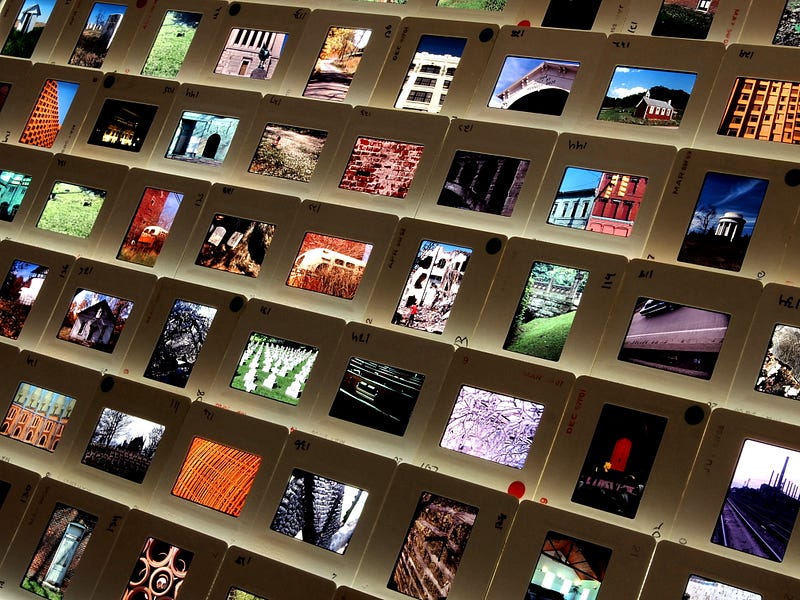
Film photography never went away, but it was cast to the side by the commercial efficiencies of digital photography. Camera builders stopped making analog cameras. Kodak downsized their production facility in Guadalajara from 32 operating machines to 4 before closing shop and moving production back to Rochester and outsourcing the marketing and distribution of photographic film.
But film photography never died. Those late Millennials and Zoomers (Gen Z) that stumbled upon their parent’s album collection, spun them on the old record players they also found, created a resale market that enticed music companies to start pressing LPs again. While in their childhood basement, they also found their parents photo albums and negative sleeves. In that shoebox they found something genuine and authentic in an artificial, electronic world. They saw the art without the need for commercial application.
As the modern age marched along, Atget’s clients no longer needed to crank out mass produced paintings. The potter no longer needed to crank out cheap tableware. A transition point came where many of these crafts could return to their roots and focus purely on creativity tethered to the organic process. For those of us still entranced by art that harnesses the magic of photosensitive particles suspended in a translucent emulsion, this is our path going forward.
There will be challenges, so much production around film photography has disappeared. Hopefully the rising prices of film will attract capital to increase production capacity. Fortunately, at least one camera company has seen into the future. Pentax is in the process of making film cameras again. Time was running out. The engineers with the skills and experience to do this were disappearing with the advancement of age, Pentax invited them back into to design discussions before it was too late.
In one of the promotional videos that follows the Pentax Film Project, a young photographer, Shiori Iwakuwa is invited to the Ricoh/Pentax headquarters to experience and provide input on direction and progress. The video closes with her words “I’m excited. Very excited.”
So am I. Photography is returning to its original medium and craft. Photography is coming home.
John Pemberton
I am the founder of F2.8Press, Publishers of Undiscovered Photography. We have an open call for submissions for our Zine: “Archive”. Check us out on Twitter!
You can find me, my personal work on my Site.
When I am not wandering aimlessly with a camera, I am a Lecturer of Economics and Statistics at Butler University.


