
The Future of Nuclear Fusion: A Breakthrough or a Pipe Dream?
The Pros and Cons of Nuclear Fusion: A Comprehensive Guide to the Most Challenging Technology of Our Time
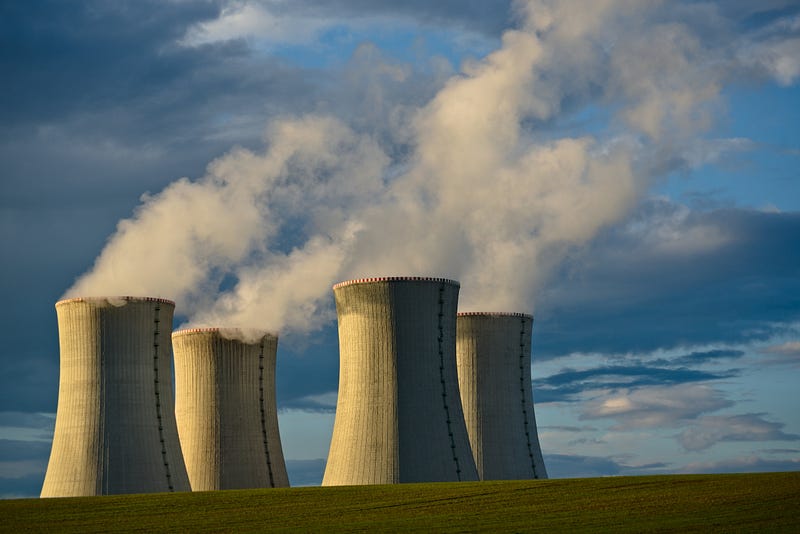
Did you know that the sun produces enough energy in one second to power the entire human civilization for 500,000 years? This is possible because of nuclear fusion, the process of combining two lighter nuclei to form a heavier one, releasing a large amount of energy in the process. Nuclear fusion is the power source of the sun and stars, and it has the potential to provide unlimited clean energy for humanity. Imagine a world where we could harness this power and use it to meet our growing energy needs, without relying on fossil fuels, emitting greenhouse gases, or generating radioactive waste. Sounds too good to be true, right? Well, it might be.
Nuclear fusion is also one of the most difficult and elusive technologies to achieve. It requires extremely high temperatures and pressures, sophisticated devices and materials, and enormous amounts of money and time. Despite decades of research and experimentation, we are still far from reaching the ultimate goal of net energy gain from fusion, let alone commercializing it. Is nuclear fusion a breakthrough or a pipe dream? Will it ever become a reality or will it remain a fantasy?
In this article, we will explore the latest developments and challenges in nuclear fusion research, compare it with nuclear fission, and discuss the ethical, environmental, and geopolitical implications of nuclear fusion technology.
Nuclear Fusion vs Nuclear Fission

Nuclear fusion and nuclear fission are two different ways of producing energy from nuclear reactions. Nuclear fission is the process of splitting a heavier nucleus into two lighter ones, releasing energy in the process. Nuclear fission is the current dominant form of nuclear energy production, but it has several drawbacks. According to the World Nuclear Association, some of them are:
- Producing radioactive waste that needs to be safely stored and managed for long periods of time.
- Requiring enriched uranium fuel that is scarce and expensive, and that can be used for making nuclear weapons.
- Posing safety and security risks, such as accidents, sabotage, or terrorism, that can have catastrophic consequences for people and the environment.
- Being subject to public opposition and political regulations that can limit or hinder its development and deployment.
Nuclear fusion has several advantages over nuclear fission, such as:
- Producing less radioactive waste that decays faster and is easier to handle.
- Using abundant and cheap hydrogen fuel that is widely available and cannot be used for making nuclear weapons.
- Being inherently safe and secure, as the fusion reactions are self-limiting and cannot cause runaway chain reactions or explosions.
- Being more acceptable and attractive to the public and policymakers, as it promises to provide clean and unlimited energy for the future.
However, nuclear fusion also has some disadvantages or limitations compared to nuclear fission, such as:
- Being more technically challenging and expensive, as it requires extremely high temperatures and pressures, sophisticated devices and materials, and enormous amounts of money and time.
- Having lower power density and efficiency, as the fusion reactions produce less energy per unit mass or volume than the fission reactions.
- Requiring more infrastructure and resources, such as electricity, water, land, and manpower, to operate and maintain the fusion reactors.
- Facing possible competition from renewable energy sources, such as solar, wind, or hydro power, that are becoming more accessible and affordable.
These are some of the comparisons between nuclear fusion and nuclear fission. They show that nuclear fusion has great potential but also great challenges. It is not clear whether nuclear fusion will ever replace or complement nuclear fission as a major source of energy.
The Latest Developments and Challenges in Nuclear Fusion Research
Nuclear fusion research is a global endeavour that involves many countries, institutions, and projects. According to the World Nuclear Association, one of the most ambitious and prominent projects is the International Thermonuclear Experimental Reactor (ITER), which is being built in France by a consortium of seven partners: the European Union, the United States, Russia, China, India, Japan, and South Korea. ITER aims to be the world’s largest and most powerful tokamak, a device that uses magnetic fields to confine a plasma of deuterium and tritium, the fuel for fusion. The goal of ITER is to achieve net energy gain from fusion by 2035.
However, ITER is not the only approach to nuclear fusion. There are other types of devices and methods that are being explored by different researchers and organizations. For example, some of them are:
- Inertial confinement fusion (ICF), which uses lasers or beams to compress and heat small pellets of fuel. One of the leading ICF experiments is the National Ignition Facility (NIF) at Lawrence Livermore National Laboratory in California, which recently achieved a milestone of producing more energy from fusion than the energy absorbed by the fuel.
- Stellarator, which is a twisted version of a tokamak that aims to achieve more stable and continuous plasma confinement. One of the most advanced stellarators is the Wendelstein 7-X (W7-X) at Max Planck Institute for Plasma Physics in Germany, which has demonstrated high-performance plasma operations and long-pulse discharges.
- Magnetized target fusion (MTF), which uses magnetic fields and shock waves to compress and heat a plasma of fuel inside a metal sphere. One of the leading MTF experiments is the Linus project at General Fusion in Canada, which plans to build a prototype reactor by 2025.
- Alternative fuels, such as helium-3 or boron-11, which could offer advantages over deuterium-tritium in terms of lower neutron production, higher energy yield, or easier ignition. Some of the experiments that are exploring alternative fuels are the LHD at National Institute for Fusion Science in Japan, which has achieved high-temperature helium-3 plasmas, and the HB11 project at University of New South Wales in Australia, which has proposed a novel scheme to fuse hydrogen and boron-11 using lasers.
These are some of the examples of the current state of nuclear fusion research around the world. However, despite the progress and diversity of these efforts, there are still many challenges and obstacles that nuclear fusion researchers face. According to MIT News, some of them are:
- Achieving high enough temperatures and pressures to initiate and sustain fusion reactions.
- Maintaining stable plasma conditions without losing too much heat or particles.
- Dealing with neutron radiation and heat exhaust that result from fusion reactions.
- Scaling up from laboratory to commercial size and integrating various subsystems and technologies.
These challenges require overcoming engineering complexities and uncertainty, not to mention the huge about of resources needed to fund endeavours like this.
The Ethical, Environmental, and Geopolitical Implications of Nuclear Fusion Technology
Nuclear fusion technology is not only a scientific and technical challenge, but also a social and political one. It raises many ethical, environmental, and geopolitical issues that need to be considered and addressed. For example, some of them are:
Ethical issues. Is it worth investing so much time and money into an uncertain endeavor that may or may not succeed? Is it fair to divert resources from other pressing problems or needs, such as poverty, health, or education? Is it morally acceptable to tamper with nature or create artificial stars? Is it responsible to create such a powerful technology that could be misused or abused?
Environmental issues. What are the positive and negative impacts of nuclear fusion technology on the planet and its ecosystems? On one hand, nuclear fusion could reduce greenhouse gas emissions, enhance energy security, and diversify energy sources. On the other hand, nuclear fusion could disrupt natural cycles, create new forms of pollution, and increase energy consumption and demand.
Geopolitical issues. How will nuclear fusion technology affect the world order and its relations? On one hand, nuclear fusion could foster international collaboration, promote scientific diplomacy, and share knowledge and benefits. On the other hand, nuclear fusion could create new conflicts, exacerbate inequalities, and trigger arms races.
These are some of the implications of nuclear fusion technology that need to be carefully weighed and balanced. Nuclear fusion technology could have profound consequences for humanity and the world. It could be a blessing or a curse, depending on how it is developed and used.
Nuclear fusion is a promising but challenging technology that could provide unlimited clean energy for humanity. It has many advantages over other energy sources, but it also faces many technical, ethical, environmental, and geopolitical challenges. The question of whether nuclear fusion is a breakthrough or a pipe dream is not easy to answer. It depends on many factors, such as scientific progress, economic viability, social acceptance, and political will. Nuclear fusion is not a magic bullet that will solve all our energy problems. It is a complex and uncertain endeavour that requires vision, courage, and collaboration. But it is also a noble and inspiring quest that could transform our future for the better.
We should not give up on nuclear fusion, but we should also not rely on it blindly. We should support nuclear fusion research and development, but we should also pursue other sustainable and renewable energy options. We should be realistic about the challenges and risks of nuclear fusion, but we should also be optimistic about the opportunities and benefits of nuclear fusion. Nuclear fusion is not a pipe dream, but it is not a breakthrough yet. It is a potential breakthrough that we can make happen if we work together and act wisely.
Are you tired of scrolling through endless clickbait articles and ads on other platforms? With a Medium membership, you’ll have access to high-quality, ad-free content from top writers and publications. Indulge in the pleasure of reading while supporting the creative work of writers, and take your reading experience to the next level. Sign up now to join the community of readers and writers on Medium.