avatarJason Kravitz

Free AI web copilot to create summaries, insights and extended knowledge, download it at here

2201

Abstract

y unexpected.</p><p id="fc8e">Dalí was a master at encoding faces and figures inside many of his greatest “<a href="https://dali.com/dali-double-imagery-better-anyone-else/">double-image</a>” works.</p><figure id="4801"><img src="https://cdn-images-1.readmedium.com/v2/resize:fit:800/1*Uv5PCdPvhDFq9S_NnyTQlQ.jpeg"><figcaption>Old Couple or Musician by Salvador Dalí (1930)</figcaption></figure><figure id="37c4"><img src="https://cdn-images-1.readmedium.com/v2/resize:fit:800/1*Im2M63z3-nscxrWSgompMQ.jpeg"><figcaption></figcaption></figure><figure id="ac1d"><img src="https://cdn-images-1.readmedium.com/v2/resize:fit:800/1*JRS0B2kfkPbnMk830YGLsQ.jpeg"><figcaption>Ballerina in a Death’s Head (1939) and L’Amour de Peirrot (1920) by Salvador Dalí</figcaption></figure><figure id="b203"><img src="https://cdn-images-1.readmedium.com/v2/resize:fit:800/1*X4Eb86AHQMwr3bnMPT3iwg.jpeg"><figcaption>Gala Nude Looking at the Sea by Salvador Dalí (1975) looks like Abraham Lincoln at 18m away</figcaption></figure><p id="2563">Surrealist creatives challenged the fundamental fabric of their reality through a series of exercises and games which they used to widen their perspective by removing the conscious ego part of themselves from their creations. Dalí practiced his own technique which he called the <a href="https://en.wikipedia.org/wiki/Paranoiac-critical_method">Paranoiac-critical method</a>.</p><p id="3439">A simplified way to describe the method is to disassociate one’s ideas about the purpose of familiar everyday things to allow new connections and meaning to emerge.</p><p id="a8b2">For example, the nucleus of an atom from a dream takes form on the canvas in the shape and color of the sun, textured like a sunflower, and within floats the son of God, the <a href="https://www.dalipaintings.com/the-ascension-of-christ.jsp">Ascension of Christ</a>.</p><figure id="c26e"><img src="https://cdn-images-1.readmedium.com/v2/resize:fit:800/1*Y9pgN9vcrYbdxLXVucGxtw.jpeg"><figcaption>The Ascension of Christ (1958) by Salvador Dali</figcaption></figure><p id="cce0">The free association is not unlike <a href="https://en.wikipedia.org/wiki/Pareidolia">pareidolia</a>, the phenomenon of <b>finding

Options

faces</b> in inanimate objects such as clouds, foodstuffs, and even mountains.</p><p id="22bb">Interestingly, the words “paranoia” and “pareidolia” both share a similar etymology relating to their Greek roots that can be translated to something like “<i>alternate mind / alternate form</i>”.</p><figure id="14b6"><img src="https://cdn-images-1.readmedium.com/v2/resize:fit:800/1*wfOZcsWFfepESrdPAakEGg.jpeg"><figcaption>Metamorphosis of Narcissus by Salvador Dalí (1937)</figcaption></figure><p id="e983">Dalí’s optical illusions are an excellent visual aid to train ourselves to see different narratives, individually and simultaneously. To accept that there can be more than one version of reality operating at any given time.</p><p id="0176">The ability to transcend the fundamental fabric of reality doesn’t stop in the art creation process.</p><p id="7116">We are all relating to the world from an often fixed version of ourselves and “reality” as we know it. Our worldview, choices, and default behaviors are all unconsciously influenced by our fears, misconceptions, old defenses, and outdated ideas.</p><p id="006c">Could it be possible to train ourselves, much like the Surrealists, to see the world from a new perspective?</p><figure id="114b"><img src="https://cdn-images-1.readmedium.com/v2/resize:fit:800/1*V9Lkzk_uvddCkiZB2mGtsA.jpeg"><figcaption>The Persistence of Memory by Salvador Dalí (1931)</figcaption></figure><p id="c58d">As Dalí’s famous 1931 painting “The Persistence of Memory” illustrates, time and memory are fluid and fading. Every new moment provides an opportunity to see the world differently.</p><p id="475e">When we open ourselves up to alternate viewpoints and perspectives we are stretching our concept of what is possible.</p><figure id="d7f3"><img src="https://cdn-images-1.readmedium.com/v2/resize:fit:800/1*tE71Cq5i5k8gXB4bnqCUfA.gif"><figcaption></figcaption></figure><h2 id="0d05">The world is full of minor miracles and momentary monuments.</h2><h2 id="9750">Some require a leap of faith, while others only the right perspective.</h2><h2 id="0431">Imagine the things you might find in this world if you simply changed your perspective.</h2></article></body>

The fundamental fabric of reality is changing, you just haven’t seen it yet

From pareidolia to paranoia, what Salvador Dalí can teach you about expanding your perspective

In an increasingly polarized world, the ability to even consider another perspective, let alone allowing yourself to accept the possibility of multiple perspectives at once, has become a rare talent.

One hundred years ago, humanity was slowly recovering from a world war and another famous virus pandemic. The aftershock of these tumultuous times birthed the Surrealist movement.

This collective of creatives challenged themselves to see life in a non-linear way more akin to dreaming, and in doing so, would go on to shape the art and culture of the world for decades to follow.

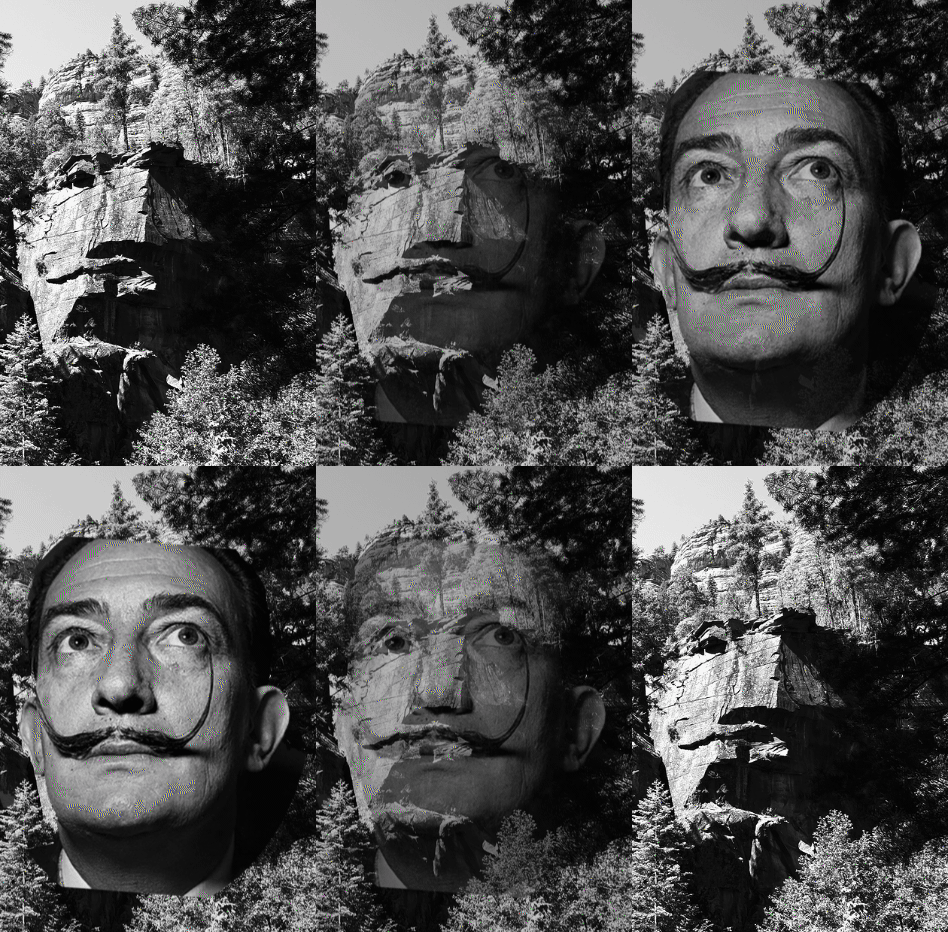
A few years ago, I had an unexpected brush with the Surrealists while hiking on the West Fork Trail in Arizona on a hot summer day when I stopped off for a quick break.

That’s when I saw it. Or rather, I couldn’t see it. At least not with my naked eye. From my standing perspective, it looked like an ordinary rock wall.

But the strangest thing happened when I casually glanced down at the flipped LCD screen of my camera from a waist level perspective. There it was.

Unmistakable. A face in the rocks.

Not just any face, but one that bore a striking resemblance to the great Spanish surrealist painter Salvador Dalí.
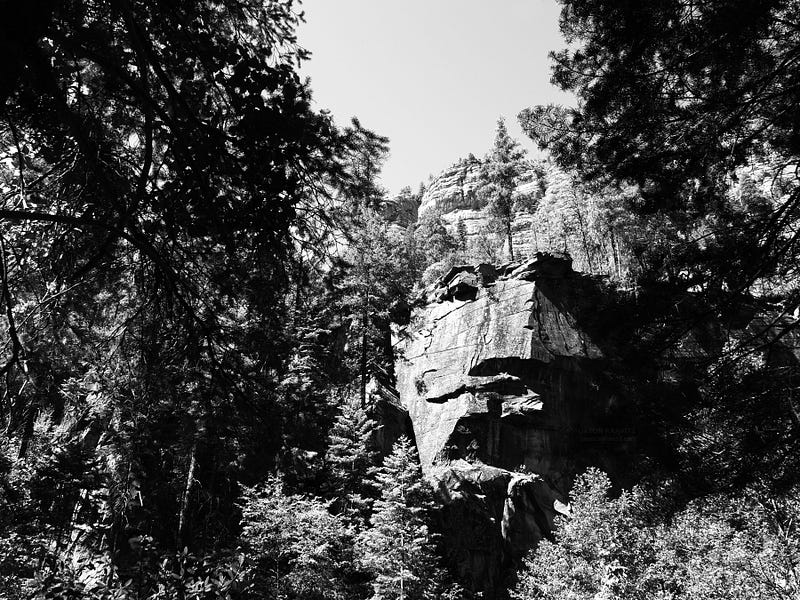
Dali of the Fork by Jason Kravitz

After several photos, double-takes, and confirmation from my hiking companion that she saw it too, it was still there. That face. But only visible from a certain perspective.

It seemed a fairly random face to manifest itself in an Arizona canyon trail. Though not entirely unexpected.

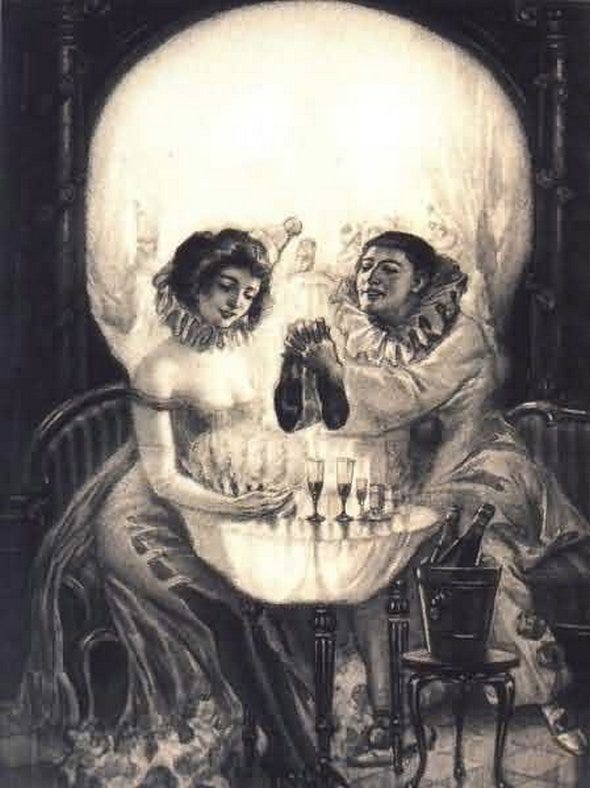
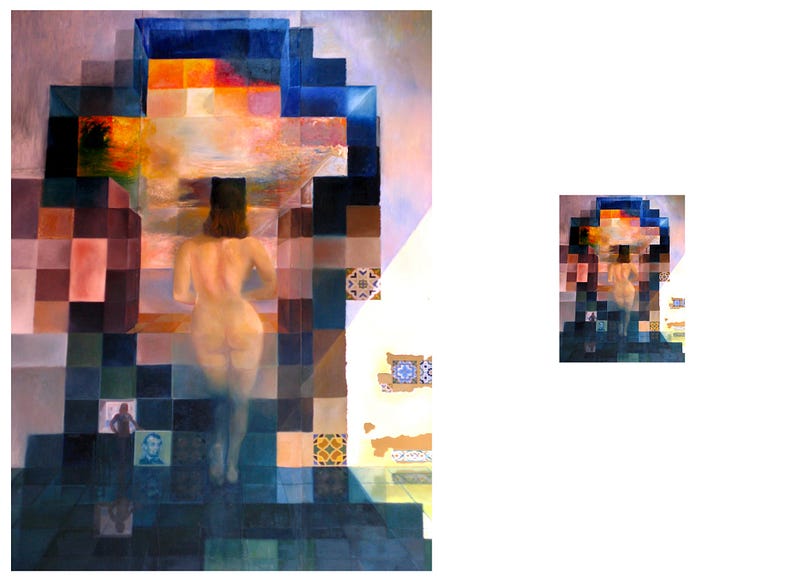
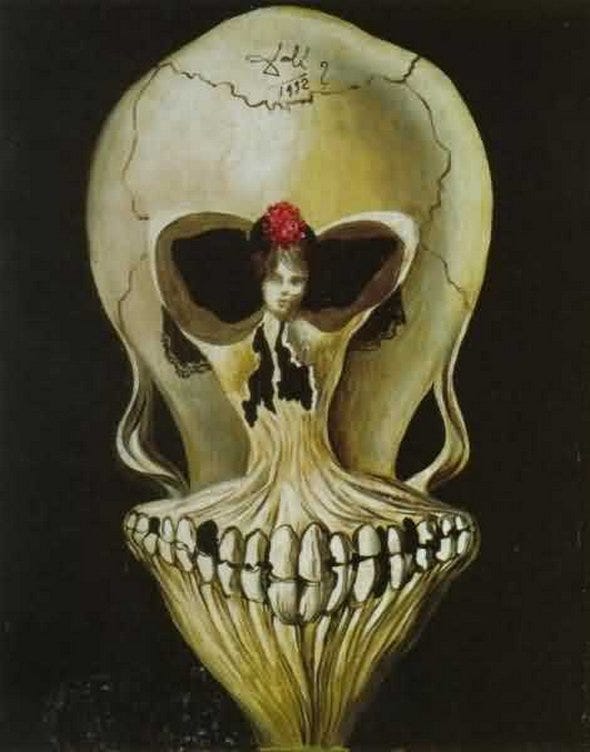
Dalí was a master at encoding faces and figures inside many of his greatest “double-image” works.
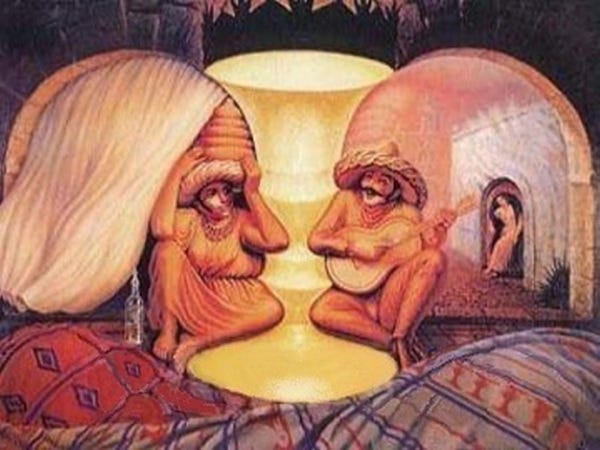
Old Couple or Musician by Salvador Dalí (1930)
Ballerina in a Death’s Head (1939) and L’Amour de Peirrot (1920) by Salvador Dalí
Gala Nude Looking at the Sea by Salvador Dalí (1975) looks like Abraham Lincoln at 18m away

Surrealist creatives challenged the fundamental fabric of their reality through a series of exercises and games which they used to widen their perspective by removing the conscious ego part of themselves from their creations. Dalí practiced his own technique which he called the Paranoiac-critical method.

A simplified way to describe the method is to disassociate one’s ideas about the purpose of familiar everyday things to allow new connections and meaning to emerge.

For example, the nucleus of an atom from a dream takes form on the canvas in the shape and color of the sun, textured like a sunflower, and within floats the son of God, the Ascension of Christ.
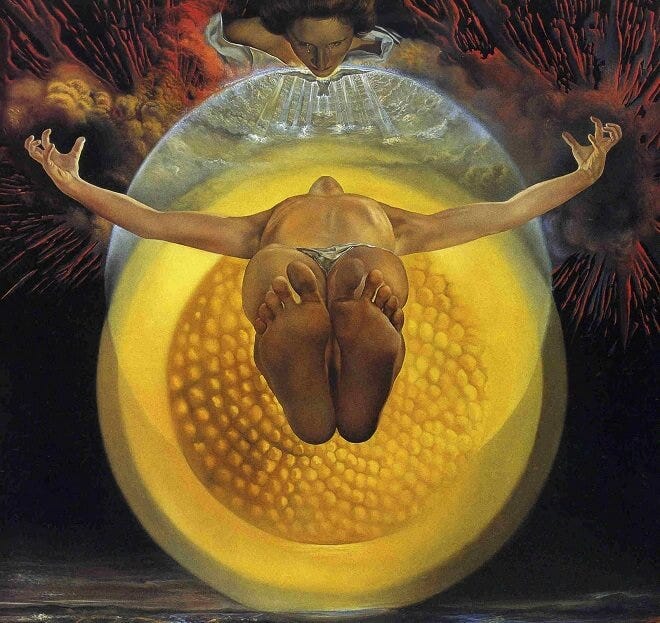
The Ascension of Christ (1958) by Salvador Dali

The free association is not unlike pareidolia, the phenomenon of finding faces in inanimate objects such as clouds, foodstuffs, and even mountains.

Interestingly, the words “paranoia” and “pareidolia” both share a similar etymology relating to their Greek roots that can be translated to something like “alternate mind / alternate form”.
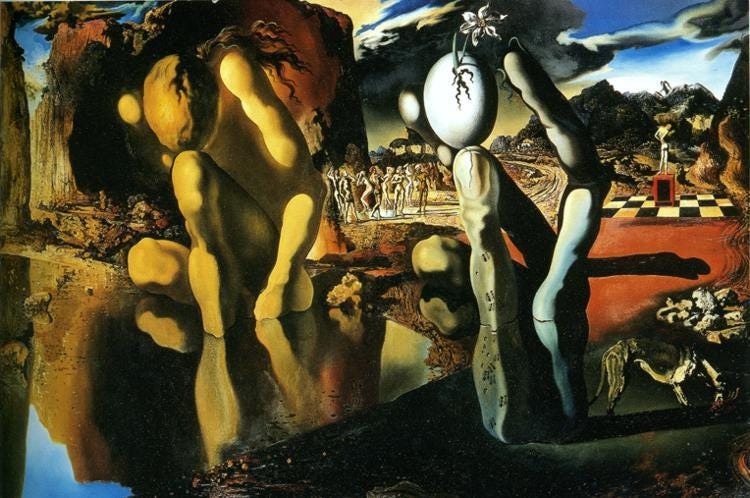
Metamorphosis of Narcissus by Salvador Dalí (1937)

Dalí’s optical illusions are an excellent visual aid to train ourselves to see different narratives, individually and simultaneously. To accept that there can be more than one version of reality operating at any given time.

The ability to transcend the fundamental fabric of reality doesn’t stop in the art creation process.

We are all relating to the world from an often fixed version of ourselves and “reality” as we know it. Our worldview, choices, and default behaviors are all unconsciously influenced by our fears, misconceptions, old defenses, and outdated ideas.

Could it be possible to train ourselves, much like the Surrealists, to see the world from a new perspective?
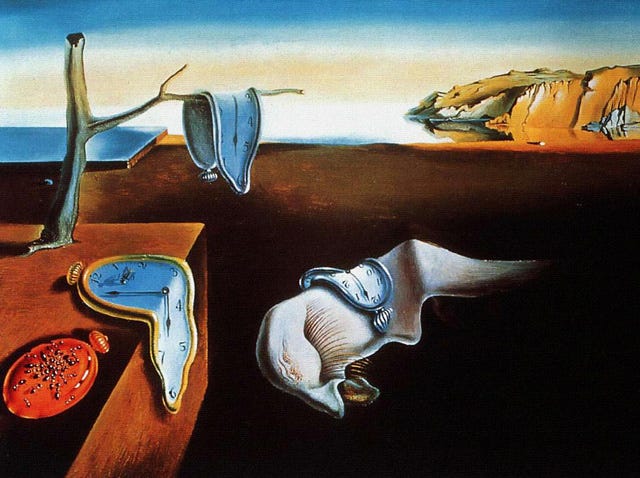
The Persistence of Memory by Salvador Dalí (1931)

As Dalí’s famous 1931 painting “The Persistence of Memory” illustrates, time and memory are fluid and fading. Every new moment provides an opportunity to see the world differently.

When we open ourselves up to alternate viewpoints and perspectives we are stretching our concept of what is possible.
The world is full of minor miracles and momentary monuments.

Some require a leap of faith, while others only the right perspective.

Imagine the things you might find in this world if you simply changed your perspective.

Philosophy
Art
Creativity
Self Improvement
Psychology
Recommended from ReadMedium