
The Free State of Jones
Victoria Bynum’s remarkable book offers a nuanced view of race and gender
An extraordinary feature of genealogy research is its power to illuminate a broad and nuanced history of a place from the study of a single family. During my 25 years as an amateur, and oftentimes bumbling, family historian, I have found that the study of my family provides me with new insights into how individuals' lives reveal the complexities of their larger world.
Victoria E. Bynum’s remarkable book: The Free State of Jones: Mississippi’s Longest Civil War, relies on a genealogical approach to understand a unique moment in the history of the Confederacy. Dr. Bynum is the Distinguished Professor Emeritus of History at Texas State University, San Marcos. Her area of expertise is dissenters. She also is the author of The Long Shadow of the Civil War: Southern Dissent and Its Legacies and Unruly Women: The Politics of Social and Sexual Control in the Old South. Bynum’s work demonstrates the subtle understanding of history teased out from carefully researching an individual family.
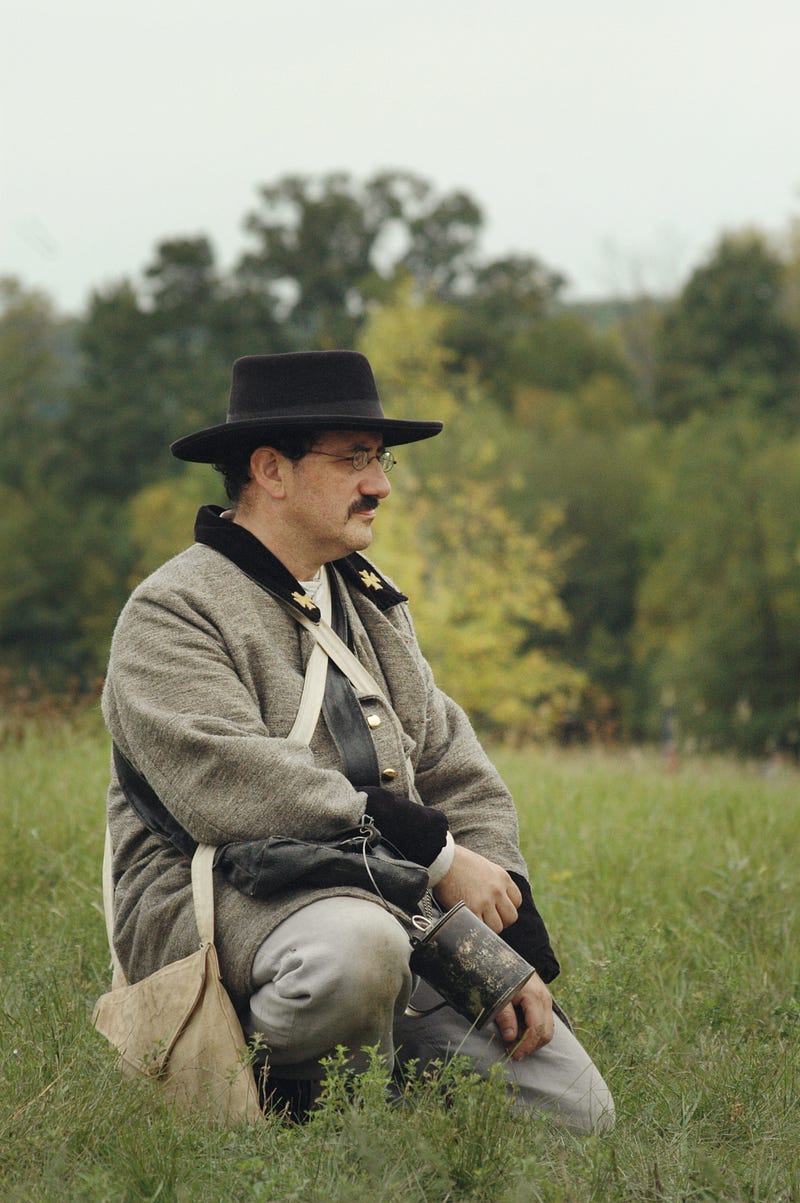
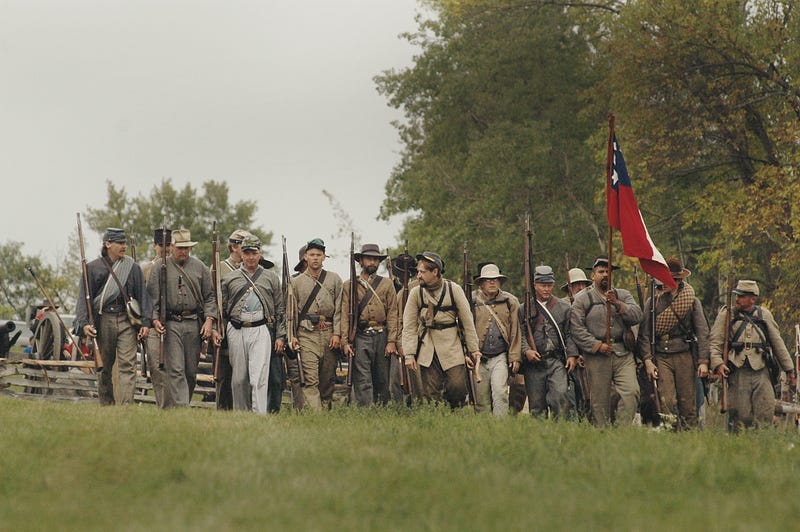
Bynum descends from one of the followers of Newton Knight. Knight deserted the Confederate 7th Mississippi Infantry Battalion. He walked 200 miles home and led as many as 600 residents of Jones County, Mississippi, and nearby areas, to take up arms against Confederates. In the middle of the Civil War, Knight’s followers held Jones County under the United States flag until the end of the conflict.
In the deepest of the deep south, the homeplace of Confederate President Jefferson Davis, what would inspire this group of lapsed Confederates to defy the southern cause? To understand the independent streak of Bynum’s ancestor’s one must understand the history of how the Bynums came to southern Mississippi.

Her family’s American origins were in colonial North Carolina. The Church of England set up establishments there, as well as in Virginia, New York, Maryland, South Carolina, and Georgia. The history of the Anglican Church is complicated. The British crown established the Church of England as the official religion of the colonies, but the colonists themselves favored the free practice of faith. Freedom of religion was allowed, even before the U.S. Constitution or the Bill of Rights were written. At the same time, Great Britain granted privileges to the Anglican Church, including the right to receive tax support from all citizens. The planters who were prominent tended to be prominent in the church, as well as powerful in government.
The Great Awakening throughout the colonies appealed to yeoman farm families like the Bynums. In the Sandy Creek area of Western North Carolina, the nonhierarchical approach, open-air sermons, and reliance on faith instead of academic study was a rebuke of the formality of the Church of England. Protestant faiths that grew from the Great Awakening appealed to the sensibilities of independent farmers.
In addition to their independent Baptist roots, Bynum’s ancestors were among the Regulators. The Regulator Movement pitted yeoman farmers in the rural western part of North Carolina against the planter, slave-holding elites, who comprised only about five percent of the population but controlled the levers of government and the church. Civil disobedience devolved into looting and burning of the homes of the colonial upper class. The rebellion culminated in the Battle of Alamance. Even though the Regulators were subdued, some scholars believe that Regulator resistance sparked additional rebellion in Massachusetts, which ultimately led to the American Revolution.
After the Revolution, Bynum’s ancestors traveled west to Georgia and finally to the piney woods of eastern Mississippi, taking with them their Primitive Baptist faith and yeoman farmer values. Baptists in the southern United States split again during the Civil War in general and slavery in particular. Newton Knight and Bynum’s ancestors were among the Primitive Baptists who opposed slavery.
Newton Knight’s reason for joining the Confederate Army is not revealed through documentary evidence, but Bynum could find no proof that Knight held any strong ideological position regarding the Confederacy. She suspects that he just liked the idea of being a soldier. However as the war slogged on, farmers like Knight bore a disproportionate burden of the high cost of war. Their farms depended on grown men to perform the hard physical work of raising crops and livestock. Without husbands and older sons, women found it almost impossible to raise enough food to feed themselves and their stock. Large plantations tended to continue raising cotton, pushing the provisioning of soldiers onto rural family farms. These issues, coupled with the appalling slaughter at the Seige of Corinth, caused men like Knight to abandon their commitment to the Confederate effort.
The last straw was the 20 Negro Law, which allowed planters who enslaved twenty or more people to be exempt from fighting. Having no slaves himself, why would he have more of an incentive to risk his life than those who did?
Professor Patrick Rael concluded the following in The Civil War Era:
“Whether it came in the form of resentment toward the need to maintain the plantation police state through measures such as the twenty Negro law, or whether it came in the form of individual calculations weighing family security against the value of an independent Confederate state, homefront support proved decisive to Confederate defeat.”
In the end, Bynum’s study of her family covers the changing role of women and Black persons in the Civil War era, the splintering factions in the Baptist church, the conflicting interests of the planter class, and the citizen farmer. She wrote seriously about Reconstruction and voter suppression tactics. Her research inspired a movie named after her book.
She frequently refers to records compiled by the National Society, Daughters of the American Revolution, an organization that itself was formed in part to preserve the history of women. In fact, the Tallahala Chapter, NSDAR owns the Deason Home, where Newt Knight was alleged to have shot and killed Confederate Major Amos McLemore, who was in the area trying to round up Confederate deserters. The Tallahala Chapter is currently restoring the home, the oldest residence in Jones County.
One popular thread of public discourse about racial reckoning, especially about the treatment of Black persons, relies heavily on recounting what is commonly described in popular culture as a true history: White people’s persistent oppression of persons of color, beginning with the earliest days of European settlement. This is the flawed premise of the New York Times’ 1619 Project.
Continual study of the Black experience in America is indispensable to understanding the American story. To truly understand the pressures that advanced and constricted Black rights, history must be understood in context.
Victoria Bynum’s remarkable book provided the vehicle to create the first major modern film to take Reconstruction seriously. In the film, the Jones community is saved from impending extermination by Union victory. Unfortunately, the biracial community’s hopes are almost immediately dashed. Voting is thwarted. Government promises of forty acres and a mule are empty. Sharecropping replaced slavery, and cotton remained king. All these factors diminish the power and influence of the yeoman farmer, the Primitive Baptist, the Regulator- regardless of his race.
Sources: