
Inspiration and Life
The Four Stages of Possessions in Life
The Best Way to Think About Possessions
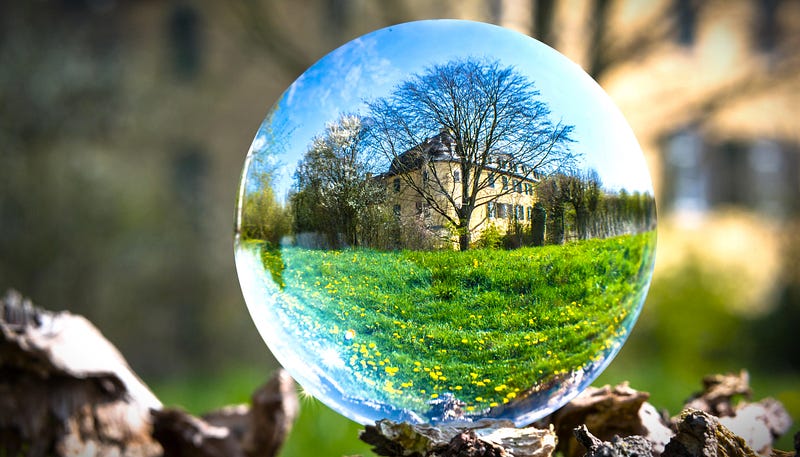
As you age, you go through various stages in your desire for possessions. Little information exists about the four stages we are about to discuss, and I believe you will find the following perspectives interesting. They are seen in life all the time, but grouping them for a better understanding is not common.
The stages include:
- Dreaming
- Collecting
- Hoarding
- Decluttering
These stages are fluid rather than sequential. You will likely be in more than one stage to varying degrees during your life regardless of age, and you may skip some stages altogether.
Let’s examine each of the four stages and ask ourselves some questions to help us better understand where we want to be in them.
Dreaming Stage
Dreaming about owning different things can be fun as we go through life. The dreaming stage can happen at any age and seems particularly suited for the young or young at heart.
What a marvelous thing it can be when a dream comes true. As a young man, I dreamt about many things. Certain guitars, cameras, and audio equipment remained only a dream at one time because I couldn’t afford them. Yet later, some of those dreams became a reality as my income increased.
The things we dream of often become more expensive as we reach middle age. For years I dreamed of owning that next home and car. Such prized possessions can not only consume your money but a great deal of your time. While such things are nice to have, they are not necessary for a life of happiness.
Are you one of those whose dreams must become a reality for you to become reasonably satisfied? Or are you willing to enjoy the dream and forgo the ownership part of the equation? As you age, you hopefully mature in your dreams and desires and become more grounded in reality.
Questions for self-examination:
- What am I dreaming about owning?
- Will I be satisfied if it remains a dream, or is it something I believe I must have?
- Am I willing to give up on the dream, or do I prefer to hold on to it?
- What do the things I dream about and my desire for them tell me about myself?
Collecting Stage
I was solidly in the collecting or accumulating stage for years. I collected homes, cars, musical instruments, sound equipment, cameras, computers, and titles in the companies I worked for, among other things. Looking back at this stage, I now see it as an exciting, enjoyable, challenging, disruptive, and disturbing part of my life.
That last sentence may sound full of contradictions, but it wasn’t for me at the time. I had allowed my identity to become tied to what I owned and did rather than who I was. I became president of a large company at a relatively young age, allowing it to consume a big portion of my life. It was an exciting time, yet I let my ego become so tied to the position it blinded me to many things.
I accumulated material things with abandon, for which I paid both a cost and a price in exchange for a large chunk of my life. The following quote speaks volumes about this:
“What you possess, possesses you.” Petronius (c. 27–c. 66 AD
During this stage, “things” began to control me. The more I owned, the more I lost in my time and life. I thought it was worth it then, but looking back, it was a very costly lesson.
For the most part, I skipped the hoarding stage and landed squarely in the decluttering stage. A life-changing event can have that effect on us. In my early 50s, my wife contracted cancer and died within months. There I was, left with all of this “stuff,” which suddenly became almost meaningless to me. A tragic event in one’s life can change your focus from the material to the spiritual, making physical “things” of little or no value.
I would rather have learned this lesson more naturally rather than through tragedy, yet I value its lesson. While I do not fully ascribe to the “minimalist” approach to life, it does have a great deal of merit.
Questions to explore:
- Where am I valuing most, and how does it improve my life?
- Am I satisfied with what I have, or do I want more?
- How much of my life (time) can I free up by “collecting” less?
- What do these desires tell me about yourself?
“Sometimes you can have everything you want but fail to achieve anything you need.” Craig D. Lounsbrough (1963-present)
Hoarding Stage
While I struggled only a little with this stage, it is a lifestyle choice for some people. I’m sure you have heard of hoarders. Hoarders are people who are unable to throw things away. I somewhat hoarded certain items like books, magazines, camera equipment, and photographs for a few years. When Charlotte, my first wife, died, I kept everything of hers but her clothes for a time.
I have since gotten rid of boxes of unnecessary things, although it took a few years. I mostly hoarded what I did because I thought I might need it again or because of its sentimental value. It wasn’t easy initially, but I slowly realized I rarely needed most of what I kept. I now try to rid myself of anything I haven’t touched in a year, which is most of it!
Some of the hardest things to let go of are those things with a sentimental attachment. I have passed much of it to family members who will cherish them, except for the photographs and film. I am still in the process of digitizing them but am slowly getting rid of the countless slides, photos, super 8’s, VHS, and digital tapes I accumulated over the decades. The great thing is I can now share them with family and friends via the internet.
If you are hoarding certain things, ask yourself:
- How important will it be to me in five, ten, or more years? Should I keep it, give it to someone, or dispose of it?
- Will it be useful to me at any point in the future? If so, realistically, when?
- Were I to die tomorrow, what would happen to it? Would it have value to anyone else, or would it wind up in the trash?
- Why should I keep it if I have not laid hands on it or seen it for a year or more?
- What do these desires tell me about myself?
I’m sure you can come up with some other good questions to deal with hoarding, and only you can provide the answers in your specific case. Keep in mind the more you attempt to justify keeping something, the stronger your attachment is to it. Find someone to speak with or help you sort through this issue. You may wish to see a therapist or psychiatrist if it will help you.
Decluttering Stage
Over time I have greatly decluttered my life. As mentioned, I began shedding things years ago. Some of it is easy. I was fortunate because the internet contains more information than books and magazines, so I did not need to keep them. Digitizing photographs and film also freed up an enormous amount of physical space.
My camera equipment is another matter, however. I love my old film cameras and lenses, yet I have no use for them now. I have gotten rid of much of what I could not adapt to my newer digital equipment. Only sentimentality makes me hang on to some of the old equipment for too long. I continue to remind myself it too must go one day.
Upon losing Charlotte, the truth in the following quote impacted me greatly:
“No possession is gratifying without a companion to share it.” Seneca (4BC-65AD)
The 32 years of smaller items accumulated during my first marriage were difficult to let go. Yet I could not keep them all. So many things had such sentimental value that only time could lessen the pain of giving them up.
Questions to ask yourself as you decide to declutter your life:
- What physical things hold the most value in my life?
- What will happen to it when I die?
- Will I even notice it is gone if I give it up in a year or two?
- How can letting go of things free up my time and life?
- What does my stand on decluttering tell me about myself?
The healthy way to see possessions
One thing for certain is as you age, you become more aware of how temporary everything on earth is. But, we are emotional beings and will cling to some things until death.
The trouble with owning too many possessions is the amount of time they steal from your life. The more you have, the more time, attention, maintenance, and care they require. Some things can become both a money-pit and a time-pit.
Your time is invaluable, worth far more than any possession on earth. I would rather spend one minute with a loved one before they die rather than have “all the tea in China,” as the old saying goes. Then there is the freedom you gain by owning less. Who doesn’t want more freedom?
Remember this:
“The things you own end up owning you. It’s only after you lose everything that you’re free to do anything.” Chuck Palahniuk (1962 — present)
While most equate wealth and success with possessions, nothing could be further from the truth, as expressed in this quote:
“Wealth is not an absolute. It is relative to desire. Every time we yearn for something we cannot afford, we grow poorer, whatever our resources. And every time we feel satisfied with what we have, we can be counted as rich, however little we may actually possess.” Alain de Botton (1969-present)
There is far more to say about each of these stages. I would love to hear your take on them in the comment section below.
Final thoughts
How can you use this information in your life? Give it some thought, then put some action behind it to create a better life for yourself.
If you take anything away from this essay, I hope it is:
Instead of focusing on getting or keeping, do the opposite and focus on giving.
Remember, it is in the giving that you make your life worthwhile and create your legacy. Why not start now?
LinkedIn |Twitter| Medium| UncommonSense| AmazonAuthorPage | Parlor
Bill Abbate Leadership Writer and Editor in ILLUMINATION
Thank you for reading this article! If you enjoyed it, please check out the others below!