
The Power of Language: 4 Words That Transformed My Life’s Course
A simple way to effectively heal and transform your life
If you’re not a member, join 👉 Medium, or read this story for free here 👈.
Do you want to make a 180-degree turn, stop being a spectator, and become the leading actor in your life, experiencing gratitude, peace, and meaningfulness?
Or transform the bad luck, fear, distress, or anger and become fortunate, confident, calm, and happy?
And if you are considering stopping reading here and looking for something else or searching for the answer over the internet. I dare you to leave now wondering if this really works or spend at least a half-hour finding the answer by yourself instead of reading for a couple of minutes more and finding it here.
It is not a magic trick; I’m not a snake-oil salesman. I want to share this simple trick that helped me and can help you too.
All you need to do is to learn four words and carry them with you all the time:
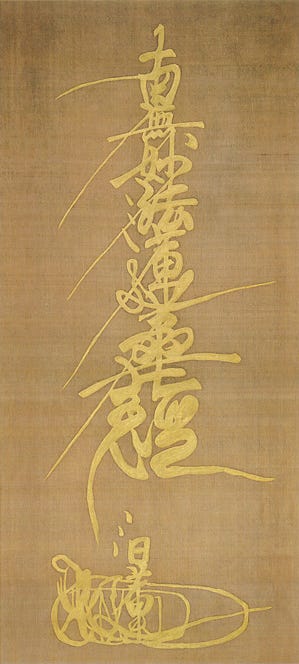
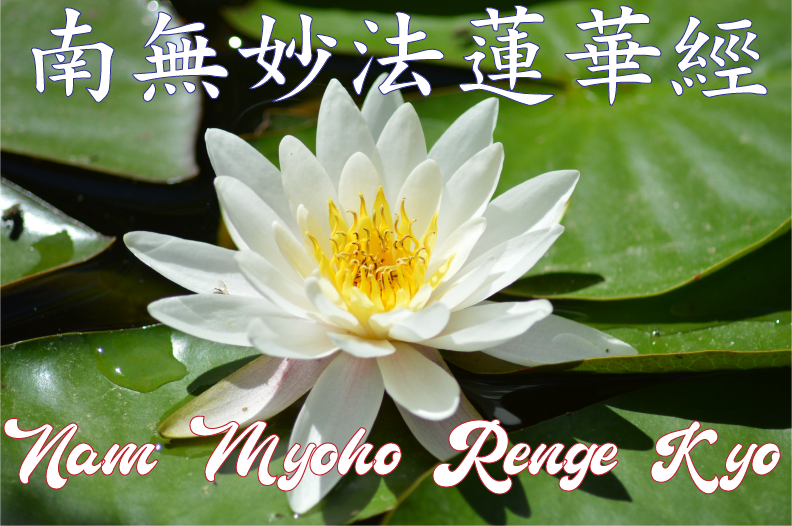
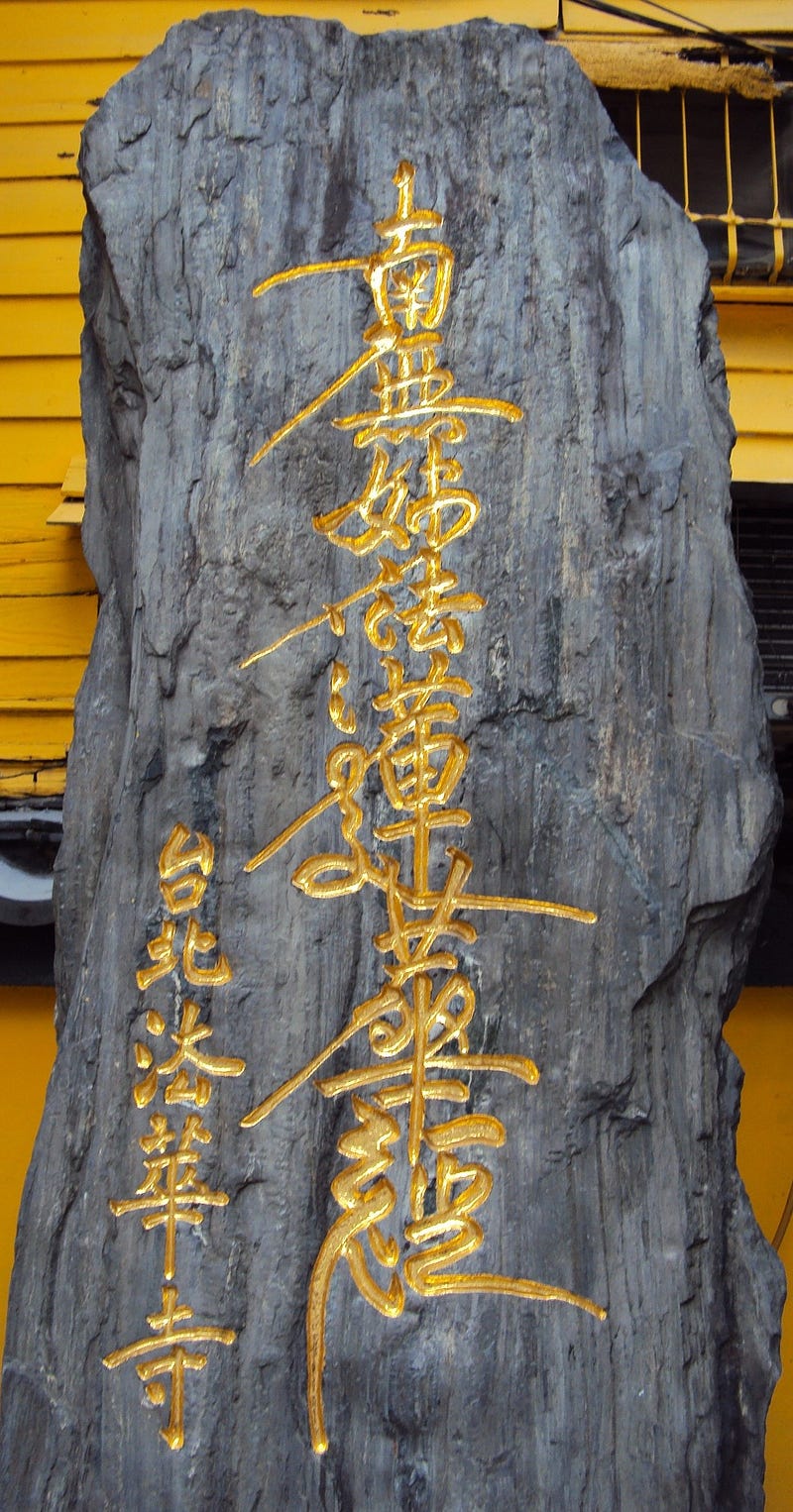
Nam Myoho Renge Kyo
But what do they mean, and how do you use them? What are the benefits they bring?
Before answering the three points, allow me to explain it is a simple trick but not an easy task. Here is a simple way to answer.
What does Nam Myoho Renge Kyo mean?
Life is really simple, but we insist on making it complicated.
— Confucius
If you search the internet for the history and meaning, plan on spending at least 30 minutes browsing the hundreds of pages you will find, and if you manage, then try to explain it to someone else, so here is a simplified version for you.
2600 years ago, Gautama Siddhartha, founder of Buddhism, awoke to the “Lotus Sutra” and the universal truth of “Myoho Renge Kyo.”
In the year 1253, when Nichiren Daishonin, founder of the branch of Japanese Buddhism, known as Nichiren, told his disciples for the first time that the Lotus Sutra or “Nam Myoho Renge Kyo,” is the fundamental principle within the entire teaching of this Buddhism.
This mantra harmonizes our life with the perfect rhythm of the universe, increasing good fortune, health, life force, and wisdom.
It is difficult to translate this mantra, consisting of the Sanskrit word “Nam,” and the Japanese pronunciation of the “Lotus Sutra” translated from classical Chinese.
To understand its meaning, we have to analyze each of its parts:
NAM
“Peace begins with a kind gesture and Namaste.”
— Debasish Mridha (American philosopher, poet and author)
NAM is a Sanskrit word derived from “NAMAS” and is used to express devotion. It comes from the same root of “Namaste,” used in the practice of meditation and yoga, as a greeting which means “I bow before you,” or in a more profound sense, “I bow to the divine presence in you.”
Therefore, we can translate NAM as:
“I bow down to the divinity that exists within me / you.
MYOHO
“Our life is the expression of the mystical law”
— Nichiren Daishonin founder of Nichiren Buddhism
MYOHO is the union of MYO, which translates as a mystic, and HO, or the law. Therefore, we can translate MYOHO as “Wonderful Law,” or “Mystical Law,” considered in Nichiren Daishonin’s Buddhism, as:
The primary Law or reality permeates all the phenomena of the universe.
We can conclude MYO is the mystical and infinite, the name given to what we do not see, the intangible, and the dynamic life force of the universe, and HO is the visible and tangible aspect of this force.
Both together form the reality of life. The ever-changing phenomena of HO, but bathed in a constant reality known as MYO.
MYO “Mystic,” + HO “Law,” = MYOHO “Mystic Law.”
RENGE
“As the lotus rises on its stem without being stained by mud and water, so the sage speaks of peace and is not stained by the opinions of the world.”
— Buddha
RENGE means ‘lotus flower.’ Unlike most plants where the flower first appears and then transforms into a seed, the lotus is one of the few that simultaneously produces both flower and seeds. Nichiren Buddhism regards the lotus as the union of cause and effect.
Each action creates a cause through our actions, words, or thoughts, generating a simultaneous effect. The results are manifested in our lives and what surrounds us. Also known as the law of cause and effect, or Karma and Dharma.
Another characteristic of the lotus plant is that it grows in swamps or muddy ponds. However, it blooms white and without spots. In Nichiren Buddhism, this lotus’ quality symbolizes our personal Buddha's pure and unblemished emergence.
So, we can define RENGE = as the manifestation of our inner untarnished Buddha responsible for the law of cause and effect.
KYO
“You have to grow from the inside out. No one can teach you, and no one can make you spiritual. There is no other teacher than your soul.”
— Swami Vivekananda (19th-century Indian mystic)
Buddhists translate KYO as a sutra, sound, teaching, or “the voice of the Buddha.” However, KYO's sinogram (Chinese character) also represents the threads connected in a loom.
For Nichiren Daishonin, the union or link connects everything through eternity. The continuation of life uniting the universe's past, present, and future, and that in Myoho Renge Kyo, represents the enlightenment of the living Buddha, transmitted throughout eternity.
NAM-MYOHO-RENGE-KYO
“Nam Myoho Renge Kyo is like the roar of a lion. Therefore, what disease can be an obstacle?”
— The Writings of Nichiren Daishonin
If we unite all the elements, Nam-Myoho-Renge-Kyo, we can translate it as:
Nam = I bow down, I line up, I surrender. Myoho = Mystic Law. Renge = Lotus Flower, Buddha without blemish. Kyo = Sutra, teaching, the voice of Buddha, the union of the past, present, and future.
Putting all parts together, we can generate the following sentence, “I bow down to the mystical law of the Lotus Flower Sutra,” or in a more profound sense:
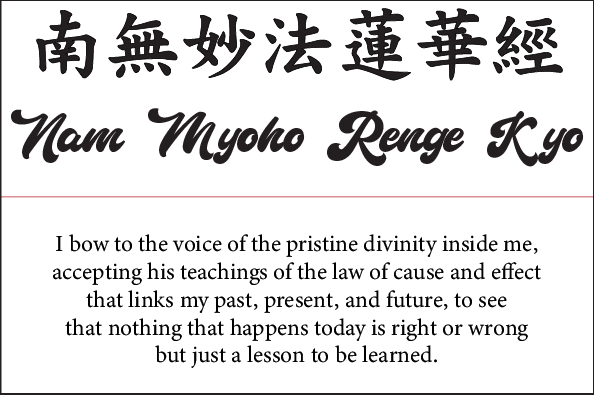
I align myself with the voice of the spotless Buddha, accepting his teaching of the law of cause and effect that links my past, present and future.
HOW DO YOU USE NAM-MYOHO-RENGE-KYO?
“Repeating a mantra opens the heart and makes love flow within us.”
— Swami Muktananda (Siddha Yoga)
The Mantra of the Nam-Myoho-Renge-Kyo suggests we bow and surrender to the Name of a Higher Power and the Mystic Law. That blooming like a lotus makes us bloom and feel happy, beautiful, full of energy, life, and always young. When we dedicate ourselves to that One Whole of which we are part, our sufferings vanish.
You can repeat the Nam-Myoho-Renge-Kyo mantra for five minutes, or for only ten times, at dawn, preparing to accept any event as an opportunity for growth and learning, and before going to sleep as gratitude for all the teachings that the day gave us.
What are the benefits of Nam-Myoho-Renge-Kyo?
“When you repeat Nam-Myoho-Renge-Kyo, little by little you eliminate all the poor decisions that you’ve made. The more you repeat it, the more you clarify your life and you will get closer to your true nature, avoid wrong decisions. “
— Tina Turner
You can find thousands of Google pages, from Buddhist monks, Meditation gurus, and even Tina Turner. But let me tell you my experience using this technique.
I discovered it some time ago. When I had lost my job, had marriage problems, and my health was terrible. And this was before the 2020 pandemic!
Looking for some way to cope with all my problems, I heard someone talking about how it helped Tina Turner.
It was so simple that it just made a click, and the words stuck in my mind. Later, I tried to find the meaning, but after searching for several hours, I decided to give it a try.
I printed two copies and put one in my wallet and the other by the door to see it when I left or returned home.
Since then, each time I leave the house, I see it as a reminder of the opportunity to learn from everything that day and be grateful at night.
If something happens during the day, and my brain goes into auto-response mode, I stop and remember the card by thinking: What’s in your wallet?
Therefore, when I face some problem, something happens, or my cynophobia (fear of dogs, not xenophobia, fear of foreigners), I repeat the mantra and feel calm.
Other benefits I experience are:
- It gives me the ability to deal better with problems and difficulties.
- Overcome fear, stress, and phobias.
- It helps me to control my anger and gives me confidence before any presentation.
- I change any submissive behavior when I want to say yes or no to something to avoid upsetting others, fearing to hurt their feelings.
- Relax my mind and body after any stressful situation.
- See things more clearly to find a win-win solution in a conflict.
- At night, before I sleep, I feel love, happiness, joy, and peace.
- It helps me feel grateful for everything that happened during the day.
IN CONCLUSION
“Suffer what you have to suffer, enjoy what you have to enjoy. See suffering and joy as facts of life, and continue to sing Nam Myoho Renge Kyo, whatever happens. How could this be anything other than the joy? of the Unlimited Law? “
— The Writings of Nichiren Daishonin
Imagine the immense benefit you’ll gain from just earnestly reciting the Nam-Myoho-Renge-Kyo Sutra in the morning and at night for as little as ten times.
In Nichiren Buddhism, the object of devotion is usually printed on a scroll with calligraphic Chinese and Sanskrit characters placed by the door.
Nichiren never writes about the number or the times we should repeat the sutra. He only explains that it depends on the consciousness of each individual. Still, it is essential to do it a little each day.
Therefore, we must strive to live each day and continually improve ourselves by practicing in the morning and night.
A gift for you
The Author’s personal mantra
Here is a copy for your door or to carry it in your wallet.
Also, find a video on the internet chanting the mantra to use as a background sound when you work.
SOURCES
© Copyright Jose Luis Ontanon, 2021


