
The Forgotten Kingdoms: Revealing the Secrets of Ancient Mesopotamia, Canaan, and Anatolia
These kingdoms thrived between the 4th and 1st millennia BC.
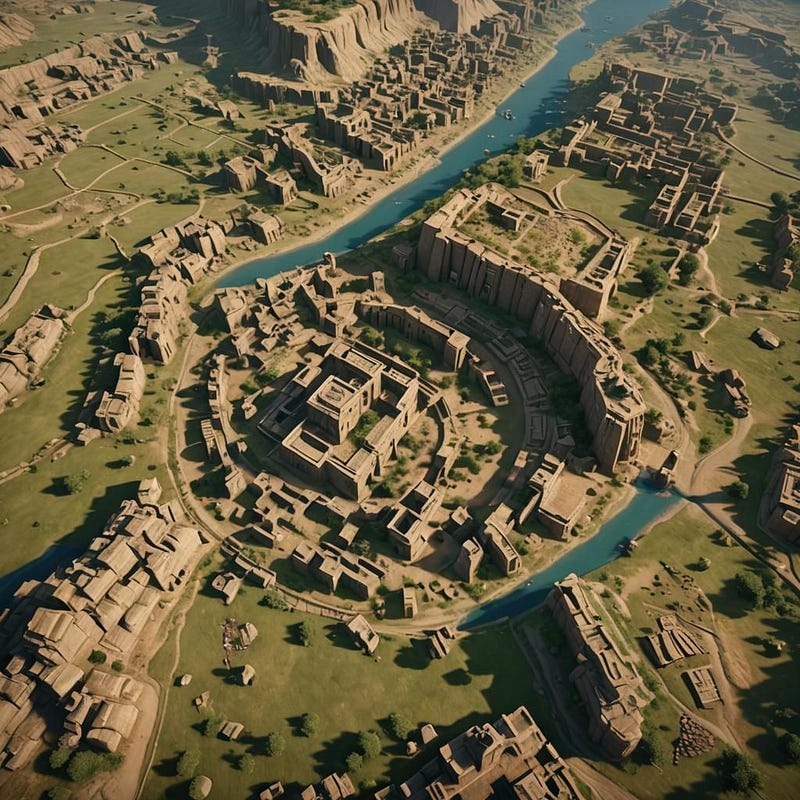
The world we live in today has been shaped by countless civilizations, both ancient and modern. Among these, the kingdoms of Mesopotamia, Canaan, and Anatolia stand out for their rich history and cultural contributions.
These kingdoms thrived between the 4th and 1st millennia BC, leaving an indelible mark on the history of humankind. Despite their significant impact, many of the stories and secrets of these kingdoms have been forgotten.
Ancient Mesopotamia The Cradle of Civilization
Mesopotamia, often referred to as the “cradle of civilization,” was a region situated between the Tigris and Euphrates rivers in what is now modern-day Iraq.
This area was home to some of the earliest known civilizations, including the Sumerians, Babylonians, and Assyrians. These cultures developed sophisticated systems of writing, mathematics, and astronomy that laid the foundation for much of the knowledge we possess today.
The Sumerians are credited with inventing the first known form of writing, known as cuneiform. This writing system allowed them to record their history, laws, and religious beliefs, which have been invaluable in understanding the development of human civilization.
The Sumerians were responsible for the invention of the wheel and the development of complex irrigation systems, which enabled them to cultivate crops and support a growing population.
One of the most famous cities in ancient Mesopotamia was Babylon, which was ruled by the legendary King Hammurabi. Under his reign, Babylon became a center of trade, culture, and learning.
Hammurabi is best known for his code of laws, which established a set of principles for governing society and resolving disputes. The code, inscribed on a stone pillar known as the Stele of Hammurabi, serves as a testament to the sophistication of Babylonian legal and moral thought.
The Assyrians, another prominent Mesopotamian civilization, were known for their military prowess and their skill in constructing monumental architecture. They built elaborate palaces and temples, many of which still stand today as a testament to their engineering prowess. The Assyrians also developed a complex bureaucracy and a highly organized army, which enabled them to conquer much of the ancient Near East.
Ancient Canaan The Birthplace of the Hebrew Bible
Canaan, situated along the eastern coast of the Mediterranean Sea, was the birthplace of the Hebrew Bible and the Israelite people. This region, which encompasses modern-day Israel, Lebanon, and parts of Jordan, was home to a diverse array of cultures and religions.
The Canaanites, who predated the Israelites, were known for their advanced knowledge of metallurgy and their skill in crafting intricate jewelry and pottery.
The Israelites, who emerged as a distinct people in the 2nd millennium BC, developed a powerful monotheistic religion that would go on to influence much of the world. The Hebrew Bible, also known as the Old Testament, contains the stories and teachings of the Israelites, including the Ten Commandments and the prophecies of Isaiah, Jeremiah, and Ezekiel. This sacred text has been a source of inspiration and guidance for millions of people around the world.
Ancient Anatolia A Crossroads of Civilizations
Anatolia, also known as Asia Minor, was a region of great strategic importance, situated at the crossroads of Europe, Asia, and Africa. Throughout history, Anatolia has been home to numerous civilizations, including the Hittites, Phrygians, and Lydians. These cultures left behind a rich legacy of art, architecture, and literature that continues to captivate the imagination of scholars and historians.
The Hittites, who emerged in the 2nd millennium BC, were one of the earliest civilizations to develop a complex system of writing. Their cuneiform script, which was adapted from the Sumerians, allowed them to record their laws, religious beliefs, and historical events. The Hittites were also known for their skill in metallurgy and their development of advanced military technology, including chariots and iron weapons.
The Phrygians, another ancient Anatolian civilization, were known for their distinctive art and architecture. They developed a unique style of pottery, characterized by its swirling patterns and vibrant colors. The Phrygians also constructed elaborate tombs and temples, many of which have been uncovered by archaeologists.
The Lydians, who ruled Anatolia in the 7th and 6th centuries BC, were famous for their wealth and luxury. They were the first civilization to mint coins, which revolutionized the global economy and facilitated the spread of trade. The Lydians were also known for their skill in music and poetry, which they used to entertain their royal courts and celebrate their achievements.
The forgotten kingdoms of Mesopotamia, Canaan, and Anatolia have left an indelible mark on the history of humankind. These ancient civilizations developed sophisticated systems of writing, mathematics, and astronomy that laid the foundation for much of the knowledge we possess today. They also produced remarkable works of art, architecture, and literature that continue to inspire and captivate us.
As we continue to explore the secrets of these ancient kingdoms, we are reminded of the incredible resilience and ingenuity of the human spirit. The stories and legacies of these forgotten kingdoms serve as a testament to the power of human achievement and the enduring impact of our collective history.
By studying these ancient civilizations, we can gain a deeper understanding of our own origins and the cultures and traditions that make up our world today.