
The Forgotten Beatles Songs About Bloody Sunday
Both John and Paul wrote separate protest songs in response to a massacre in Northern Ireland.
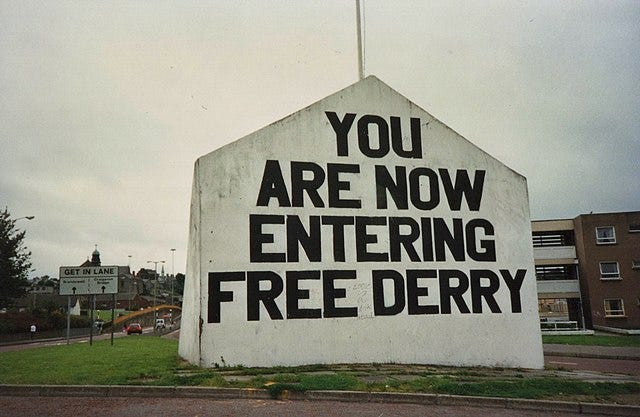
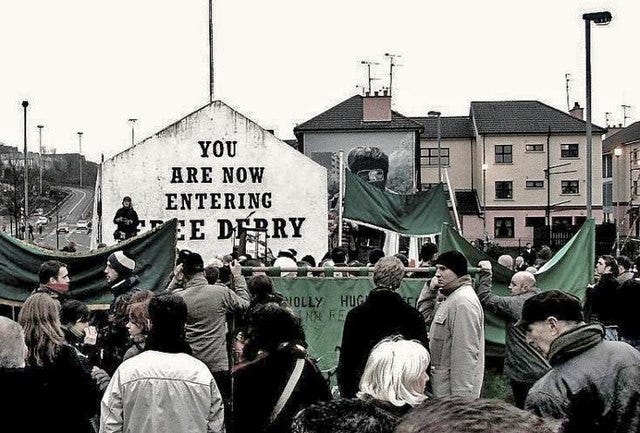
On January 30th, 1972, a chilling incident known as ‘Bloody Sunday’ occurred. The Irish Nationalist (Or Catholic*) community organized a civil rights demonstration in the city of Derry in Northern Ireland, and things turned incredibly violent.
The British military supposedly saw these unarmed protestors as a threat and opened fire, killing 13 and injuring 14 others, with one of them dying afterward. It marks one of the most horrific incidents in the conflict in Northern Ireland, known as ‘The Troubles.’
This is a simplified account of what happened, but it’s the gist of what Paul McCartney and John Lennon would have read in the news the next day.
Like many Liverpudlians, all four Beatles had Irish heritage. During The Fab Four’s 1963 tour of Ireland, John declared to his screaming Irish fans: “We’re all Irish.”
You could brush off this comment as John playing to the crowd, but almost a decade later, we would see how much their Irish ancestry meant to them. In one of Ireland’s darkest hours, it was The Beatles (Or former Beatles at this stage) who lent their voice.
John’s Song About The Troubles — The Luck of The Irish
Prior to Bloody Sunday, John was already involved with global protest movements. The Vietnam War was the most pressing, but the situation in Northern Ireland was also getting pretty worrying.
In 1969, The British Army launched ‘Operation Banner,’ where British troops were sent to patrol Northern Ireland. They were placed primarily to curb civil unrest from the nationalist community, who were protesting discrimination in areas like housing and jobs, among other areas.
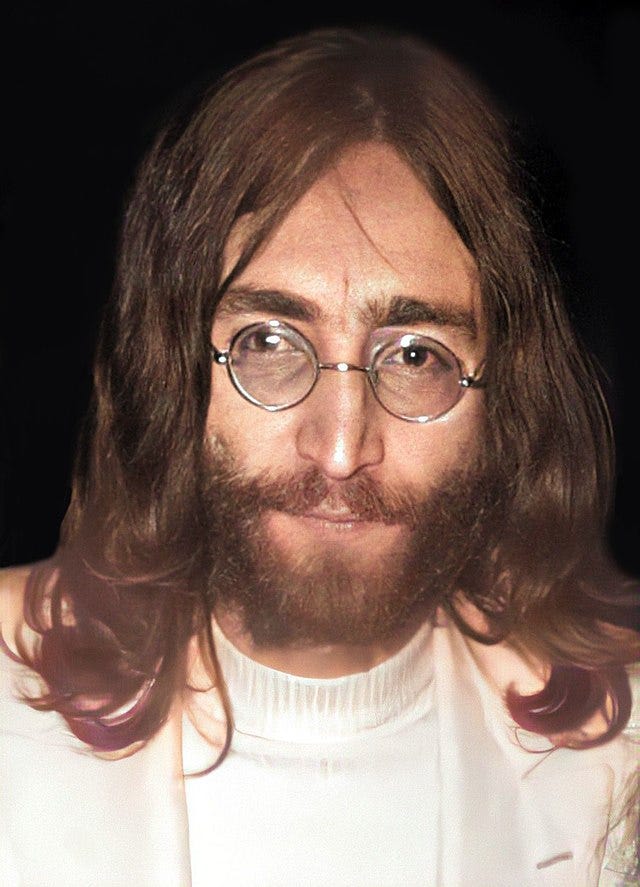
John’s response to the conflict was a song called The Luck of the Irish. The Beatles had recently broken up, so this song was performed by John and his wife, Yoko Ono. The song turns the cliché on its head and argues that the Irish, historically, are deeply unlucky.
The lyrics open with:
If you had the luck of the Irish, You’d be sorry and wish you were dead You should have the luck of the Irish And you’d wish you was English instead
John and Yoko went on to perform this track live in the aftermath of Bloody Sunday and performed the song at a protest outside the New York offices of BOAC (the British national airline).
Ultimately, John Lennon singing a protest song should not come as much of a surprise. The big shock was when Paul McCartney, who had very much steered clear of major political issues, decided to write his own song about Bloody Sunday. And it was Paul, not John, who caused the bigger storm.
Paul’s Song About Bloody Sunday — Give Ireland Back To The Irish
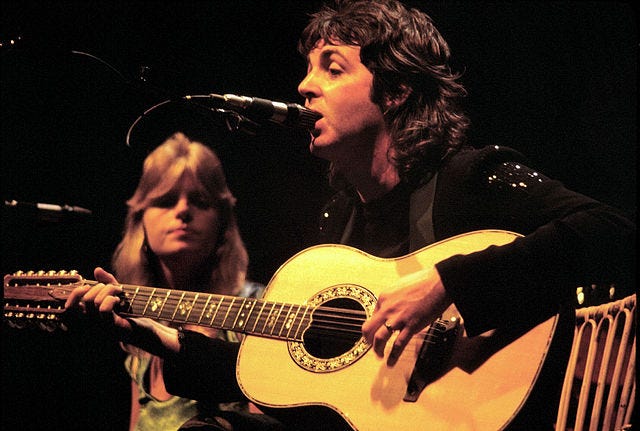
Just like John, Paul started his own band after The Beatles with his wife Linda called Wings. In his 2021 book, The Lyrics, Paul explained where he was when he heard about Bloody Sunday:
“I was in New York that day, having met with John the day before. It was a meeting at which we more or less agreed to stop sniping at each other.”
With John and Paul, we see two common perspectives from British people about Bloody Sunday and perhaps other conflicts.
John was politically left-wing and anti-war and thought that The British Army were the bad guys. Paul, meanwhile, supported the British Army but felt that, on this occasion, they had deeply let themselves down.
According to Paul:
“It was deeply troubling to me to see footage of a perfectly peaceful demonstration that had gone wrong. It looked as if our Army boys had acted indiscriminately and fired on innocent people.”
“There was immediately a cover-up, claiming that the protesters weren’t innocent but had rifles. But it seemed to me a reasonable demonstration, the kind that had been happening in Black communities throughout recent history.
“So, I was shocked by the idea that our soldiers had perpetrated this horror because up till that point, I had thought our boys were all great.”
And Paul began to sympathize with the children of Northern Ireland, who were growing up with soldiers policing their streets.
“Then I imagined Irish soldiers on the streets of Liverpool when I was growing up, telling me I couldn’t go here or I couldn’t go there.”
In response to the thoughts and feelings swimming through his head, he came up with a song that was unambiguously titled Give Ireland Back To The Irish.
As you can imagine, the song was not something that his record company, EMI, was comfortable releasing. But Paul put his foot down.
“I told him this particular event had affected me very deeply, and I felt I must respond to it. He asked me to reconsider.
“So, I gave it a couple of days and rang back and said I had to put it out. He said the record would be banned by the BBC, and no good would come of it for me. I told him I didn’t care.”
Paul was one of the few people who had the leverage to force EMI to release this type of song, and its impact was immediate. Paul McCartney had just released a song called Give Ireland Back To The Irish, and a heavy backlash ensued.
The Song’s Response
I don’t think I’ll get much pushback from saying that this song is not McCartney’s greatest effort, but in many ways, this was not the point. At the time, spreading the word was the most important thing. And as a former Beatle, he had a bigger soapbox than most.
EMI turned out to be right. The song was banned. It was forbidden by broadcasting authorities across the UK. Even Radio Luxembourg, a popular pirate station not subject to broadcasting regulations, refused to play it. In the singles chart, it did not appear as ‘Give Ireland Back To The Irish,’ but as “a record by the group Wings.”
The BBC said in a statement:
“We will not be playing this record, because we feel the lyrics adopt a definite standpoint on the Northern Ireland situation and are therefore politically controversial.”
To counteract this ban, McCartney tried to buy commercial airtime, but every regulator refused to permit it. The song charted at number 16 in Britain and 21 in the US.
Unsurprisingly, the song reached number 1 in the Republic of Ireland, but surprisingly, it was also number one in Spain. The track was particularly popular among the Basque community, who wanted to be separate from Spain, and they saw parallels between what was happening in Ireland and in their own community.
The reason why broadcasters banned the song was not merely political censorship. It was an incredibly sensitive time where showing any opinions about The Troubles could result in violence.
From the 1960s onwards, Northern Ireland experienced horrific violence from paramilitary groups like the Irish Republican Army (IRA) and the Ulster Volunteer Force (UVF).
And sadly, a violent incident did happen as a result of Give Ireland Back To The Irish.
The Problem With The Song
Playing guitar for Wings was Henry McCullough, who grew up in Portstewart, a town about an hour away from Derry. The message of ‘give Ireland back to the Irish’ was complicated by the fact that Henry came from a Unionist (Or Protestant) background. He came from a background of people who saw themselves as British and wanted Northern Ireland to remain part of the United Kingdom.
This Unionist community were not immune from incidences of violence either. Quite the opposite. Six months after Bloody Sunday, an incident known as Bloody Friday occurred, where the IRA let off bombs across the city of Belfast, and seven civilians were killed.
Despite coming from this background, Henry agreed to perform on the song. But sadly, his brother was beaten up because of his association with the song.
From what I can gather, Henry did not seem to want to get involved, and it’s hard to find out his political leanings (if any). The only thing he said about the song was, “I knew it would cause a little bit of a fuss,” and he was right.
Speaking about Henry, Paul said:
“Henry was Protestant, so some people were a bit upset by his involvement in this song.
“Then there were others who perceived the song as a rallying cry for the IRA. It certainly wasn’t written to be one.
“For better or worse, this was a moment where I had a sense that art could, and should, respond to a situation.”
In the meantime, John Lennon had been penning his song about the incident, and a second song by a Beatle about Bloody Sunday was about to be released.
John’s Song About Bloody Sunday — Sunday Bloody Sunday
John’s song, Sunday Bloody Sunday, came out that summer, and much like Paul, John did not sit on the fence. Just like Paul, John was accused of promoting propaganda for the IRA.
The lyrics included the lines:
“You anglo pigs and scotties Sent to colonise the North.”
John’s viewpoint is curious as Lennon had a family member who experienced the uglier side of the Irish Republican movement. In 1939, John’s mother Julia was working as an usher at the Trocadero Cinema in Liverpool when a bomb went off, which was planted by the IRA. Thankfully, she was unharmed by the incident.
Paul denied that his song was in support of the IRA. With Lennon, we don’t have the same sense of condemnation. There is no tangible evidence to confirm this, but an MI5 agent has alleged that John Lennon financially supported the IRA. A spokesperson for the political party Sinn Féin, which was then the political arm of the IRA, said: “It is not unbelievable.”
But John also made a similar point to Paul’s. He made a song to highlight something wrong, and that was all there was to it.
Responding to his critics, John said:
“Here I am in New York and I hear about the 13 people shot dead in Ireland and I react immediately……..
“My songs are not there to be digested and pulled apart like the Mona Lisa. If people on the street think about it, that’s all there is to it.”
Lennon’s Sunday Bloody Sunday was not broadcast in the UK either, but appeared on his album Once Upon A Time In New York, as did The Luck of the Irish.
And here is why they have been largely forgotten. Give Ireland Back To The Irish was a hastily released single that did not make it onto any albums, and both of John’s songs appeared on one of his least popular LPs. All three songs are in the dusty lower echelons of Lennon and McCartney’s extensive catalogue.
Ultimately, the song mostly associated with Bloody Sunday is by U2, which came out eleven years after the event in 1983. The song adopts a more neutral stance and is a more nuanced account of what happened.
Thankfully, ‘The Troubles’ came to a close during the Nobel Peace Prize-winning Good Friday Agreement in 1998. It was a coming together from both sides and just like John Lennon’s much more popular protest song, they decided to ‘give peace a chance.’
* I often see The Troubles framed as Protestants Vs Catholics. While religion played a part, this framing overlooks the political and social aspects of it too.
Sources
https://www.bbc.com/news/uk-northern-ireland-foyle-west-47433319
https://www.irishtimes.com/culture/bloody-sunday-the-victims-and-the-wounded-1.4770362
https://www.beatlesstory.com/blog/2017/03/17/the-luck-of-the-irish-the-beatles-and-ireland/
https://www.beatlesbible.com/people/john-lennon/songs/the-luck-of-the-irish/
https://www.derrydaily.net/2022/01/24/bloody-sunday-shocked-paul-mccartney-to-pen-protest-song/
https://www.the-paulmccartney-project.com/1972/02/give-ireland-back-to-the-irish-banned/
https://www.bbc.com/news/uk-northern-ireland-62135584
https://www.irishpost.com/entertainment/91768-2-91768
https://ultimateclassicrock.com/paul-mccartney-give-ireland-back-to-the-irish/
https://www.amazon.co.uk/Fab-Intimate-Life-Paul-McCartney/dp/0306817837
https://www.theguardian.com/uk/2000/feb/20/northernireland.martinbright
https://www.irishamerica.com/2020/10/imagine-john-lennon-at-80/