
The Flower Garland and Indra’s Net…
Hua-Yen Buddhism’s approach to nonduality is logical, if not exactly easy to understand…
Somewhere out there in space — as near or as far as you would prefer — there is a peppercorn-sized bit of rock floating through space on an asteroid. It has as little to do with you, me, and anything we care about as we could possibly conceive. It is inconsequential.
Yet if that peppercorn-sized rock were placed a little differently, say it was rotated about a quarter way around, we would live in an entirely different Cosmos.
Sure, it may very well be a rather similar Cosmos, as everything else might be pretty much or even exactly as it is now. But it would be completely different, because our Cosmos has the rock in the position it is in. Change the most insignificant aspect of the whole, the tiniest little part, and you have something completely different.
Move one little hair of one brushstroke on the Mona Lisa, and it would be a different painting. Again, it wouldn’t really matter on a practical level, but on an existential level, it would make all the difference in the Cosmos. The Mona Lisa in our Cosmos has the brushstrokes just where they are, and if they were a tiny bit different, it would be a different Cosmos.
I’m not talking about change. The rock could get nudged into a different position by something or other, and the Mona Lisa might look somewhat different after getting cleaned or repaired. That’s part of the ongoing movement that takes place in this Cosmos.
I’m referring to differences that might have occurred at the same time. The tiny, perhaps imperceptible difference in the brushstroke because one hair might have been a tiny little bit off from where it actually was, the miniscule alteration in the pebble that we don’t care about on the asteroid that we don’t even know exists over in some far-flung galaxy.
The point is that the whole is dependent on each of its parts, and if any part were any different than it is, the whole would be different. That goes for the Mona Lisa, and it goes for our Cosmos (and indeed, if the Mona Lisa were even a tiny bit different, the entire Cosmos would be different).
Why think about a difference that doesn’t make a difference?
Hua-Yen Buddhism — an influential school that had a strong impact on Ch’an (Zen) — emphasizes that everything in the Cosmos is existentially dependent on everything else in the Cosmos. Reasonably, you might claim that some things in the Cosmos are not part of your immediate situation. But in terms of basic existence, we’re all tied into this particular iteration of existence.
In Hua-Yen terms, everything in the Cosmos causes everything else. Not causality in the sense of A precedes B, but in the sense that all things are existentially dependent on each other. The whole Cosmos is dependent on every last little thing in it, just as each little thing is dependent on the whole. And Hua-Yen, the Flower Garland School, goes so far as to say that every little thing is thus dependent on every other little thing (and big thing, for that matter).
Everything. In this moment, your existence is dependent on mine, and mine on yours, and both of us on the little itchy nose hair in the nostril of some guy crossing the street in Cleveland, and all of us on that little unseen rock the size of a peppercorn on an asteroid in a distant galaxy.
It’s all one. It’s all changing, but it’s all changing together. The whole shebang.
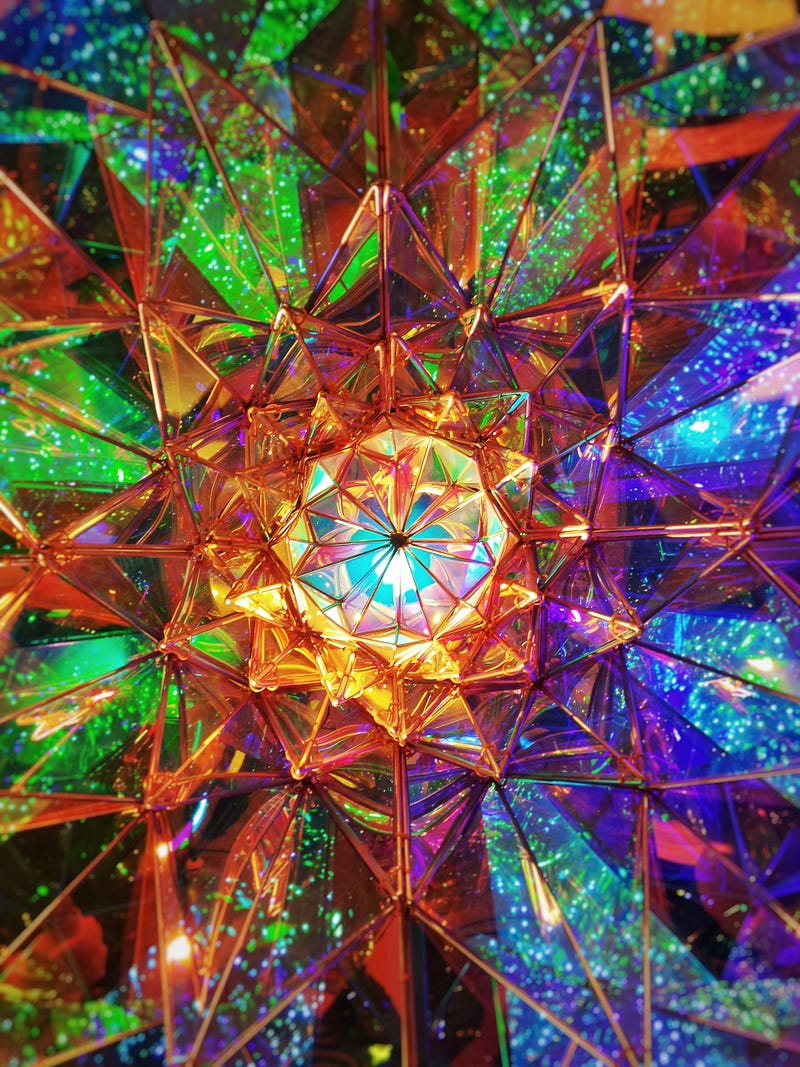
Somewhere in the celestial palace of the dancing god Indra, there hangs a fabulous net the spreads boundlessly over the cosmos in every direction. The divine craftsman has so cleverly fashioned this net that at every knot there hangs a dazzling jewel, each one so brilliantly polished that it reflects all the others… (Adapted from Francis H. Cook, Hua-Yen Buddhism)


