
The Flood and the Flame
Weathering the pandemic’s surreal early seasons
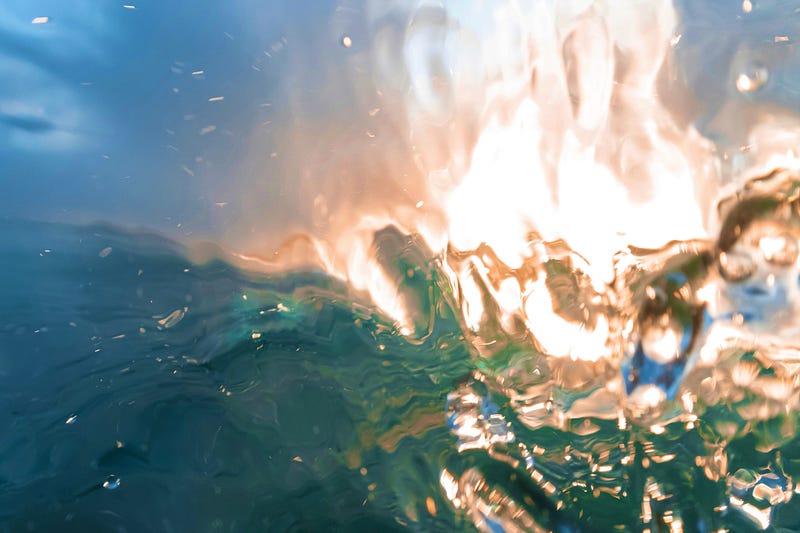
I. The Flood
Back in the winter, the early weeks, we read about this new virus as if it were an offshore storm. It swirled abstractly on a distant map.
Slowly, slowly, they hinted it might blow toward us across oceans.
Then here it was, crashing upon our shores. Each new case slashed in like another drop in the downpour that started to flood our streets. Panic swelled in its wake. We scrambled to stock our pantries and seal our doors. Overnight, we went from hesitant weather warnings to strict orders: shelter in place.
Downtowns went eerily quiet.
We held our breaths.
The pandemic’s tsunami washed over us all through spring while we hid in our homes. How quiet that season felt, sounds dampened as if we’d been pulled underwater. We each sank alone. The mood was murky-dark.
Bit by bit, we found each other again. Not in the flesh, but on screens: through tiny windows and tinny speakers, divers exchanging status reports from distant deep-sea caves. We marveled to one another at how our sense of reality had rippled and warped like a shaft of light bending in the blue. Peering through our fish-eye lenses, we murmured over and over: Alone, together. Together, apart.
We were flooded in. There was nothing for us to do but wait.
II. The Flame
Eventually, summer brightened yellow overhead. Orders began to lift. Many grew hopeful: was the first wave finally receding?
The week of the solstice, epidemiologist Michael Osterholm spoke about the pandemic on NBC’s “Meet the Press.” His voice reached me like everyone else’s, through a pair of cheap headphones: “Wherever there’s wood to burn, this fire is going to burn it,” he warned. “I don’t think we’re going to see one, two, and three waves. I think we’re just going to see one very, very difficult forest fire of cases.”
I pulled off my headphones and crept outside to listen. The soft hum of the world beyond my porch seemed to change pitch. It was no longer oceanic echoes. It was the fizz of a distant brushfire crackling along.
I shut the door.
The graphs confirmed it. For weeks, their lines followed the promised wave as it curved up, crested, and plateaued. Now I watched as, day by day, June climbing toward July, the numbers flared skyward all over again like a flame that was just fed fresh kindling.
The graphics matched: heatmaps of counties across the land going from the gold of a dry prairie, to orange, to blood red, to burnt sienna.
When I hazarded a walk, I was sure I could smell the smoke of disease all around. It curled in through my cloth mask as I navigated sidewalks.
Stores had reopened. Restaurants served diners indoors. My heart clanged like an old-fashioned smoke alarm, red paint chipping away to raw steel. Look at them, lounging unmasked, eating! Some of the chests in there hid lungs that were secretly on fire with virus, alveoli glowing and crackling like embers. I imagined smoke pluming from their nostrils and eddying around nearby faces. The longer they stayed, the thicker their smog would collect overhead, dark as charcoal. Each breath pulled it into another body like sparks into tinder. How could they not see it, smell it, feel its sting on their skin?
Cold and hot at once, I turned for home. Step by quickening step, feeling wooden, I wove far around other pedestrians. I closed myself from the elements, and tried to catch my breath in my bubble of privately conditioned air.
And still, still, there was nothing for me to do but wait.