
The Flaws and Feels AI Can’t Master in Music
The Messiness of Life Makes Music that AI Music Can’t Touch
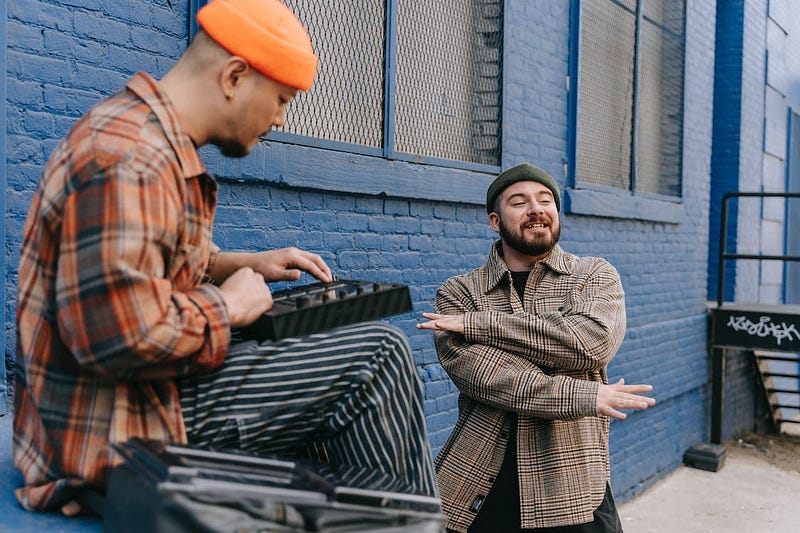
Generative music is huge right now, and anyone (including me) can make catchy, commercial songs in just a few minutes.
The AI production capabilities are truly impressive, producing songs within minutes, if not seconds, adding to an explosion of new music.
More is not better.
This inevitability becomes a gluttony of the senses.
I think people will start to value human-made songs in the sea of AI-generated music.
Making music by hand with analog instruments like guitars, drums, keyboards, and more takes a certain level of skill, creativity, and the ability to express feelings.
AI systems that use algorithms to create music cannot replicate these human traits that give music its heart and soul, allowing analog music to prosper in the future.
Explosion of Generative Music
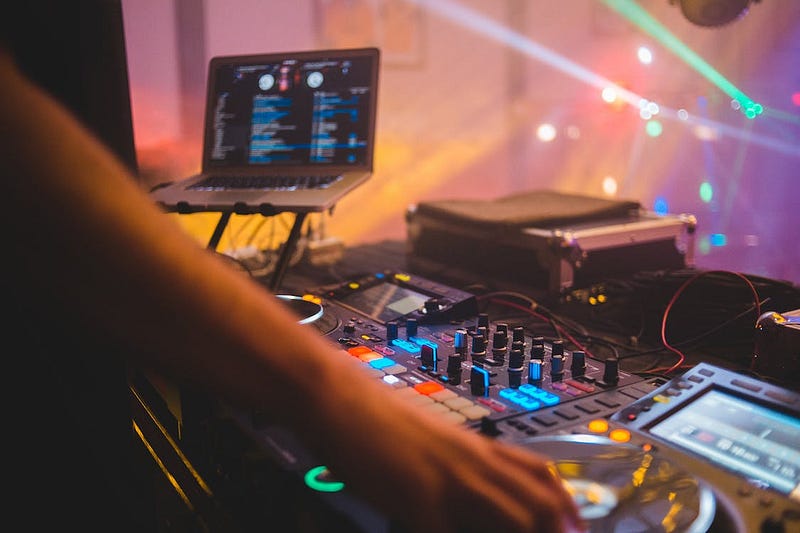
The music business is going through a huge change with the arrival of advanced generative AI.
Systems can now use algorithms to make an infinite number of musical copies, remixes, and imitations.
This makes a huge amount more music available to stream and download, but it might make people feel like they have too much music, which would lower the value of music in general.
Oversaturation in the market is a real possibility when generative systems like Aiva and other AI music variants produce high-quality, digitally-sounding music with minimal human intervention.
As more and more identical-sounding songs flood platforms, the personal connection that listeners have with the music of their favorite artists may fade.
As AI becomes more prolific, human musicians may lose interest due to a lack of financial motivation to meticulously compose music.
There may be an onslaught of passable, derivative machine-made music that threatens the raw creative energy that analog music relies on.
Creatively, AI music creation has a lot of potential, but if left unregulated, it could hurt professional musicians’ careers and reduce consumer appreciation.
Maintaining a thriving musical culture may depend on policies that securely harness the potential of generative music without diminishing human creativity.
Human Qualities in Music
Composing engaging music requires human qualities that artificial intelligence (AI) does not yet possess, such as creativity, life experiences, and technical proficiency with instruments.
Music created by humans reflects our unique experiences and emotions in a manner that machines simply cannot match.
The imperfections and emotion in analog music give it an authentic, organic quality.
Many listeners report that the presence of this “human element” makes them feel closer to the artist.
Cold digital perfection often feels dull by comparison.
Players of analog instruments like guitars or pianos also develop instrumental skills over years of practice that AI cannot match.
Limits of AI Music Generation
While AI systems can produce pleasant musical pastiches, AI-composed music tends to sound derivative, lacking innovation.
The algorithms rely on mimicking patterns in existing music, recombining rather than creating from nothing.
Although AI has made a lot of music so far that makes sense harmonically and structurally, it can only copy the patterns and styles found in the music that AI was trained on, which is music by human musicians and composers.
No doubt, AI systems can produce catchy tunes and even emotionally evocative melodies and pieces.
These arise from recombining and extrapolating the finite musical ideas and concepts the AI has been exposed to rather than from any innate creative spark.
The outcomes satisfy preexisting human preferences for music, but they fall short of truly expanding the realm of musical concepts.
Being truly creative means not only being able to follow the rules but also to question, test, break, and rewrite them.
This is the domain where human performers can excel by experimenting with instruments to produce utterly novel sounds.
Blending Emotional Resonance
AI could simulate musical emotion, but it could not really feel and send it.
The life experiences, pain, and joy that humans infuse our art with resonate at a deeper level.
Mubert, Jukebox and similar AI systems can, at first glance, appear to be capable of creating beautiful musical pastiches complete with rich instrumental textures and, to give the impression that they are “human,” a few random imperfections.
On the other hand, the majority of contemporary generative music simply reuses and expands upon patterns found in previously produced music by humans.
Even though they change the signs of musical emotions, the algorithms do not have any real emotional experiences to draw from.
That is why, even though an AI symphony might follow the rules of emotional cadences, the feelings it imitates are still not as deep as music that comes from the messy, joyful, and painful depths of life.
It does not matter if programmers train generative algorithms on avant-garde music with random textures, atonal passages, and erratic rhythms; the machine will still essentially play back the same statistical patterns that it learned from.
However, innovative human musicians free from the constraints of commercial norms and cultural preferences can explore unexplored creative territories with analogue instruments.
Revelations and sublime beauty blossom precisely from such rule-breaking experimentation and even "errors," which no preprogrammed probabilities can encapsulate.
So while generative systems produce perfectly listenable musical patterns, their most novel variations occur around the fringes of known successful music patterns.
Truly culture-shifting creativity reflecting the full rollercoaster of human experience remains impossible.
Customizing every note or texture still amounts to soulless puppetry without a living spirit behind the code.
For these reasons, analog music created by artists to channel the controlled chaos of being human retains an emotional resonance AI cannot rival, no matter how detailed its digital facsimiles may sound—creativity means being free and flawed.
Elevating the Analog Experience
Live concerts and tours are the best places for human musicians to show off their unmatched performance skills.
Their technical knowledge, ability to improvise, and charisma on stage create an energy, sense of connection, and sense of innovation that no AI generator can match.
When artists release music on limited edition vinyl, cassettes, and CDs, fans feel more connected to and proud of their copies than when they can passively stream disposable digital audio files.
Artists could also try out new ways to distribute their work in the real world, such as making handmade crafts or apps that teach generative remix techniques.
This would use AI as a collaborative tool to highlight human vision.
Maximizing social responsibility in their business practices also lets human creators stress ethical production values that algorithms that are only interested in making money can’t.
While AI opens up new musical possibilities, the performance, distribution, and conscientious operation skills of human artists provide the emotional and tangible substance that passive generative music streams lack.
Gaining value from AI as a creative tool, analog music prioritizes live, tangible, and ethical dimensions.
Humanity Prevails
Artificial intelligence (AI) music generation has its benefits for some, but human creativity, technical skill, and the capacity to convey emotion through music will ensure that analog music retains its appeal.
The intrinsic worth of music is derived from the uniquely human traits displayed by accomplished musicians.
AI lacks living experiences and cannot connect truly to listeners; while digitally engineered music is impressive technologically, analog music conveys real spirit.
The “soul” in music that moves listeners so profoundly springs directly from human experience. Machines cannot emulate this.
Digitally produced music will supplement, not replace, the analogue compositions of great artists, though it has creative uses.
Music is not a computer program, but rather the work of creative, fallible humans.
Digital music will always lose ground to analog because of the “body and soul” that people bring to our songs.
Thanks for reading!
📔 Break free from high-tech, learn more about the retro revival lifestyle.
Follow me at Cursive Writing and ☕️ any coffee donations are always appreciated!


