
The Flat-Tailed Wren and the Neuroscience of Taking Turns in a Dialogue
If we sometimes imitated nature, we would get better results, and we would be unstoppable
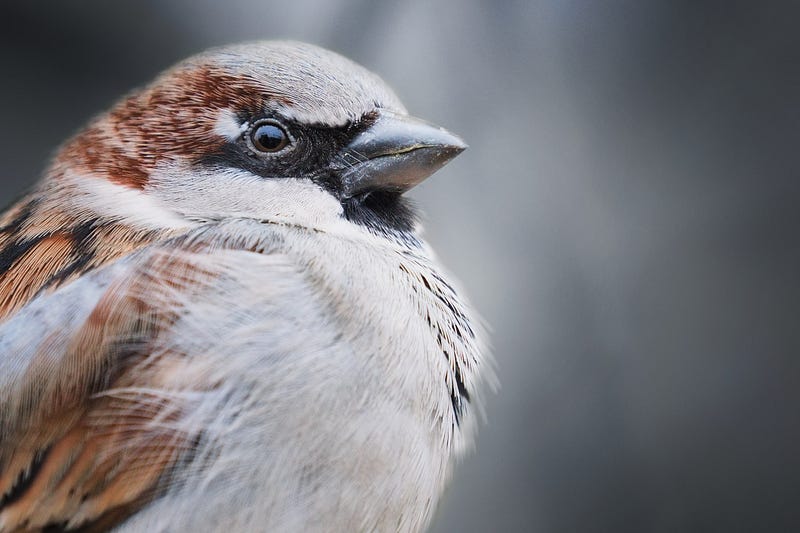
Many animals coordinate actions with a partner to make cooperative social behavior such as duet singing.
How often have we been ourselves talk at cross purposes, where only one person speaks, and the other only listens. But despite this, the latter may have many more valuable things to contribute?
Neuroscience shows us that Zoom and personal encounters between two people or a group could be more fun and fair if we imitated nature.
The bird duo is a rare phenomenon found among the bird species of the Southern hemisphere.
Some research into the flat-tailed wren shows that synchronization can maintain a fluid dialogue.
Coordination in dialogue is essential in humans. While someone transmits a message, the other person listens and then transforms it according to their life experience and genetics.
Shifts are essential to enjoy and learn in a zoom or a simple dialogue. Still, it will not happen if there is no precise coordination and timing of signals between the people involved in a conversation.
Among the flat-tailed wren, the ability to coordinate rests on sensory signals, which inhibit the other’s vocal emission. There was an increase in neural transmission during duet singing as each bird sang its part.
At the same time was discovered that the electrical transmission decreased because one of the brains relaxed when each bird listened to its partner.
While in some species of birds, the vocalizations of both duos overlap to a varying degree, other birds produce vocal teams in which the contributions of the partners alternate.
Experiments suggest that alternate vocalizations in birds duos come from the partner’s efforts to avoid signal overlap.
Among human beings, it should be this way too: while one speaks, at the same time, the other listens until the other speaks. Although, this is not always possible due to some talkative person’s anxiety about being noticed.
Returning to the flat-tailed kings of Ecuador, they sing a duet in a synchronized way, with a harmonious, fluid, and powerful sense.
What if we function as a Broadway show? Those who sing, sing. Those who dance, dance, and meanwhile, the orchestra plays the music. Each one fulfills its role, and everyone enjoys the show.
Some obstruct, hoard, and even sabotage their interlocutors in a meeting.
In flat-tailed wren, the one who usually goes out of tune or makes a timing error is the male, the female corrects it, and the song continues.
In a dialogue, the show leads by a healthy and enjoyable commitment. The sender and the receiver have the leading roles, with the subsequent exchange of them. Even in the new apps post-pandemic(Zoom) or changing the world or make each other fall in love.