
The Five Initiatives That Improved My Mental Health During Isolation
Helped me to survive quarantine and became a better person.
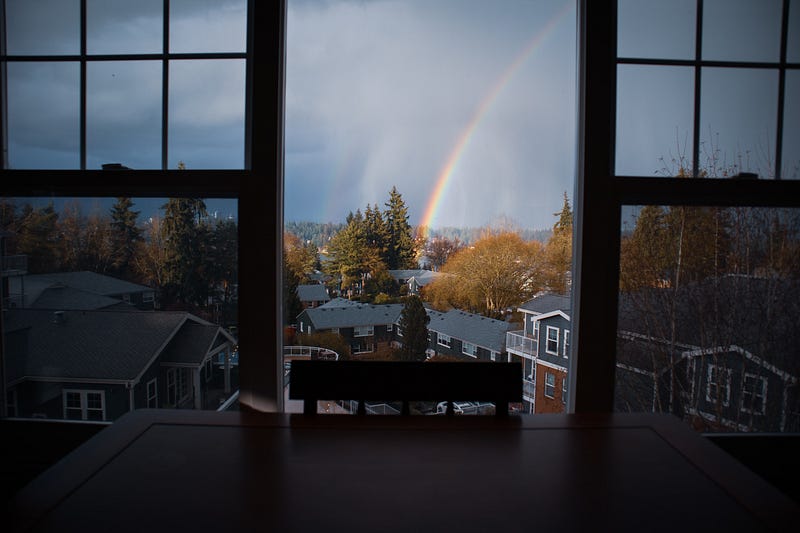
It is a fact that our lives are changing, and will continue changing because of Coronavirus. The entire world has been on this journey since last December, with some countries and cities that have been more than four months on lockdown, and a significant portion of the planet that does not even know when will go back to normality.
Of course, everyone is living differently. We can’t try to generalize and include everyone in the same group. What you are living probably is very different to what I am, or even what my wife or child are living.
However, what I am trying to bring here are those elements that have been helpful for my family and me during this process.
Context I: My COVID experience
To set the right context, I think it is essential to share a little bit of my COVID context.
I live in Australia. We have near 7100 cases, but the curve is going flat since the last few weeks, and actually, the country is already starting to ease some lockdown restrictions.
My situation is not critical at all. I am on the group of people that the most significant impact is not to be able to go outside, go to the office, or see friends and family. Nothing to be worried about compare with others.
We had not had any problem buying food or personal elements. We can even go outside for exercise, take a walk, or hang-out in small groups.
As you can see, my COVID experience hasn’t been so bad. So, for me, COVID is an opportunity to improve, to be a better person, learn something new, and take the time to reflect on what matter most.
Context II: Who I am
To understand the five things that have been useful for me to improve as a person and survive quarantine, I think is essential to let you know who I am, so you can understand why I selected these five elements and not others.
I am a person that need to be doing things the entire day. To give you an idea, my primary motivation to go to sleep is that time will go fast and will be a new day again, with more hours to do more things.
I am continually looking for things to do besides my work. During a time, I was working, doing an MBA, training for a marathon, doing coaching, and trying to be a good husband, father, and friend at the same time.
I need to fill every hour of the day with things. If I am not doing something, I feel I am wasting my life. When we went into isolation, I was concerned, and I thought it would be a big challenge for my mental health.
To be honest, the first two weeks were awful, and I was a complete mess. In terms of work, I didn’t have any issues, I have the right desk and place to work, and I had the time to do my things without a problem. But all my routines went to hell, and I started to feel lost. I didn’t know what to do with my day. And at the same time, I knew this was an unusual situation, so I wanted to make the best of it.
That is why I defined five things to do. Five things that originality was created to survive quarantine, but know I feel I am a different person. I want to continue doing this no matter if we are passing through another pandemic, or not.
I know some people would say “You do not need to be doing things all the time”. Probably is true, but what I would not agree, is that you need to waste your isolation time doing nothing. I do not understand people that are just using the time to watch tv or do nothing. We are humans; we look for a purpose in this life. And doesn’t matter the situation, we need to maintain that philosophy.
So, let me tell you something, procrastination will not be on this list.
The Five Initiatives
Have specific routines during your day
Before isolation, I had a system for each day. My alarm will always be set at 5.30 am, I would start my mornings with exercise, breakfast, then go to work. And after work, my afternoons were for family time, and before bedtime for myself.
When we started quarantine, my entire plan went to garbage. I wake up at the same hour, but I couldn’t go out for a run, and I didn’t have to prepare myself for the commute. So here I was, before 6 am ready to start the work, and with no other check on my daily goals. My mornings became family time, work hours weren’t exact, no exercise, and a lot of free time in the afternoon that I wasn’t sure how to fill.
Then, after a few weeks of no clarity, I went back to set a daily routine. My day now is more structured, and I feel better because I know I am using my time correctly:
Wake-up — Write — Prepare breakfast — Work — exercise — work — have lunch — work — family time — read — gratitude journal — go to bed. And some days I would add a chat with friends or family.
Have clear and straightforward routines is something I encourage you to try. It will make your day easy so you can truly focus on what is more critical for you, and spend your energy on a complicated task. When you already know what is coming in your day, you are putting your brain on speed to keep working on relevant things rather than stopping to make irrelevant decisions.
Start a Gratitude Journal
This has been the most fantastic thing that I have done during the quarantine. All started as part of a conversation with my work colleagues about what things we could do to maintain good general health. The idea was to do something different that we thought was relevant. I choose a Gratitude Journal.
Usually, I am more able to see the half-empty glass than the half-full. So I thought this was a perfect opportunity to change that, or at least have a better balance.
I have never written a journal before and has been an incredible experience. Every night before going to sleep, I will take no more than 5 or 10 minutes to think about what I am grateful that day. And can be anything, it doesn’t need to be complicated or profound situations. I have days where I am thankful just to have the time to be with my family, heard my kid saying a new word, or just having the time to do nothing.
The good thing about the Gratitude Journal is that is for yourself, you can punt whatever you want, and there is no one there to judge you. It is an excellent way to put things on perspective, and see how lucky we are on what we have.
Include breaks in your routine
When I was in the office, I always tried to go out for a run, a walk, or anything during half-morning or half-afternoon. But work always consumed me. Now that I am working from home, I am doing that. Setting 15 or 30 minutes beak between 10.30 and 11.00, or between 15.00 to 15.30 have made a massive change for me.
Working from home have benefits. But being hours in front of the computer, in the same room, and with no one around, it can be challenging for your health. This breaks help me to reset and gain energy back to attack the rest of the day.
Learn something new
I already shared that I am a person that need to be doing things. So I decided to use this time to learn something. And of course, I chose writing.
I have always been a book lover, and when I was a child, I used to write a lot. But with time, I put that away. So this is the perfect time to do it, and do it right! So I am taking some online courses to learn basics writing tips and structures.
We need to embrace isolation as a time for ourselves. To do things that fill our purpose, to pursue what we want more. It can be anything and doesn’t need to be systemic or academic learning. My invitation it’s to think when you were a kid what did you like to do more, or what did you always said you would do. And now do it!
Take time to rest
I know I have been saying that I always need to be doing something. That is true. However, I have realized that being like that is hard, and my brain is continuously tired, thinking about what other activities add to my life.
So, I took the conscious decision to include time for nothing. Is not more than 30 minutes per day, but those 30 minutes are a time where I don’t do anything. I am just sitting there, taking a brain break. Sometimes I can be watching tv, playing guitar, or doing nothing.
Those five things have helped me to survive the quarantine. But also I know that have made a better person of myself. I am more self-aware, I have specific routines, and most important; I am grateful for what I have, for the simple things in life.
If you are struggling with your quarantine and mental health, I encourage you to try any of these or create other ones that can suit you. This is not a perfect list and is not the intent either. Just give it a shoot


