
Thoughts on weight loss
The First Thing To Do to Lose Weight Is To Stop Obsessing About It
Deprivation creates desire, and desire creates obsession
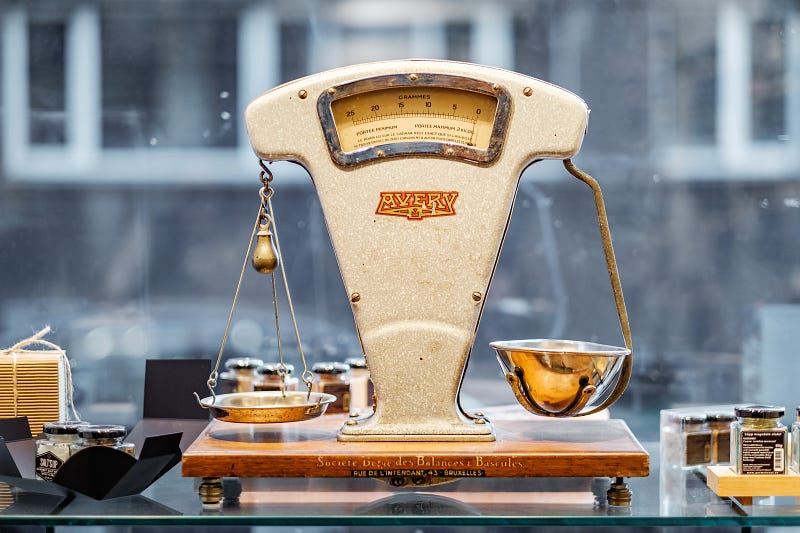
According to a study of 800 women in the United States, 77% of them said that losing weight would change the way they perceive themselves. People often think they’ll be happier if they lose weight.
This is a real problem.
Yes, obesity is a scourge. But so are eating disorders. Most of these eating disorders often stem from an obsession with obtaining a perfect body taught by the media, social networks, and society.
The Influence of Society, Television, and Social Media on Body Vision
Many people grow up feeling good about themselves. They don’t worry much about what they eat. They eat what they want and when they’re hungry. They do as much physical activity as they like and have no health problems. These people don’t calculate calories or monitor nutrients. They simply live their lives and listen to their desires.
Today, however, social networks are interfering with our lives and our daily routine to the point of disrupting one of our most basic needs: eating.
The cult of the perfect body and the social pressure associated with it harm the development of people’s self-image. Worse still, they have a negative influence on people’s desire to lose weight by selling them the illusion of a happier life with fewer kilos.
And the problem here is when a person who feels good about their body and doesn’t even question their weight, starts not to appreciate themselves as they are and wants to change, to lose weight to fit in better with society’s norms.
There are plenty of reasons to want to lose weight. But in my opinion, there is one that is not acceptable. It’s wanting to fit into society’s codes just after being inflated by the physical dictates of Instagram.
Because there’s no worse way than trying to change yourself to look like someone else, physical comparison never leads to anything good. And above all, it leads to a permanent feeling of dissatisfaction.
But it gets worse. A normal person who starts to lose weight to meet aesthetic criteria is dangerously exposed to the development of eating disorders.
It can happen to anyone.
It happened to me.
It Happened To Me Too, I Was Influenced
I’d never had any problems with my weight or my body. I was within the norm, with a good weight-to-height ratio for optimal health. But advertising and social media started to plant a seed in my mind that maybe I should lose a few kilos
So I started reading up on the subject of nutrition and fitness, reading books, watching YouTube videos, and reading testimonials.
And I discovered a new world. With its codes and principles that were unknown to me at the time. The more content I consumed, the more I was influenced to the point of believing that this was the routine I had to follow.
It’s not about having a routine that revolves around a perfect night’s sleep, fitness, and a perfect body. The problem is when we feel obliged to follow this routine because we believe it’s what’s best for us, likean obligation for our health and well-being. And as I’ve always been a good student, I thought that’s what I should do.
But generally speaking, if you’re looking for perfection, you’re on the wrong track. You have to try to improve, not be perfect.
So I started counting the calories I ate, weighing the food, making sure I had the right amount of protein, fat, carbohydrates…
I also started a home fitness program with sessions every day.
And little by little my days began to revolve around the ratio of calories in to calories out.
I’d get up and my first motivation of the day would be to relax.
Then I’d force myself to do sport early in the morning to get rid of it
But when I felt I wasn’t performing well, I’d get disappointed and frustrated. And on the days when I didn’t do sport, I felt guilty
But the worst was the food.
I’ve always considered eating to be a sacred act and an incomparable pleasure. But counting and weighing every item I ate and entering this data into a table every day was unnatural for me.
It was interfering with the pleasure I had in eating.
Whenever I had free time I’d watch YouTube videos on weight loss and read articles on the subject.
It was as if my only objective in life was to lose weight to look like the models on Instagram… Which wasn’t necessary because my weight was already fine.
Restriction Creates Obsession
And that’s when things started to go wrong.
The less I ate, the prouder I felt and the better my day had been.
But if I went over the calorie total, I wasn’t proud of myself, and I blamed myself for not having managed to stick to it.
My satisfaction depended on calories.
I also realized that deciding to deprive myself of certain foods like bread or pasta made me want to eat them much more.
And the result was cracking.
The greater the restriction, the greater the craving.
So some evenings, I’d find myself buying a baguette to have a bit of bread to go with my salad, and I’d end the evening finishing the entire baguette out of greed, not hunger.
Because the restriction made me much more greedy.
For example, I’d never normally eaten dessert, but when I was on restriction, I wanted it all the time and several times in a row.
And I understood.
The more I deprived myself, the more I craved that forbidden delicacy.
The restriction was creating an obsession.
And there was this duality of a day of restrictions and a day of cracking down, which led to nothing in terms of results
And I’m not even talking about the scales
At first, it’s a pleasure. It stimulates you so much that it makes you want to watch your results even more. Until you get to the stage where you’re not losing anymore. Then you start weighing yourself before and after every meal in the hope of seeing a change. You start to stress and worry about gaining weight. And the result determines your mood of the day.
Restraint Doesn’t Bring Happiness
I realized that there was a problem and that I wasn’t going in the right direction
My obsession with weight, scales, and calories made me less happy than before and made me wonder whether it was worth it to continue to want to lose weight.
I thought about it, I analyzed it, I observed it, and I realized several things:
First, as I said above, the more you restrict yourself, the more you’ll want to eat
Secondly, the more you are alone and the less you fill your time with activities, the more you tend to think about eating. Indeed it’s a fact: boredom and loneliness lead to eating more. In the same way, the busier you are, the less likely you are to feel hungry and want to eat because you’ll be emotionally stimulated. Challenge and stimulation keep you from going emotionally hungry.
Thirdly, satisfying positive or negative emotions by eating is not a good thing; eating is not a reward or a punishment, it’s a necessity. The body communicates very well about its needs; you have to listen to it — when it’s hungry, you can feel it, and it’s time to eat; when it’s not hungry, it’s not time.
In addition, the satiety number is an ally: it indicates when the body is full. It’s important to understand that emotional hunger and overeating hide a deeper problem: it’s a want to fill a void with food. But when you’re emotionally full, you eat just the right amount, not too much. And above all, you aren’t obsessed with food. You don’t think about eating when you’re not hungry.
Fourthly, the more you obsess about losing weight, the less you’ll lose. As with so many things in life, it’s when you stop being stubbornly negative that you start to get the results you want.
The less you weigh yourself, the less you look at your body, so the less you obsess and the more you get what you want.
Back to Square One?
So I stopped everything. I stopped all the rules, weighing, and calorie counting. And I had to learn to regain the balance I’d lost.
So I had to listen to my body and reconnect with it. I listened to and followed my desires.
So there are days when I don’t feel like eating sweets and other days when I do. I listen to and understand myself. The main thing is to indulge when you feel like it, without going overboard.
You might also ask yourself what’s in it for me if I eat an extra square of chocolate or have a refill, whether I really want to or whether I’m just being greedy. Moreover, questioning yourself leads you to eat more intelligently. It’s important to attach more importance to the nutritional quality of food than to calories as such because not all calories are equal.
So, you might think that for me it was back to square one, but no.
Like every experience, I’ve learned a lot from these mistakes.
Everyone is different and what works for one person may not work for another. Counting calories and restricting what I eat doesn’t work for me. For me, eating is a pleasure, and I need freedom in that respect.
I’ve never eaten as well as I do now that I don’t have any restrictions. I eat more fruit and vegetables and am more balanced than ever. Because I listen to my body. And if my body wants more vegetables, it’s because it knows that’s what’s best for it, not because someone tells it to.
What You Need to Remember from this Experience, My Advice for Healthy Weight Loss :
Remember that everything I’ve described above is just my experience and that everyone has a different experience of the subject. I greatly admire and respect people who can count their calories and follow a strict diet.
Finally, the advice I could give to people who are like me but want to lose weight is as follows:
- Rebalance meals with always 50% fruit and vegetables on your plate.
- Listen to your body and your wants.
- Don’t restrict yourself, don’t count or weigh what you eat every day.
- Indulge yourself every day and vary the treats.
- Drink plenty of water (2 liters a day).
- Do sports you like when you feel like it, don’t force yourself to do it when you’re tired or to follow a rhythm in a sport you don’t like.
- Banish the scales from your life, look at yourself in the mirror, and feel how your body feels in your clothes.
- Every meal should be a pleasure to taste, whatever you eat, put your heart into preparing it so that it’s beautiful, tasty, and healthy. If you’re going to eat, make sure it’s delicious.
- Be active, busy, outdoors, and with people as much as possible.
Instead of wasting time and money trying to lose weight, it’s better to use your time to do activities you enjoy, because they’ll keep you busy, stimulate you, make you happy, and won’t make you want to keep yourself busy by eating. Eating will once again become an activity of necessity or social pleasure and not a way of compensating for emotional lack or boredom.
You shouldn’t overthink and analyze your diet. You have to feel it and live it. Eating is a moment of pleasure and sharing, a moment of life to be cherished. There are already far too many constraints and restrictions in this world to self-imposed rules on something as enjoyable as eating.
“Use, do not abuse; neither abstinence nor excess makes a man happy “— Voltaire.