avatarWilliam S. Willis

Free AI web copilot to create summaries, insights and extended knowledge, download it at here

2473

Abstract

lds.htm"><i>U.S. National Parks Service</i></a></p></blockquote><p id="8b59">Like a giant amoeba, the plasmodia consumes microorganisms, bacteria, and dead vegetation by engulfing the food and then digesting it internally.</p><figure id="3fd7"><img src="https://cdn-images-1.readmedium.com/v2/resize:fit:800/1*U9jdQ8ZB9fqNztpaJ6TYxw.jpeg"><figcaption></figcaption></figure><figure id="ebd0"><img src="https://cdn-images-1.readmedium.com/v2/resize:fit:800/1*j_XB38KPAdQaaYWtsinoAw.jpeg"><figcaption></figcaption></figure><figure id="fa0c"><img src="https://cdn-images-1.readmedium.com/v2/resize:fit:800/1*8NiEWx3bKCZlioCqjZnE9w.jpeg"><figcaption>Photos by the author show the slime mold consuming a pepper in two days.</figcaption></figure><h2 id="4eba">It Moves!</h2><p id="eb0c">Some species can move at 1 mm per second, which means they could move from one side of your small finger to the other side in about 10 seconds.</p><p id="c64b">Slime mold has both chemical and photosensors. The cell moves away from the light and toward the food it senses.</p><p id="d62f">It moves by squeezing its protoplasm (the liquid inside the cell) toward the direction it “wants” to go. It does make deliberate movements. First, it will spread. Then, when it finds a food source, it will create an efficient route to the food. Below, you can see the spread of the slime mold in the lower right. The tubes mark the best path to the food.</p><figure id="ddc3"><img src="https://cdn-images-1.readmedium.com/v2/resize:fit:800/1*CmXooJiNlqTnlLZ-Nbe3DQ.jpeg"><figcaption>Slime mold. Photo by the author.</figcaption></figure><p id="477b">The slime mold is growing in my compost bin, an Areobin 200.</p><figure id="0b90"><img src="https://cdn-images-1.readmedium.com/v2/resize:fit:800/1*P_8HuSK7fRahbHxka7ZnHw.jpeg"><figcaption>Aerobin 200. Photo by the author.</figcaption></figure><p id="4577">Back in November, I purchased an Aerobin 200 Composter. The Aerobin is an insulated bin that cooks vegetable, cardboard, and paper waste through microbial decomposition and the heat created by the breakdown. For months, I have been adding my garden trimmings, coffee grounds, banana peels, citrus, avocado skins, shredded Amazon boxes, and all those bits of kitchen waste to the bin.</p><p id="6c1f">The decomposition was okay, but not as fast or as hot as I expected. The inside of the Aerobin was about 15℉ warmer than the outside temperature. Items in the bin were breaking down, but not very f

Options

ast.</p><h2 id="2d87">Then the Slime Mold Showed Up</h2><p id="d684">It was like a beast within the bin had awakened! A creature that had inspired the 1950s cult classic “The Blob” was living in the bin. It was like a giant mouth lived below the surface. The volume of the bin’s contents dropped by nearly a foot. A hot, warm breath hit me when I opened the top of the bin. I started wearing a mask. The temperature outside was in the 50s℉, but inside, it was over 80℉.</p><p id="2cf9">Today, the bin's contents are still consumed by the beasts within. Each day, I add more cuttings, banana peels, coffee grounds, shredded cardboard, avocado skins, citrus rinds, onion skins, apple cores, and all the other vegetable waste we generate.</p><p id="f6c5">The warm breath hits me when I open the bin’s top to add more waste. If I listen carefully, I hear it say, “Feed Me!”</p><h2 id="6e22">References</h2><p id="1690"><a href="https://botit.botany.wisc.edu/toms_fungi/june99.html">https://botit.botany.wisc.edu/toms_fungi/june99.html</a></p><p id="380b"><a href="https://www.wired.com/video/watch/mycologist-explains-how-a-slime-mold-can-solve-mazes">A very interesting video about slime mold movement</a></p><div id="3f90" class="link-block"> <a href="https://www.nature.com/articles/d41586-021-00478-1"> <div> <div> <h2>Slime moulds' memories are totally tubular</h2> <div><h3>Simple one-celled organisms 'recall' the location of food using internal tubes made of a gel-like material. Simple…</h3></div> <div><p>www.nature.com</p></div> </div> <div> <div style="background-image: url(https://miro.readmedium.com/v2/resize:fit:320/0*Mc1qo0COBVlztMUr)"></div> </div> </div> </a> </div><h2 id="cd5a">Also on Medium</h2><div id="6879" class="link-block"> <a href="https://readmedium.com/slime-molds-and-various-stages-of-rot-7efc2f14b7b3"> <div> <div> <h2>Slime Molds and Various Stages of Rot</h2> <div><h3>A sonnet</h3></div> <div><p>medium.com</p></div> </div> <div> <div style="background-image: url(https://miro.readmedium.com/v2/resize:fit:320/1*[email protected])"></div> </div> </div> </a> </div></article></body>

The First of Them, Is It the Last of Us?

Slime Mold
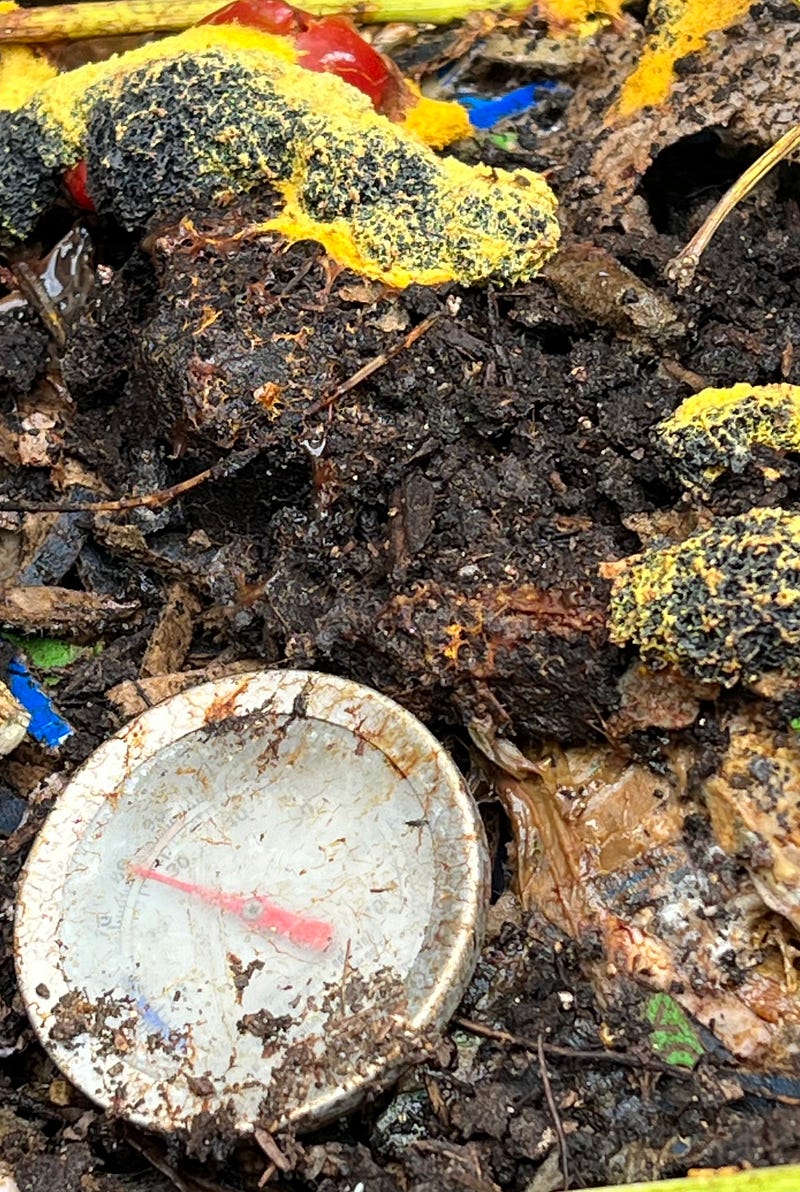
Slime mold. Photo by the author

I have been waiting for slime mold for a long time. In high school, I read a Scientific American article on slime mold and tried to grow it as an extra-credit project. I did not fail the class, but I did fail to grow slime mold.

Slime mold is a fascinating creature. It is rare in Southern California. It is not fungi or mold, a plant, or an animal. Also, the name “Slime Mold” is a terrible description; the name is used to identify multiple, similar, and yet wildly different organisms. In this article, I am talking about members of the Myxomycete, a phylum in the Protista.

Myxomycetes start life as either microscopic amoeba-like or protozoa-like with a flagella single cell. It is too small to be seen without a microscope. Like a human egg or sperm, they are haploid; they carry half of the parent's genetic information. When they find another haploid cell and the conditions are suitable, they will fuse into a single cell with a single nucleus, called a zygote.

Two haploids fusing into one is a narrative retold in many plants and animals on Earth. The zygote continues to divide into multiple cells, a process called mitosis. In mitosis, the nucleus and the cell divide into two cells, each with a cell membrane or wall and a nucleus with the genetic material.
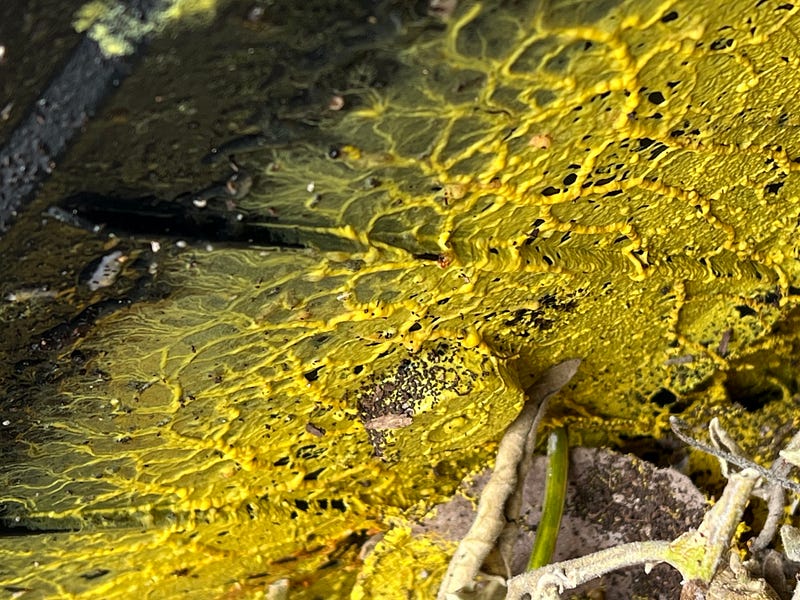
Slime mold. Photo by the author.

But Slime Molds Are Different

Mitosis occurs in slime molds, but the cell does not divide. It gets bigger. The nucleus divides, but it remains in one cell. As a result, a slime mold is one cell with multiple nuclei. Evidence of a chemical agent or signal also prompts the amoeba-like slime mold individuals to fuse into a single-celled, multi-nucleated creature. The enlarged version is the plasmodial stage of slime mold—one cell that gets very big!

These plasmodia can be quite large; some species have been recorded to be over thirty square meters in size! -U.S. National Parks Service

Like a giant amoeba, the plasmodia consumes microorganisms, bacteria, and dead vegetation by engulfing the food and then digesting it internally.
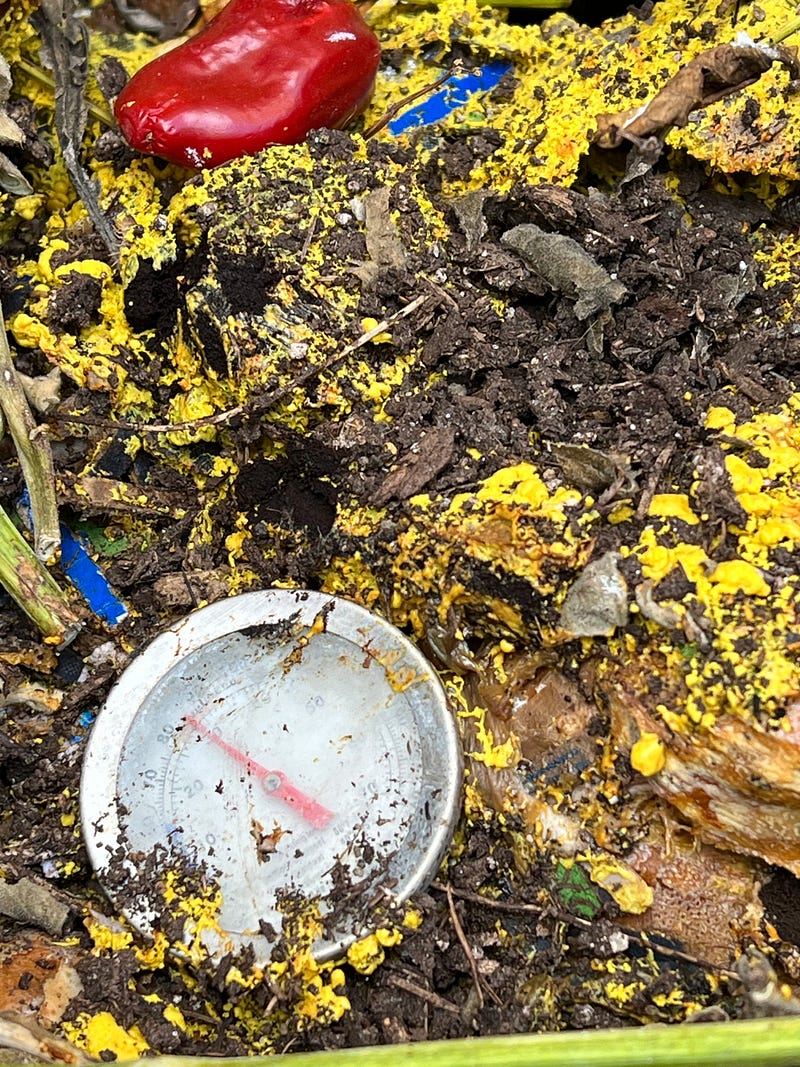
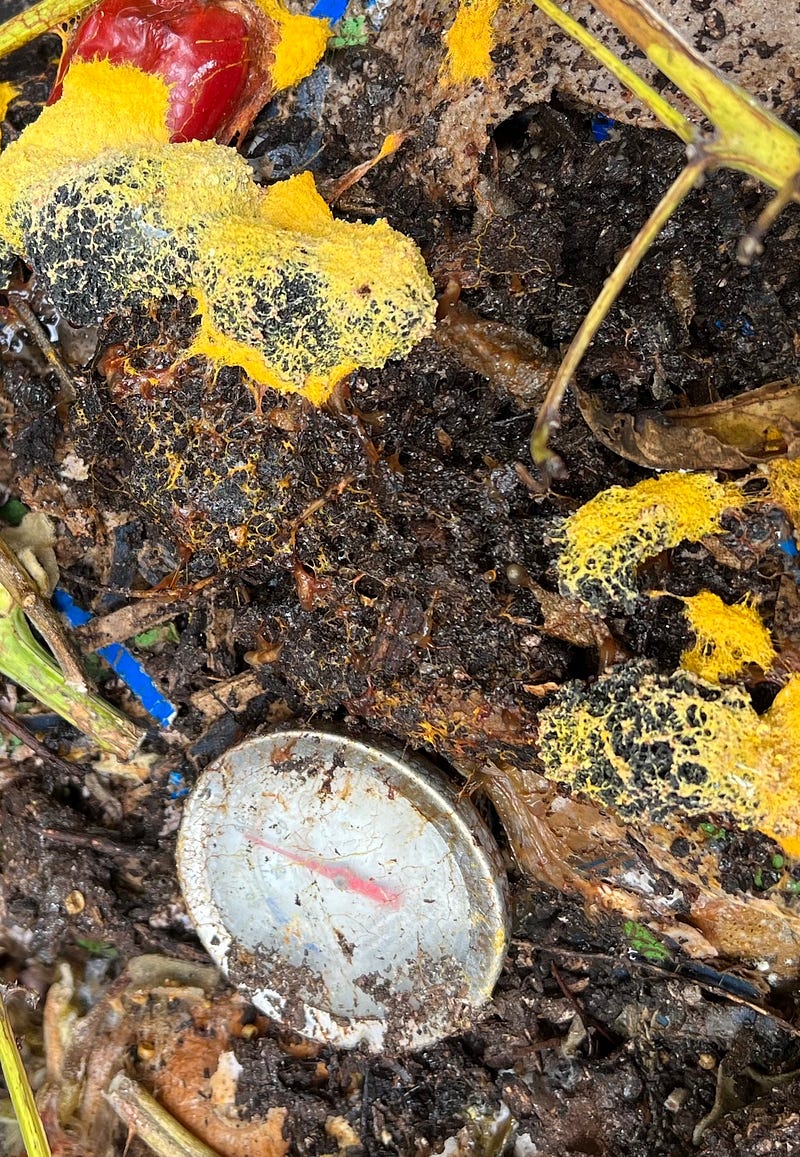
Photos by the author show the slime mold consuming a pepper in two days.

It Moves!

Some species can move at 1 mm per second, which means they could move from one side of your small finger to the other side in about 10 seconds.

Slime mold has both chemical and photosensors. The cell moves away from the light and toward the food it senses.

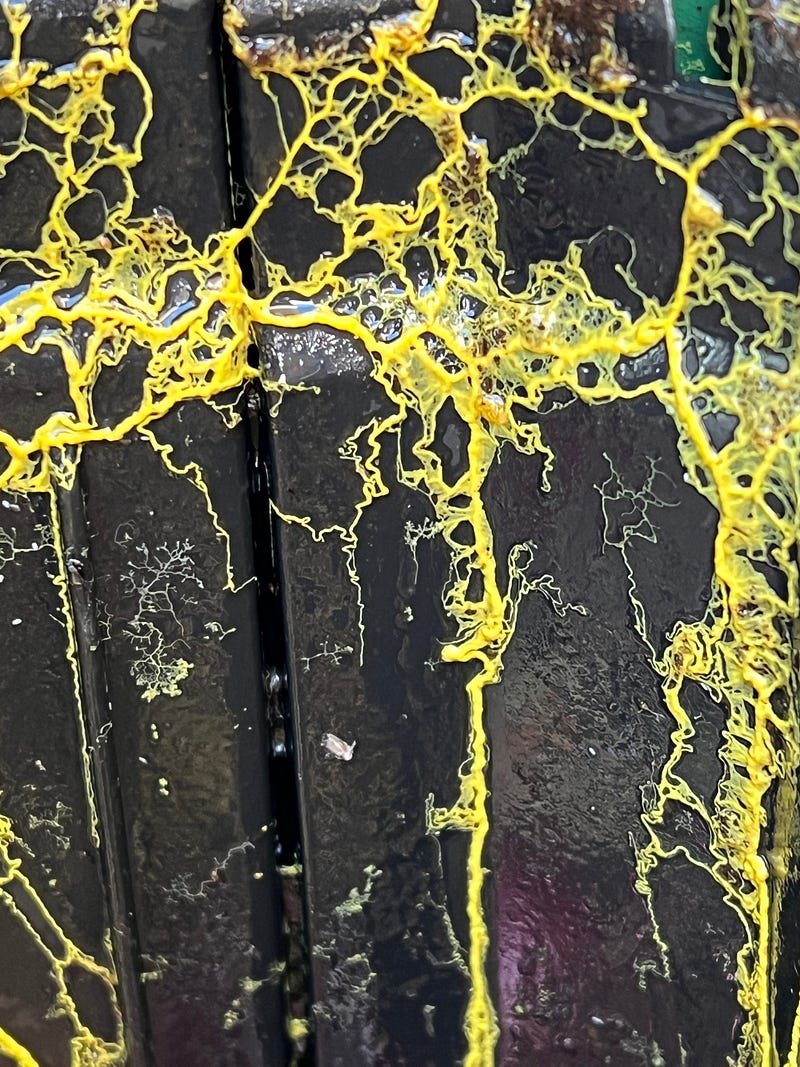
It moves by squeezing its protoplasm (the liquid inside the cell) toward the direction it “wants” to go. It does make deliberate movements. First, it will spread. Then, when it finds a food source, it will create an efficient route to the food. Below, you can see the spread of the slime mold in the lower right. The tubes mark the best path to the food.
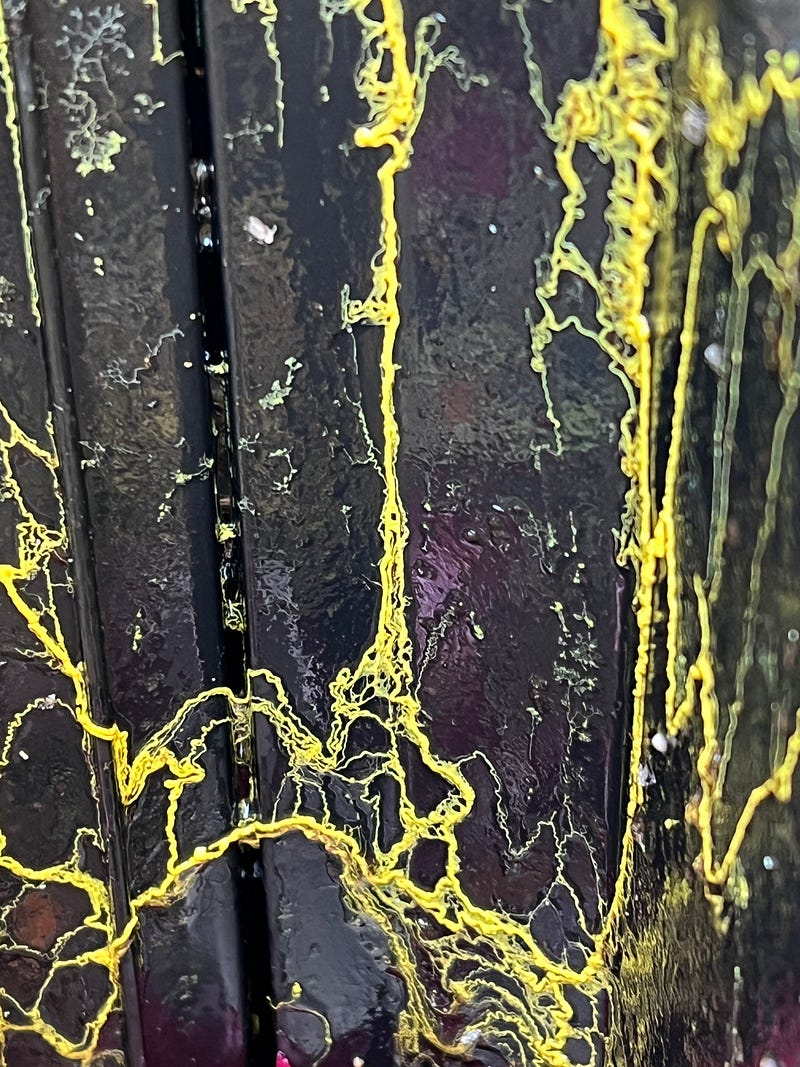
Slime mold. Photo by the author.

The slime mold is growing in my compost bin, an Areobin 200.
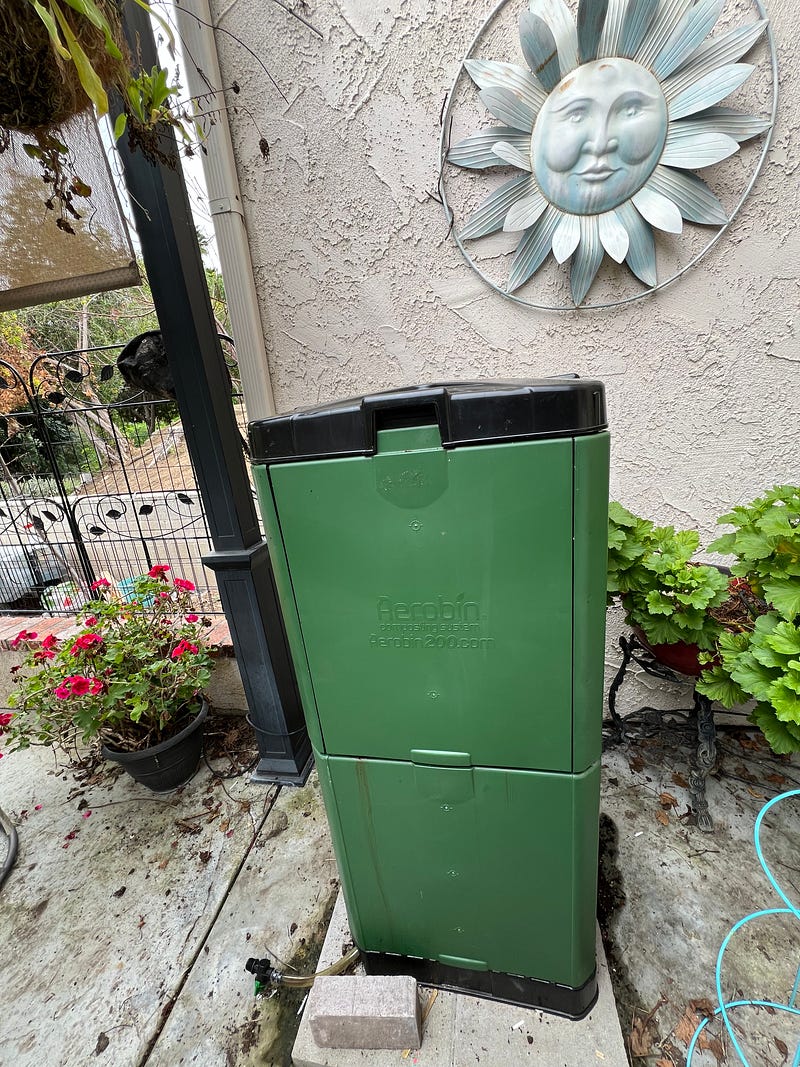
Aerobin 200. Photo by the author.

Back in November, I purchased an Aerobin 200 Composter. The Aerobin is an insulated bin that cooks vegetable, cardboard, and paper waste through microbial decomposition and the heat created by the breakdown. For months, I have been adding my garden trimmings, coffee grounds, banana peels, citrus, avocado skins, shredded Amazon boxes, and all those bits of kitchen waste to the bin.

The decomposition was okay, but not as fast or as hot as I expected. The inside of the Aerobin was about 15℉ warmer than the outside temperature. Items in the bin were breaking down, but not very fast.

Then the Slime Mold Showed Up

It was like a beast within the bin had awakened! A creature that had inspired the 1950s cult classic “The Blob” was living in the bin. It was like a giant mouth lived below the surface. The volume of the bin’s contents dropped by nearly a foot. A hot, warm breath hit me when I opened the top of the bin. I started wearing a mask. The temperature outside was in the 50s℉, but inside, it was over 80℉.

Today, the bin's contents are still consumed by the beasts within. Each day, I add more cuttings, banana peels, coffee grounds, shredded cardboard, avocado skins, citrus rinds, onion skins, apple cores, and all the other vegetable waste we generate.

The warm breath hits me when I open the bin’s top to add more waste. If I listen carefully, I hear it say, “Feed Me!”

References

https://botit.botany.wisc.edu/toms_fungi/june99.html

A very interesting video about slime mold movement

Also on Medium

Recycling
Composting
Slime Mold
Biology
Gardening
Recommended from ReadMedium