
The First Barbie Was Modeled After a Sex Doll
The history you won't read on Mattel's site.
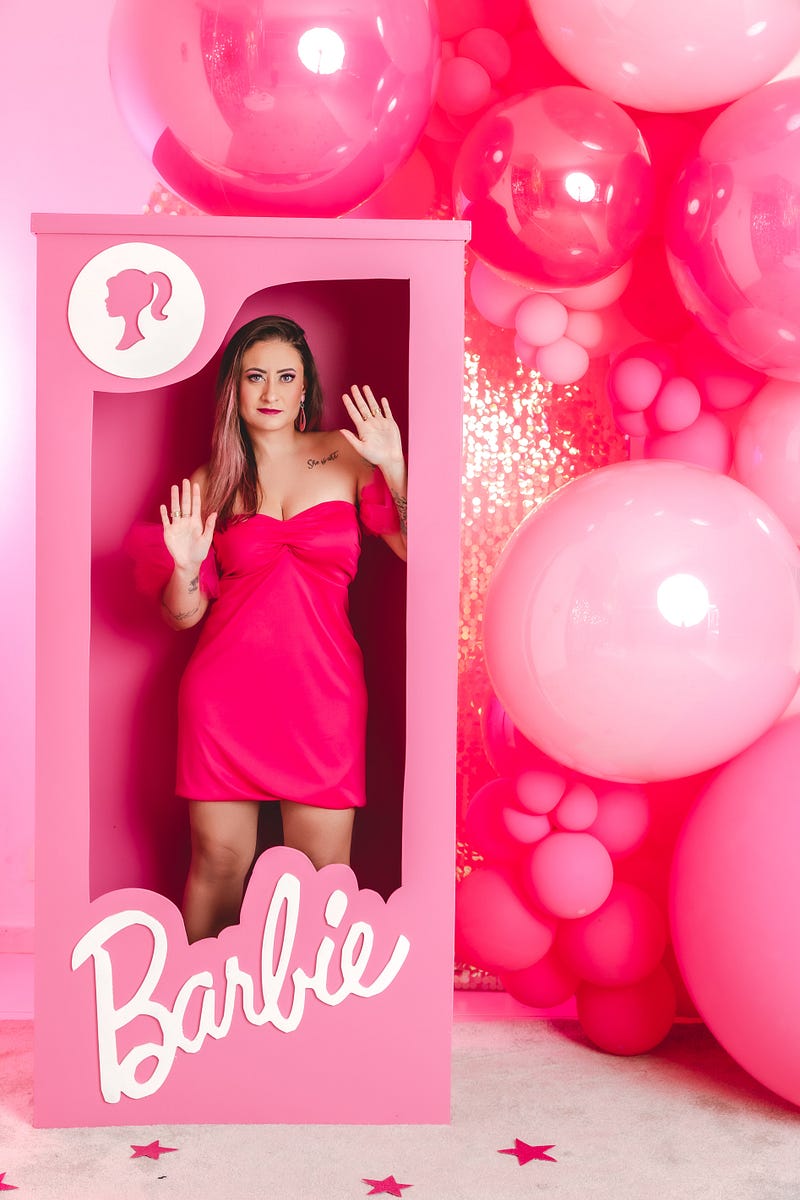
Barbara Millicent Roberts…you saucy little minx. We know you as Barbie, but you would have never existed without your predecessor — a tawdry German sex doll.
But this sordid tale does not begin in Europe but in postwar America. In the 1950s, sexuality was going through its pimply teen rebellion stage. TV shows like I Love Lucy and Leave It To Beaver separated American couples into sanitized twin beds while Elvis Presley's hip-swiveling antics dirtied teenage minds.
Then, in 1948 and 1953, The Kinsey Report dropped "an atomic bomb" on human sexuality, turning prudish American society on its blushing head. The report revealed that premarital sex, extramarital affairs, and homosexuality were a big meh and not a reason to reach for your pearls. Even more shocking, women were orgasming through (gasp!) masturbation (but not from penetration). How dare those hussies not invite the penis to the party.
Back in a suburban home in Los Angelos, the co-founder of Mattel, Ruth Handler, noticed something odd about how her daughter and her friends played. They had no interest in baby dolls and tea sets but instead preferred paper fashion dolls found in the back of their comic books. These dolls portrayed adult women.
At the time, young girls had only two doll options. They could playact motherhood with infant dolls or learn how to be beautiful with pubescent, creepy-eyed "glamour dolls" — Dollikin, Little Miss Ginger, Sindy, Miss Revlon, and others.

As an entrepreneur, Ruth knew that not every young girl wanted to grow up to be a mom or unaging arm candy. Some girls wanted to engage in imaginative play that opened a world of possibilities and choices.
But the girls would get frustrated with the fragile paper and flimsy tabs on their paper dolls. Ruth knew if she could take this 2D creative play and give kids a 3D option, she would have a hit.
She only needed a prototype for her fashion model…
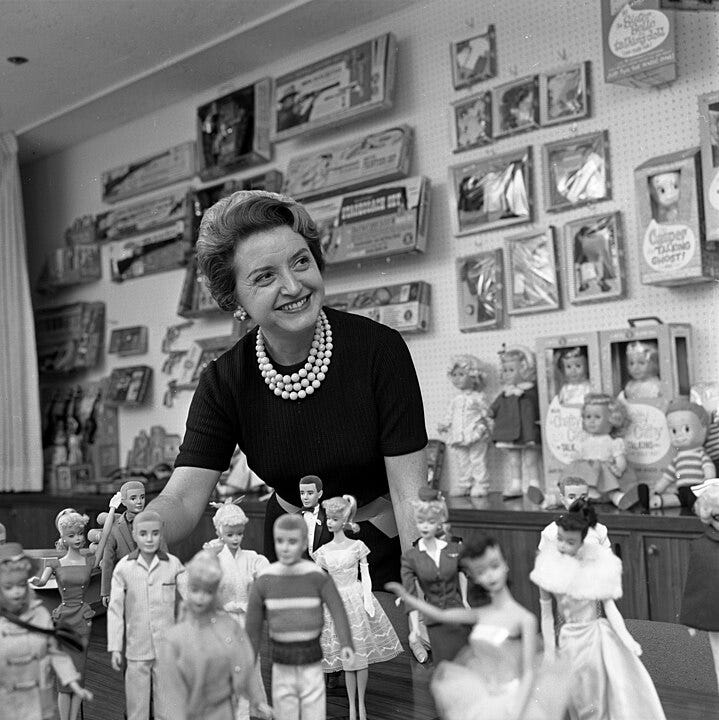

Ruth was vacationing in Europe when she stumbled upon a novelty shop in Lucerne, Switzerland. In the display window, she met the woman who would become Barbie's inspiration — Lilli.
Her full name was “Bild-Lilli.” The doll was based on a cartoon character in the German Hamburg-based tabloid, Bild-Zeitung. Lilli is an empty-headed sex kitten whose only worry is looking cute in a bikini and seducing rich men. To accomplish this feat, her creator, Reinhard Beuthien, gave Lilli all the usual sex appeal — tiny waist, bullet boobs, perky ponytail, mischievous eyes, and, best of all…tons of sass.
She was also a bit of a tart. In one cartoon, she is greeting a friend with dirty handprints all over her buxom bottom. The caption reads, "My car broke down, but luckily, a long-distance truck driver lent me a hand."
Oh, snap.
In another cartoon, a police officer chides her for illegally wearing a bikini. She coyly inquires, "Which part of the bikini would you like me to remove?"
Move over, Mae West.
But it was precisely this moxy that made Lilli a popular sex doll with horny bachelors. Men could buy a twelve-inch Lilli doll from tobacco shops, bars, and adult-themed toy stores.
Now, I know what you are thinking. A twelve-inch sex doll doesn't sound like much fun unless you are a G.I. Joe action figure or Matt Gaetz.
Well, Lilli wasn't that kind of sex doll. Men would give Lilli to their friends as a gag gift or hang her from their dashboards, similar to a Hula Girl. And if a man bought his lady love a Lilli doll, it was a wink-wink for "I want sex." (Note: This foreplay only worked in the 1950s. Please, don't.)
According to M.G. Lord, author of Forever Barbie: The Unauthorized Biography of a Real Doll, men would “take it to bars, lifting up her skirt or pulling down her pants.” Imagine if anyone manhandled Barbie like that. They would get a plastic heel in their eye.
But Ruth didn't care how perky Lilli's tits were or what sophomoric pranks she inspired. Ruth cared that Lilli came in different costumes. She envisioned young girls dressing similar mature dolls.
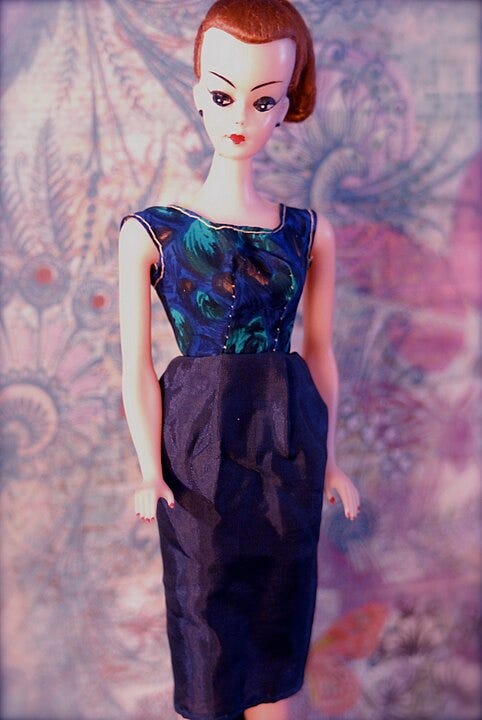

So Ruth bought a bunch of Lilli dolls and brought them back to Mattel. Then she tried to convince an all-male boardroom that moms would buy a doll with…breasts.
Of course, the thought of a mature female doll made them more than a little squeamish. Even Ruth's partner and husband, Elliot, told her she was nuts to think Americans would buy an adult female doll for young girls.
Ruth insisted. She knew a post-war America was hungry for more innovative toys. So she hired makeup artist Bud Westmore to give Lilli a more wholesome makeover. Bud relaxed Lilli's puckered lips, sank her arched eyebrows, and gave Barbie removable (and losable) shoes instead of those molded to Lilli’s feet.
The designers kept her unattainable dimensions — roughly 39–21–33.
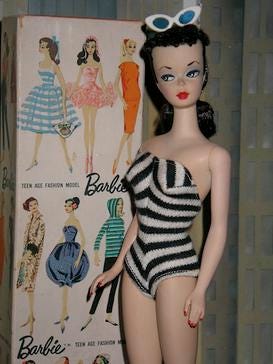

When Barbie was released to the public, many moms were aghast. Even Dr. Ruth proclaimed, "Why would they ever do a doll with a bust?" Sure. Because breasts are so shameful.
Of course, Ruth Handler was right. Mothers scooped up the doll, and Mattel sold 300,000 Barbies in the first year. The doll also made Ruth the top executive (and only female executive) in the toy industry. Not too shabby for a sex doll turned child's toy.
Unfortunately, Mattel has also had its share of missteps over the years.
In 1961, Barbie got a fashion accessory and her castrated sidekick — Ken. (Ruth named both dolls after her children, Barbara and Kenneth.) Most girls didn't care about Ken's board shorts.
And then there was the Midge debacle. In 1963, Barbie got a red-haired, freckled bestie named Midge. She was discontinued in 1967 and then brought back decades later. One snafu — Midge was now pregnant with an unknown baby daddy. (Supposedly, Ken’s friend Allan impregnated her, but the story was sketchy.) Walmart pulled Midge from their shelves after public outcry that she promoted teen pregnancy. Midge was discontinued in 2002.
In 1967, Mattel released the first Black doll — "Colored Francie." It was a move toward diversity with a big miss. Francie merely looked like a white girl with darker skin. Try again.
Ruth also had her troubles. In 1970, she was diagnosed with breast cancer and underwent a mastectomy. In 1975, she resigned as President of Mattel. Three years later, she was indicted for tax evasion and almost went to prison.
In the following decades, Barbie took a nosedive into the patriarchal snakepit. In 1992, Mattel introduced "Talking Barbie." Girls could pull the string on her back and listen to her whine, "Math class is TOUGH." Sure. Only if your hair bleach is destroying brain cells.
Understandably, the National Council of Teachers of Mathematics took umbrage with the sexist stereotype. Other feminists took more pointed action. They exchanged Talking Barbie's voice recording with the equally loquacious Talking G.I. Joe action figure. When you pulled that Barbie's string, she declared, "Eat lead, Cobra!" and "Vengeance is mine!" — an apropos portent of today's education divide. (Girls now surpass boys in every subject, including math and science.)
Then there was the blunder with "Wheelchair Barbie." She couldn't fit into the elevator in the Barbie Dream House. Oops. Some designers didn't think that one through.
Still, Barbie has come a long way over the years. While Lilli was only molested by horny barroom men, her soul sister became a surgeon, an astronaut, and even President. You could argue Barbie is doing ok despite her bleach-fried hair, squashed intestines, and broken arches.
Of course, Barbie also has her share of haters for obvious reasons — she has become a symbol of impossible beauty standards. It's hard to refute that her message could be toxic for many girls. In Barbie's world, you can climb the corporate ladder, but only if you are wearing a miniskirt and your waist is the size of a peach.
The other side trots out the usual snowflake argument. We are becoming too precious with how we raise our children. They have a point too. While not every girl finds a creative outlet in adorning the body, some do. And we shouldn't deny those girls the chance to express their creativity. Give a girl a Barbie, and you might inspire a future fashion or costume designer.
Besides, if you watch young girls play with Barbies, most Barbie aficionados could care less about the model and are more interested in her clothes. And who wouldn't get giddy dressing "Barbie and the Rockers" in slouchy boots, 80s fluorescent hairbows, and killer shoulder pads? (Not a personal reference…maybe.)
Here is the real problem. Parents always project their fears onto kids, but not every girl sees an anatomically incorrect doll as the beauty standard she must obtain. Far more harmful are the thinspo influencers and supermodels who girls truly wish to emulate. It's far easier to see yourself in a real person than a seven-inch plastic doll who can't stand or menstruate.
And let's face it. Women had impossible beauty standards long before Barbie mounted her dream horse.
Then there are the religious nutbags who claim Barbie skirts propriety with her sexuality. Please. She doesn't even have nipples. And if you think a plastic doll without genitalia will make girls promiscuous, you probably should tame your own shame dragons. Trust me on this one. It's always the people scared of sexuality who are hiding monsters.
Either way, let's leave this debate on a hopeful note. Mattel has righted many of the wrongs of the past. (Although there is still room for improvement.) Today, Barbie comes in every shape, size, profession, race, and ethnicity.
Barbie today has higher aspirations than being Ken's "Dream Date." Now, all girls can find their dreams in her. And that is really the purpose of creative play — to imagine what is possible.
*Sources in the comment section upon request.